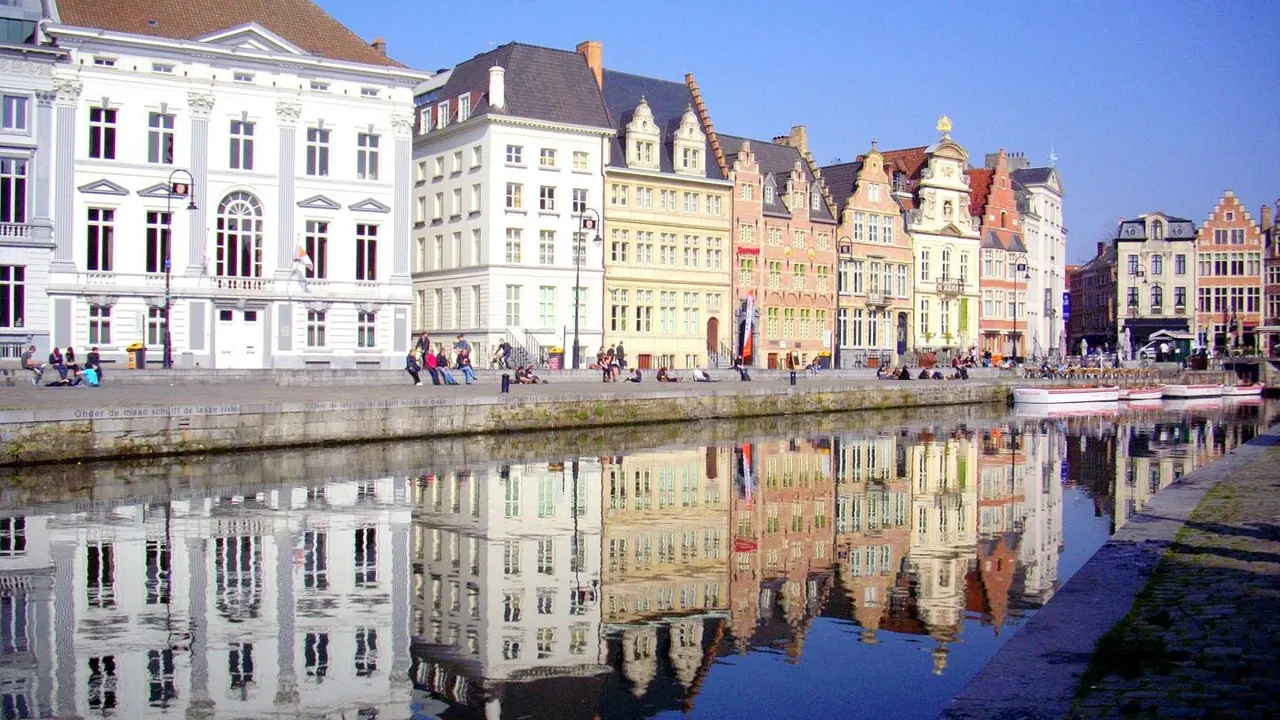
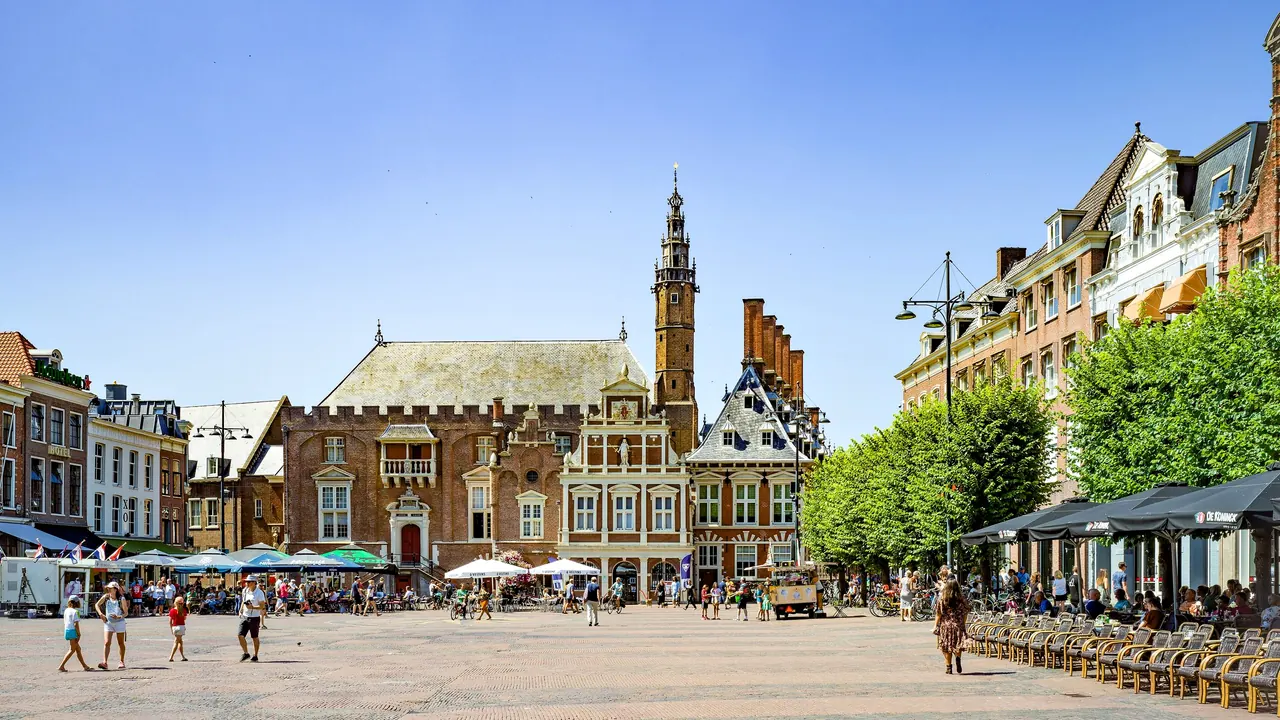
Photos: Ghent by ykeiko, CC BY-SA 3.0, cropped; Haarlem by Moroder, CC BY-SA 4.0, cropped.
Ghent or Haarlem?
Our verdict in twelve categories, each scored against the same fixed benchmark cities, and the climate month by month, so you can choose for your trip.
Choose Ghent for
- nightlife
- food and drink
- live music and the arts
Ghent is the better choice if you want a city with more going on inside its own walls. It has the Ghent Altarpiece and more museums, beer cafés around the Patershol and the Vrijdagmarkt, opera and NTGent, and a student crowd that keeps the evenings going late. It also makes a strong base for Bruges, Brussels and Antwerp, and costs a little less.
Choose Haarlem for
- nature and the outdoors
- wellness
- shopping
If you would rather spend your days outdoors and your evenings quietly, Haarlem is the stronger pick. The dunes of Zuid-Kennemerland and the sand at Zandvoort start at the edge of town, the bulb fields are a spring bike ride away, and the side streets are good for a slow afternoon of browsing. Amsterdam is fifteen minutes away whenever you want something bigger.
Scoreboard
Twelve categories on one fixed scale from 0 to 100. The shaded stretch is the gap between the two.
Your match
Pick a travel style or drag the sliders, and both match scores follow your weighting.
Too close to call, 2 points apart
Wins on nightlife and food and drink with your weighting.
Wins on nature and the outdoors and wellness with your weighting.
What matters to you?
Category by category
What the scores mean for a trip.
Beaches & swimming
Neither city is a place for a swimming vacation, since both face the same cool, windy North Sea. From Ghent, the coast is a proper day out: about an hour by train to Ostend, then the coastal tram to the wider sands. On hot days, the lake at the Blaarmeersen is the swimming spot closer to home.
Haarlem is ahead simply because the coast is so close. Zandvoort's long beach is ten minutes away by train, and the quieter dune-backed sand at Bloemendaal aan Zee is a bike ride away. That makes it easy to fit a beach afternoon around other plans.
Food & drink
Ghent is the better place to eat and drink. Its Flemish cooking has real character, from waterzooi and beef stewed in dark beer to grey shrimp croquettes. Vegetarians do unusually well there, and the brown cafés of the Patershol and the Vrijdagmarkt pour some of the best Belgian beer lists you will find.
Haarlem eats well but plainly. The highlights are raw herring and freshly fried kibbeling from the Saturday market on the Grote Markt, and a good local craft-beer scene. Expect pleasant bistro meals rather than dishes you will remember.
Culture & sights
Oddly, both cities have a great church of St Bavo. Ghent's holds the van Eyck altarpiece, one of the founding works of European painting. Haarlem's holds the organ Mozart played as a boy. Ghent has more around its masterpiece: the moated Gravensteen in the middle of town, the guildhalls of the Graslei, and museums from Flemish masters to the SMAK and the STAM.
Haarlem is quieter and more intimate. Its two main museums are the Frans Hals Museum and Teylers, whose 18th-century oval room still looks as it did. The rest of its charm lies in the hofjes, quiet almshouse courtyards behind plain doors, which are best found on an unhurried walk.
Nightlife
Ghent's university gives it far more to do after dark. The Overpoort student bars run loud and late in term time, the quaysides fill with people drinking in summer, and the ten-day Gentse Feesten each July turns the whole centre into a street party.
Haarlem's evenings are pleasant but short, spent on the terraces and in the brown cafés around the Grote Markt and the Botermarkt. Most places close well before dawn. Anyone wanting a club takes the train to Amsterdam.
Nature & outdoors
Haarlem has real countryside on its doorstep. Zuid-Kennemerland National Park begins at the western edge of town, with dunes, pine and oak woods, small lakes, highland cattle and wild ponies. The water-supply dunes to the south are known for their tame fallow deer, and in spring the bulb fields stripe the polders with colour.
Around Ghent, the outdoors is gentler and more farmed. You can follow the riverside paths along the Leie to Sint-Martens-Latem, or watch birds in the Bourgoyen-Ossemeersen wetland. It is pleasant cycling country, but you need to travel to the coast for dunes.
Day trips
Both cities are superb bases, with frequent short trains to several historic cities, so the choice comes down to which country you want to see. From Ghent, you reach Bruges in under half an hour, along with Brussels and Antwerp, the First World War battlefields around Ypres, and even Lille across the French border.
From Haarlem, Amsterdam is so close that you can visit it several times. Leiden, The Hague and Delft follow, and the country outings are distinctly Dutch: Alkmaar's cheese market, the windmills of Zaanse Schans and, in spring, the Keukenhof gardens.
Good for families
Both are calm, largely car-free centres where children are easy to manage, and neither has a zoo or theme park in town. Ghent's draws are indoors and historic: the Gravensteen's battlements and armour, and the old toys at the House of Alijn. Its cobbles make pushchairs hard work.
In Haarlem, children spend more time outside, running in the dunes and on the beach and using the national park's playgrounds. Teylers' fossils are there for rainy days, and the local habit of carrying children on cargo bikes makes getting about with them easy.
Getting around
Getting around is equally easy in both: compact, flat centres, few cars and cycling as the local habit. In Ghent, the main station, Gent-Sint-Pieters, is a twenty-minute walk or a short tram ride from the centre, and the wet cobbles call for care.
Haarlem's station sits right on the edge of the old town, so you can walk straight out to your hotel. Its separate bike paths also run out into the dunes and down to the beach.
Shopping & style
Haarlem is the more rewarding place to browse. The narrow streets near the Grote Markt, such as Gierstraat, Kleine Houtstraat and Schagchelstraat, are packed with independent boutiques, design shops, bookshops and delicatessens.
Ghent's offer is thinner but has its own strengths. You will find vintage clothes around the Sint-Pietersnieuwstraat, the weekend flea market at Sint-Jacobs and the Sunday flower market on the Kouter. The best things to take home are edible: cuberdons, chocolate and the city's strong mustard.
Affordability
Neither city is cheap, but Ghent goes a little easier on the budget. Its hotel rooms are moderately priced for most of the year, except during the Gentse Feesten, and St Bavo's Cathedral and several other churches are free to enter.
Haarlem has the harder hotel market. Rooms are few for the demand, often small for the money, and fill early in tulip season and summer. Regular train trips to Amsterdam and Leiden also add up over a stay.
Live music & performing arts
Ghent has the deeper stage. Its nineteenth-century opera house is home to half of the Flemish national opera and ballet, NTGent puts on bold theatre that is known well beyond Belgium, and De Bijloke hosts early and classical music in a medieval hospital.
Haarlem has a steady local programme at the Philharmonie and the Stadsschouwburg, but for opera you go to Amsterdam. Its distinctive offer is the organ: regular concerts on St Bavo's great instrument and a long-running international organ festival.
Wellness & relaxation
Haarlem offers more to anyone who wants to be pampered. The Netherlands has a strong sauna culture, with large day-spa complexes in the wider region and smaller saunas in town, and the dune paths are a ready way to unwind.
Ghent has little beyond a few hotel spas. Its rest comes from the slow pace instead: the enclosed beguinage gardens, walks along the Coupure canal and quiet Sundays.
When should you go?
Pick your month. The climate figures are measured averages, not a forecast.
Ghent in July
Haarlem in July
Daytime high, °C
Rainfall in the month, mm
Where the figures come from
Ghent has no rain gauge within 25 km of the centre, so its rainfall comes from a gridded climate dataset read at the city rather than from a gauge further away.
Ghent's sunshine is measured 45 km from the centre, at Vlissingen.
Haarlem has no rain gauge within 25 km of the centre, so its rainfall comes from a gridded climate dataset read at the city rather than from a gauge further away.
Haarlem's sunshine is measured 49 km from the centre, at De Bilt.
Temperature and rainfall are climate normals, averaged over the years shown. Ghent: 2009-2025 (sunshine 1991-2020, rainfall 1991-2020) normals, Melle / Kalverhaag (10.1 km from centre). Haarlem: 1991-2020 normals, Amsterdam Airport Schiphol (12.7 km from centre).
Both cities have the same cool North Sea climate, and both are at their best from late May to September. July and August are the warmest months, with highs of about 23°C in Ghent and a degree lower in Haarlem. Those are the only months for the beach, and even then the sea only reaches about 19°C in August, so expect a quick dip rather than a long swim. April is the driest month in both cities and good for walking, though still fresh. In winter, highs sit around 6°C, with short grey days and steady rain. That suits museums and cafés, but not long walks outside.
The two part ways in autumn and in the amount of sun. Ghent gets a little more sunshine in every month, and its rain is spread fairly evenly through the year. Haarlem gets clearly wetter from August and peaks at about 109mm in October, so September and October are better spent in Ghent. Spring favours Haarlem, when the bulb fields nearby come into colour.
Which traveller are you?
On a food and nightlife trip, Ghent is the clear choice. Waterzooi and long lists of Trappist and lambic beers in the old cafés give it more to taste, and the Overpoort student bars and the July Gentse Feesten keep nights going far later than Haarlem's terraces.
For an outdoors trip, choose Haarlem. The dunes, woods and lakes of Zuid-Kennemerland, with grazing ponies and deer, begin at the edge of town, the beach is a bike ride away, and spring brings the bulb fields. Around Ghent the country is flat farmland.
On a culture and arts trip, Ghent gives you more. You get the van Eyck altarpiece, the Gravensteen, a run of museums from Flemish masters to the SMAK, and opera, ballet and NTGent in the evenings. Haarlem's Frans Hals and Teylers museums fill fewer days.
Before you go
| Measure | Ghent | Haarlem |
|---|---|---|
| Official language | French, German, Dutch | Dutch |
| Currency | Euro (EUR) | Euro (EUR) |
| Sockets | CE230 V, 50 Hz | CF230 V, 50 Hz |
| Driving side | Right | Right |
| Time zone | UTC+1, UTC+2 in summer | UTC+1, UTC+2 in summer |
| Emergency number | 112 | 112 |
| Elevation | 12 m | 2 m |
| Main airport | Brussels Airport (BRU)56 km from centre191 non-stop destinations | Amsterdam Airport Schiphol (AMS)12 km from centre287 non-stop destinations |
| Public holidays this year | 14 days | 11 days |
By the numbers
| Measure | Ghent | Haarlem |
|---|---|---|
| City population | 272,657 | 162,543 |
| People per km² | 1,728 | 5,064 |
| Museums within 10 km | 30 | 28 |
| UNESCO World Heritage sites within 50 km | 5 | 5 |
| Swim season, months above 21 °C | None | None |
Where else could you go?
Every comparison below shares a destination with this one, so you can follow Ghent or Haarlem somewhere new.
- Amsterdamvs Haarlem
- Brugesvs Ghent
- The Haguevs Haarlem
- Utrechtvs Haarlem
- Brusselsvs Ghent
- Antwerpvs Ghent