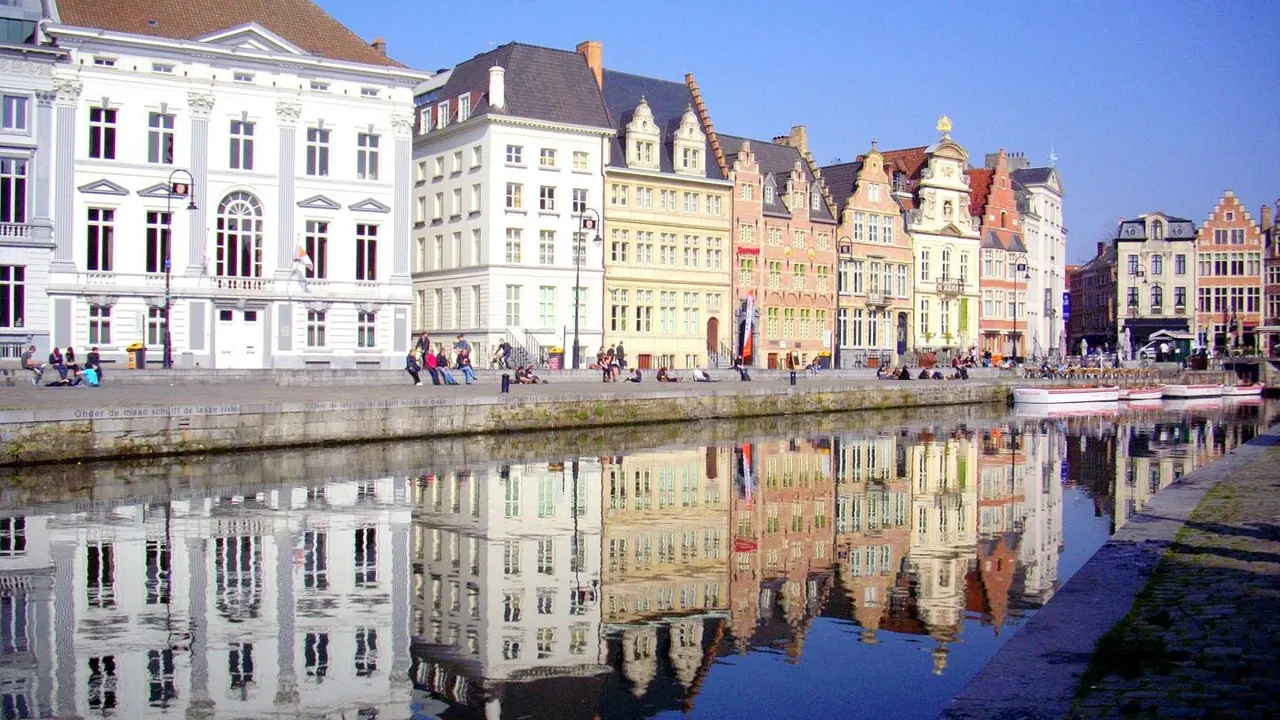
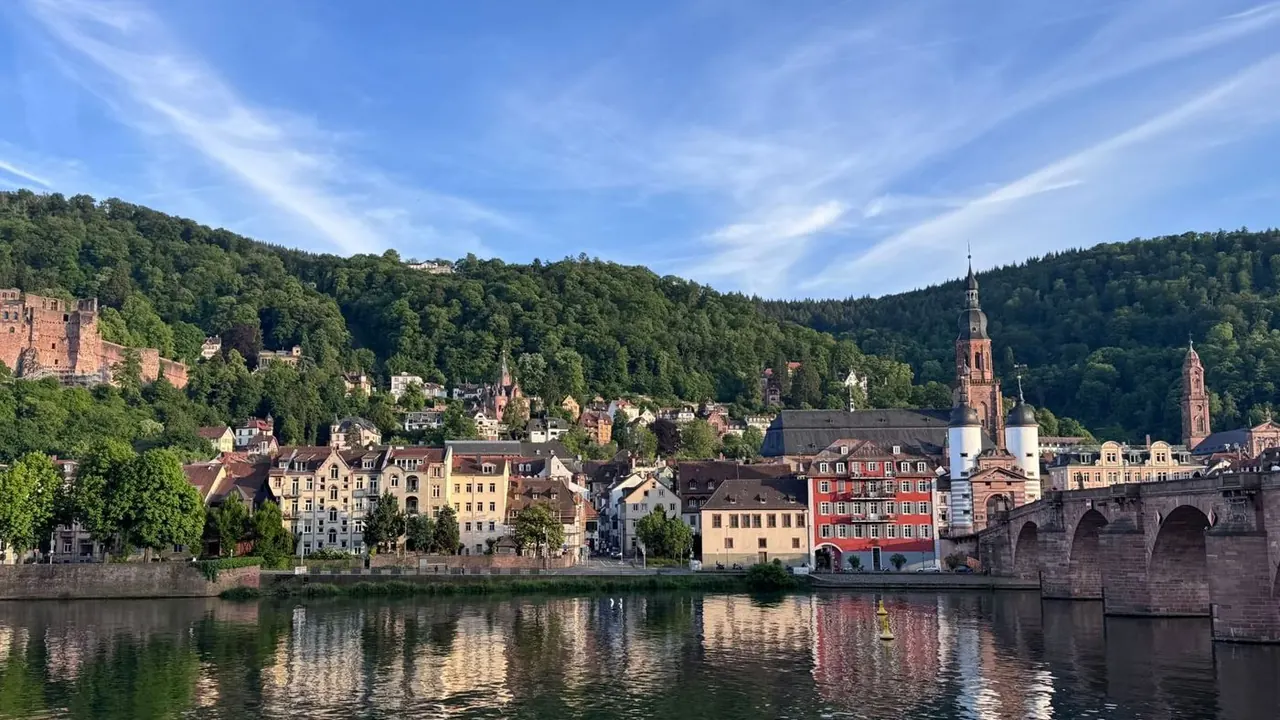
Photos: Ghent by ykeiko, CC BY-SA 3.0, cropped; Heidelberg by Kuanling Chen, Pexels License.
Ghent or Heidelberg?
Our verdict in twelve categories, each scored against the same fixed benchmark cities, and the climate month by month, so you can choose for your trip.
Choose Ghent for
- food and drink
- beaches
- nightlife
Ghent suits a traveller who wants a few days of art, beer and canal-side evenings, with the rest of Flanders close by. The van Eyck altarpiece, a medieval centre that is still lived in, brown cafés and a young, lively crowd after dark give it more to fill both the days and the nights. Bruges, Brussels and Antwerp are short train rides away, so it also works well as a base.
Choose Heidelberg for
- nature and the outdoors
- families
- wellness
Choose Heidelberg if the trip leans towards forest paths, river views and an easier pace with children. Woodland starts at the edge of the Altstadt, the funicular to the Königstuhl is an outing for all ages, and wine villages and thermal baths lie nearby. That gives it a gentler, greener rhythm than Ghent, though its food and nightlife are thinner.
Scoreboard
Twelve categories on one fixed scale from 0 to 100. The shaded stretch is the gap between the two.
Your match
Pick a travel style or drag the sliders, and both match scores follow your weighting.
Wins on food and drink and beaches with your weighting.
Wins on nature and the outdoors and families with your weighting.
What matters to you?
Category by category
What the scores mean for a trip.
Beaches & swimming
You would not plan swimming around either city, but Ghent at least has the sea within reach. Ostend and the coastal tram are about an hour away by train, with wide sand and dunes, though the North Sea water is cold. In town, the lake at the Blaarmeersen has a sandy shore and supervised swimming in summer.
Heidelberg is several hours from any coast, and the Neckar is not for swimming. On hot days people go to the outdoor pools or the gravel-pit lakes on the Rhine plain, which are fine for an afternoon and no more.
Food & drink
Ghent eats better on a short visit. Waterzooi, beef stewed in dark beer and grey shrimp croquettes are worth seeking out, the lanes of the Patershol hold a good spread of restaurants, and vegetarians are well served. The beer lists in the old cafés around the Vrijdagmarkt are a reason to go in themselves.
Heidelberg's cooking is heartier and plainer, with Maultaschen, Schäufele and white asparagus in spring. Its strength is wine rather than beer, from the Bergstrasse slopes and the Palatinate. The catch is that the streets below the castle cater to day-trippers, so you have to look for the better meals in Neuenheim or the village wine taverns.
Culture & sights
Ghent gives you more to see. At its heart is the Ghent Altarpiece by the van Eyck brothers in St Bavo's Cathedral, one of the founding works of European painting. Around it stand the moated Gravensteen, the guildhalls of the Graslei and Korenlei facing each other across the Leie, the UNESCO-listed beguinages and four substantial museums, from the Flemish masters at the Museum of Fine Arts to contemporary work at the SMAK.
Heidelberg is the more compact and picturesque set: the red sandstone castle ruin above a baroque Altstadt, the Old Bridge with its gate towers, and Germany's oldest university with its graffiti-covered Student Prison. It makes a memorable day or two, but its museums are mainly regional, and nothing there draws visitors the way the altarpiece does.
Nightlife
Both towns owe their evenings to students, but Ghent's nights are fuller and run later. The Overpoort stays loud into the night in term time, and the cafés of the Vrijdagmarkt and Oudburg suit a slower evening over beer. Every July the Gentse Feesten takes over the centre for ten days.
Heidelberg's nightlife is concentrated on the Untere Strasse and in the old student taverns, and the town goes quiet early on weeknights and out of term. For a proper club night, people take the train to Mannheim or Frankfurt.
Nature & outdoors
Heidelberg has the real outdoors of the two. Woodland starts at the edge of the old town, and the Philosophers' Walk gives the classic view of the castle. From the top of the Königstuhl, reached by funicular, forest trails run on for hours, and the Neckar cycle path and the sandstone crags of the Palatinate Forest are within reach.
Ghent's surroundings are flat farmland, so nature there means riverside rides along the Leie, birdwatching in the Bourgoyen-Ossemeersen wetland and paddling at the Blaarmeersen. It is pleasant, but there are no hills to climb.
Day trips
Both are excellent bases, and Ghent is the slightly richer one. Bruges, Brussels and Antwerp are each under an hour away by frequent train. Mechelen, Leuven, the Ypres battlefields, the coast and Lille extend the list, all without needing a car.
Heidelberg's outings are smaller in scale but varied: Speyer's Romanesque cathedral, the palace gardens at Schwetzingen, Worms, Lorsch and Maulbronn, and villages lined with castles up the Neckar. The Palatinate wine villages are easiest by car, and Frankfurt and Mainz are about an hour away by train.
Good for families
Heidelberg gives children more to look forward to. The funicular up to the castle and the Königstuhl is an outing in itself, with a small fairy-tale park at the top, and there is a zoo by the river. The Technik Museum Speyer, where children can climb into a space shuttle and a submarine, is about half an hour away.
Ghent is safe and largely car-free, and children like the armour and battlements of the Gravensteen and the canal boats. Beyond the House of Alijn and the Blaarmeersen, though, little is made for them. Cobbles make pushchairs hard work in both cities, and Heidelberg adds slopes.
Getting around
Both are easy on foot, and Ghent is a shade easier. Its flat, largely car-free centre puts the cathedral, the Gravensteen and the Patershol a few minutes' walk apart, and cycling is the local way of getting about. The main station, Gent-Sint-Pieters, is a twenty-minute walk out of the centre.
Heidelberg's sights line up along one long pedestrian street, with a funicular for the castle hill, which is steep on foot. A single fare system covers the trams and S-Bahn across the Rhine-Neckar area, which makes trips around the region simple.
Shopping & style
Ghent is the better place to browse. Beyond the chains on the Veldstraat, the Serpentstraat and the Onderbergen have independent fashion and design, the student quarter has vintage, and the flower market on the Kouter and the flea market at Sint-Jacobs fill the weekends. Chocolate, cuberdons and mustard make good gifts.
Heidelberg's shopping runs along one long street, the Hauptstrasse, from chains and department stores at one end to cuckoo clocks and beer steins at the other, with a few boutiques in the side lanes. Bergstrasse wine is the thing to take home, and for serious fashion people go to Mannheim or Frankfurt.
Affordability
Overall costs are much alike, firmly Western European in both, and the difference lies in where the money goes. In Ghent the bills mount at the table, over sit-down dinners and Belgian beer. Rooms are moderately priced outside the Gentse Feesten, and several churches, St Bavo's among them, are free to enter.
In Heidelberg it is the other way round. Student cafés and simple taverns keep eating fairly cheap, but hotel rooms are scarce and expensive at busy times, so many visitors sleep in Mannheim and come in by train.
Live music & performing arts
Ghent has the more serious stage life. Its opera house is home to half of the Flemish national company, and NTGent's productions are known well beyond Belgium, though most are in Dutch. De Bijloke, set in a medieval hospital, is a fine hall for early and classical music.
Heidelberg's municipal theatre and orchestra give a full season for a small town, and its highlights come with the seasons. In spring the Heidelberger Frühling brings chamber music, and in summer there are open-air performances in the castle courtyard. For bigger productions, Mannheim is twenty minutes away by train.
Wellness & relaxation
Neither town is a spa destination, but Heidelberg has the edge because thermal baths are close by. The spa towns of the Kraichgau, with warm saline pools and saunas, are about half an hour away and Baden-Baden about an hour. In town, the Neckar meadows and forest paths make it easy to unwind.
Ghent offers little beyond hotel spas and private saunas. Its calm is of a different kind: the enclosed gardens of the beguinages, slow walks along the Coupure canal and quiet Sundays after a busy day of sightseeing.
When should you go?
Pick your month. The climate figures are measured averages, not a forecast.
Ghent in July
Heidelberg in July
Daytime high, °C
Rainfall in the month, mm
Where the figures come from
Ghent has no rain gauge within 25 km of the centre, so its rainfall comes from a gridded climate dataset read at the city rather than from a gauge further away.
Ghent's sunshine is measured 45 km from the centre, at Vlissingen.
Temperature and rainfall are climate normals, averaged over the years shown. Ghent: 2009-2025 (sunshine 1991-2020, rainfall 1991-2020) normals, Melle / Kalverhaag (10.1 km from centre). Heidelberg: 1991-2020 normals, Heidelberg (4.5 km from centre).
Neither city is a beach destination, so the best months are the ones that are good for walking. Ghent stays mild all year, with highs of around 23°C in July and August. The North Sea reaches only about 19°C in August, which is cool for anyone but hardy swimmers. Spring is its drier, brighter stretch, with April the least rainy month at 45mm. From midsummer through to December the rain is steady, and winters are grey and damp but rarely bitter.
Heidelberg has the warmer summer of the two, at around 26°C in July and August. That suits evenings on the Neckar meadows but can make the climb to the castle sticky at midday. July is also its wettest month, at about 80mm, much of it in showers. May, June and September are the best time for walking the hills. Winter is a touch colder than in Ghent and has noticeably less sun.
Which traveller are you?
On a food and nightlife trip, Ghent is the stronger pick. It has waterzooi and mussels in the Patershol, long lists of Trappist and lambic beers in the brown cafés, and late student bars on the Overpoort. That is far more range than Heidelberg's Untere Strasse offers.
For an outdoors trip, Heidelberg wins clearly. Forest trails begin just above the Altstadt, the Königstuhl and the Heiligenberg reward hours of walking, and the Neckar cycle path and the Palatinate Forest are close. Flat, farmed Flanders offers mainly gentle cycling.
On a family trip with children, Heidelberg is easier to fill. The funicular, the fairy-tale park on the Königstuhl, a riverside zoo and the Technik Museum Speyer are all close by. Ghent has the Gravensteen and boat trips, but for a zoo families have to go to Antwerp.
Before you go
| Measure | Ghent | Heidelberg |
|---|---|---|
| Official language | French, German, Dutch | German |
| Currency | Euro (EUR) | Euro (EUR) |
| Sockets | CE230 V, 50 Hz | CF230 V, 50 Hz |
| Driving side | Right | Right |
| Time zone | UTC+1, UTC+2 in summer | UTC+1, UTC+2 in summer |
| Emergency number | 112 | 112 |
| Elevation | 12 m | 114 m |
| Main airport | Brussels Airport (BRU)56 km from centre191 non-stop destinations | Frankfurt Main Airport (FRA)69 km from centre281 non-stop destinations |
| Public holidays this year | 14 days | 12 days |
By the numbers
| Measure | Ghent | Heidelberg |
|---|---|---|
| City population | 272,657 | 156,092 |
| People per km² | 1,728 | 1,433 |
| Museums within 10 km | 30 | 17 |
| UNESCO World Heritage sites within 50 km | 5 | 4 |
| Swim season, months above 21 °C | None | - |
Where else could you go?
Every comparison below shares a destination with this one, so you can follow Ghent or Heidelberg somewhere new.