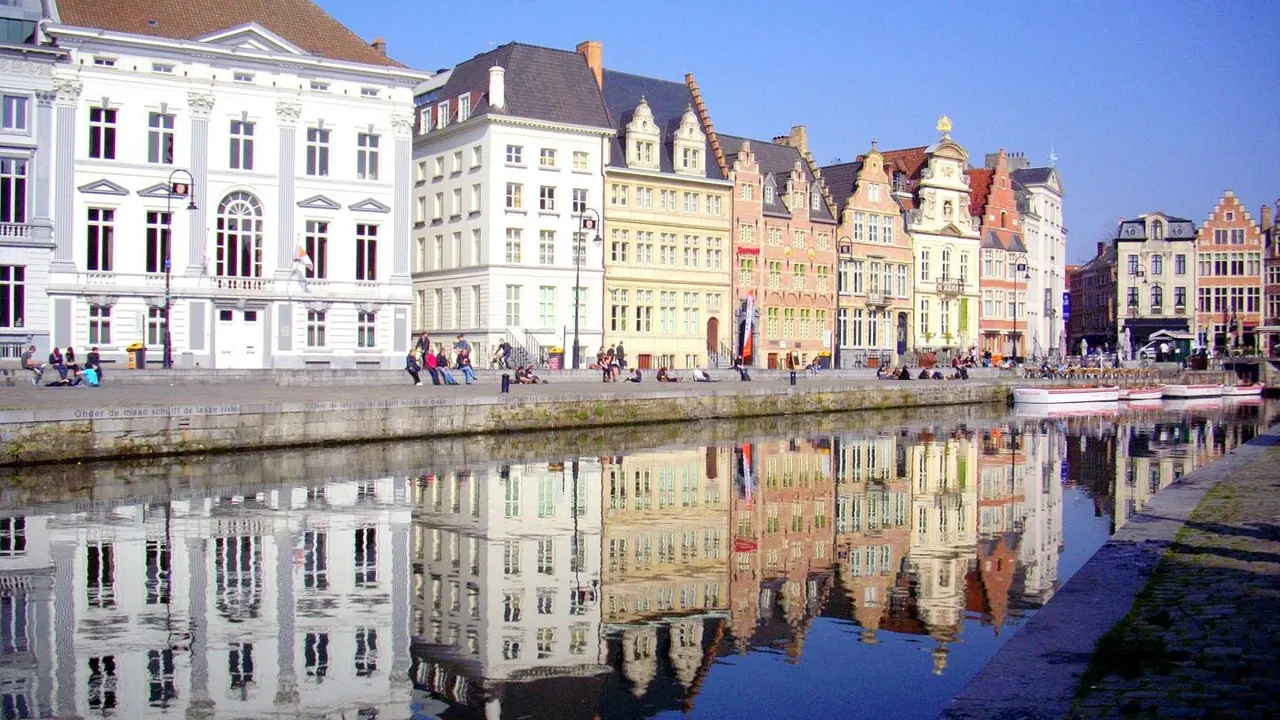
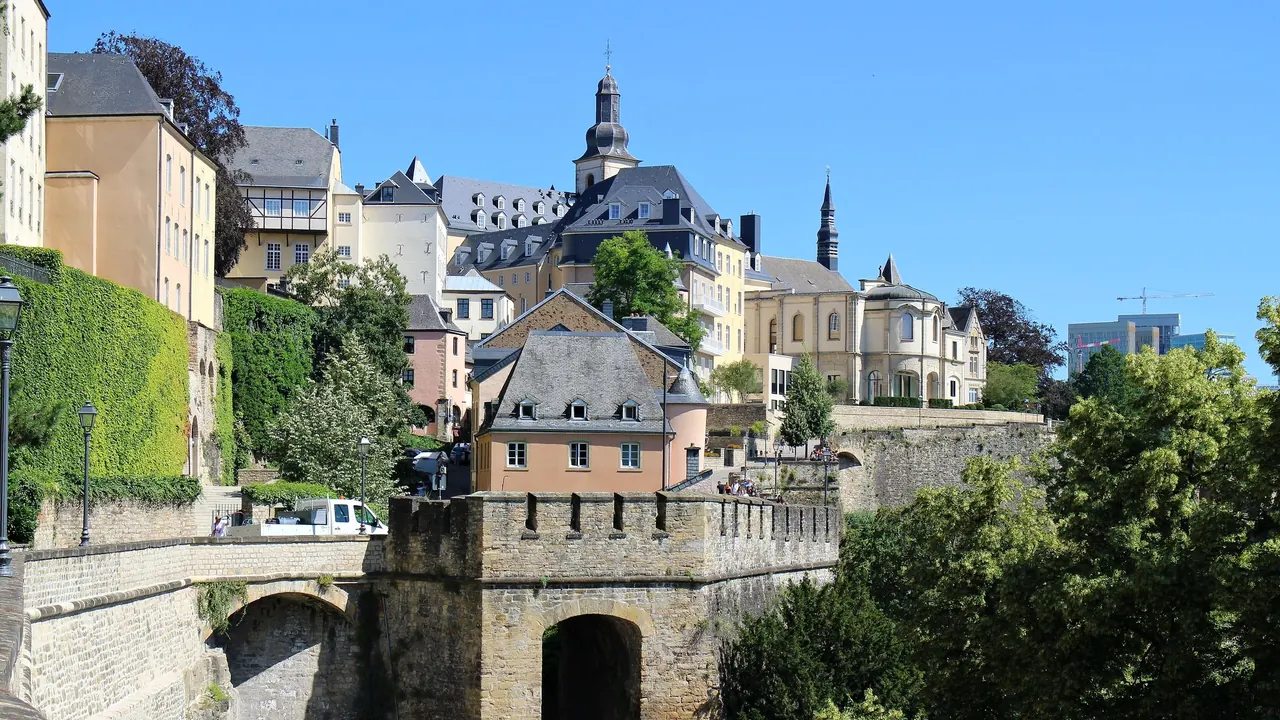
Photos: Ghent by ykeiko, CC BY-SA 3.0, cropped; Luxembourg by Suicasmo, CC BY-SA 4.0, cropped.
Ghent or Luxembourg?
Our verdict in twelve categories, each scored against the same fixed benchmark cities, and the climate month by month, so you can choose for your trip.
Choose Ghent for
- prices
- nightlife
- culture and sights
Ghent suits the traveller who wants more to see by day and more to do at night. The van Eyck altarpiece, the guildhall quays and a university town's beer cafés give it the richer city life. Fast trains put Bruges, Brussels and Antwerp within easy reach, and it is the less costly of the two, though neither is cheap.
Choose Luxembourg for
- nature and the outdoors
- wellness
- getting around
For a quieter, greener stay, Luxembourg is the better pick. Its fortress sits above wooded gorges, the Müllerthal trails are half an hour away and the spa at Mondorf-les-Bains is close by, so it favours walkers and anyone wanting to slow down. Free public transport makes the whole country easy to explore. Expect high bills and early nights.
Scoreboard
Twelve categories on one fixed scale from 0 to 100. The shaded stretch is the gap between the two.
Your match
Pick a travel style or drag the sliders, and both match scores follow your weighting.
Wins on prices and nightlife with your weighting.
Wins on nature and the outdoors and wellness with your weighting.
What matters to you?
Category by category
What the scores mean for a trip.
Beaches & swimming
Neither is a beach destination, but Ghent at least has a sea within reach. Ostend is about an hour away by train, and the coastal tram links a string of wide, sandy resorts, even if the North Sea stays cool and often windy. In town, the Blaarmeersen lake has a sandy shore for hot days.
Luxembourg has no coast at all. Swimming there means lakes: the Upper Sûre reservoir an hour to the north and the Remerschen ponds in the Moselle valley. Both are warmer than the North Sea in high summer, but they make an afternoon out, not a beach trip.
Food & drink
Ghent eats better day to day. With waterzooi, beef stewed in dark beer, frites in paper cones and a long vegetarian habit, it is easy to eat well without planning. The beer cafés around the Vrijdagmarkt are a reason to linger in themselves.
Luxembourg is strongest at the two ends. It has a serious fine-dining tier aimed at well-paid professionals, and Moselle Riesling and crémant are poured by the glass everywhere. In between, casual eating is thin and the local dishes are few, so wine lovers will be happier here than beer lovers or grazers.
Culture & sights
Ghent carries more cultural weight. The van Eyck brothers' Ghent Altarpiece in St Bavo's is one of the founding works of European painting. Around it, the Graslei quays, the Gravensteen and the line of towers seen from St Michael's Bridge form a medieval centre that is still lived in, backed by the Museum of Fine Arts, SMAK and STAM.
In Luxembourg the setting is the attraction more than the collections: the UNESCO-listed fortress, the Bock casemates and the view down from the Chemin de la Corniche to the Grund. MUDAM and the national museum are worth a visit, but nothing there draws visitors the way the altarpiece does.
Nightlife
Ghent is the clear winner after dark, thanks to its university. The Overpoort's student bars run late in term time, and the old cafés of the Oudburg suit a long night over strong beer. In July the Gentse Feesten takes over the centre for ten days.
Going out in Luxembourg is limited to a few pockets: the Rives de Clausen, the riverside pubs of the Grund and Hollerich. It peaks on Thursday and Friday, before many residents leave for the weekend.
Nature & outdoors
Here Luxembourg pulls ahead. Wooded gorges cut through the city centre itself, and the mossy rock passages of the Müllerthal are about half an hour away. Further out, the Ardennes offer hill walking and the Moselle offers cycling past vineyards, best of all in autumn.
The land around Ghent is flat and farmed. It is pleasant for riverside rides along the Leie to Sint-Martens-Latem and for birdwatching in the Bourgoyen-Ossemeersen wetland, but there is nothing to climb and no scenery to rival Little Switzerland.
Day trips
Both make good bases, but Ghent has more within a short ride. Bruges is under half an hour away, Brussels about the same and Antwerp under an hour. Mechelen, Leuven, Ypres and Lille are all close enough for a day, so a week of outings is easy to fill.
Luxembourg's advantage is variety across borders. Roman Trier and Gothic Metz are each under an hour by train, and Vianden's castle, Echternach and the Moselle wine villages fill the days nearer home. The choice covers three countries, but there are fewer great cities within reach, and they are further apart.
Good for families
Both are safe, calm and easy with children, and neither will fill a long school vacation. What differs is the kind of outing. Ghent's car-free centre, the Gravensteen and canal boat trips suit small children, though cobbles make pushchairs hard work.
In Luxembourg, lifts and a funicular make buggies easier to handle, and the casemate tunnels feel like an adventure. The Parc Merveilleux at Bettembourg is a rare place built for families, and older children can scramble through the Müllerthal.
Getting around
Both are easy to get around, in different ways. Ghent is flat and compact, made for walking and above all for cycling, with trams from Gent-Sint-Pieters and frequent trains to the rest of Flanders.
Luxembourg is built on several levels, so public lifts and a funicular do the climbing. Trams, buses and trains are free across the whole country, which makes it especially simple to reach Vianden or the Moselle without a car.
Shopping & style
Ghent is the more enjoyable place to browse. There is independent fashion and design on the Serpentstraat, vintage around the Sint-Pietersnieuwstraat and weekend flea and flower markets, with cuberdons, mustard and beer to take home.
Luxembourg leans the other way. Luxury and premium brands line the Grand-Rue, malls sit on the city's edges, and Villeroy & Boch porcelain and Moselle crémant are the standout buys. It serves designer shoppers better, but Ghent has more character and more chances of a find.
Affordability
Neither is cheap, but Ghent is the gentler on the wallet. Sit-down meals with beer add up, but frites stands and set lunches help. Hotel rooms are moderately priced except during the Gentse Feesten, and several churches, St Bavo's among them, are free to enter.
Luxembourg costs noticeably more. Its hotels are aimed at business travellers, and eating out costs well above the Western European norm. Free public transport, free museums and reasonably priced wine by the glass help, and some visitors stay in Trier or Metz and come in by train for the day.
Live music & performing arts
Ghent has the stronger home-grown scene. NTGent's theatre is known well beyond Belgium, the opera house is home to half of the Flemish national company, and early music at De Bijloke, a medieval hospital, is a real draw. Much of the theatre is in Dutch, though.
Luxembourg's Philharmonie is a fine hall with its own orchestra and regular visits from touring soloists. The Grand Théâtre programmes work in French, German and English, which helps visitors, but most of what plays there has been brought in from elsewhere.
Wellness & relaxation
Luxembourg has the edge, thanks to Mondorf-les-Bains, a thermal spa about half an hour away. A warm mineral spring feeds its pools and saunas, set in a landscaped park. Quiet evenings and walks in the Pétrusse valley add to the calm.
Ghent has no bathing culture beyond a few saunas and hotel spas. Its restfulness comes instead from the beguinage gardens, walks along the Leie and the Coupure, and long afternoons on café terraces once the day-trippers have left.
When should you go?
Pick your month. The climate figures are measured averages, not a forecast.
Ghent in July
Luxembourg in July
Daytime high, °C
Rainfall in the month, mm
Where the figures come from
Ghent has no rain gauge within 25 km of the centre, so its rainfall comes from a gridded climate dataset read at the city rather than from a gauge further away.
Ghent's sunshine is measured 45 km from the centre, at Vlissingen.
Temperature and rainfall are climate normals, averaged over the years shown. Ghent: 2009-2025 (sunshine 1991-2020, rainfall 1991-2020) normals, Melle / Kalverhaag (10.1 km from centre). Luxembourg: 1991-2020 normals, Luxembourg / Luxembourg (6.3 km from centre).
Both cities have a mild northern European climate, and May to September is the time to go. Summer highs peak at about 23°C in Ghent and 24°C in Luxembourg. That is warm enough for walking all day without ever being too hot, and Luxembourg's summers are noticeably sunnier. Beach weather is marginal: the North Sea within reach of Ghent only climbs to around 19°C in August, so a swim is brisk at best.
The two part ways in the cold half of the year. Ghent's rain builds through autumn to a wet, grey peak of about 87mm in December. Luxembourg spreads its rain more evenly but has colder, darker winters, with January highs near 4°C and very little sun from November to January. That makes Ghent the easier winter city break, while Luxembourg is at its best in late spring and early autumn, when walking in the valleys is most comfortable.
Which traveller are you?
On an outdoors trip, Luxembourg is the clear choice. Wooded gorges run through the city itself, the sandstone passages and beech forest of the Müllerthal are half an hour away, and free trains reach the Ardennes. Ghent offers flat cycling country and little more.
For a food and nightlife trip, Ghent wins comfortably. Its brown cafés pour long lists of Trappist and lambic beers, the Patershol holds good restaurants and the student Overpoort runs late. A typical Luxembourg evening is a glass of crémant and an early night.
On a tight budget, Ghent is the more forgiving of the two, though it is not cheap. Frites stands, bakeries and set lunches keep the days sensible. Luxembourg is expensive to sleep and eat in, and the main help is free transport and museums.
Before you go
| Measure | Ghent | Luxembourg |
|---|---|---|
| Official language | French, German, Dutch | French, German, Luxembourgish |
| Currency | Euro (EUR) | Euro (EUR) |
| Sockets | CE230 V, 50 Hz | CF230 V, 50 Hz |
| Driving side | Right | Right |
| Time zone | UTC+1, UTC+2 in summer | UTC+1, UTC+2 in summer |
| Emergency number | 112 | 112 |
| Elevation | 12 m | 300 m |
| Main airport | Brussels Airport (BRU)56 km from centre191 non-stop destinations | Luxembourg-Findel International Airport (LUX)6 km from centre115 non-stop destinations |
| Public holidays this year | 14 days | 12 days |
By the numbers
| Measure | Ghent | Luxembourg |
|---|---|---|
| City population | 272,657 | 137,678 |
| People per km² | 1,728 | 2,663 |
| Museums within 10 km | 30 | 19 |
| UNESCO World Heritage sites within 50 km | 5 | 4 |
| Swim season, months above 21 °C | None | - |
Where else could you go?
Every comparison below shares a destination with this one, so you can follow Ghent or Luxembourg somewhere new.