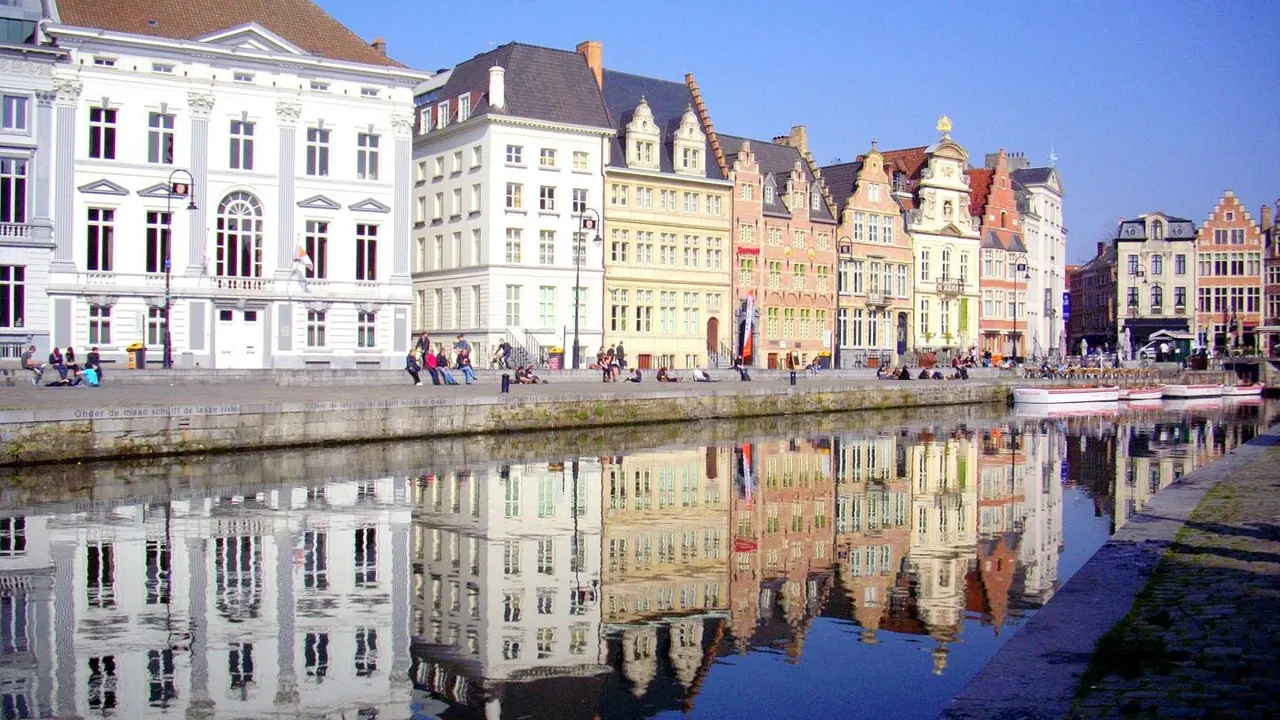
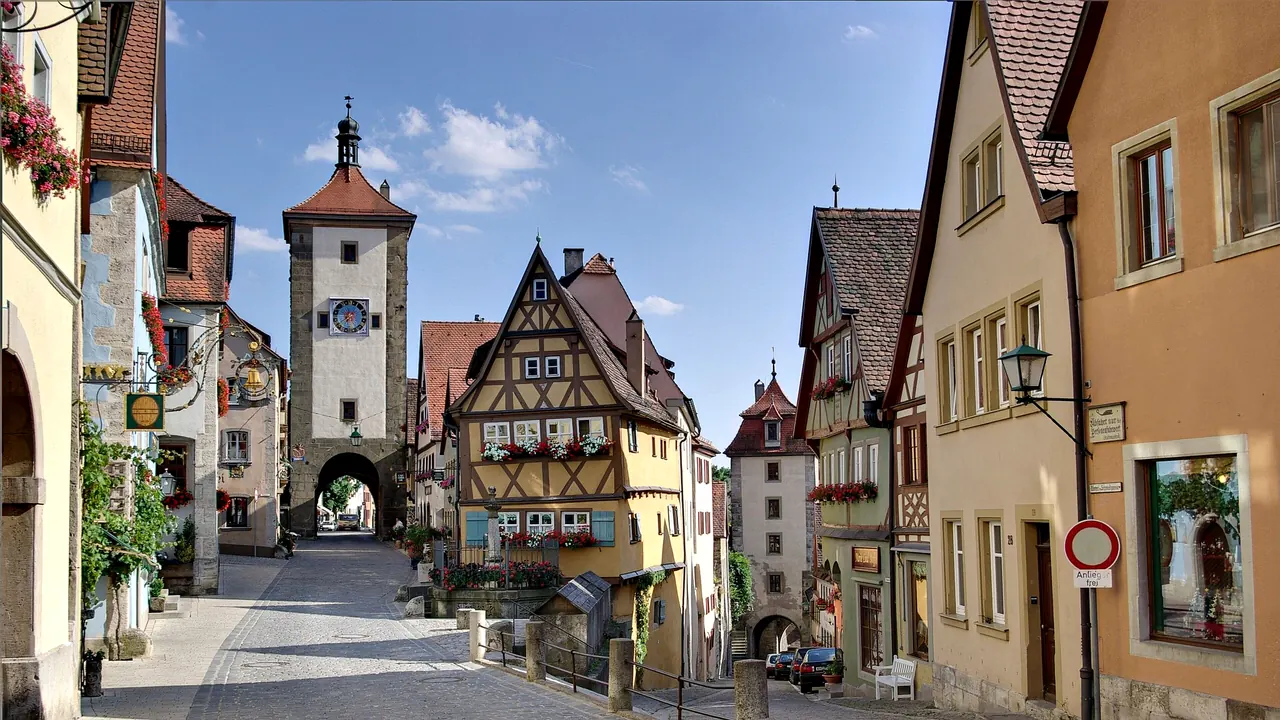
Photos: Ghent by ykeiko, CC BY-SA 3.0, cropped; Rothenburg ob der Tauber by Berthold Werner, Public domain.
Ghent or Rothenburg ob der Tauber?
Our verdict in twelve categories, each scored against the same fixed benchmark cities, and the climate month by month, so you can choose for your trip.
Choose Ghent for
- nightlife
- live music and the arts
- food and drink
Ghent is the better choice for a fuller city trip. It pairs a working medieval centre and the van Eyck altarpiece with a student-driven night scene, serious theatre and music, good beer and Flemish cooking, and fast trains to Bruges, Brussels and Antwerp. It can carry a long stay on its own or serve as an easy base for all of Flanders.
Choose Rothenburg ob der Tauber for
- prices
- wellness
- nature and the outdoors
Rothenburg suits a slower, quieter trip built around one remarkable walled town. Its evenings end early and the food is narrow, but you get the ramparts and the empty lanes once the coach groups leave. It also costs a little less, and with a car it opens up the Romantic Road and the spa towns of Franconia.
Scoreboard
Twelve categories on one fixed scale from 0 to 100. The shaded stretch is the gap between the two.
Your match
Pick a travel style or drag the sliders, and both match scores follow your weighting.
Wins on nightlife and live music and the arts with your weighting.
Wins on prices and wellness with your weighting.
What matters to you?
Category by category
What the scores mean for a trip.
Beaches & swimming
Neither is a place for swimming, but Ghent at least has options. Trains reach Ostend in about an hour, and the coast tram links sandy resorts backed by dunes, though the North Sea stays cool. In town, the Blaarmeersen lake has a sandy shore with supervised swimming in summer.
Rothenburg sits on its hilltop deep in Franconia, far from any coast. Swimming in summer means the town's outdoor pool or a drive to the grassy bathing areas of lakes such as the Altmühlsee.
Food & drink
Ghent eats and drinks much better. Waterzooi, beef stewed in dark beer and grey shrimp croquettes are proper Flemish cooking, vegetarians are well looked after, and the beer list in an old café can run to Trappists, lambics and abbey ales.
Rothenburg's cooking is hearty but narrow: Schäufele, dumplings and bratwurst, with Silvaner from the dumpy Bocksbeutel as the highlight. Many places on the Marktplatz cook for coach parties, so for a better meal look for a family guesthouse or a Tauber valley wine tavern.
Culture & sights
Both are medieval, but in different ways. Ghent is a working city, where the Graslei guildhalls, the Gravensteen and the three towers lined up from St Michael's Bridge sit among everyday life. It also has the deeper art: the van Eyck altarpiece, the Museum of Fine Arts, the SMAK and the STAM.
Rothenburg is the more complete survival, with its wall walk, the Plönlein and almost nothing modern inside the gates. Riemenschneider's Holy Blood Altar is a true masterpiece, but beyond it and the Medieval Crime Museum you run out of sights sooner.
Nightlife
The gap here is wide. Ghent's university keeps the Overpoort loud and late in term time, the cafés around the Vrijdagmarkt and Oudburg suit a long evening over strong beer, and the Gentse Feesten turns July into ten days of street party.
In Rothenburg the main evening outing is the night watchman's tour, and after that the wine taverns wind down and the lanes go silent. For a real night out you have to go to Würzburg or Nuremberg.
Nature & outdoors
Ghent's surroundings are flat meadow and polder, best seen by bike. You can ride along the Leie to Sint-Martens-Latem, go out to the Bourgoyen-Ossemeersen wetlands to watch birds, or take a kayak or rowing boat out at the Blaarmeersen. The nearest hills are the gentle, cobbled slopes of the Flemish Ardennes around Oudenaarde, and the coastal dunes and the Zwin bird reserve are within an hour.
Rothenburg's countryside starts right at the town walls. Paths drop from the walls into the Tauber valley, and the Tauber valley cycle path follows the river through vineyards and villages. The orchards are at their best in spring blossom and autumn colour. Both places are gentle rather than dramatic, and neither has mountains, large lakes or wild country within easy reach.
Day trips
Ghent is the stronger base, mostly because of the trains. Bruges, Brussels and Antwerp are each under an hour away, Mechelen, Leuven, Ypres and Lille are easy to reach too, and you never need a car.
Rothenburg's neighbours are lovely, among them Dinkelsbühl, Nördlingen inside its crater and Würzburg with its Residenz. But rail journeys mean a change off a quiet branch line, so a car makes all the difference.
Good for families
Ghent edges ahead for children because it has a little more to fill the days: the Gravensteen's battlements, canal boat trips, the old toys at the House of Alijn, and the Blaarmeersen's lake beach and playgrounds, all in a centre largely free of cars.
Rothenburg works like a storybook for a day or two, with ramparts to walk, a tower to climb and the night watchman with his lantern. After that, families need to plan excursions. In both towns the cobbles are hard on pushchairs.
Getting around
Ghent is easier on every count. Its flat centre is walkable and mostly car-free, trams fill the gaps, cycling is the local habit and frequent trains make a car pointless.
Inside the walls, Rothenburg is simple on foot, though the climb back up from the valley is steep. It falls behind once you leave town: the branch line needs a change at Steinach and the buses are sparse, so a car is the practical choice.
Shopping & style
Ghent has everyday shopping with some character. Chains line the Veldstraat, the Serpentstraat and Onderbergen have independent design, there is vintage around the Sint-Pietersnieuwstraat, and there are weekend flea and flower markets. Chocolate, cuberdons and the city's mustard are the best buys.
Rothenburg does one thing well, which is Christmas: shops of baubles, nutcrackers and carvings open all year, and a much-loved Christmas market. Beyond that, the Herrngasse and Schmiedgasse mostly sell souvenirs.
Affordability
Neither is cheap, but Rothenburg is a little easier on the wallet. Beer and wine in the inns are fairly priced, entry fees are modest, and staying outside the walls or in a nearby village saves a good deal.
Ghent has Belgian prices, so sit-down dinners with a few beers add up, though frites stands, bakeries and set lunches help and several churches are free. Rooms in Ghent get scarce and dearer during the Gentse Feesten, while Rothenburg's peaks come in December and on summer weekends.
Live music & performing arts
Ghent has a real stage life for its size. There is opera and ballet in the nineteenth-century opera house, bold theatre at NTGent, early music at De Bijloke in a medieval hospital, and free stages all over the centre during the Gentse Feesten.
In Rothenburg, performance mostly means local history, above all the costumed Meistertrunk play, along with summer open-air theatre and organ concerts in St Jakob's. On most evenings there is no show to go to.
Wellness & relaxation
Calm in Ghent is a city kind of calm. You find it in the walled gardens of the beguinages, on a slow walk along the Coupure canal, over a long afternoon on a café terrace, and on Sundays, when the centre goes quiet. If you want treatments, there are only a few private saunas and hotel spas.
Rothenburg has the edge for anyone who wants proper bathing. At Bad Windsheim's Franken-Therme the salt water lets you float without effort. In town, some of the larger hotels have small spas, and the Burggarten above the valley is a quiet place to sit once the day visitors have left.
When should you go?
Pick your month. The climate figures are measured averages, not a forecast.
Ghent in July
Rothenburg ob der Tauber in July
Daytime high, °C
Rainfall in the month, mm
Where the figures come from
Ghent has no rain gauge within 25 km of the centre, so its rainfall comes from a gridded climate dataset read at the city rather than from a gauge further away.
Ghent's sunshine is measured 45 km from the centre, at Vlissingen.
Rothenburg ob der Tauber's sunshine is measured 27 km from the centre, at Feuchtwangen-heilbronn.
Temperature and rainfall are climate normals, averaged over the years shown. Ghent: 2009-2025 (sunshine 1991-2020, rainfall 1991-2020) normals, Melle / Kalverhaag (10.1 km from centre). Rothenburg ob der Tauber: 1991-2020 normals, Rothenburg ob der Tauber (0.9 km from centre).
Both are at their best from May to September, when the days are long and warm enough to walk the streets from morning to evening. Ghent stays mild, peaking around 23°C in July and August, so it rarely gets too hot for sightseeing. It is the wetter of the two, especially from October to December, with about 87mm in December. Even so, it gets more winter sunshine than Rothenburg. The North Sea within reach of Ghent only warms to about 19°C in August, so a beach day is more for paddling than for long swims.
Rothenburg's inland climate swings further. July and August are a little warmer and sunnier, at about 25°C, and the town stays fairly dry all year. Its winters are colder and duller than Ghent's, near 3°C in January with fewer hours of sun, so a December visit for the Christmas market means wrapping up well.
Which traveller are you?
For a food and nightlife trip, Ghent is far ahead. Its old brown cafés pour long lists of Trappist and lambic beers, the Patershol has the better restaurants and the Overpoort runs late in term time. Rothenburg's inns are quiet by eleven.
On a short city break, Ghent gives you more in two or three days. You get a walkable centre kept mostly free of cars, the Ghent Altarpiece, a real theatre and concert life, and quick trains from Brussels. Rothenburg is quick to see but awkward to reach without a car.
For a relaxing and wellness trip, Rothenburg is the calmer choice. Early mornings and evenings on the walls are deeply quiet, the Tauber valley paths start at the gates, and the thermal baths at Bad Windsheim and Bad Mergentheim are within an hour's drive.
Before you go
| Measure | Ghent | Rothenburg ob der Tauber |
|---|---|---|
| Official language | French, German, Dutch | German |
| Currency | Euro (EUR) | Euro (EUR) |
| Sockets | CE230 V, 50 Hz | CF230 V, 50 Hz |
| Driving side | Right | Right |
| Time zone | UTC+1, UTC+2 in summer | UTC+1, UTC+2 in summer |
| Emergency number | 112 | 112 |
| Elevation | 12 m | 430 m |
| Main airport | Brussels Airport (BRU)56 km from centre191 non-stop destinations | Nuremberg Airport (NUE)66 km from centre56 non-stop destinations |
| Public holidays this year | 14 days | 12 days |
By the numbers
| Measure | Ghent | Rothenburg ob der Tauber |
|---|---|---|
| City population | 272,657 | 11,331 |
| People per km² | 1,728 | 272 |
| Museums within 10 km | 30 | 6 |
| UNESCO World Heritage sites within 50 km | 5 | 2 |
| Swim season, months above 21 °C | None | - |
Where else could you go?
Every comparison below shares a destination with this one, so you can follow Ghent or Rothenburg ob der Tauber somewhere new.
- Brugesvs Ghent
- Brusselsvs Ghent
- Antwerpvs Ghent
- Nurembergvs Rothenburg ob der Tauber
- Lillevs Ghent
- Bambergvs Rothenburg ob der Tauber