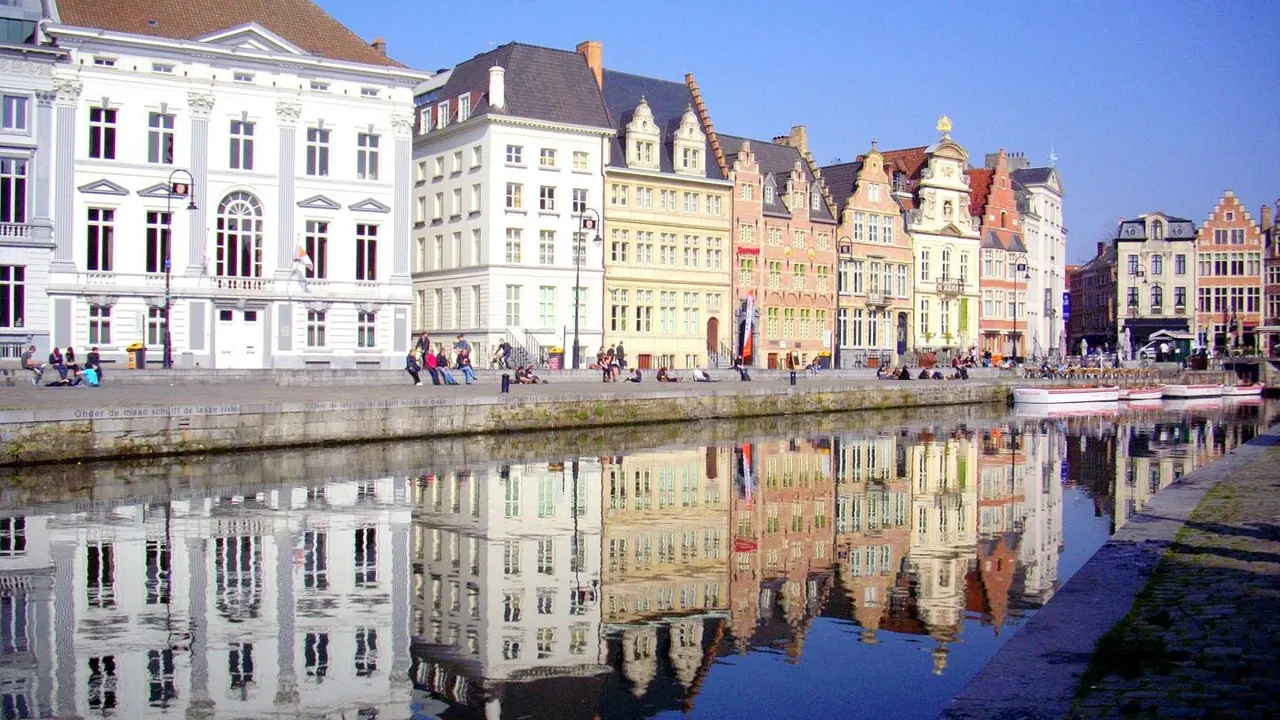
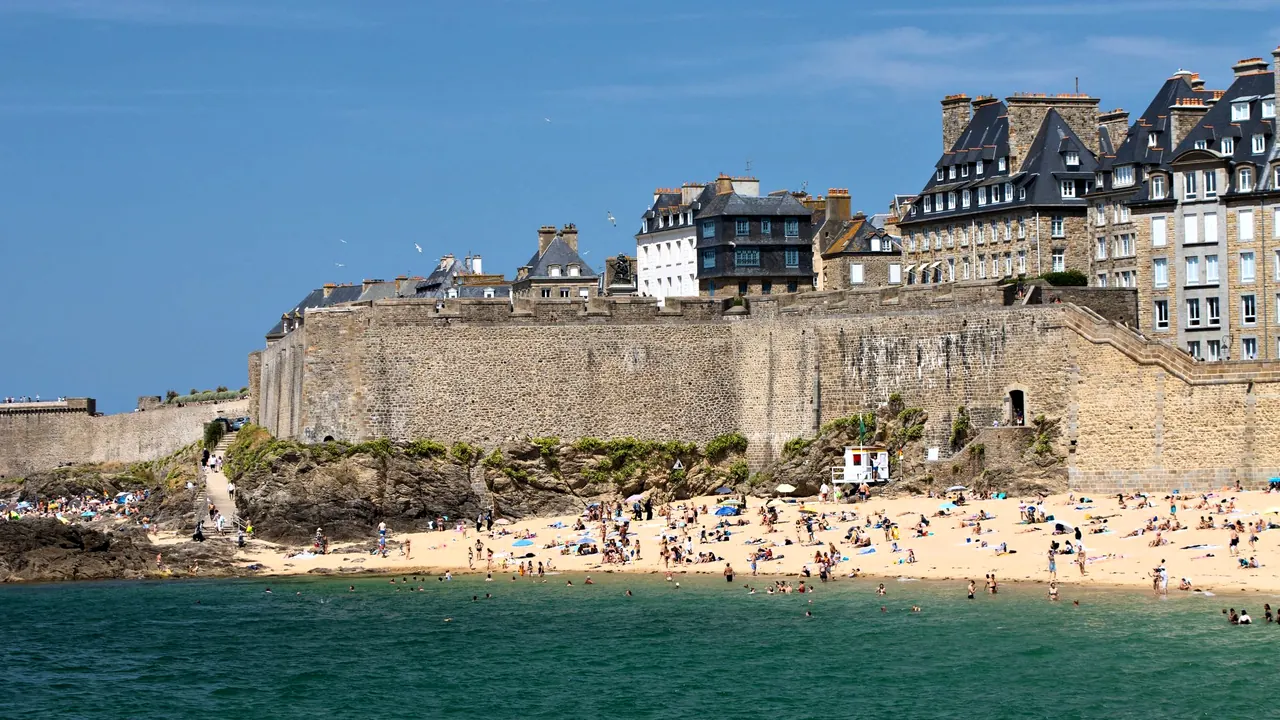
Photos: Ghent by ykeiko, CC BY-SA 3.0, cropped; Saint-Malo by Efrem Efre, Pexels License.
Ghent or Saint-Malo?
Our verdict in twelve categories, each scored against the same fixed benchmark cities, and the climate month by month, so you can choose for your trip.
Choose Ghent for
- live music and the arts
- culture and sights
- nightlife
Choose Ghent if the trip is about art, old streets and evenings out. The van Eyck altarpiece, a medieval centre that people still live and work in, beer cafés and a student crowd give it far more to fill the days and nights. Fast trains to Bruges, Brussels and Antwerp mean you can see much of Flanders without ever needing a car.
Choose Saint-Malo for
- nature and the outdoors
- beaches
- wellness
Saint-Malo is the better pick for a trip by the sea. Its beaches start at the foot of the ramparts, the tides empty the bay twice a day, and the coastal path runs off in both directions. Families with older children and anyone after a quiet seawater spa weekend will find it more rewarding, as long as they don't expect much after dark and are happy to drive for the excursions.
Scoreboard
Twelve categories on one fixed scale from 0 to 100. The shaded stretch is the gap between the two.
Your match
Pick a travel style or drag the sliders, and both match scores follow your weighting.
Wins on live music and the arts and culture and sights with your weighting.
Wins on nature and the outdoors and beaches with your weighting.
What matters to you?
Category by category
What the scores mean for a trip.
Beaches & swimming
Ghent has no coast of its own. Swimming in town means the lake shore at the Blaarmeersen, and the North Sea resorts are a train ride of about an hour away at Ostend.
Saint-Malo is the beach town of the two. The Grand Plage du Sillon runs for about 3km from the walls, and the tidal pool at Bon-Secours means you can still swim at low water. The Channel is just as cold as the North Sea, though, so expect to spend more time on the sand than in the water.
Food & drink
Ghent eats and drinks better. You get waterzooi and beef stewed in beer in the Patershol lanes, long lists of Trappist and lambic beers in the old brown cafés, and a meat-free habit that makes it unusually easy for vegetarians.
Saint-Malo has fine raw materials, such as galettes with dry cider and oysters eaten by the harbour wall at Cancale. Inside the walls, though, the cooking is uneven, because many places cater to day visitors. Good meals take some looking for in Saint-Servan or along the coast, and there is little beyond Breton and seafood menus.
Culture & sights
Ghent is in another league here. The van Eyck altarpiece in St Bavo's is one of the founding works of European painting. Around it are the moated Gravensteen, the guildhalls of the Graslei and Korenlei, and museums ranging from Flemish masters at the Museum of Fine Arts to contemporary art at the SMAK.
Saint-Malo's appeal is the place itself. You walk the full circuit of the ramparts above the granite town, which was rebuilt after 1944, and cross to the Grand Bé at low tide to see Chateaubriand's grave. Its history of corsairs and shipowners shows in statues and street names rather than in collections, and a day covers it.
Nightlife
Ghent has the nightlife. Its students keep the Overpoort loud and late in term time, the cafés around the Vrijdagmarkt and Oudburg are made for long evenings over beer, and the July Gentse Feesten turns the centre into a street party for ten days.
Saint-Malo's evenings rarely go beyond a drink after dinner in the pubs and wine bars inside the walls. Summer weekends stay up a little later, but the town goes quiet early for most of the year, and the nearest clubs are in Rennes.
Nature & outdoors
Saint-Malo wins easily. The GR34 coastal path leads east to Pointe du Grouin and west to the cliffs of Cap Fréhel. Low tide uncovers huge flats where seabirds feed and seals haul out off the islands, and the Rance estuary is good for kayaking.
Ghent's countryside is flat, farmed and gentle. Cycling along the Leie to Sint-Martens-Latem, birdwatching at the Bourgoyen-Ossemeersen wetlands or rowing at the Blaarmeersen make pleasant half-days, but none of it is a reason to choose the city.
Day trips
Both make good bases for excursions, but Ghent's are closer together and easier to reach. Bruges, Brussels and Antwerp are all within an hour on frequent trains, and the Ypres battlefields and Lille are within range too, so you never need to plan around a car.
Saint-Malo's best outing is Mont-Saint-Michel. Medieval Dinan, Dinard across the estuary and the oyster port of Cancale are all near, and ferries cross to Jersey in summer. Apart from the boat to Dinard and the train to Rennes, most of these trips are much easier by car.
Good for families
Saint-Malo gives children more to do. There are wide beaches, the sea pool at Bon-Secours to jump into, island forts to walk out to at low tide and the Grand Aquarium for wet days. The one caveat is the tide, which comes in fast over the causeways.
Ghent is safe and largely car-free, and the Gravensteen and the House of Alijn go down well. Once those and a canal boat trip are done, little in the city is aimed at children, and the cobbles are hard on pushchairs.
Getting around
Ghent is easier on every count. The flat centre is mostly closed to cars, trams link the main station, and cycling is the normal way to get about. Frequent trains also take care of day trips.
In Saint-Malo, the walled town and the promenade to Paramé are easy on foot, and a passenger boat crosses to Dinard. Further afield, buses are thin, and most people end up driving to Mont-Saint-Michel or Cancale.
Shopping & style
Ghent has more variety. Independent fashion and design shops line the Serpentstraat and the Onderbergen, the student quarter has vintage shops, and there are weekend markets at Sint-Jacobs and on the Kouter. The best things to take home are chocolate, cuberdons and mustard.
Saint-Malo's shops lean almost entirely on Breton specialities, such as striped sailor tops, salted-butter caramels, cider and faience. They make good souvenirs, but for clothes or department stores you go to Rennes.
Affordability
The two cost much the same overall. What differs is when the money goes. In Ghent, prices hold steady most of the year apart from the July festival, and the expensive part is sit-down dinners with several Belgian beers.
Saint-Malo's prices follow the seasons. Rooms by the beach and inside the walls are expensive in July and August and much better value in spring and autumn. Galettes and set lunches keep eating cheap until you order a seafood platter.
Live music & performing arts
Ghent has a year-round season. The opera house is home to half of the Flemish national company, NTGent is known abroad for its theatre, though most of it is in Dutch, and De Bijloke stages early and classical music in a medieval hospital.
Saint-Malo's town theatre offers a modest programme of touring shows and the cathedral hosts the odd concert. The draw is a handful of festivals, such as La Route du Rock for indie music and Étonnants Voyageurs for books, so it is worth timing a visit to them.
Wellness & relaxation
Ghent offers rest but no real treatments. Saint-Malo builds whole weekends around the sea, while Ghent has only a handful of hotel spas and private saunas. What it does well is slow down: Sundays are quiet, evenings away from the student streets end early, and that makes a calm base after long days of sightseeing or train trips around Flanders.
Saint-Malo has the real thing, the French seawater cure. A large centre on the seafront of the Sillon pipes in sea water for heated pools, hydrotherapy and treatments, and Dinard, across the estuary, has the same tradition, so you can book treatments on either shore. Timing matters more than in Ghent. August brings crowds and noise to the walls and beaches, but from autumn to spring the town settles down and locals keep up their cold morning swims in the sea pools.
When should you go?
Pick your month. The climate figures are measured averages, not a forecast.
Ghent in July
Saint-Malo in July
Daytime high, °C
Rainfall in the month, mm
Where the figures come from
Ghent has no rain gauge within 25 km of the centre, so its rainfall comes from a gridded climate dataset read at the city rather than from a gauge further away.
Ghent's sunshine is measured 45 km from the centre, at Vlissingen.
Saint-Malo has no rain gauge within 25 km of the centre, so its rainfall comes from a gridded climate dataset read at the city rather than from a gauge further away.
Saint-Malo's sunshine is measured 68 km from the centre, at Rennes.
Temperature and rainfall are climate normals, averaged over the years shown. Ghent: 2009-2025 (sunshine 1991-2020, rainfall 1991-2020) normals, Melle / Kalverhaag (10.1 km from centre). Saint-Malo: 2002-2020 (sunshine 1991-2020, rainfall 1991-2020) normals, Dinard (7.9 km from centre).
Neither place ever gets too hot for walking. Both peak in July and August, with Ghent slightly warmer at around 23°C, but Ghent's wettest stretch of the warm half of the year falls in high summer, at around 77mm in July. Saint-Malo is at its driest just then, at about 46mm, which makes it the more reliable choice for a beach week. The Channel there reaches only about 18°C in August and September, so swims stay short. Ghent's late spring is its sunniest time and the best season for walking the city and cycling.
Rain sets in at both from October onwards, and Saint-Malo's wettest months are November and December, at about 97mm. The Breton coast stays milder in winter, while Ghent's January days are cold enough to send you indoors to the museums and cafés. That suits Ghent, because its main sights work in any weather. Saint-Malo depends much more on being outdoors.
Which traveller are you?
On a culture and arts trip, Ghent is the clear choice. It has the Ghent Altarpiece, the Museum of Fine Arts and the Gravensteen, plus an opera house, a well-known city theatre and De Bijloke for early music. Saint-Malo offers a walk round its walls and little else indoors.
For an outdoors trip, go to Saint-Malo. The GR34 coastal path runs to Pointe du Grouin and Cap Fréhel, the tides are among the largest in Europe, and you can kayak the Rance and kitesurf off the long beaches. Ghent's flat farmland offers pleasant cycling but nothing dramatic.
On a relaxing and wellness trip, Saint-Malo has a real tradition of seawater cures, with a thalassotherapy centre on the Sillon beach and walks across empty sand at low tide out of season. Ghent has quiet beguinage gardens and canal walks, but no spas worth travelling for.
Before you go
| Measure | Ghent | Saint-Malo |
|---|---|---|
| Official language | French, German, Dutch | French |
| Currency | Euro (EUR) | Euro (EUR) |
| Sockets | CE230 V, 50 Hz | CE230 V, 50 Hz |
| Driving side | Right | Right |
| Time zone | UTC+1, UTC+2 in summer | UTC+1, UTC+2 in summer |
| Emergency number | 112 | 112 |
| Elevation | 12 m | 0 m |
| Main airport | Brussels Airport (BRU)56 km from centre191 non-stop destinations | Rennes-Saint-Jacques Airport (RNS)68 km from centre15 non-stop destinations |
| Public holidays this year | 14 days | 11 days |
By the numbers
| Measure | Ghent | Saint-Malo |
|---|---|---|
| City population | 272,657 | 47,439 |
| People per km² | 1,728 | 1,296 |
| Museums within 10 km | 30 | 3 |
| UNESCO World Heritage sites within 50 km | 5 | 2 |
| Swim season, months above 21 °C | None | None |
Where else could you go?
Every comparison below shares a destination with this one, so you can follow Ghent or Saint-Malo somewhere new.