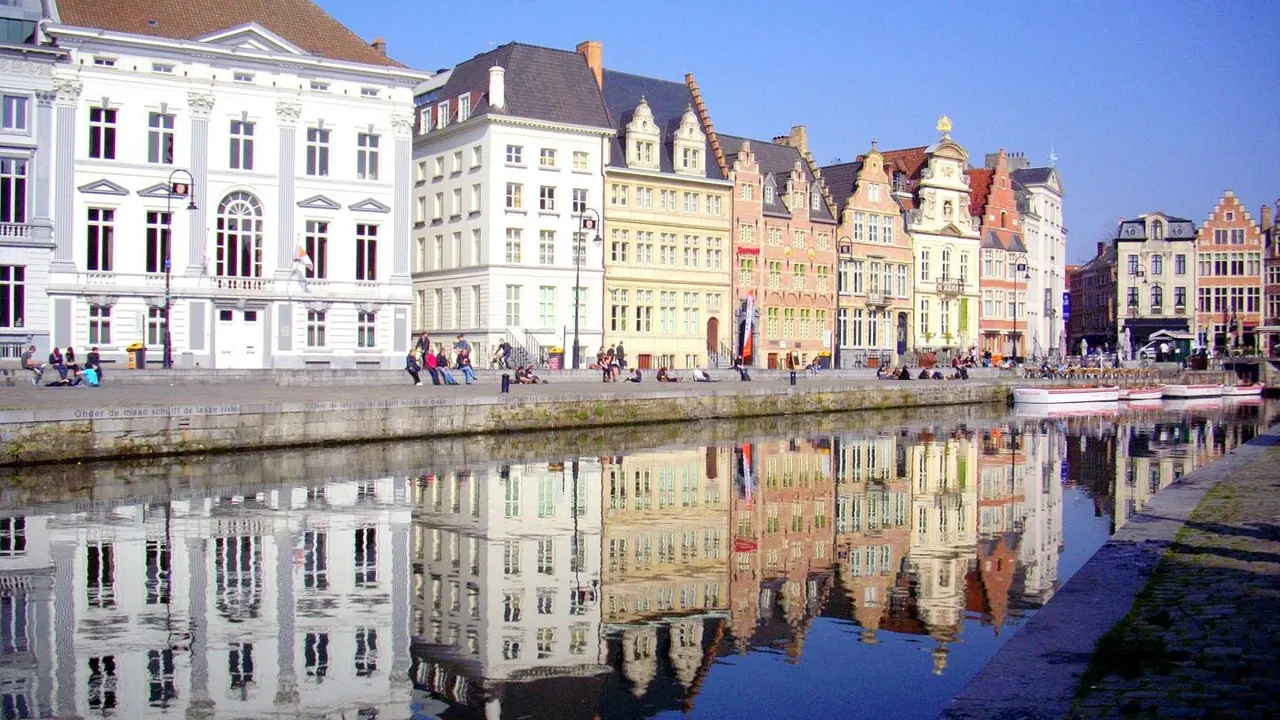
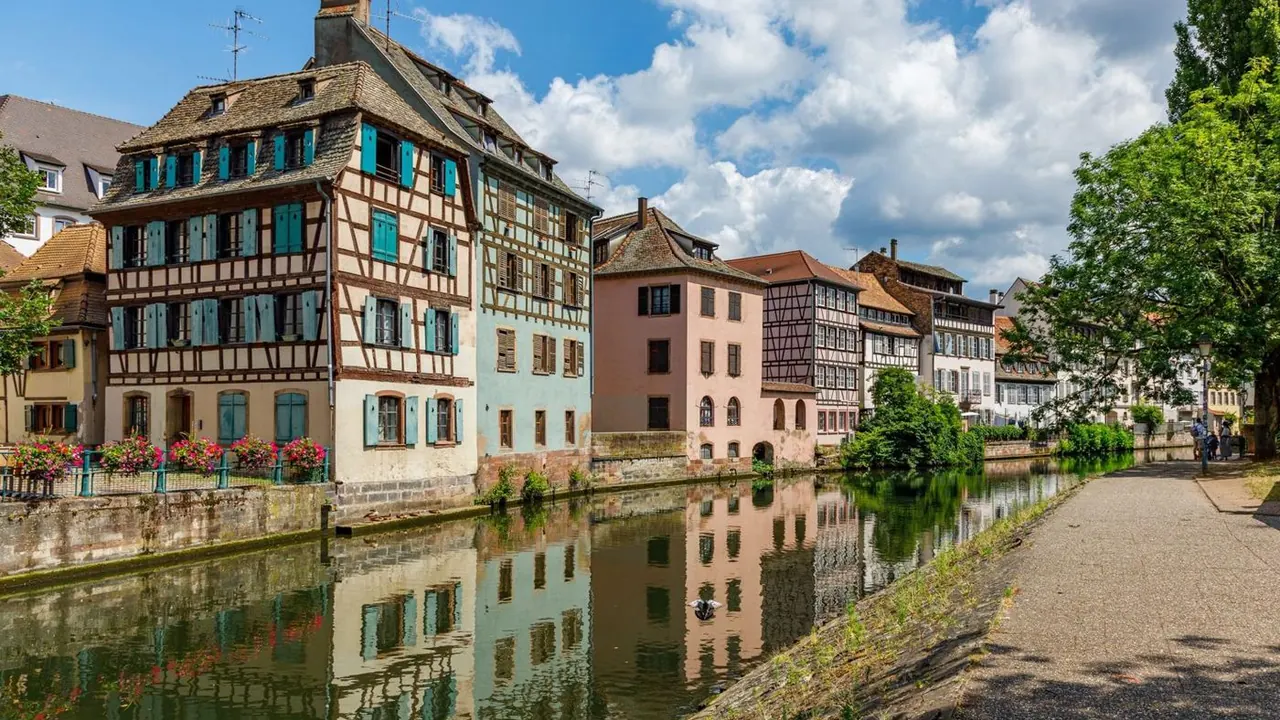
Photos: Ghent by ykeiko, CC BY-SA 3.0, cropped; Strasbourg by Edoardo Colombo, Pexels License.
Ghent or Strasbourg?
Our verdict in twelve categories, each scored against the same fixed benchmark cities, and the climate month by month, so you can choose for your trip.
Choose Ghent for
- beaches
- nightlife
- day trips
Ghent is the better choice for a rail-based trip through old Flanders with a bit of life after dark. Bruges, Brussels and Antwerp are each a short train ride away, so a few nights here can cover half a dozen historic cities without a car. In the evenings the student bars and beer cafés keep the town busier than its medieval looks suggest, and the July street festival takes that much further.
Choose Strasbourg for
- nature and the outdoors
- wellness
- families
Strasbourg suits travellers who want countryside and slower days alongside the sights. The Vosges, the Alsace wine villages and the Black Forest all lie within about an hour, and the thermal baths of Baden-Baden are close enough for an afternoon. It also works better with children, thanks to a hands-on science centre, a stork-filled park and one of Europe's largest theme parks just over the border. Summers are noticeably warmer too.
Scoreboard
Twelve categories on one fixed scale from 0 to 100. The shaded stretch is the gap between the two.
Your match
Pick a travel style or drag the sliders, and both match scores follow your weighting.
Wins on beaches and nightlife with your weighting.
Wins on nature and the outdoors and wellness with your weighting.
What matters to you?
Category by category
What the scores mean for a trip.
Beaches & swimming
Neither city is for a beach vacation, but Ghent at least has a real coast within reach. Trains get to Ostend in about an hour, and the coastal tram links wide sandy beaches and dunes, even if the North Sea is cool and often windy. Back in the city, the Blaarmeersen lake has a sandy shore with lifeguards in summer.
Strasbourg has no sea anywhere near. Swimming means the old gravel-pit lakes, such as the Baggersee, which you can reach by tram, with grassy banks and calm fresh water. They are fine for a hot afternoon and nothing more.
Food & drink
The two are evenly matched at the table, but they drink differently. Ghent is a beer city, with brown cafés pouring Trappist and lambic beers next to waterzooi, beef stewed in beer and grey shrimp croquettes. It is also unusually easy for vegetarians.
Strasbourg is built around wine. Its winstubs serve choucroute, baeckeoffe and tarte flambée with a pichet of Riesling from the vineyards just south of the city, and there are more fine-dining options, both in town and in the villages nearby. The covered market is good for cheese and charcuterie. Avoid the tourist menus around the cathedral, and expect food that is heavy for midsummer.
Culture & sights
Both reward two or three days of sightseeing. In Ghent the draw is one great painting and a medieval townscape that people still live and work in: the van Eyck altarpiece in St Bavo's, the moated Gravensteen and the guildhalls facing each other across the Leie.
In Strasbourg the whole city works as a piece of architecture, from the pink sandstone cathedral with its astronomical clock to the half-timbered houses of Petite France and the German imperial avenues of the Neustadt. The Palais Rohan gathers fine arts, decorative arts and archaeology under one roof. The European Parliament and the Council of Europe then give it a modern, political side that Ghent does not have.
Nightlife
Ghent offers more after dark. The Overpoort's student bars stay loud late into the night in term time, the old cafés around the Vrijdagmarkt suit long evenings over strong beer, and in July the Gentse Feesten turns the centre into a street party until the early hours.
Strasbourg's nights are pleasant but early. They mostly mean bars in the Krutenau and around Place Saint-Étienne, plus riverside terraces in summer. There are very few clubs, and on weeknights much of the city is quiet by midnight.
Nature & outdoors
Strasbourg is far better for the outdoors. Within about an hour you can be on forest trails and ridge walks in the Vosges, such as Mont Sainte-Odile, or hiking among the fir woods of the Black Forest. Closer in, the Rhine forests have storks, herons and beavers, and level cycle routes run into Germany.
Ghent's surroundings are flat and farmed. The good options are riverside rides along the Leie to Sint-Martens-Latem, birdwatching in the Bourgoyen-Ossemeersen wetland and the coastal dunes of the Zwin, all gentle and none of it dramatic.
Day trips
Both are excellent bases, and Ghent has a slight edge because everything is a quick train ride away. Bruges takes under half an hour, Brussels about half an hour and Antwerp under an hour, and Ypres, Mechelen, Leuven and even Lille are easy too, so a whole week of famous cities needs no car.
Strasbourg's trips mix towns and countryside. Colmar and Baden-Baden are easy by train, as are Freiburg and Basel further off. The best of the region, though, is the Alsace wine route, with its vineyard villages and Haut-Koenigsbourg castle, and that is much easier with a car or a bike.
Good for families
Strasbourg is the better city for children. Le Vaisseau is a hands-on science centre made for them, the Orangerie has nesting storks, playgrounds and rowing boats, and the astronomical clock's moving figures usually win them over. Europa-Park is about an hour away, and the Vosges have animal parks and castle ruins to climb.
Ghent is safe and easy to get around, but its family offer is short. It has the Gravensteen's battlements, canal boats, the toys at the House of Alijn and the Blaarmeersen lake. The nearest zoo is in Antwerp, and the cobbles are hard work with a pushchair.
Getting around
Both are compact, flat and mostly free of cars, and both are made for cycling. The difference is in the details. Ghent's main station is a twenty-minute walk from the centre, and its trams and buses fill the gaps, but the frequent trains mean day trips never need a car.
Strasbourg's centre is an island you can cross on foot in twenty minutes, and its tram network reaches the station, the European quarter and even Kehl across the Rhine. A car only becomes useful for the wine villages and the hills.
Shopping & style
Neither is a shopping destination, and neither does luxury, but they offer different things to take home. Ghent's best is in its side streets and markets: independent design on the Serpentstraat, vintage in the student quarter, the Sint-Jacobs flea market and the Kouter flower market, plus cuberdons, mustard and beer.
Strasbourg has a department store and the chain stores around Place Kléber. Its regional goods are more substantial: Soufflenheim pottery, printed linens, kougelhopf moulds and Alsace wine. In December the Christmas market adds crafts and decorations, though many of them are mass-produced.
Affordability
Strasbourg is a little easier on the wallet. Winstub meals and tarte flambée are reasonably priced, wine by the pichet is good value, and the cathedral and old town cost nothing. Ghent has Belgian prices, and evening bills with a few beers add up, though frites stands and set lunches help.
In both cities hotels are the main expense, and timing matters. In Ghent avoid the Gentse Feesten in July. In Strasbourg avoid the Christmas market and the weeks when the European Parliament sits.
Live music & performing arts
Both have serious stages for cities of their size, each with an opera house, a leading theatre and a strong festival. Ghent's NTGent mostly performs in Dutch, and De Bijloke specialises in early music in a medieval hospital. In July the Gentse Feesten puts free stages all over the centre, so you can come across performances without planning.
Strasbourg's Théâtre National mostly performs in French. The city has its own philharmonic, and the autumn Musica festival makes it a centre for contemporary music. Outside festival time, though, you need to plan evenings around the season.
Wellness & relaxation
Strasbourg is much better for a restful, spa-focused stay. The early twentieth-century Bains municipaux has tiled pools, a hammam and saunas, and the Friedrichsbad and Caracalla baths in Baden-Baden are under an hour away.
Ghent has no bathing culture beyond a few hotel spas. Its version of relaxing is quieter: the enclosed gardens of the beguinages, slow walks along the Coupure canal and calm Sundays once the day-trippers have left.
When should you go?
Pick your month. The climate figures are measured averages, not a forecast.
Ghent in July
Strasbourg in July
Daytime high, °C
Rainfall in the month, mm
Where the figures come from
Ghent has no rain gauge within 25 km of the centre, so its rainfall comes from a gridded climate dataset read at the city rather than from a gauge further away.
Ghent's sunshine is measured 45 km from the centre, at Vlissingen.
Temperature and rainfall are climate normals, averaged over the years shown. Ghent: 2009-2025 (sunshine 1991-2020, rainfall 1991-2020) normals, Melle / Kalverhaag (10.1 km from centre). Strasbourg: 1991-2020 normals, Strasbourg (9.1 km from centre).
Ghent has mild, changeable summers, with highs of about 23°C in July and August. That is comfortable for walking all day but rarely beach weather, and the North Sea at the nearby coast only reaches about 19°C at its warmest. April is the driest month and May is among the sunniest, so late spring is the best time for sightseeing. From June the rain builds, and it stays heavy through late summer, autumn and into early winter, when the days are short, grey and cold.
Strasbourg has a more continental climate. Summers are warmer, with highs near 26°C in July and August. That is pleasant for lake swimming and evenings on terraces, though sometimes too warm for long walks around town. May is the wettest month at about 77mm, and late spring and September are the easiest times for walking and cycling. Winters are drier than Ghent's, at around 45mm in January, but slightly colder and even shorter on sunshine.
Which traveller are you?
On a food and nightlife trip, Ghent is the stronger pick. The cooking is evenly matched, but Ghent has the long beer lists of its brown cafés, the late student bars of the Overpoort and the ten-day Gentse Feesten, while Strasbourg's evenings mostly wind down by midnight.
For an outdoors trip, choose Strasbourg. The forest trails and castle ruins of the Vosges and the higher ridges of the Black Forest are both about an hour away, whereas the country around Ghent is flat farmland that suits gentle cycling more than hiking.
On a family trip with children, Strasbourg gives more to do. Le Vaisseau science centre, the rowing boats and storks of the Orangerie and Europa-Park across the Rhine fill several days, while Ghent offers little beyond the castle, a toy museum and the lake.
Before you go
| Measure | Ghent | Strasbourg |
|---|---|---|
| Official language | French, German, Dutch | French |
| Currency | Euro (EUR) | Euro (EUR) |
| Sockets | CE230 V, 50 Hz | CE230 V, 50 Hz |
| Driving side | Right | Right |
| Time zone | UTC+1, UTC+2 in summer | UTC+1, UTC+2 in summer |
| Emergency number | 112 | 112 |
| Elevation | 12 m | 132 m |
| Main airport | Brussels Airport (BRU)56 km from centre191 non-stop destinations | Strasbourg Airport (SXB)10 km from centre43 non-stop destinations |
| Public holidays this year | 14 days | 11 days |
By the numbers
| Measure | Ghent | Strasbourg |
|---|---|---|
| City population | 272,657 | 293,771 |
| People per km² | 1,728 | 3,752 |
| Museums within 10 km | 30 | 21 |
| UNESCO World Heritage sites within 50 km | 5 | 1 |
| Swim season, months above 21 °C | None | - |
Where else could you go?
Every comparison below shares a destination with this one, so you can follow Ghent or Strasbourg somewhere new.