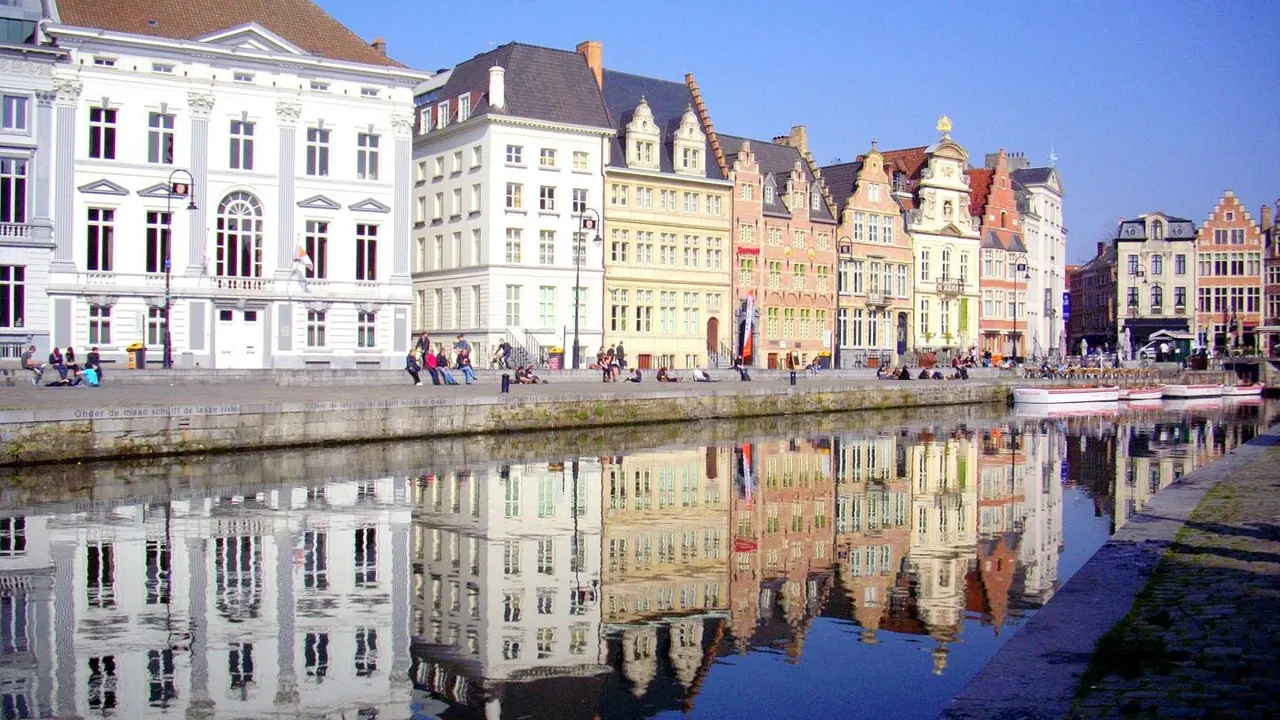
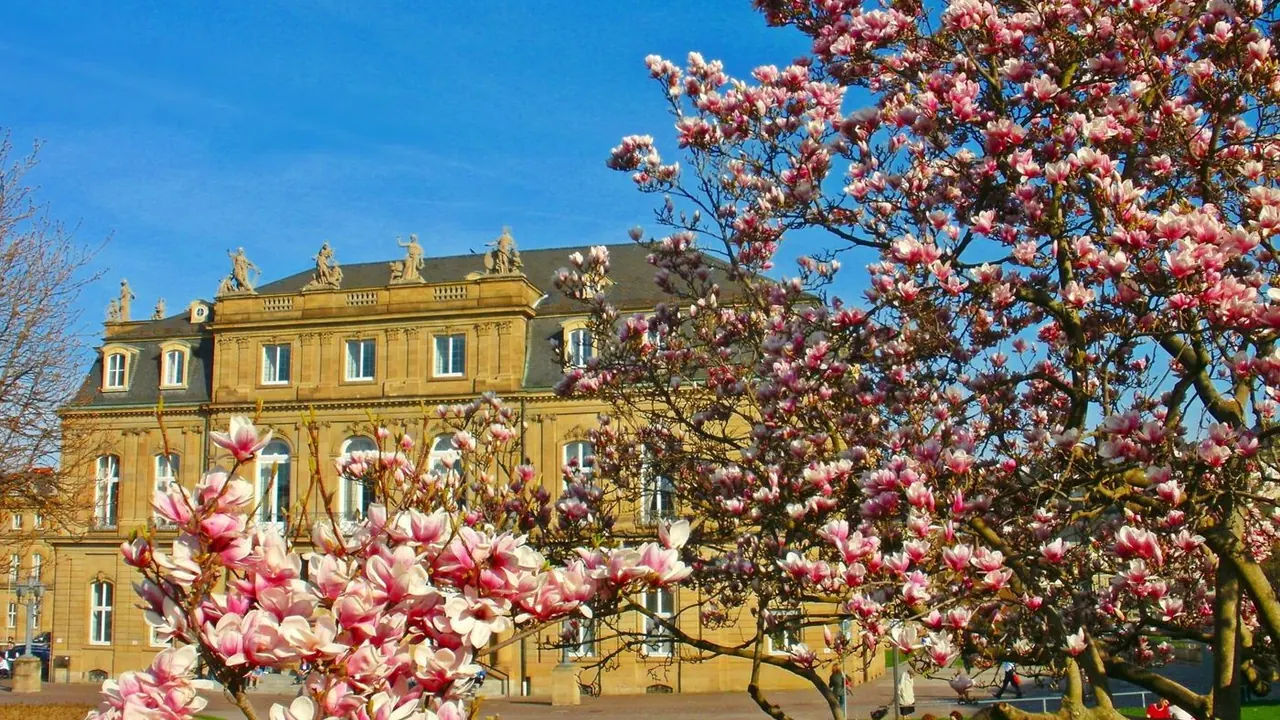
Photos: Ghent by ykeiko, CC BY-SA 3.0, cropped; Stuttgart by Baden de, CC BY 3.0, cropped.
Ghent or Stuttgart?
Our verdict in twelve categories, each scored against the same fixed benchmark cities, and the climate month by month, so you can choose for your trip.
Choose Ghent for
- beaches
- nightlife
- culture and sights
Ghent suits travellers who want an old city that still works as one, and want to spend their days walking it. The van Eyck altarpiece, the guildhall quays and the castle are all a few minutes apart. Evenings in the beer cafés and student streets are livelier than the city's size suggests, and Bruges, Brussels and Antwerp are each a short train ride away. Couples and friends on a sightseeing and beer trip will get the most from it.
Choose Stuttgart for
- wellness
- nature and the outdoors
- families
Stuttgart is the better choice when the city is only half the plan. Vineyards and forest start at the edge of the centre, the Swabian Jura and the Black Forest are about an hour out, and warm mineral baths are waiting at the end of the day. Families do better here too, thanks to Wilhelma, and so does anyone who wants a night at the ballet or the opera.
Scoreboard
Twelve categories on one fixed scale from 0 to 100. The shaded stretch is the gap between the two.
Your match
Pick a travel style or drag the sliders, and both match scores follow your weighting.
Wins on beaches and nightlife with your weighting.
Wins on wellness and nature and the outdoors with your weighting.
What matters to you?
Category by category
What the scores mean for a trip.
Beaches & swimming
Neither city is for a beach trip, but Ghent at least has the coast within reach. Trains get to Ostend in about an hour, and a coastal tram links the wide sandy resorts, although the North Sea is cool and often windy. Closer in, the Blaarmeersen lake has a sandy shore and lifeguards in summer.
Stuttgart is much further from any shore, and Lake Constance is more than two hours away. Here swimming means the outdoor pools, some of them fed by the mineral springs.
Food & drink
The two eat about equally well, and the real difference is beer against wine. Ghent's tables are built around Flemish stews, mussels with frites and the city's waterzooi. You wash them down with long lists of Belgian beer in old brown cafés, and vegetarians are unusually well served.
Stuttgart cooks heartier Swabian dishes like Maultaschen and Käsespätzle and pours Trollinger and Riesling from vineyards inside the city limits. It also has a deeper choice of fine dining and its Art Nouveau Markthalle, while Ghent is the easier place to grab a cone of frites in the street.
Culture & sights
Ghent is the stronger city for sightseeing, because its medieval centre survived whole. The guildhalls along the Leie, the Gravensteen castle and the three towers seen from St Michael's Bridge make the streets themselves the attraction. Inside St Bavo's hangs the Ghent Altarpiece, one of the founding works of European painting.
Stuttgart's old core was heavily bombed, so its sights lean towards industry and modern design. The Mercedes-Benz and Porsche museums, the Staatsgalerie and Le Corbusier's houses at the Weissenhof Estate are each excellent, but they are destinations to travel between rather than a streetscape to wander through.
Nightlife
Ghent's university gives it the livelier nights. The Overpoort student bars run late in term time, the cafés around the Vrijdagmarkt suit a long evening over strong beer, and summer crowds drink along the quays. In July the Gentse Feesten turns the whole centre into a party.
Stuttgart's nights centre on the bars of Theodor-Heuss-Strasse and a scatter of basement clubs, with quieter wine bars in the Bohnenviertel. Its big moment is the Cannstatter Volksfest in autumn. On ordinary weekdays the city goes to bed fairly early.
Nature & outdoors
Stuttgart is far better for time outdoors. The city sits in a basin of wooded hills and vineyards, so wine trails and the deer forests of the Rotwildpark start almost at the edge of town. Within about an hour are the cliff paths and caves of the Swabian Jura and the fir-covered ridges of the northern Black Forest.
Around Ghent the land is flat farmland, so the outdoors means riverside cycling along the Leie, birdwatching at the Bourgoyen-Ossemeersen wetland and the dunes on the coast. It is pleasant, but there is nothing to climb.
Day trips
Both make excellent bases, and Ghent has the slight advantage of shorter distances. Bruges is under half an hour away, Brussels about the same, and Antwerp under an hour, with Ypres, Leuven and Lille also within reach. You could take a different trip every day of a week without a long train ride.
Stuttgart's day trips are more varied in kind. There is Ludwigsburg's baroque palace and Tübingen's punts, Heidelberg is about forty minutes by fast train, and Hohenzollern Castle and Maulbronn monastery are further out. Several of these are best combined, so the days out run longer.
Good for families
Stuttgart does more for children. Wilhelma, a zoo and botanical garden among Moorish-style pavilions, can fill a whole day, and the Killesberg park adds a miniature railway and animal enclosures. There are also good outdoor pools and the rack railway.
Ghent is safe, and its centre is largely free of cars, but its attractions for children come down to the Gravensteen's battlements, canal boat trips and the House of Alijn's old toys. The nearest zoo is in Antwerp, and cobbles make pushchairs hard work. Stuttgart's hills are a different challenge for pushchairs.
Getting around
Ghent is slightly easier to get around, because everything a visitor wants is in a flat, largely car-free centre that is easy to cover on foot or by bike. The main station is a twenty-minute walk or a short tram ride south.
Stuttgart's centre is just as compact, but the city climbs steeply up the sides of its basin. Past the core, you rely on the Stadtbahn and S-Bahn, a rack railway, a funicular or the long public stairways called Stäffele. One ticket covers it all, so the hills slow you down without getting in the way.
Shopping & style
Stuttgart is the better choice if you shop for brands. Königstrasse is one of Germany's longest pedestrian shopping streets, Breuninger department store is the place for designer fashion, and the outlet town of Metzingen is about half an hour away.
Ghent is better for browsing than buying big. It has independent fashion on the Serpentstraat, vintage in the student quarter and weekend flea and flower markets. Its best buys are edible, such as cuberdons, mustard and Belgian beer.
Affordability
Neither city is cheap, and both cost about the same overall. Where the money goes is different. In Ghent, sit-down dinners with a few beers are what add up, while frites stands, set lunches and free entry to several churches, St Bavo's among them, help balance the bill. Rooms only become really expensive around the Gentse Feesten.
Stuttgart's hotel prices follow the trade fairs, so a weekend or quiet-season visit can come in noticeably cheaper. Tavern meals give generous portions for the price.
Live music & performing arts
Stuttgart is the city to visit for its stages. The Stuttgart Ballet, famous since John Cranko's time, and a bold opera company share the state theatre by the palace gardens. The Liederhalle has a strong Bach tradition, and long-running musicals fill two large theatres in Möhringen.
Ghent's scene is strong for a city its size, but it is more local. You can see opera and ballet in the nineteenth-century opera house, and early music in De Bijloke's medieval hospital hall. NTGent's acclaimed productions are mostly in Dutch.
Wellness & relaxation
Stuttgart has a real bathing culture, which Ghent lacks. Its springs are among Europe's most productive mineral sources and supply public baths such as the Mineralbad Cannstatt and the Mineralbad Leuze, where you soak in warm, naturally fizzy water. Plan on an afternoon there, not a full spa retreat.
Ghent's way of relaxing is to slow down. That means the enclosed gardens of the beguinages, walks along the Coupure canal, long terrace afternoons and quiet Sundays, with only a few hotel spas.
When should you go?
Pick your month. The climate figures are measured averages, not a forecast.
Ghent in July
Stuttgart in July
Daytime high, °C
Rainfall in the month, mm
Where the figures come from
Ghent has no rain gauge within 25 km of the centre, so its rainfall comes from a gridded climate dataset read at the city rather than from a gauge further away.
Ghent's sunshine is measured 45 km from the centre, at Vlissingen.
Temperature and rainfall are climate normals, averaged over the years shown. Ghent: 2009-2025 (sunshine 1991-2020, rainfall 1991-2020) normals, Melle / Kalverhaag (10.1 km from centre). Stuttgart: 1991-2020 normals, Stuttgart / Neckartal (2.8 km from centre).
Ghent is at its best from May to September, when afternoons reach about 23°C in July and August and the streets never get too hot for walking. April is its driest month and already one of the sunnier ones, so spring is a good time for cycling along the Leie. From June the rain builds steadily and stays high through to December, and winter is cold and grey, with highs around 8°C. The North Sea warms to only about 19°C in August, so a day on the coast is more about sand and fresh air than long swims.
Stuttgart's winters are just as cold, but its summers are clearly warmer, at about 26°C in July and August. That is warm enough for the outdoor pools and evenings in the wine taverns, and still comfortable for sightseeing on foot. Its rain peaks from May to July, while winter is the drier season. September stays warm and is drier than high summer, which makes it a good month for the Jura trails before the autumn colour sets in.
Which traveller are you?
For a food and nightlife trip, Ghent has the edge. Its brown cafés pour long lists of Trappist and lambic beers, the Overpoort student bars stay up late, and July brings ten days of street party. Stuttgart's evenings are pleasant but end earlier.
On an outdoors trip, Stuttgart is far better. Wine trails and deer forests start at the edge of the city, and the Swabian Jura cliffs and Black Forest ridges are about an hour away. Ghent offers flat cycling and wetland birdwatching, and nothing more dramatic.
On a relaxing and wellness trip, Stuttgart is the clear choice. Its mineral springs feed public baths where you can soak in warm, naturally fizzy water indoors and out, with saunas too. Ghent has quiet beguinage gardens and canal walks, but almost nowhere to bathe.
Before you go
| Measure | Ghent | Stuttgart |
|---|---|---|
| Official language | French, German, Dutch | German |
| Currency | Euro (EUR) | Euro (EUR) |
| Sockets | CE230 V, 50 Hz | CF230 V, 50 Hz |
| Driving side | Right | Right |
| Time zone | UTC+1, UTC+2 in summer | UTC+1, UTC+2 in summer |
| Emergency number | 112 | 112 |
| Elevation | 12 m | 245 m |
| Main airport | Brussels Airport (BRU)56 km from centre191 non-stop destinations | Stuttgart Airport (STR)10 km from centre124 non-stop destinations |
| Public holidays this year | 14 days | 12 days |
By the numbers
| Measure | Ghent | Stuttgart |
|---|---|---|
| City population | 272,657 | 609,365 |
| People per km² | 1,728 | 2,938 |
| Museums within 10 km | 30 | 42 |
| UNESCO World Heritage sites within 50 km | 5 | 3 |
| Swim season, months above 21 °C | None | - |
Where else could you go?
Every comparison below shares a destination with this one, so you can follow Ghent or Stuttgart somewhere new.