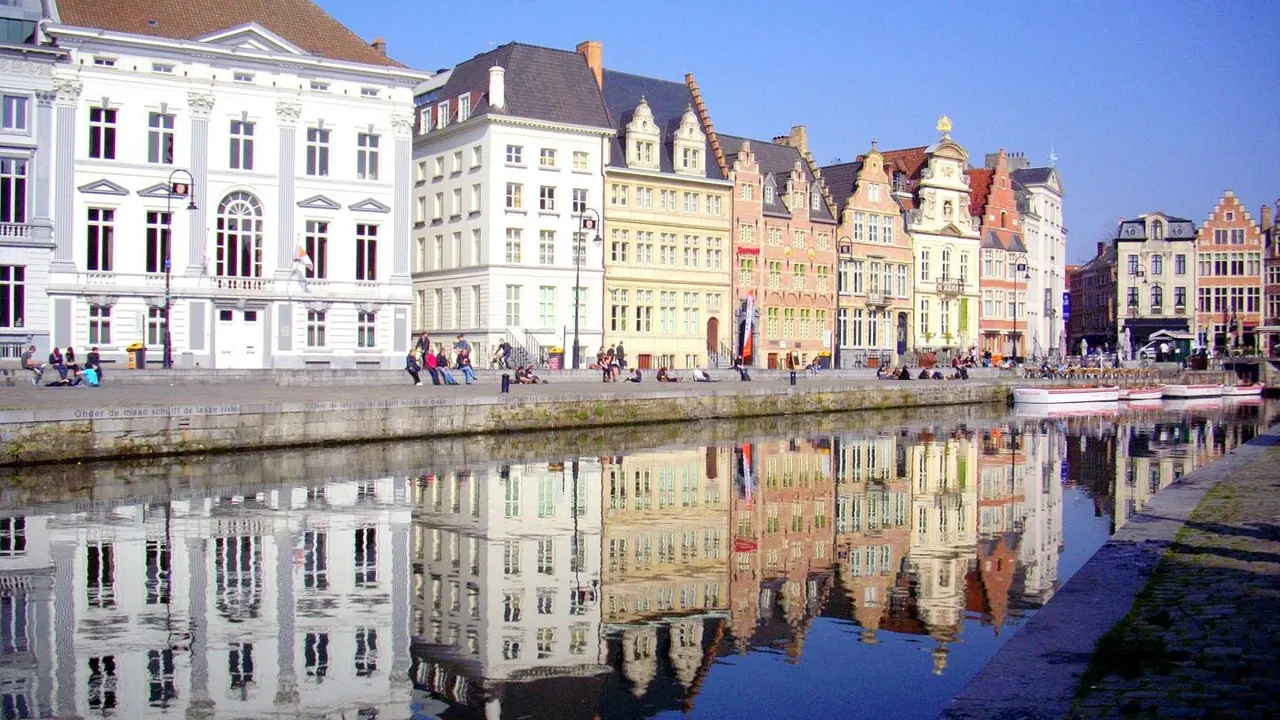
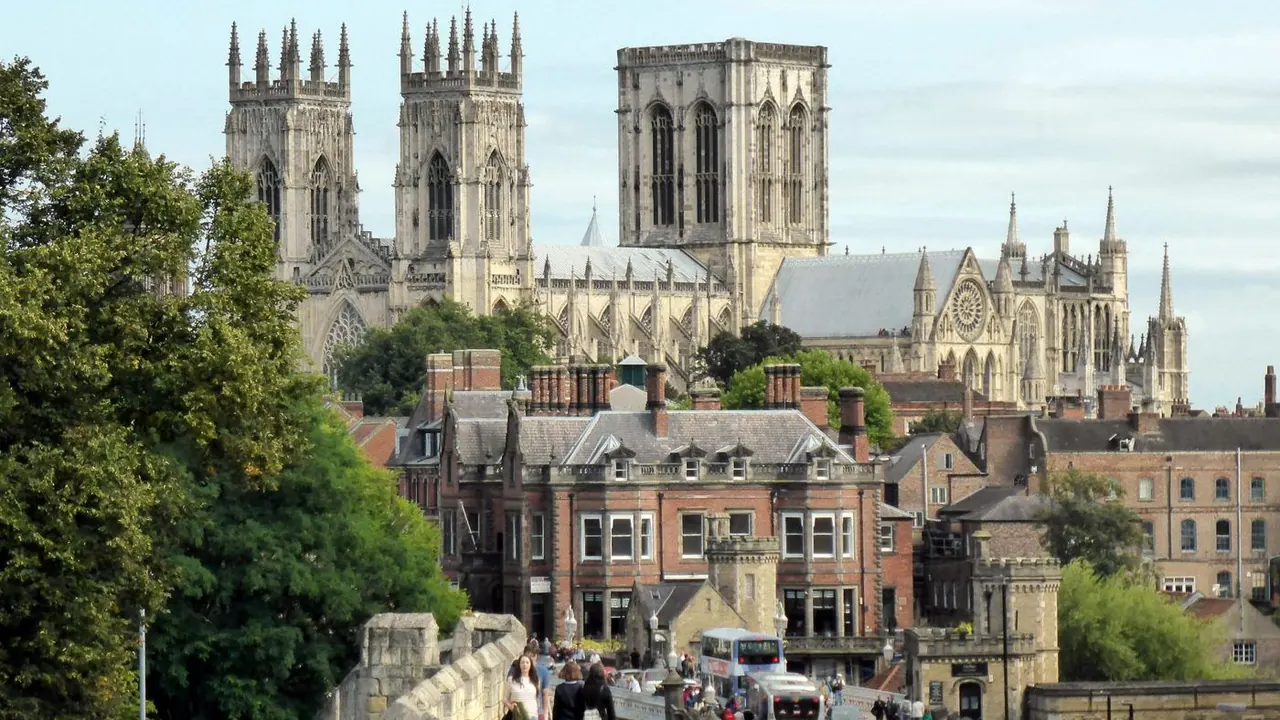
Photos: Ghent by ykeiko, CC BY-SA 3.0, cropped; York by PAUL FARMER, CC BY-SA 2.0, cropped.
Ghent or York?
Our verdict in twelve categories, each scored against the same fixed benchmark cities, and the climate month by month, so you can choose for your trip.
Choose Ghent for
- live music and the arts
- food and drink
- nightlife
Ghent suits travellers who want a medieval city that still feels lived in, with evenings to match. Its beer cafés, Flemish cooking, student bars and strong stages give it a fuller night out than York. Frequent trains put Bruges, Brussels and Antwerp within easy reach, so it works well as a base for a week in Flanders without a car.
Choose York for
- nature and the outdoors
- families
- wellness
For walkers and families, York is the better pick. The National Railway Museum, Jorvik and the city walls keep children busy, and the North York Moors and the Dales are close enough for proper days in the hills, which flat Flanders cannot offer. Expect evenings in the pub rather than late nights, and a car or a tour for the countryside.
Scoreboard
Twelve categories on one fixed scale from 0 to 100. The shaded stretch is the gap between the two.
Your match
Pick a travel style or drag the sliders, and both match scores follow your weighting.
Wins on live music and the arts and food and drink with your weighting.
Wins on nature and the outdoors and families with your weighting.
What matters to you?
Category by category
What the scores mean for a trip.
Beaches & swimming
Neither city works for a beach vacation, but Ghent does a little better. Its Blaarmeersen lake has a sandy shore and supervised swimming in summer, and the coast tram links wide sandy resorts from De Panne to Knokke, about an hour away by train.
York has nothing to swim in within the city. Its seaside is a day out to Scarborough's two bays or to Filey and Whitby, traditional resorts where the sea is colder still and any swim is brief.
Food & drink
Ghent is the better place to eat and drink. Flemish cooking gives it waterzooi, beef stewed in dark beer and mussels with frites, the old brown cafés pour deep lists of Trappist, lambic and abbey beers, and vegetarians are unusually well looked after.
York's strengths are narrower and more traditional: afternoon tea with fat rascals, Sunday roasts, Yorkshire real ale in centuries-old pubs, and pies and cheese at the Shambles Market. Beyond a few good modern British kitchens the choice thins out, and much of what is near the Minster is aimed at tourists.
Culture & sights
The two are closely matched, and both deserve two or three full days. Ghent's draw is art: the van Eyck altarpiece in St Bavo's, Flemish masters at the Museum of Fine Arts and contemporary work at the SMAK, all set in a medieval centre of guildhalls along the Leie, with a moated castle in the middle.
York is history you can read in layers, from the excavated Viking street under Jorvik to the abbey ruins around the Yorkshire Museum, with the Minster's medieval glass and a walk on the walls as the highlights. Choose Ghent for paintings, York for Romans, Vikings and the railway age.
Nightlife
Ghent stays out later and offers more ways to do it. The university fills the Overpoort with student bars in term time, the brown cafés of the Vrijdagmarkt and Oudburg suit a long night over strong beer, and in July the Gentse Feesten turn the centre into ten days of street partying.
In York a night out mostly means the pub, and a crawl through the ancient inns of Stonegate and Micklegate is a pleasure in itself. Weekends bring stag and hen parties, weeknights end early, and clubbers take the train to Leeds.
Nature & outdoors
York has far more landscape within reach. The North York Moors begin about 40km away, the Dales lie an hour west, and the Cleveland Way runs along high sea cliffs, though most of it is much easier with a car.
Ghent's surroundings are flat and farmed: riverside cycling along the Leie to Sint-Martens-Latem, birdwatching in the Bourgoyen-Ossemeersen wetland and the Zwin reserve near the coast. It is pleasant, gentle country and nothing more.
Day trips
Both make excellent bases, but Ghent's outings are closer together and easier to reach. Bruges, Brussels and Antwerp are all within an hour by frequent train, with Mechelen, Leuven, Ypres and even Lille not far behind, so a whole week can be filled without a car.
York's trains serve Durham, Harrogate, Leeds and Scarborough well. Many of its finest outings, though, such as Castle Howard, Fountains Abbey and Rievaulx, are country houses and ruins best reached by car or on a coach tour.
Good for families
York keeps children busier. The hall of locomotives at the National Railway Museum, Jorvik, the Castle Museum's Victorian street and ghost walks for older children fill several days, and a theme park, a zoo and the beach at Scarborough are about an hour away.
Ghent is safe and largely free of cars in the centre, and the Gravensteen, canal boats, the House of Alijn and the Blaarmeersen playgrounds all go down well. Beyond those, little is aimed at children, and the cobbles are hard work with a pushchair.
Getting around
Both centres are flat and easy to walk, and in neither is a car any use in town. Ghent has a slight edge thanks to its trams and a city built around the bicycle, with bike streets throughout, though its main station is a twenty-minute walk from the centre. In York nearly every sight lies inside or just outside the walls, about fifteen minutes on foot from the station, and much of the centre is pedestrianised.
Shopping & style
Neither city is a shopping destination, and luxury barely features in either. Ghent's best buys are edible, from chocolate and cuberdons to mustard and beer, and its markets are the most enjoyable part, from the Sint-Jacobs flea market to the Sunday flowers on the Kouter.
York's appeal is the setting: bookshops, jewellers and antiques dealers in the medieval lanes of Stonegate and Petergate, and Christmas markets that draw visitors in their own right.
Affordability
The two cost about the same, mid-to-high for their countries, and neither gives you a budget advantage. In Ghent, sit-down dinners with Belgian beer push the bill up while frites stands and set lunches keep it down, and rooms stay moderate except during the Gentse Feesten.
In York, hotels near the walls are the bigger expense, rising sharply at weekends, on race days and at Christmas, so a midweek stay saves the most. Its free sights, the National Railway Museum, the walls and the Museum Gardens, balance Ghent's free churches.
Live music & performing arts
Ghent has the stronger stage life. Opera and ballet from the Flemish national company, NTGent's bold theatre, early and classical music at De Bijloke and free festival stages in July add up to far more than York offers, though most theatre is in Dutch.
York's pleasures are smaller and in English: drama and the famous pantomime at the Theatre Royal, touring shows at the Grand Opera House, the early-music festival and free choral evensong at the Minster. The Mystery Plays, performed on wagons in the streets, are its own tradition, but they are only revived now and then.
Wellness & relaxation
Neither city has a bathing culture, and in both, relaxing means slow walks rather than spas: the beguinage gardens and the Leie and Coupure canals in Ghent, the walls early in the morning, the Museum Gardens and a long afternoon tea in York.
The real difference is what lies nearby. York has Harrogate half an hour away by train, where the Royal Baths still hold a Victorian Turkish bath in Moorish style. Ghent has nothing comparable within reach.
When should you go?
Pick your month. The climate figures are measured averages, not a forecast.
Ghent in July
York in July
Daytime high, °C
Rainfall in the month, mm
Where the figures come from
Ghent has no rain gauge within 25 km of the centre, so its rainfall comes from a gridded climate dataset read at the city rather than from a gauge further away.
Ghent's sunshine is measured 45 km from the centre, at Vlissingen.
York has no rain gauge within 25 km of the centre, so its rainfall comes from a gridded climate dataset read at the city rather than from a gauge further away.
York's sunshine is measured 48 km from the centre, at Leeming.
Temperature and rainfall are climate normals, averaged over the years shown. Ghent: 2009-2025 (sunshine 1991-2020, rainfall 1991-2020) normals, Melle / Kalverhaag (10.1 km from centre). York: 1991-2020 normals, Linton-On-Ouse (14.9 km from centre).
The two climates run almost in step. Winters are cool and damp, with highs around 7°C in both, and summers are mild, good for walking the streets but never hot. Late spring to early autumn is the best time to go to either. Ghent is a touch warmer at its peak, about 23°C in July and August, and it is clearly sunnier in every month of the year. It is also the wetter of the two from midsummer into winter, with December its rainiest month at 87mm, while April is its driest and one of its brightest.
York gets less rain over the year but more grey skies, so the long summer days are its best chance of sun. Neither city is a beach destination. Ghent's nearest sea is the North Sea, which reaches only about 19°C in August, enough for a quick dip on a fine day and little more.
Which traveller are you?
On a food and nightlife trip, Ghent is the clear choice. Waterzooi, mussels and long Trappist and lambic lists in the Patershol and around the Vrijdagmarkt beat York's tearooms and pub meals, and the Overpoort and summer quaysides keep going long after York goes quiet.
On a family trip with children, York has more to fill the days. Locomotives to walk around at the National Railway Museum, the Viking street at Jorvik, the Castle Museum's Victorian street and a walk along the walls give children more than Ghent's castle and canal boats.
For an outdoors trip, York wins easily. Heather moors, the sea cliffs at Robin Hood's Bay and the limestone Dales give real walking and cycling country within about an hour, while Ghent's flat farmland offers gentle riverside rides and birdwatching but nothing dramatic.
Before you go
| Measure | Ghent | York |
|---|---|---|
| Official language | French, German, Dutch | English |
| Currency | Euro (EUR) | Pound Sterling (GBP) |
| Sockets | CE230 V, 50 Hz | G230 V, 50 Hz |
| Driving side | Right | Left |
| Time zone | UTC+1, UTC+2 in summer | UTC, UTC+1 in summer |
| Emergency number | 112 | 112 or 999 |
| Elevation | 12 m | 25 m |
| Main airport | Brussels Airport (BRU)56 km from centre191 non-stop destinations | Leeds Bradford Airport (LBA)39 km from centre69 non-stop destinations |
| Public holidays this year | 14 days | 8 days |
By the numbers
| Measure | Ghent | York |
|---|---|---|
| City population | 272,657 | 208,400 |
| People per km² | 1,728 | 766 |
| Museums within 10 km | 30 | 24 |
| UNESCO World Heritage sites within 50 km | 5 | 2 |
| Swim season, months above 21 °C | None | - |
Where else could you go?
Every comparison below shares a destination with this one, so you can follow Ghent or York somewhere new.