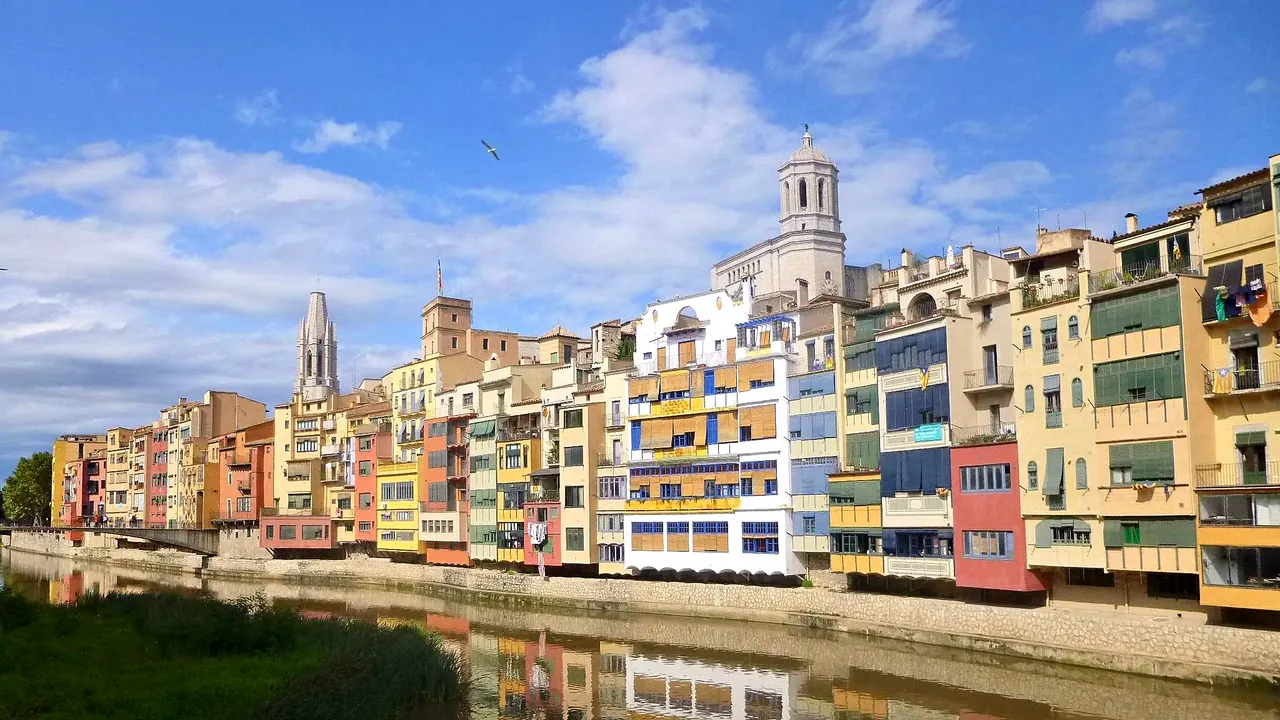
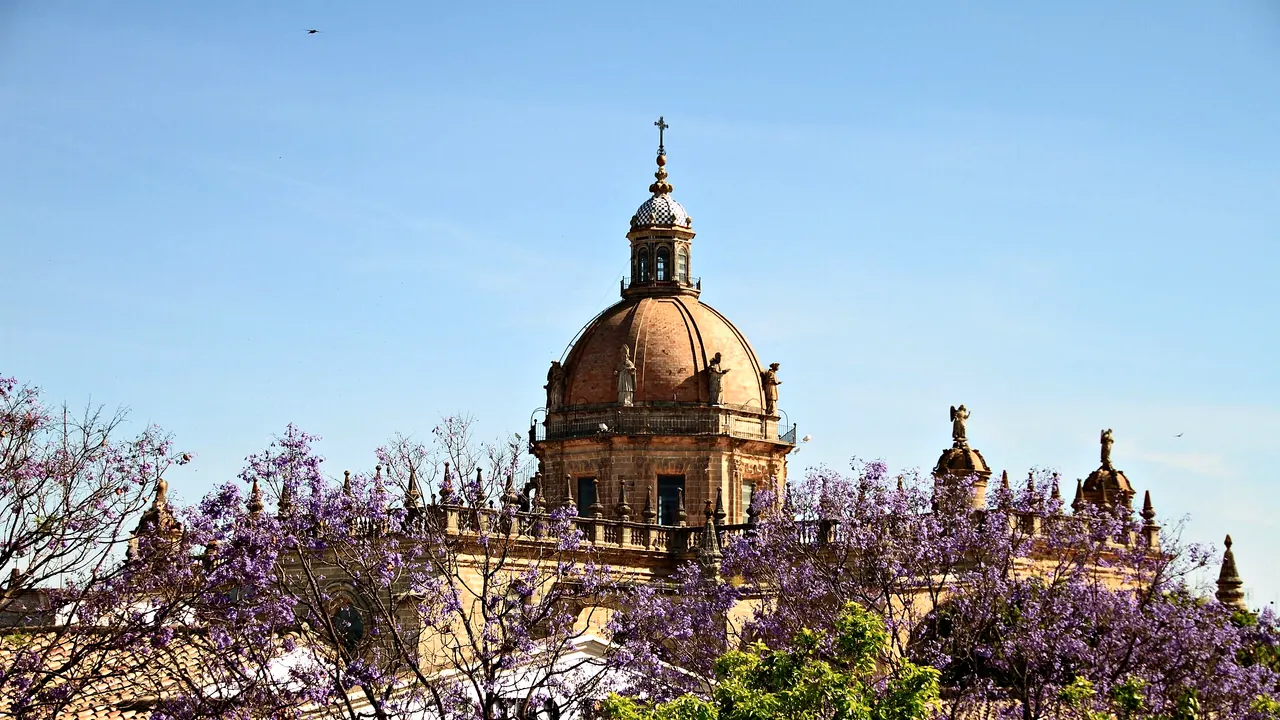
Photos: Girona by Zarateman, CC0; Jerez de la Frontera by PEPE GADEIRAS, CC BY 4.0, cropped.
Girona or Jerez de la Frontera?
Our verdict in twelve categories, each scored against the same fixed benchmark cities, and the climate month by month, so you can choose for your trip.
Choose Girona for
- nature and the outdoors
- culture and sights
- day trips
Girona suits travellers who want to spend their days outdoors and on the move. That means road cyclists, walkers and anyone happy to head out of town most mornings, with the Garrotxa volcanoes, the Costa Brava coves, Dalí's Figueres and Barcelona all close by. The walled Barri Vell and its Jewish quarter also give it the richer old town to explore, though the evenings are quiet.
Choose Jerez de la Frontera for
- live music and the arts
- prices
- nightlife
Pick Jerez if your evenings matter as much as your days. Flamenco is still a local art there, heard in peñas and tabancos as well as on stage. The tapas bars stay busy late, and the sherry bodegas bring food, drink and heritage together. It is also the cheaper of the two, and its zoo, dancing horses and gently sloping sandy beaches give families a little more to do.
Scoreboard
Twelve categories on one fixed scale from 0 to 100. The shaded stretch is the gap between the two.
Your match
Pick a travel style or drag the sliders, and both match scores follow your weighting.
Too close to call, 2 points apart
Wins on nature and the outdoors and culture and sights with your weighting.
Wins on live music and the arts and prices with your weighting.
What matters to you?
Category by category
What the scores mean for a trip.
Beaches & swimming
Neither city has a beach of its own, so from both the coast is a day out. What you find there is different. From Girona you reach the Mediterranean, where long sandy bays alternate with small pine-backed coves around Begur, and the water is some of the clearest on the Spanish coast. The famous coves fill early in high summer, and without a car the infrequent buses limit how far along the coast you get.
Jerez looks out on the Atlantic, with long, open beaches of fine golden sand at El Puerto, Cádiz and Sanlúcar. They are wide and exposed rather than sheltered, and the Levante wind can make some days rough. Getting there is easier, since the train reaches Cádiz in about half an hour.
Food & drink
Both cities eat equally well, but in different ways. Girona has the broader table. Catalan home cooking such as mar i muntanya dishes and botifarra with beans sits alongside serious tasting-menu restaurants, xuixos from the pastry shops and Empordà wines and cava.
Jerez goes deep into one tradition, sherry. You drink fino or oloroso from the barrel in the tabancos, eat kidneys and oxtail cooked in it, and add fried fish from the nearby coast. Neither city offers much street food or international cooking.
Culture & sights
Girona has the more complete historic centre. Its walled Barri Vell climbs to a cathedral with one of the widest Gothic naves in the world, and the Call is one of the best-preserved Jewish quarters in Europe. You can walk the city walls for views over the rooftops to the Pyrenees, and a day or two of unhurried walking covers the essentials.
Jerez has fewer monuments. The main one is the Almohad Alcázar, with its mosque turned chapel, Arab baths and gardens, and the Baroque cathedral stands just below it. Two sights are unique to the city: the great sherry bodegas, huge barrel-filled warehouses that you can tour as heritage, and the dressage horses of the Royal Andalusian School of Equestrian Art. With bodega tours and shows to fit in, Jerez fills two or three days.
Nightlife
Jerez stays out later. Dinner starts late, the tapas streets around Plaza del Arenal and Calle Larga stay busy past midnight, and the tabancos and copa bars make a sociable, if provincial, night out. In May, the casetas at the Feria del Caballo stay open until dawn for a whole week.
Girona's evenings are mostly about terrace dinners and student bars in term time. People after clubs take the train to Barcelona.
Nature & outdoors
Girona is in a different class for active travel. Cyclists come from around the world for the climbs of Rocacorba and Els Àngels and for the old railway lines turned into greenways. Within about an hour you reach the beech woods of the Garrotxa, the coastal path above the coves and Cap de Creus, and further on the Pyrenees offer hiking and skiing.
Around Jerez the chalky vineyards are pleasant but gentle, and the gorges of Grazalema take more than an hour to reach. What it offers in return has a southern character. Boats from Sanlúcar cross to the edge of Doñana, one of Europe's great bird wetlands, the windy coast towards Tarifa draws kitesurfers, and in this horse country riding is easy to arrange.
Day trips
Both are excellent bases, and Girona has a little more within easy reach. Barcelona is under 40 minutes by high-speed train, and Dalí's Figueres, Púbol and Cadaqués, medieval Besalú, the ruins at Empúries and even Perpignan in France are all close.
From Jerez, the big trips are Seville, about an hour by train, and old Cádiz, even closer. By car, the white towns lead from Arcos to Ronda. In both cities a hire car makes the villages far easier to reach.
Good for families
Jerez gives children slightly more to do. Its zoo and botanical garden is one of the better ones in Spain, the dancing-horse show is usually a hit, and the gently sloping Atlantic sands suit small swimmers. The catch is the town's fierce heat in July and August.
Girona is calm and safe, and walking the walls feels like an adventure. Still, its museums are aimed at adults, and the stairs of the Barri Vell are hard work with a pushchair.
Getting around
Both centres are easy to walk, but the ground is different. Girona's old town is steep, with plenty of stairs, while Jerez is flat. Girona has the more useful train link, a fast one to Barcelona, and bikes are an easy option for local trips. Jerez has direct trains to Seville and Cádiz, and its airport is minutes away by rail. In both cities the buses to the hill villages and coast are infrequent, so many visitors rent a car.
Shopping & style
Neither city is a real shopping destination, and what is worth buying differs. Girona has independent fashion shops, bookshops and delicatessens around the Rambla, Empordà cheeses and oil from the Mercat del Lleó, and plenty of cycling kit. Jerez's best buys come from its own traditions: sherry and brandy from the bodegas, handmade saddlery and riding boots, and flamenco dresses and guitars.
Affordability
Jerez is the cheaper stay. Tapas and sherry in the tabancos cost little, bodega tours are inexpensive, and central hotels are moderately priced.
Girona costs about the Western European average. Its small stock of old-town rooms gets expensive in summer and in the cycling season, and many visitors add the cost of a hire car. Both cities get dearer during big events: the spring flower festival in Girona, and in Jerez the Feria, the flamenco festival and the motorcycle race weekends.
Live music & performing arts
Jerez is one of the places where flamenco was born, and it is still lived there. You can hear it in the members' peñas of the old gypsy quarters, at close range in the tabancos and in more polished tablao shows. The late-winter festival brings major dancers to the Teatro Villamarta.
Girona has a respectable programme for a small city. Its highlight is Temporada Alta, an autumn festival of theatre and dance. At other times of year there is not much on, and many plays are in Catalan.
Wellness & relaxation
Both cities are slow, easy places, with long lunches and evening strolls, and neither has much spa culture. The difference is where you go to bathe. In Jerez there is an Arab-style bathhouse in the old town with warm pools and massage. Girona's Arab Baths are only a monument, but the thermal-spring town of Caldes de Malavella is about 20 minutes away.
When should you go?
Pick your month. The climate figures are measured averages, not a forecast.
Girona in July
Jerez de la Frontera in July
Daytime high, °C
Rainfall in the month, mm
Temperature and rainfall are climate normals, averaged over the years shown. Girona: 1991-2020 normals, Gerona / Costa Brava (10.1 km from centre). Jerez de la Frontera: 1991-2020 normals, Jerez De La Fronteraaeropuerto (9.9 km from centre).
Girona has the milder summer. Highs reach about 31°C in July and August, and the sea off the Costa Brava is warm enough for swimming from late June to September, peaking at about 24°C in August. Rain falls in every month, most heavily in September and October. Winters are cool but still fine for walking, and spring and early autumn are the best times for cycling and exploring the old town.
Jerez is hotter, sunnier and much drier in summer. Highs of about 34°C make walking the streets at midday hard work in July and August, and almost no rain falls from June to August. The Atlantic there is a little cooler than the Costa Brava in August but warmer for most of the rest of the year, so a swim in June or early October is more comfortable than in Girona. Winters are milder than Girona's, though October to December is the wettest stretch. Spring is Jerez's best season.
Which traveller are you?
On an outdoors trip, Girona is the better base. Quiet cycling lanes and traffic-free greenways start at the edge of town, and the Garrotxa volcanoes, the Cap de Creus headland and the Pyrenees are all within reach. Jerez's landscapes are gentler, and its mountains are further away.
On a tight budget, Jerez goes further. Sherry and tapas in the tabancos cost little, bodega tours are inexpensive and central hotels are moderately priced. Girona's old town has fewer rooms, and they get expensive in season, while a hire car for the region adds to the bill.
For travellers coming for flamenco, Jerez has no match here. You can hear it close up in the peñas of Santiago and San Miguel and in informal tabanco sessions, and in late winter the festival brings major dancers to town. Girona has no tradition like it.
Before you go
| Measure | Girona | Jerez de la Frontera |
|---|---|---|
| Official language | Spanish | Spanish |
| Currency | Euro (EUR) | Euro (EUR) |
| Sockets | CF230 V, 50 Hz | CF230 V, 50 Hz |
| Driving side | Right | Right |
| Time zone | UTC+1, UTC+2 in summer | UTC+1, UTC+2 in summer |
| Emergency number | 112 | 112 |
| Elevation | 70 m | 58 m |
| Main airport | Girona-Costa Brava Airport (GRO)10 km from centre18 non-stop destinations | Jerez Airport (XRY)10 km from centre26 non-stop destinations |
| Public holidays this year | 14 days | 12 days |
By the numbers
| Measure | Girona | Jerez de la Frontera |
|---|---|---|
| City population | 108,666 | 213,634 |
| People per km² | 2,779 | 180 |
| Museums within 10 km | 9 | 14 |
| UNESCO World Heritage sites within 50 km | 0 | 1 |
| Swim season, months above 21 °C | 3 months | 3 months |
Where else could you go?
Every comparison below shares a destination with this one, so you can follow Girona or Jerez de la Frontera somewhere new.
- Cadizvs Jerez de la Frontera
- Sevillevs Jerez de la Frontera
- Barcelonavs Girona
- Rondavs Jerez de la Frontera
- Marbellavs Jerez de la Frontera
- Carcassonnevs Girona