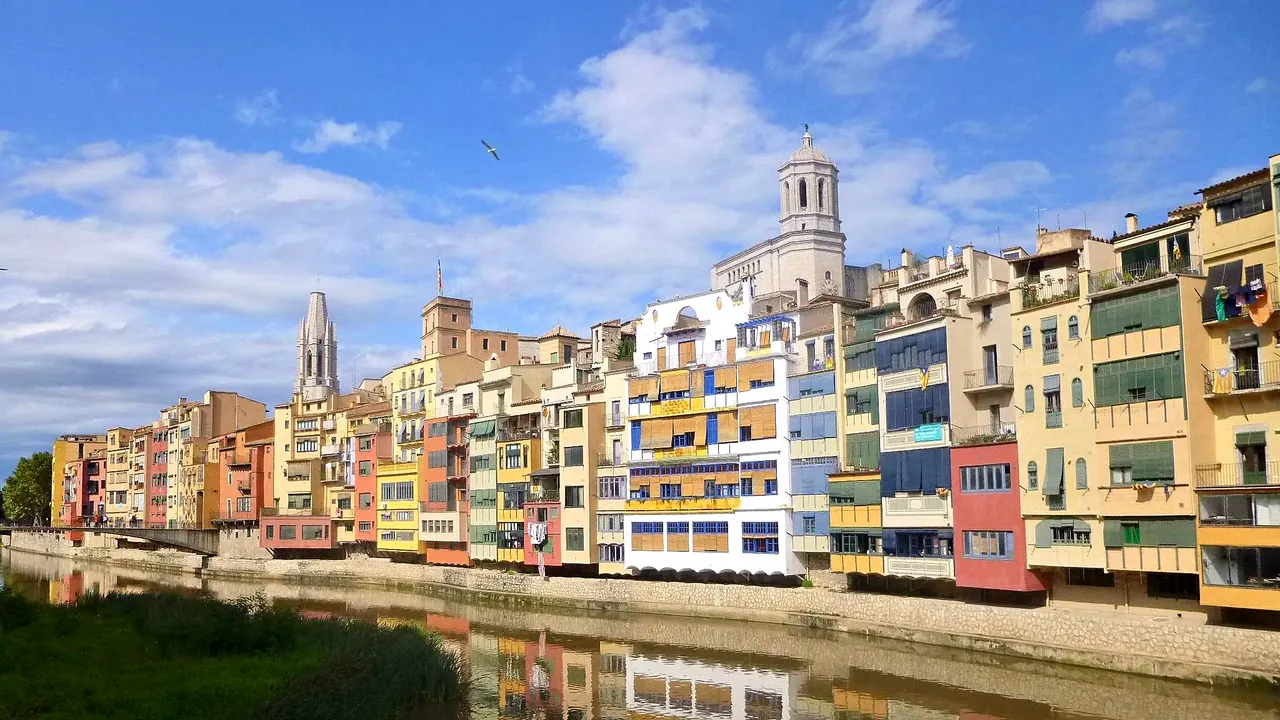
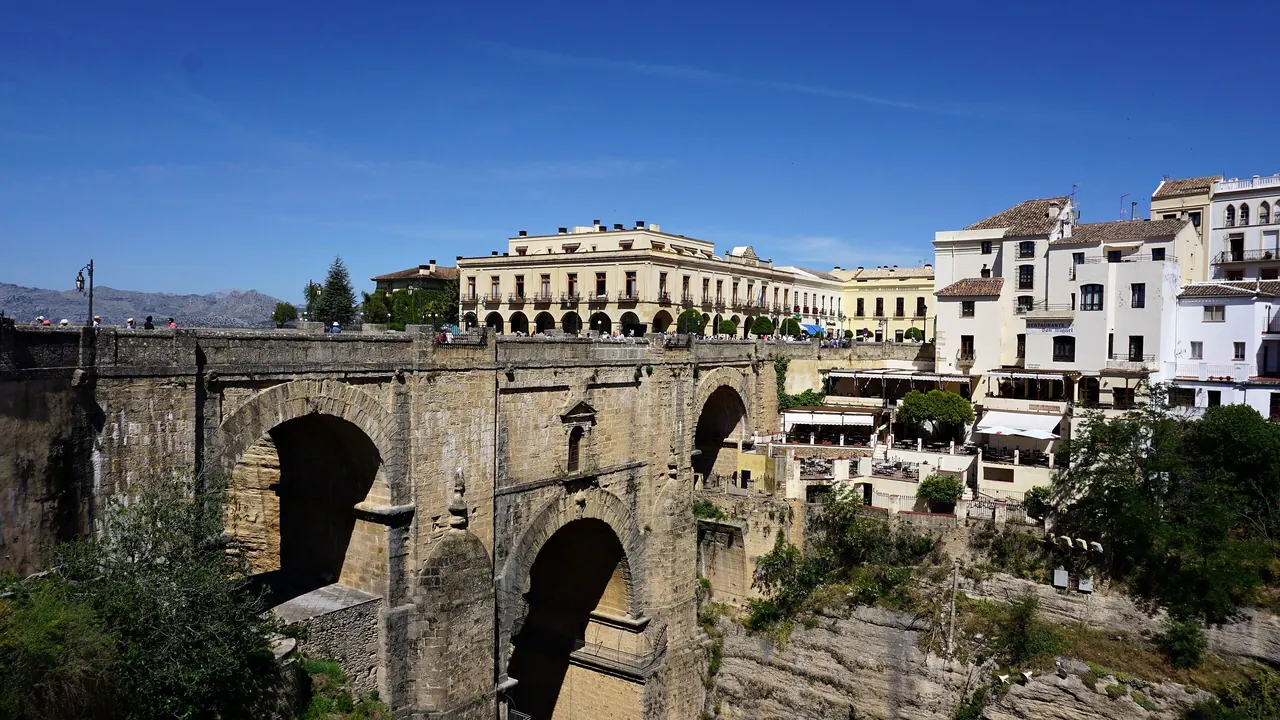
Photos: Girona by Zarateman, CC0; Ronda by Julia Kostecka, CC BY 2.0, cropped.
Girona or Ronda?
Our verdict in twelve categories, each scored against the same fixed benchmark cities, and the climate month by month, so you can choose for your trip.
Choose Girona for
- beaches
- food and drink
- live music and the arts
Girona suits the traveller who wants a small, handsome city to come back to each evening and a great deal within reach of it. The Costa Brava coves, Barcelona by fast train, Dalí's Figueres and the Empordà wine country all make easy days out, and the city itself eats noticeably better than Ronda, from old-town taverns to serious tasting menus. Cyclists, food lovers and anyone mixing a city stay with the sea will find it the stronger choice.
Choose Ronda for
- prices
Ronda is for those who come for a dramatic setting and the mountains around it, and who are happy with quiet nights. The town on its gorge, the walk down to the foot of the Tajo and the hiking in Grazalema and the Sierra de las Nieves are the draw, with the white villages close by. It also costs less, and a country house with a pool in the hills makes a restful, good-value base for walkers and couples.
Scoreboard
Twelve categories on one fixed scale from 0 to 100. The shaded stretch is the gap between the two.
Your match
Pick a travel style or drag the sliders, and both match scores follow your weighting.
Wins on beaches and food and drink with your weighting.
Wins on prices with your weighting.
What matters to you?
Category by category
What the scores mean for a trip.
Beaches & swimming
Neither town is on the sea, but Girona is much the better placed for it. The Costa Brava begins about 40 minutes away, with a choice between long sandy bays and pine-backed rocky coves, and the water around Begur and L'Escala is some of the clearest on the Spanish Mediterranean. Buses reach the main resorts, though a car opens up the smaller coves.
Ronda's nearest beaches are the long, built-up strips of the Costa del Sol around Estepona, reached down a road of hairpin bends over the Serranía. That makes the sea a full-day outing rather than an afternoon, and most visitors settle for a pool.
Food & drink
Girona is the stronger place to eat. Catalan cooking such as mar i muntanya and weekend rice dishes sits alongside an international fine-dining reputation, the Mercat del Lleó brings in Empordà produce, and local wine and cava are on every list. Its weak point is range, with little street food or foreign cooking.
Ronda's table is plainer and heartier: oxtail stew, lamb, game, cured hams and autumn chestnuts and mushrooms from the Genal valley, with Sierras de Málaga wines from nearby cellars. The best meals are in the Mercadillo's tapas bars rather than the gorge-view terraces, and a few days covers the choice.
Culture & sights
Both reward a day or two of unhurried walking, but the appeal differs. Girona's draw is a complete walled medieval quarter: the cathedral with its vast Gothic nave, the Call, one of Europe's best-preserved Jewish quarters, the Romanesque cloister and a walk along the walls.
Ronda's great sight is its setting, the Puente Nuevo spanning the deep Tajo gorge between the Moorish old town and the Mercadillo. Around it sit the Real Maestranza bullring, Arab baths that outclass Girona's, and the rock-cut stairway of the Casa del Rey Moro. Neither has major museums.
Nightlife
Girona's evenings begin with a long dinner on a terrace. In term time students carry on in the bars around Plaça de la Independència and the old quarter, and at weekends a few music bars and small clubs on the edge of the centre stay open late. For a proper night out, Barcelona is a short train ride away.
Ronda has almost no club scene. An evening there means tapas and a late meal around the Plaza del Socorro, then a drink in one of a handful of bars. Outside the September fair the town is asleep by the early hours.
Nature & outdoors
Both are excellent bases for the outdoors, and the choice comes down to how you like to move. Girona is a road-cycling centre, with quiet lanes, the climbs of Rocacorba and Els Àngels and flat greenways to Olot and the coast. It also mixes landscapes, from the Garrotxa volcanoes to the Costa Brava cliff paths, sea kayaking and the Pyrenees.
Ronda is a walker's and climber's place. Limestone mountains ring the town, with the green crags of Grazalema, the fir forests of the Sierra de las Nieves, the path into the Tajo and the Caminito del Rey within an hour.
Day trips
Girona has the richer and easier choice of outings. Barcelona is a short high-speed train ride away, Figueres and the Dalí Theatre-Museum are close, and Besalú, Peratallada, Empúries and Cadaqués fill further days. Even Perpignan in France is under an hour by fast train.
Ronda's outings centre on the white villages, from Setenil de las Bodegas under its rock to Zahara and Grazalema, plus the Palaeolithic paintings of the Cueva de la Pileta. The big cities, Seville and Málaga, are a long day there and back, and almost everything needs a car.
Good for families
Girona is the easier town for a family, though neither is built for children and neither has a zoo, aquarium or theme park. The Devesa park has shade and play areas, walking the city walls feels like an adventure, and the Costa Brava beaches are close enough to fill the days. The stairs and cobbles of the Barri Vell are hard going with a pushchair.
Ronda asks more of a family. What it has suits older children far better than small ones: the walk down into the gorge, the stairway cut through the rock at the Casa del Rey Moro and the caves nearby. Its high, exposed viewpoints need a firm hand with toddlers, and with the sea so far away, families do best in a country house with a pool and short outings into the hills.
Getting around
Both are towns you cover on foot, with steep lanes in their old quarters, so the difference lies in leaving town. Girona's station gives fast trains to Barcelona and Figueres, which makes car-free day trips practical, though the coves and wineries still favour a hire car.
Ronda's trains and buses are slow and infrequent, fine for arriving but limited for exploring, and the villages and natural parks are really car territory.
Shopping & style
Girona offers more to browse, with independent fashion and shoe shops, bookshops and delicatessens around the Rambla, plus plenty of cycling kit. Ronda has little beyond Carrera Espinel's ordinary shops and souvenir ceramics and leather near the bridge. In both the best purchases are edible, Empordà cheeses and wine in Girona, cured meats, olive oil and convent sweets in Ronda.
Affordability
Ronda is the cheaper stay. Its Mercadillo tapas bars and set lunches are good value, entry fees are modest, and rural houses in the hills are fairly priced. Only the gorge-view hotels and the Easter and September fair periods push costs up.
Girona sits around the Western European middle, with good weekday set lunches but limited old-town rooms that get expensive in summer and the cycling season. In both, a hire car is the main extra cost.
Live music & performing arts
Girona has more to attend. The Auditori brings touring orchestras and jazz, the old Teatre Municipal stages drama and dance, and the autumn Temporada Alta festival draws international theatre, though many plays are in Catalan.
Ronda's stage is mostly flamenco in small venues, plus the costumed Corrida Goyesca in the old bullring during the September fair. Beyond that, evenings offer little.
Wellness & relaxation
Neither has a living bathing culture, and both towns' Arab baths are monuments rather than places to bathe. Girona has the better option for actual soaking, at the thermal-spring hotels of Caldes de Malavella about 20 minutes away. Ronda's strength is stillness instead: once the day-trippers leave the town falls quiet, and farmhouse hotels with pools and olive groves suit a few days of doing nothing.
When should you go?
Pick your month. The climate figures are measured averages, not a forecast.
Girona in July
Ronda in July
Daytime high, °C
Rainfall in the month, mm
Where the figures come from
Ronda has no weather station within reach, so its figures come from a gridded climate model rather than a measured record, and read a broad area rather than the city itself.
Temperature and rainfall are climate normals, averaged over the years shown. Girona: 1991-2020 normals, Gerona / Costa Brava (10.1 km from centre). Ronda: 1991-2020 normals, TerraClimate 4 km grid at the town, no weather station within 90 km.
The two towns follow a similar temperature curve, mild in winter and hot in July and August, when both reach the low thirties and afternoon sightseeing on their steep lanes becomes hard work. Spring and autumn are the best months for walking in either. The difference is the rain. Girona spreads its rain fairly evenly through the year, with its wettest spell in September and October, while Ronda is almost completely dry from June to September and then turns wet, with December the wettest month at 120mm.
For swimming, Girona has the edge: the Costa Brava warms to about 24°C in August and the summer is very sunny, so June to September is beach season. Ronda's nearest sea peaks a little cooler at around 22°C, and in Ronda's dry summer most visitors swim in a pool instead. For a winter visit, Girona is the drier choice.
Which traveller are you?
On a beach and sun trip, Girona is the better choice. The Costa Brava's sandy bays and clear coves around Begur are within an easy drive or bus ride. From Ronda the coast is a long, winding drive away, so a day at the sea takes a whole day.
On a tight budget, Ronda goes further. Tapas bars and set lunches in the Mercadillo are good value, the sights are cheap to enter and country houses are fairly priced. Girona's old-town rooms are limited and get expensive in summer and the cycling season.
For a food and nightlife trip, Girona wins on both counts. Its Catalan cooking, fine-dining kitchens and Empordà wines give far more range than Ronda's mountain stews, and student bars and a few late clubs at least offer a night out.
Before you go
| Measure | Girona | Ronda |
|---|---|---|
| Official language | Spanish | Spanish |
| Currency | Euro (EUR) | Euro (EUR) |
| Sockets | CF230 V, 50 Hz | CF230 V, 50 Hz |
| Driving side | Right | Right |
| Time zone | UTC+1, UTC+2 in summer | UTC+1, UTC+2 in summer |
| Emergency number | 112 | 112 |
| Elevation | 70 m | 724 m |
| Main airport | Girona-Costa Brava Airport (GRO)10 km from centre18 non-stop destinations | Málaga-Costa del Sol Airport (AGP)60 km from centre165 non-stop destinations |
| Public holidays this year | 14 days | 12 days |
By the numbers
| Measure | Girona | Ronda |
|---|---|---|
| City population | 108,666 | 33,671 |
| People per km² | 2,779 | 87 |
| Museums within 10 km | 9 | 5 |
| UNESCO World Heritage sites within 50 km | 0 | 0 |
| Swim season, months above 21 °C | 3 months | 1 month |
Where else could you go?
Every comparison below shares a destination with this one, so you can follow Girona or Ronda somewhere new.
- Marbellavs Ronda
- Malagavs Ronda
- Barcelonavs Girona
- Jerez de la Fronteravs Ronda
- Sevillevs Ronda
- Cadizvs Ronda