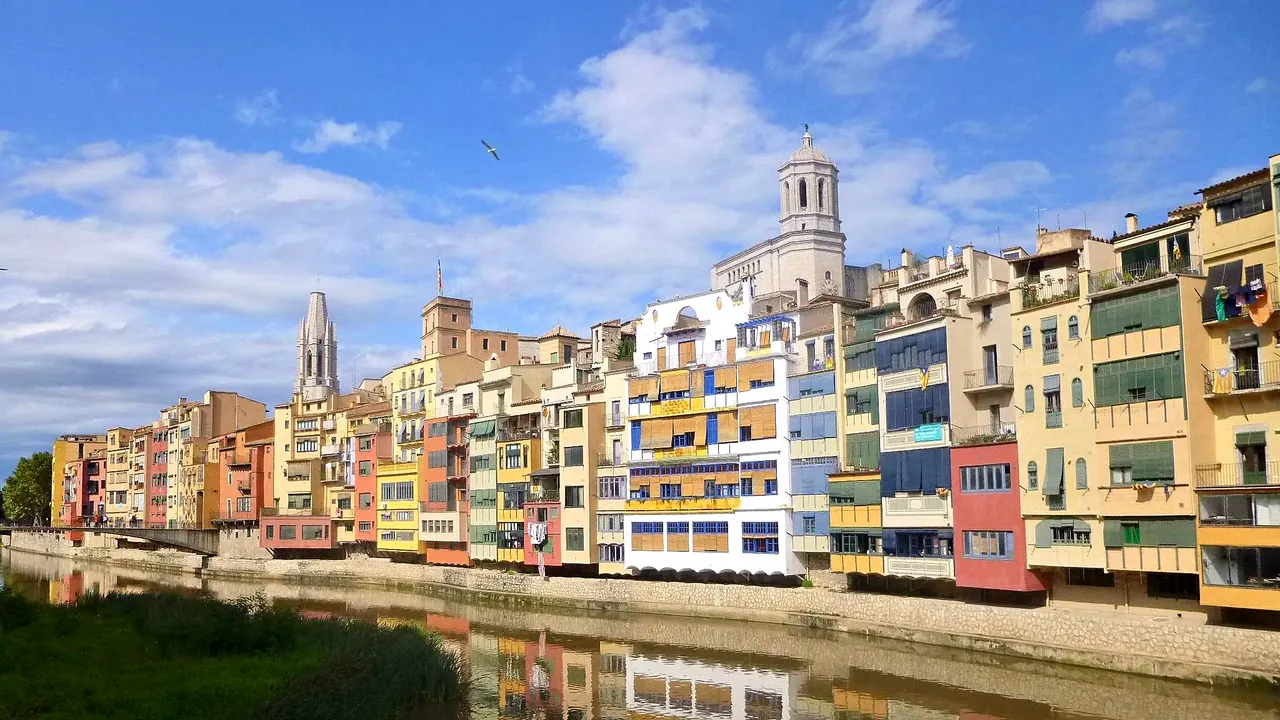
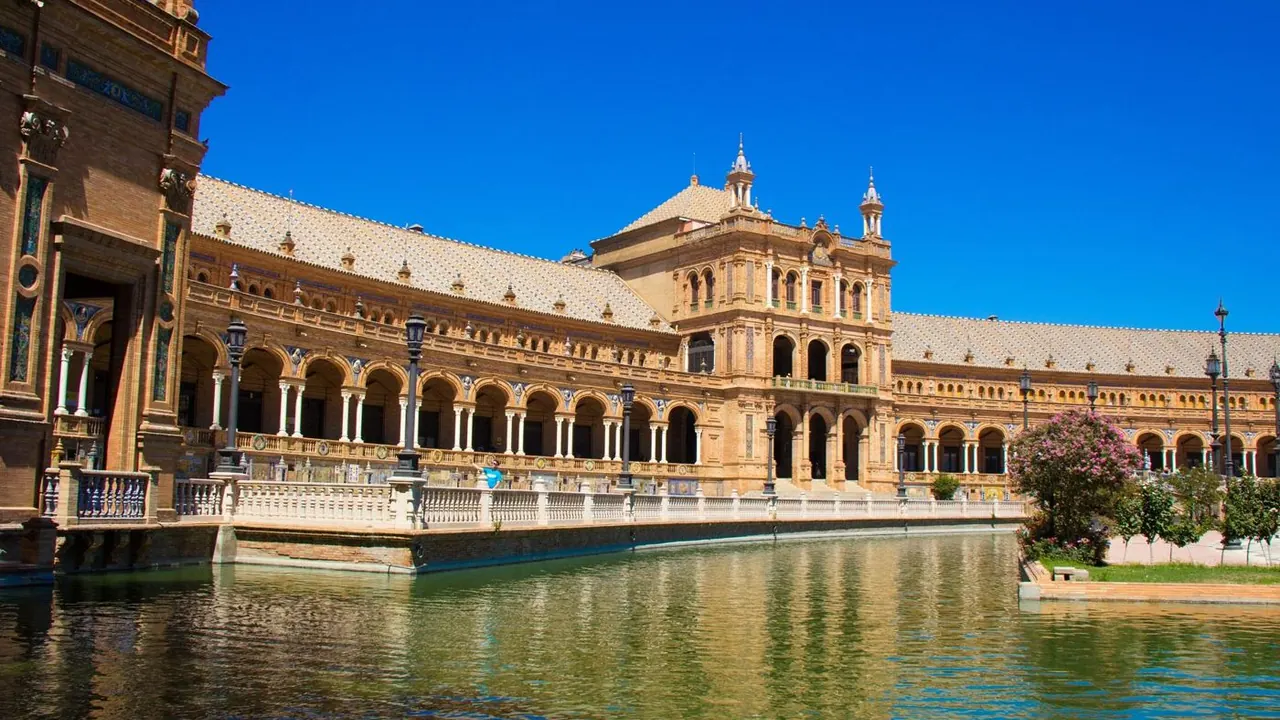
Photos: Girona by Zarateman, CC0; Seville by Tibor Kovacs, CC BY 2.0, cropped.
Girona or Seville?
Our verdict in twelve categories, each scored against the same fixed benchmark cities, and the climate month by month, so you can choose for your trip.
Choose Girona for
- beaches
- nature and the outdoors
- day trips
Girona is for travellers who want a small, calm base and plan to spend their days outside it. Road cyclists, walkers and anyone who wants the Costa Brava coves, the Garrotxa volcanoes and Dalí's villages within easy reach will get more from it. The medieval quarter fills a day or two, and the rest of the trip happens in the hills, on the greenways and along the coast, ideally with a car for part of the stay.
Choose Seville for
- nightlife
- live music and the arts
- culture and sights
Seville suits a trip built around the city itself. The Alcázar, the cathedral and the lanes of Santa Cruz make a sightseeing stay of several days, flamenco is performed every night, and evenings run late through tapas bars and riverside terraces. It also has the stronger food scene, a flat centre that is easy on foot and a little more give in the budget. The trade-off is that the sea is a long way off and high summer is fierce.
Scoreboard
Twelve categories on one fixed scale from 0 to 100. The shaded stretch is the gap between the two.
Your match
Pick a travel style or drag the sliders, and both match scores follow your weighting.
Wins on beaches and nature and the outdoors with your weighting.
Wins on nightlife and live music and the arts with your weighting.
What matters to you?
Category by category
What the scores mean for a trip.
Beaches & swimming
Neither city has a beach of its own, but Girona is much closer to one. The Costa Brava begins about 40 minutes away, from the resorts around Sant Feliu de Guíxols to the clear coves near Begur and L'Escala, so a swim fits easily into a day.
From Seville the nearest sand is Matalascañas or Mazagón on the Atlantic, more than an hour by car, and it takes most of a day. In town, swimming means a rooftop or municipal pool, so beach lovers should split the stay.
Food & drink
Seville eats better, mainly because of tapas. Grazing from counter to counter through Triana, El Arenal and Santa Cruz on salmorejo, fried fish and pork cheek, washed down with manzanilla, is a reason to visit in itself.
Girona's strengths are different: sit-down Catalan cooking, mar i muntanya dishes, Empordà wine and a serious tasting-menu reputation for a city its size. Both are weak on international food, and in both the menus near the main monuments are the ones to skip.
Culture & sights
Seville is on another scale. The Alcázar, the largest Gothic cathedral in the world and the Archivo de Indias form a UNESCO trio, and the Bellas Artes, Casa de Pilatos and Plaza de España still lie beyond them. Three or four days go quickly.
Girona offers a compact, atmospheric medieval quarter instead: the cathedral stairway, the walls with views towards the Pyrenees, the Arab Baths and the Call, one of Europe's best-preserved Jewish quarters. It is a rewarding day or two on foot, with modest museums.
Nightlife
Evenings last much longer in Seville. Dinner starts around ten and the night moves on to the Alameda de Hércules, Triana and the Alfalfa squares until the early hours, with riverside bars in summer. Clubbing is limited in both cities, so the appeal here is long outdoor evenings rather than dance floors.
Girona's evenings are a terrace and a slow dinner, with student bars in term time and a few late music bars at weekends. For a proper night out, people take the train to Barcelona.
Nature & outdoors
Girona is far ahead for the outdoors. Cyclists ride straight out to Rocacorba and Els Àngels, the old railway greenways run to Olot and the coast, and the Gavarres hills begin at the edge of town. Within an hour or so you reach volcanic beech forests, the cliff paths of Cap de Creus and the Pyrenees.
Seville is surrounded by flat farmland and orchards. Its great asset is Doñana, one of Europe's major wetlands, where you can see flamingos on a guided 4x4 trip, and the Sierra de Aracena offers gentle walking. Summer heat rules out most activity.
Day trips
Both are excellent bases, and Girona has a slight edge for variety. Barcelona is under 40 minutes by fast train, and the Dalí museum in Figueres, Besalú, the stone villages of the Empordà and the ruins of Empúries are all close, with France across the border. A car helps a lot for the villages.
Seville's day trips are grander but more spread out. Córdoba's Great Mosque is under an hour by train, Itálica and Carmona are close by, and Jerez and Cádiz lead on to the white villages. Granada and Ronda work better as overnight trips.
Good for families
Seville gives children more to do. María Luisa Park has rowing boats and horse carriages, the Alcázar gardens have a maze, and La Cartuja adds a theme park, a summer water park and an aquarium. The flat centre is easy with a pushchair, but July and August heat is a real problem with small children.
Girona is calm and safe, and children enjoy walking the walls, but almost nothing is built for them, and the stepped Barri Vell is hard work with a pushchair. Families usually treat it as a base for beach days.
Getting around
Seville is easier to get around. Its centre is flat and largely pedestrianised, with a tram, a metro line, buses and a practical public bike scheme as back-up. Heat, not distance, is the obstacle.
Girona is small enough to walk, but the old town is a climb of stairs. Its strength is the station, with fast trains to Barcelona and Figueres. Beyond those lines, infrequent buses mean many visitors rent a car to reach the coves and villages.
Shopping & style
Seville has more to buy, and much of it is distinctive: hand-painted tiles from the Triana workshops, and flamenco dresses, shawls, fans and guitars around Sierpes. Sierpes and Tetuán also have the high-street chains.
Girona's shopping is a pleasant hour on the Rambla among independent boutiques and delis, plus Empordà produce from the Mercat del Lleó and plenty of cycling kit. For anything bigger, people go to Barcelona.
Affordability
Seville is a little easier on the budget. Tapas make eating out cheap, the walkable centre keeps transport costs low, and rooms are good value in the summer heat, although rates jump during Holy Week and the April Fair.
Girona is mid-range, with good set lunches, but its old town has few rooms, and they get expensive in summer and the cycling season. A hire car for exploring the region adds to the cost.
Live music & performing arts
Seville is much stronger here, above all for flamenco. You can see it every night in the tablaos of Santa Cruz and Triana and in the local peñas, and the Teatro de la Maestranza stages opera in the city where Carmen is set.
Girona's stage life is thin for most of the year. Temporada Alta, its long autumn festival of international theatre and dance, is the exception, and summer brings outdoor concerts on the coast. Many plays are in Catalan.
Wellness & relaxation
Neither city is a place to come just to unwind, and both offer a slow pace rather than a spa scene. Seville has atmospheric Arab-style bath houses in old mansions, but its narrow streets are noisy at night.
Girona's Arab Baths are a monument, not somewhere to bathe. Its real option is the thermal-spring hotels of Caldes de Malavella, about 20 minutes away, and its quiet morning lanes are calmer than anything in Seville.
When should you go?
Pick your month. The climate figures are measured averages, not a forecast.
Girona in July
Seville in July
Daytime high, °C
Rainfall in the month, mm
Temperature and rainfall are climate normals, averaged over the years shown. Girona: 1991-2020 normals, Gerona / Costa Brava (10.1 km from centre). Seville: 1991-2020 (sunshine 1981-2010, rainfall 1981-2010) normals, Sevilla / San Pablo (8.1 km from centre).
Girona has the gentler climate. Summer highs reach about 31°C inland, warm enough for long beach days on the Costa Brava, where the sea is at its warmest in August at around 24°C and still pleasant in July and September. Spring and early autumn are best for cycling and walking the old town. The wettest stretch is September to October, peaking around 86mm, and winters are cool, with highs in the mid-teens and the shortest days.
Seville runs much hotter and drier. July and August average about 36°C with almost no rain and long sunny days, which makes midday sightseeing hard work. March to May and October are the comfortable months for walking the centre. Winter is milder than in Girona, but November and December bring the heaviest rain, with November reaching about 122mm.
Which traveller are you?
On a beach and sun trip, Girona is the better choice. The Costa Brava starts about 40 minutes away, with sandy bays and clear coves around Begur. From Seville, the Atlantic beaches of Huelva take most of a day there and back.
For a culture and arts trip, Seville is clearly ahead. The Alcázar, the cathedral and the Giralda, Murillo at the Bellas Artes and nightly flamenco fill several days. Girona's old quarter and Jewish Call are lovely but take a day or two.
On an outdoors trip, Girona wins easily. Cyclists ride quiet lanes and greenways straight from town, and the volcanic Garrotxa, the coastal paths and the Pyrenees are all close. Seville's flat farmland and fierce summers offer less, although Doñana is close enough for birdwatchers.
Before you go
| Measure | Girona | Seville |
|---|---|---|
| Official language | Spanish | Spanish |
| Currency | Euro (EUR) | Euro (EUR) |
| Sockets | CF230 V, 50 Hz | CF230 V, 50 Hz |
| Driving side | Right | Right |
| Time zone | UTC+1, UTC+2 in summer | UTC+1, UTC+2 in summer |
| Emergency number | 112 | 112 |
| Elevation | 70 m | 18 m |
| Main airport | Girona-Costa Brava Airport (GRO)10 km from centre18 non-stop destinations | Seville Airport (SVQ)9 km from centre96 non-stop destinations |
| Public holidays this year | 14 days | 12 days |
By the numbers
| Measure | Girona | Seville |
|---|---|---|
| City population | 108,666 | 689,423 |
| People per km² | 2,779 | 4,896 |
| Museums within 10 km | 9 | 24 |
| UNESCO World Heritage sites within 50 km | 0 | 1 |
| Swim season, months above 21 °C | 3 months | - |
Where else could you go?
Every comparison below shares a destination with this one, so you can follow Girona or Seville somewhere new.
- Jerez de la Fronteravs Seville
- Barcelonavs Girona
- Cadizvs Seville
- Rondavs Seville
- Cordobavs Seville
- Marbellavs Seville