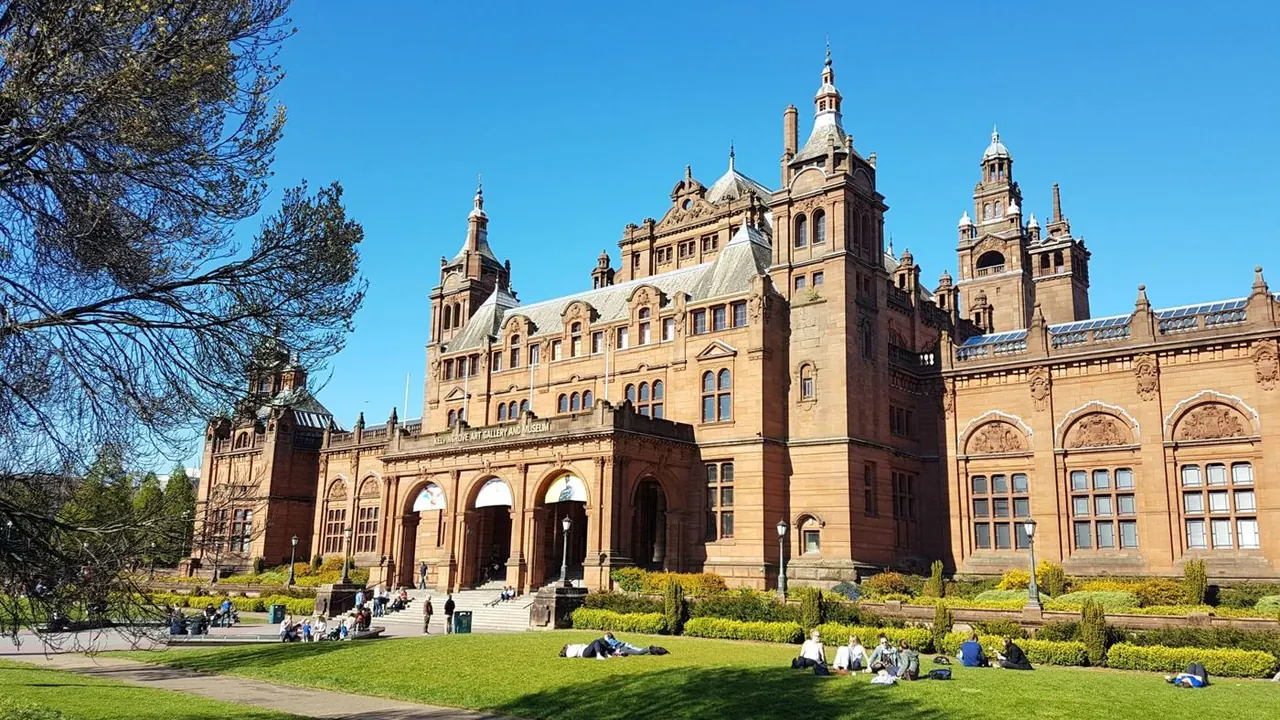
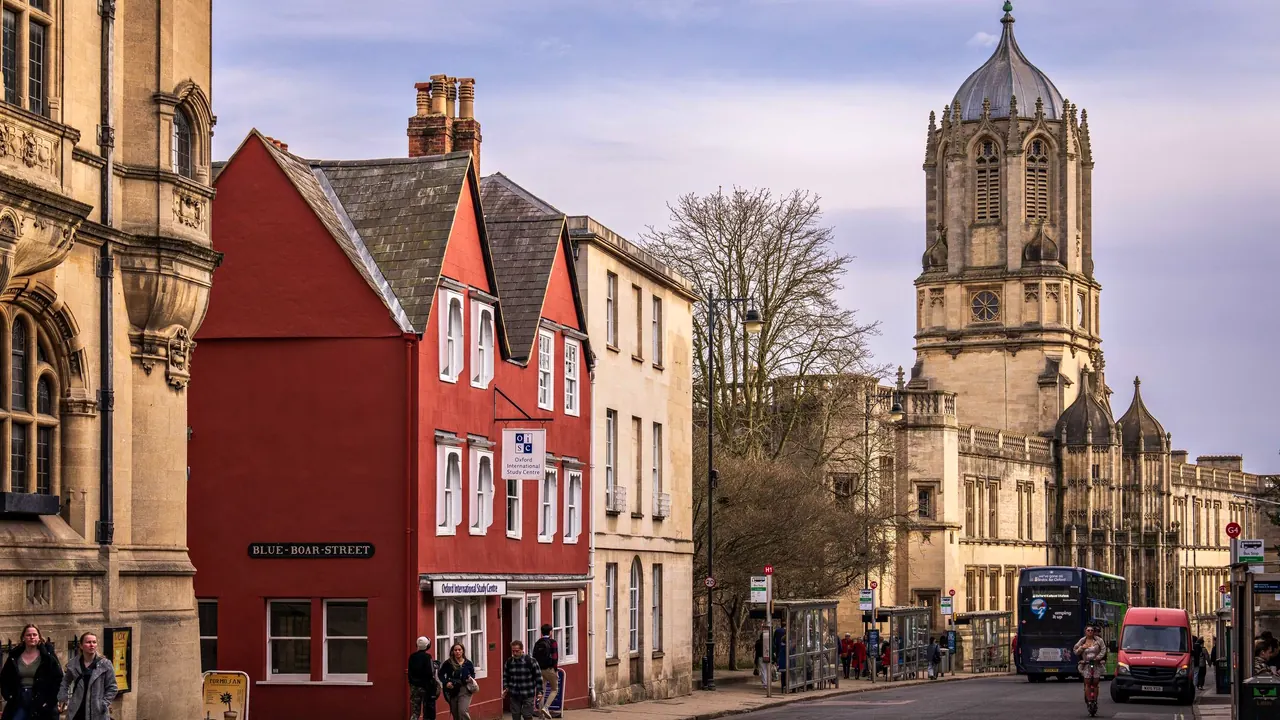
Photos: Glasgow by Stinglehammer, CC BY-SA 4.0, cropped; Oxford by Mark Stebnicki, Pexels License.
Glasgow or Oxford?
Our verdict in twelve categories, each scored against the same fixed benchmark cities, and the climate month by month, so you can choose for your trip.
Choose Glasgow for
- nightlife
- nature and the outdoors
- live music and the arts
Glasgow is the better pick for a trip with energy in it. Its nights out run late and loud, its gig circuit is one of the deepest in Britain, and the food reaches well beyond the pub, from long-standing curry houses to west coast seafood in Finnieston. The Highlands start close by, so you can be walking above Loch Lomond in the morning. Hotels also tend to cost less than in Oxford.
Choose Oxford for
- culture and sights
- day trips
- getting around
Oxford suits travellers who want beauty in a small space and a slower pace. The colleges, libraries and museums are packed into a flat centre you can cross on foot, and Evensong in a college chapel is a different kind of evening from anything Glasgow offers. It is also the stronger base for days out, with Blenheim, the Cotswolds and London all within easy reach, as long as you accept higher hotel bills and quiet nights.
Scoreboard
Twelve categories on one fixed scale from 0 to 100. The shaded stretch is the gap between the two.
Your match
Pick a travel style or drag the sliders, and both match scores follow your weighting.
Wins on nightlife and nature and the outdoors with your weighting.
Wins on culture and sights and day trips with your weighting.
What matters to you?
Category by category
What the scores mean for a trip.
Beaches & swimming
Neither city is a place for a beach, and the difference is in the kind of water. From Glasgow, a train takes about an hour to reach the old Clyde resorts of Largs, Troon and Ayr, with promenades, views to Arran and a cold sea best enjoyed from the sand. Oxford is about as far from the sea as you can get in England, so swimming there means a summer dip in the Thames at Port Meadow, the Cherwell or the open-air pool at Hinksey.
Food & drink
Glasgow gives you more variety and more reasons to plan meals around neighbourhoods. Its South Asian cooking has deep roots, Italian families shaped its cafés and chip shops, and Finnieston serves modern Scottish plates built on west coast fish, game and beef. The South Side and the West End add relaxed local places and a serious whisky selection.
Oxford eats more simply. The best meals are pub ones, such as a Sunday roast by the river or ale under low beams, along with lunch from the stalls of the Covered Market. Cowley Road brings in cheap international food, but expect solid meals rather than a food destination.
Culture & sights
Oxford has the more striking sightseeing, because so much of it is concentrated in one place. The Radcliffe Camera, the Bodleian, the Sheldonian and Christ Church stand within minutes of each other in honey-coloured stone, and the Ashmolean, the Pitt Rivers and the Natural History Museum are far stronger than a city this size would suggest.
Glasgow's appeal is Victorian rather than medieval. It has grand sandstone streets, the huge free collection at Kelvingrove and the Burrell's medieval treasures out in Pollok Country Park. Mackintosh buildings give it a signature of its own, but the highlights are spread across the city and none is as famous as Oxford's skyline.
Nightlife
This is where the two differ most. Glasgow treats a night out as a main event, with loud, friendly pubs, polished bars in the Merchant City, late student clubs around Sauchiehall Street and an underground techno and house scene that brings in DJs from across Europe. Clubs close around 3am, and weekends are packed.
Oxford's evenings revolve around historic taverns and riverside pubs, with only a few late bars and small clubs on Cowley Road. It quietens noticeably outside term, and the centre is usually calm by midnight.
Nature & outdoors
Glasgow has proper wild country nearby. Loch Lomond is about 40 minutes away, with Ben Lomond and Conic Hill above it and the Trossachs just beyond, while the West Highland Way begins on the city's northern edge. Ferries cross to Arran for the climb up Goatfell.
Oxford's outdoors is gentle and pastoral. You can walk from the centre to Port Meadow and Christ Church Meadow, take flat towpath rides along the Thames and go punting on the Cherwell. The Cotswolds, the Chilterns and the Ridgeway offer long, easy walks rather than mountains.
Day trips
Both make good bases, but Oxford has the longer and denser list. Blenheim Palace is about twenty minutes away, Cotswold villages such as Bibury and Chipping Campden are within an hour, and London is an hour by train. Stratford-upon-Avon, Warwick, Windsor and Bath can all be done in a day.
Glasgow's trump card is Edinburgh, under an hour by train, with Stirling Castle and Linlithgow Palace equally close. New Lanark, Culzean Castle and the islands of Bute and Arran add variety, though the island trips make for long days.
Good for families
Glasgow has a slight edge with children, mainly because its big museums are free and hands-on. The Riverside Museum has trams and a tall ship, Kelvingrove has a Spitfire hanging from the ceiling and the Science Centre is built for young visitors. You will need indoor plans for rainy days, and the steep streets are hard work with a buggy.
Oxford is small, safe and easy to walk, and the dinosaurs at the Natural History Museum, the Pitt Rivers and an afternoon punting usually go down well. Harry Potter fans will spot Christ Church, but most other family outings, such as the wildlife park or the studio tour, mean leaving the city.
Getting around
Oxford is the easier city to get around. Its centre is small and flat, several streets are closed to through traffic, and you can cross it on foot in about twenty minutes. Bikes and frequent buses cover the rest, and the station is a short walk away.
Glasgow's grid centre is walkable, though some streets climb steeply to the north. The little circular Subway serves the West End and Govan, and suburban trains reach the South Side and the coast. Buses are run by several companies with separate fares, which takes some getting used to.
Shopping & style
Glasgow is the better shopping city. Buchanan, Sauchiehall and Argyle Streets form a long pedestrian loop of department stores and big names, while Princes Square and the Argyll Arcade add Victorian arcades. The West End has the vintage clothes and independent boutiques, and the Barras weekend market offers rougher bargain hunting.
Oxford's centre is mostly chains, so its appeal lies in the details: the Covered Market traders, antique maps and prints, and the enormous basement room at Blackwell's. For designer labels, shoppers head to the outlet village at Bicester.
Affordability
Glasgow is noticeably easier on the budget, mostly because of where you sleep. Its hotels are usually cheaper than Oxford's, except when a big concert or match is on, and curry houses and pub lunches keep meals reasonable. Most of its major museums are free.
In Oxford, rooms are scarce and university events push prices up, so many visitors stay out by the ring road or come for the day. Once you are there, the museums are free and walking costs nothing, but college entry and library tours add up over a few days.
Live music & performing arts
Glasgow is a music city above all. It has the Barrowland Ballroom and a deep circuit of small rooms and arenas, folk sessions in pubs and Celtic Connections each winter. It is also home to Scottish Opera, Scottish Ballet and two major orchestras.
Oxford's great live experience is quieter and older. Choirs with world reputations sing Evensong in Christ Church, Magdalen and New College, and there are concerts at the Sheldonian and the historic Holywell Music Room. Its theatre and rock gigs are on a much smaller scale.
Wellness & relaxation
Neither city is built for a treatment-based break, and both offer only hotel spas and day spas. Glasgow's one oddity is its pair of Victorian swimming clubs with Turkish baths, though these are mainly for members. For real calm, people head out to the lochs.
Oxford's calm is right in the centre: the Botanic Garden, the walled college gardens, Magdalen's deer park and Addison's Walk early in the morning, or a slow drift in a punt.
When should you go?
Pick your month. The climate figures are measured averages, not a forecast.
Glasgow in July
Oxford in July
Daytime high, °C
Rainfall in the month, mm
Where the figures come from
Glasgow has no rain gauge within 25 km of the centre, so its rainfall comes from a gridded climate dataset read at the city rather than from a gauge further away.
Glasgow's sunshine is measured 57 km from the centre, at Edinburgh Airport.
Oxford's temperatures are measured 37 km from the centre, at Fairford Royal Air Force Base.
Oxford has no rain gauge within 25 km of the centre, so its rainfall comes from a gridded climate dataset read at the city rather than from a gauge further away.
Oxford's sunshine is measured 57 km from the centre, at Lyneham.
Temperature and rainfall are climate normals, averaged over the years shown. Glasgow: 1991-2020 (sunshine 1981-2010) normals, Glasgow Airport (11.5 km from centre). Oxford: 1961-1990 (sunshine 1991-2020, rainfall 1991-2020) normals, Fairford Royal Air Force Base (37 km from centre).
Neither city is warm, but Oxford has the warmer and much drier summer. Its July afternoons reach about 22°C against Glasgow's 19°C, it gets far more sunshine from May to August, and its rain is spread lightly across the year. Glasgow is wettest from October to January, at around 141mm in January, and short grey days make winter the hardest season there. Its best spell is late spring, when April and May are the driest months and the sunniest stretch of the year.
For walking the streets, both work from May to September, and Oxford's colleges and riverside meadows look their best in early summer. Glasgow's sea on the Clyde coast peaks at only about 15°C in July and August, cold enough that a swim is a brief dare rather than a beach day. In winter Oxford is slightly colder in January but much drier, while Glasgow is milder and wetter, so museum days and pubs are the plan.
Which traveller are you?
On a food and nightlife trip, Glasgow is the clear choice. It has curry houses, Italian cafés and seafood in Finnieston, followed by Merchant City cocktail bars, late clubs and basement techno nights. Oxford's evenings mostly end with a quiet pint before midnight.
For an outdoors trip, pick Glasgow. Loch Lomond, the Trossachs, the start of the West Highland Way and the island of Arran all give real hills and water nearby. Oxford's meadows and Cotswold paths are lovely but gentler walking country.
For a short city break, Oxford is the better fit. Its colleges, the Bodleian, the Ashmolean and the river all sit within a small, flat centre, so two days on foot cover a lot. Glasgow's sights are more spread out and take longer to join up.
Before you go
| Measure | Glasgow | Oxford |
|---|---|---|
| Official language | English | English |
| Currency | Pound Sterling (GBP) | Pound Sterling (GBP) |
| Sockets | G230 V, 50 Hz | G230 V, 50 Hz |
| Driving side | Left | Left |
| Time zone | UTC, UTC+1 in summer | UTC, UTC+1 in summer |
| Emergency number | 112 or 999 | 112 or 999 |
| Elevation | 21 m | 73 m |
| Main airport | Glasgow Airport (GLA)11 km from centre95 non-stop destinations | London Heathrow Airport (LHR)63 km from centre224 non-stop destinations |
| Public holidays this year | 10 days | 8 days |
By the numbers
| Measure | Glasgow | Oxford |
|---|---|---|
| City population | 626,410 | 147,500 |
| People per km² | 190 | 3,235 |
| Museums within 10 km | 29 | 11 |
| UNESCO World Heritage sites within 50 km | 2 | 1 |
| Swim season, months above 21 °C | None | - |
Where else could you go?
Every comparison below shares a destination with this one, so you can follow Glasgow or Oxford somewhere new.
- Edinburghvs Glasgow
- Londonvs Oxford
- Bathvs Oxford
- Bristolvs Oxford
- St Andrewsvs Glasgow
- Cambridgevs Oxford