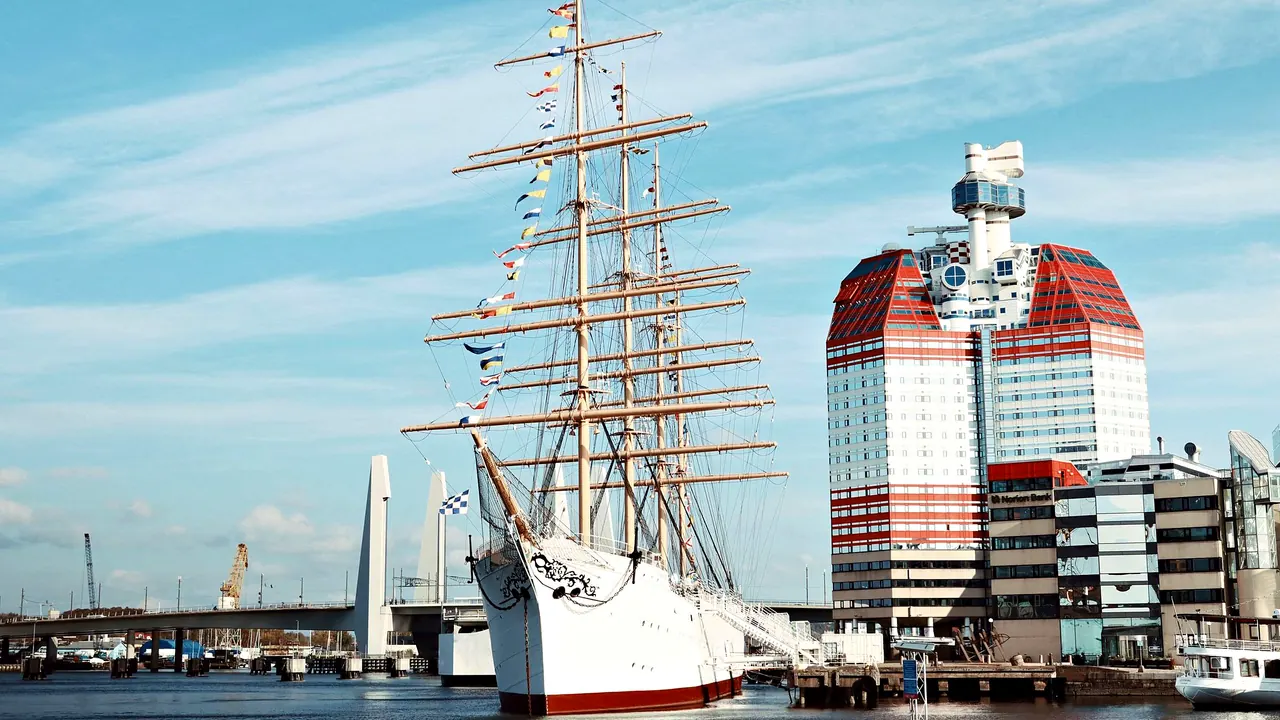
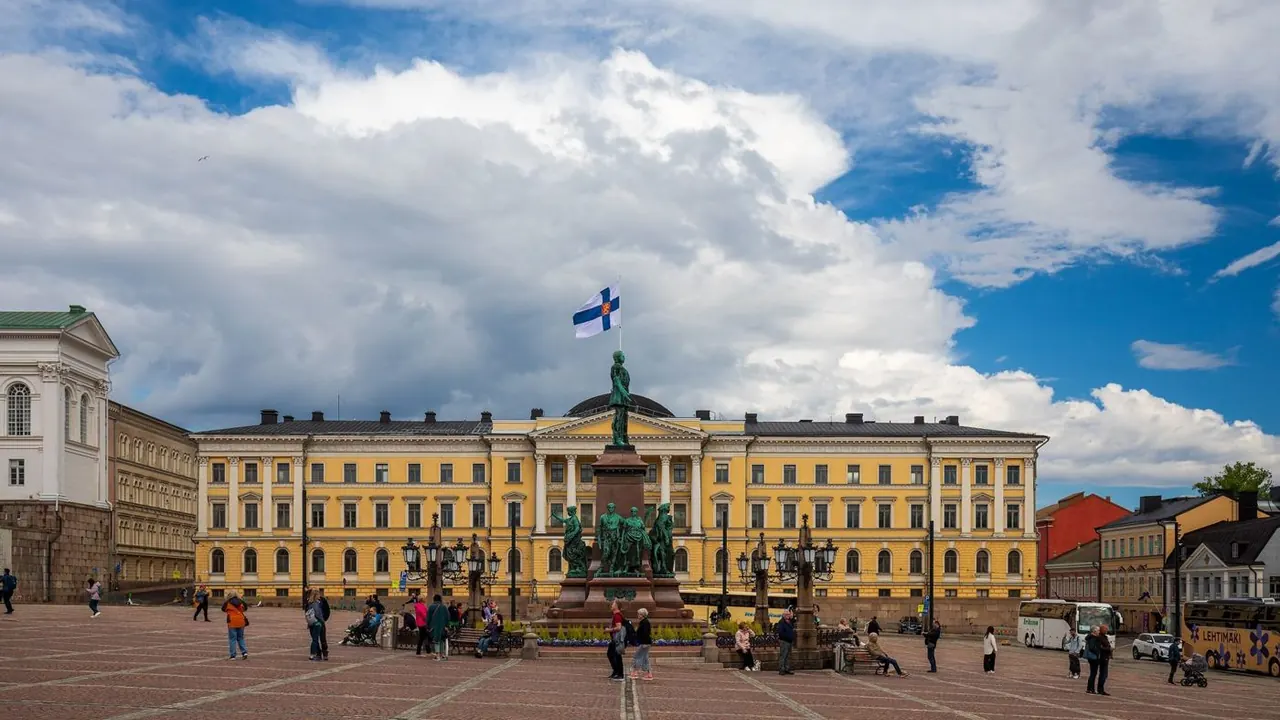
Photos: Gothenburg by Efrem Efre, Pexels License; Helsinki by Ximonic (Simo Räsänen), CC BY-SA 4.0, cropped.
Gothenburg or Helsinki?
Our verdict in twelve categories, each scored against the same fixed benchmark cities, and the climate month by month, so you can choose for your trip.
Choose Gothenburg for
- food and drink
- beaches
- nature and the outdoors
Gothenburg suits travellers who want the sea within easy reach of the city. A tram and a short ferry take you to car-free granite islands for swimming, kayaking and coastal walks. The seafood from the Bohuslän coast is the best eating on this page, and Liseberg is a short walk from the centre, which makes the city an easy summer choice for families.
Choose Helsinki for
- wellness
- culture and sights
- shopping
Helsinki is the better pick if you want a city with a stronger identity of its own. Its architecture runs from Engel's Neoclassical squares through Jugend streets to Aalto, Suomenlinna sits just offshore, and the shops are full of Finnish design. Above all it has the sauna. Public wood-heated saunas and seaside plunges into the Baltic give the city a way to unwind that Gothenburg cannot match, and Tallinn is a ferry ride away.
Scoreboard
Twelve categories on one fixed scale from 0 to 100. The shaded stretch is the gap between the two.
Your match
Pick a travel style or drag the sliders, and both match scores follow your weighting.
Wins on food and drink and beaches with your weighting.
Wins on wellness and culture and sights with your weighting.
What matters to you?
Category by category
What the scores mean for a trip.
Beaches & swimming
Neither city is a beach destination, but Gothenburg is slightly better for a summer swim. You swim off smooth granite rocks and from small coves at Askim, Hovås and Saltholmen, or on islands such as Styrsö and Vrångö, in clear salt water.
Helsinki has more sand. Hietaniemi is a proper sandy strip near the centre, and Pihlajasaari is a short boat ride out. The brackish Baltic is cooler, though, and its season is shorter, so a swim there is a pleasant hour at most.
Food & drink
Gothenburg is the better place to eat, because its whole food scene is built around seafood. Shrimp, langoustines, oysters and the autumn lobster catch come in from the coast, and you can see them in Feskekôrka, the church-like fish hall, and in Stora Saluhallen. The fine dining built on the same catch is impressive for a city of its size.
Helsinki's cooking is plainer: salmon soup, Baltic herring, Karelian pies and rye bread, best tasted together at the Old Market Hall. Both cities share the cinnamon bun and the long coffee break. In both, the lunch menu is the sensible way to eat out.
Culture & sights
Helsinki offers more sightseeing, and most of it is architecture. Engel's Senate Square, the red-brick Uspenski Cathedral, whole streets of Finnish Art Nouveau and Aalto's Finlandia Hall trace the city's history through its buildings. The sea fortress of Suomenlinna and the Ateneum's national collection add weight.
Gothenburg's appeal is quieter: canals laid out by Dutch engineers, the wooden houses of Haga and the Nordic paintings in the Museum of Art. It deserves a couple of days, while Helsinki fills two or three.
Nightlife
Nights out are much alike, friendly and expensive, and quiet on weeknights. In Gothenburg the best evenings are in the student pubs and dive bars around Järntorget and Andra Långgatan, busy with two universities, but most places close in the early hours. Helsinki's Kallio has scruffy bars and karaoke rooms, more of the city stays open past 2am at weekends, and the summer light keeps people out on the waterside terraces.
Nature & outdoors
Gothenburg has the better outdoors, mainly because of its archipelago. The bare granite islands with heather and small harbours are made for kayaking, cycling and sailing. Further north, the rocky Bohuslän coast is cut by inlets, and the Delsjön forest lakes are on the city's edge.
Helsinki has its own skerries and a forest belt reaching almost into the centre. Nuuksio National Park, with lakes and marked trails, is under an hour away by bus. In a cold winter it offers something Gothenburg cannot: skiing and ice walks on the frozen sea.
Day trips
The day trips are about equally good, but they go in different directions. From Gothenburg you follow the coast to the island town of Marstrand, Varberg's seaside fortress or the Bronze Age rock carvings at Tanum, and the furthest fishing villages are much easier with a car.
Helsinki's best day out goes abroad: a fast ferry reaches Tallinn's medieval old town in about two hours. Closer to home, Porvoo's riverside storehouses and Turku's castle are easy trips by bus or train, but beyond them the choice soon runs out.
Good for families
Both cities are safe and easy with children, and their attractions come in matching pairs. Gothenburg has Liseberg, Scandinavia's largest amusement park, along with Universeum's indoor rainforest for wet days and a destroyer and submarine to climb through in the harbour.
Helsinki answers with the classic Linnanmäki, a zoo on its own island and the tunnels of Suomenlinna. Its winters are colder and darker, though, so family days move indoors for longer than in milder Gothenburg.
Getting around
Helsinki is easier to get around. A metro line runs alongside the trams, commuter trains run north, and the airport is about half an hour away by train, all on one ticket system with the island ferries.
Gothenburg has a very large tram network and a single ticket that also covers its river and archipelago ferries. There is no metro, though, and trams slow down where the lines meet in the centre. A car still helps for the remote villages up the coast.
Shopping & style
Helsinki is better for shopping because it has a style you can take home. Aalto glass, bold printed textiles, ceramics and modernist furniture fill the Design District and the Esplanadi, and Stockmann anchors the centre.
Gothenburg is more of a Scandinavian high street, along Kungsgatan and in the Nordstan mall. Its better finds are in the vintage, record and craft shops of Haga, Majorna and Linnéstaden.
Affordability
Both are expensive by European standards, with dinners out and especially bar drinks well above what Southern Europe charges. Gothenburg is a little less punishing. Its hotels can get cheaper at weekends and in the Swedish summer vacation, while Helsinki's hotels are at their dearest in summer. In both cities the best budget tactics are the same: the transport ticket, the set lunch and a picnic by the water.
Live music & performing arts
The two cities are broadly level, with different strengths. Helsinki has more weight in classical music: two orchestras share the Music Centre, the National Opera and Ballet stages a full season by Töölö Bay, and Sibelius's legacy and the Finnish school of conductors stand behind it all.
Gothenburg has the national orchestra in Konserthuset and a harbourside opera house with a respected dance company. Its bigger draw is pop and indie, which peaks when the Way Out West festival fills Slottsskogen in August. In both cities most theatre is not in English.
Wellness & relaxation
This is the biggest difference between the two. In Helsinki the sauna is part of everyday life. You can sweat in old wood-heated public saunas in Kallio, go between the heat and the Baltic at harbour sauna complexes even in icy weather, or follow the old routine at the Yrjönkatu baths.
Gothenburg has the sauna and sea dip too, from jetties and rocks, and the plain municipal Valhallabadet. It is a quiet, restful city rather than one you would visit for the bathing.
When should you go?
Pick your month. The climate figures are measured averages, not a forecast.
Gothenburg in July
Helsinki in July
Daytime high, °C
Rainfall in the month, mm
Temperature and rainfall are climate normals, averaged over the years shown. Gothenburg: 1991-2020 normals, Goteborg Save Airport (9.8 km from centre). Helsinki: 1991-2020 normals, Helsinki Kaisaniemi / Harju (1.6 km from centre).
Both cities have a short, light summer and a long, dark winter, and July and August are the only months warm enough for swimming. Gothenburg's highs reach about 21°C and the Kattegat about 18°C. Helsinki is just as warm on land, but the Baltic stays a degree or so cooler. Helsinki is also noticeably sunnier from May to July, with close to 283 hours of sunshine in July. That makes late spring and early summer the best time for long walks along the shore and evenings out on the terraces.
Winter is where the two differ. Gothenburg stays a few degrees above freezing but turns wet and grey, and October brings around 95mm of rain. Helsinki is drier, but its highs drop to about -1°C, so expect ice and slush on the streets. In return, a cold Helsinki winter is the best time for sauna and sea plunges, and in Gothenburg late spring is the better time for walking around the city.
Which traveller are you?
On an outdoors trip, Gothenburg gives you more. You can spend whole days on the water, taking ferries between car-free islands, paddling a sea kayak along granite shores and swimming off the rocks, with forest walking on the city's edge. Helsinki offers the same kind of outing for a day or two.
For a culture and arts trip, Gothenburg's sights fill an unhurried weekend, but Helsinki rewards more time. You can spend your days following the city's history through its streets and buildings, take a ferry out to its sea fortress, and end each evening at a concert or the opera.
On a relaxing and wellness trip, Gothenburg offers a sauna and a cold dip from its jetties and rocks, but Helsinki is the clear choice. There the sauna is a daily ritual that visitors can join easily, from old neighbourhood saunas to harbour ones with a plunge into the Baltic, even in winter.
Before you go
| Measure | Gothenburg | Helsinki |
|---|---|---|
| Official language | Swedish | Finnish, Swedish |
| Currency | Swedish Krona (SEK) | Euro (EUR) |
| Sockets | CF230 V, 50 Hz | CF230 V, 50 Hz |
| Driving side | Right | Right |
| Time zone | UTC+1, UTC+2 in summer | UTC+2, UTC+3 in summer |
| Emergency number | 112 | 112 |
| Elevation | 12 m | 17 m |
| Main airport | Göteborg Landvetter Airport (GOT)19 km from centre79 non-stop destinations | Helsinki Vantaa Airport (HEL)16 km from centre136 non-stop destinations |
| Public holidays this year | 16 days | 15 days |
By the numbers
| Measure | Gothenburg | Helsinki |
|---|---|---|
| City population | 674,529 | 694,392 |
| People per km² | 2,484 | 3,239 |
| Museums within 10 km | 39 | 74 |
| UNESCO World Heritage sites within 50 km | 0 | 1 |
| Swim season, months above 21 °C | None | None |
Where else could you go?
Every comparison below shares a destination with this one, so you can follow Gothenburg or Helsinki somewhere new.
- Tallinnvs Helsinki
- Turkuvs Helsinki
- Aarhusvs Gothenburg
- Tartuvs Helsinki
- Copenhagenvs Gothenburg
- Malmovs Gothenburg