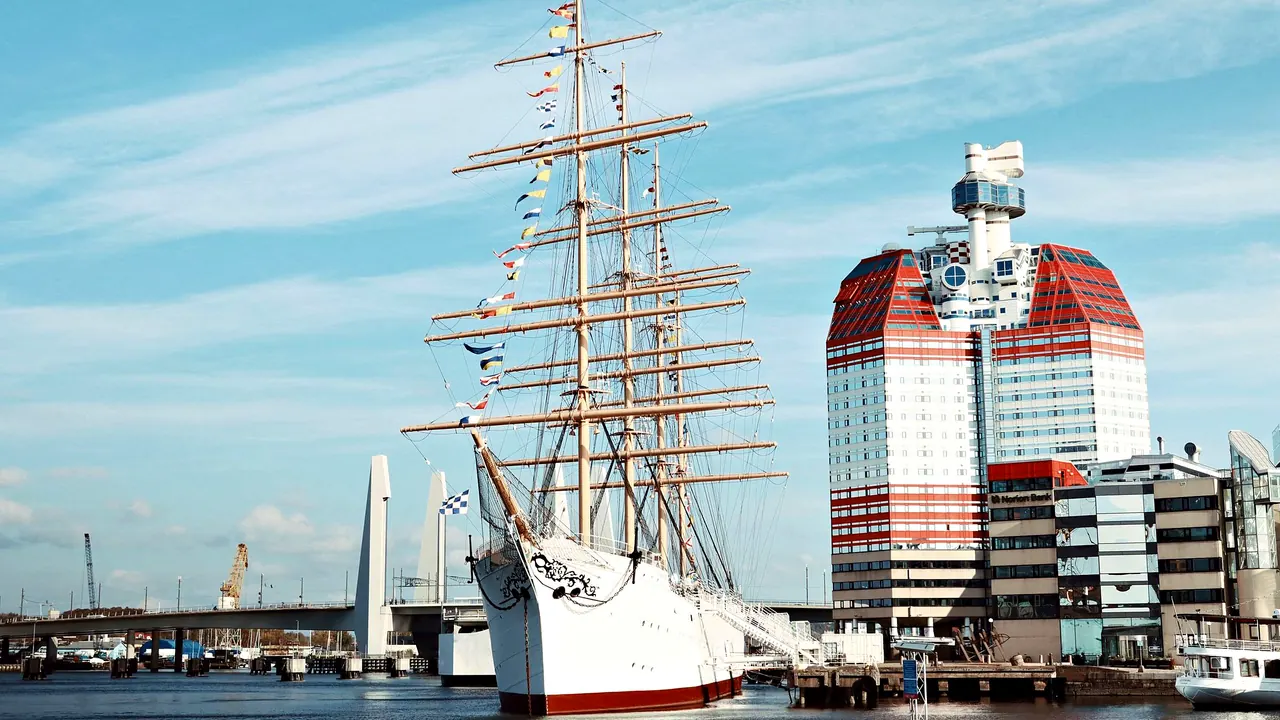
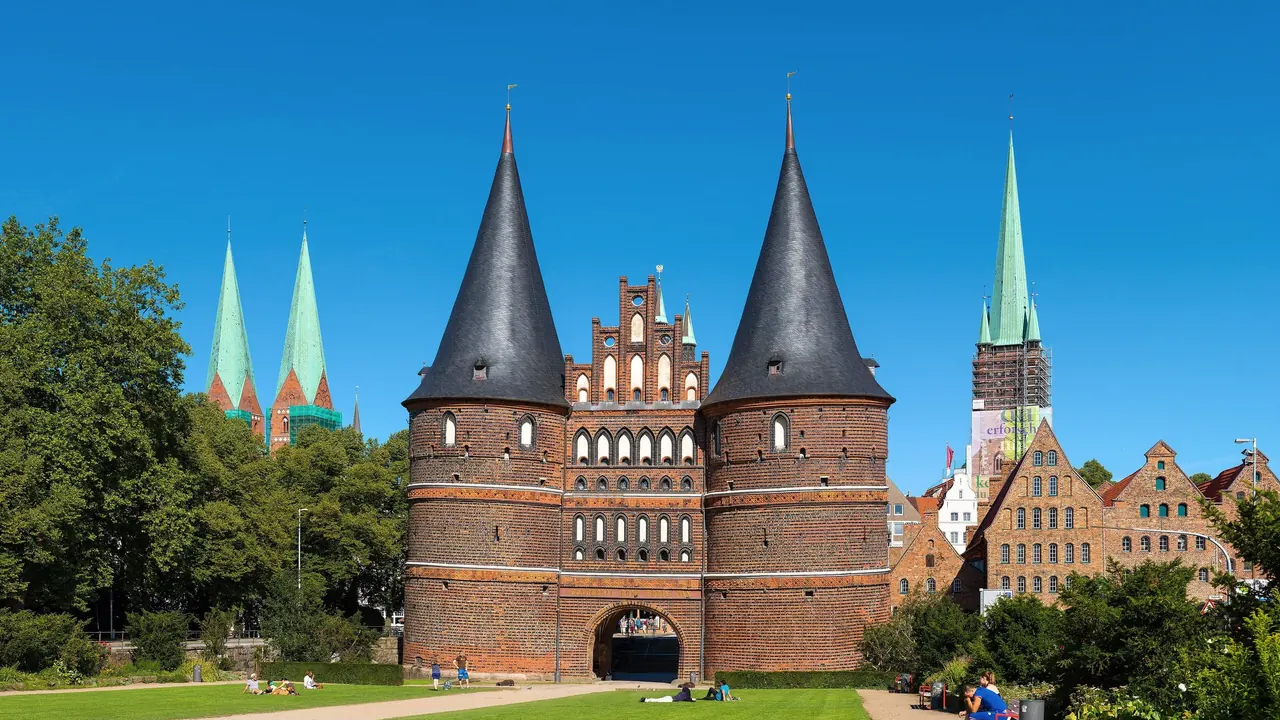
Photos: Gothenburg by Efrem Efre, Pexels License; Lubeck by Christian Wolf (www.c-w-design.de), CC BY-SA 3.0 DE, cropped.
Gothenburg or Lubeck?
Our verdict in twelve categories, each scored against the same fixed benchmark cities, and the climate month by month, so you can choose for your trip.
Choose Gothenburg for
- families
- food and drink
- nightlife
Gothenburg suits a sociable, well-fed stay that keeps moving. It has shellfish fresh off the Bohuslän coast, Liseberg and Universeum for the children, trams and ferries out to the granite islands, and livelier evenings around Järntorget. That gives it more to fill four or five days, though you pay Swedish prices for all of it.
Choose Lubeck for
- culture and sights
- prices
- day trips
Lübeck is the place for travellers who want history close up and a lighter bill. Its brick Gothic old town on an island in the Trave is the real draw, and you can walk all of it at an easy pace. Travemünde's sandy beach adds summer afternoons, and Hamburg is close enough for a day out. Evenings are quiet, so it fits an unhurried break better than a lively one.
Scoreboard
Twelve categories on one fixed scale from 0 to 100. The shaded stretch is the gap between the two.
Your match
Pick a travel style or drag the sliders, and both match scores follow your weighting.
Wins on families and food and drink with your weighting.
Wins on culture and sights and prices with your weighting.
What matters to you?
Category by category
What the scores mean for a trip.
Beaches & swimming
Neither city is a beach destination, and both have a short, cool swimming season. The difference is in the kind of shore. Gothenburg swims from smooth granite rocks and small coves at Askim and Hovås and on islands such as Styrsö and Vrångö, where the water is clear.
Lübeck has proper sand at Travemünde, with hooded wicker beach chairs and a chain of resorts along the bay. The water there is calm and shallow, which makes it the gentler option for small children.
Food & drink
Gothenburg eats better. It is a true seafood city, with shrimp, langoustines and autumn lobster from the Bohuslän coast. Feskekôrka and Stora Saluhallen show what is in season, and its fine dining is impressive for a city of its size. Fika in Haga is a pleasure of its own, though eating out is expensive.
Lübeck has two strong specialities, marzipan and North German fish such as smoked herring and plaice. It also has the old guild house of the Schiffergesellschaft and Rotspon aged in the city's cellars. Beyond those, the choice is mostly solid taverns and standard Italian and Asian food.
Culture & sights
Lübeck is the stronger choice for sightseeing. Almost the whole island old town is a World Heritage site, with seven brick spires, the leaning Holstentor, the Marienkirche that set the model for brick Gothic churches, and courtyards and passages to explore. The Hansemuseum and the Buddenbrookhaus give it depth.
Gothenburg's history is quieter. You see it in the canal grid laid out by Dutch engineers, the wooden houses of Haga and the island fortress of Nya Älvsborg, with a good Nordic art collection on Götaplatsen. It is pleasant to explore rather than a reason to come.
Nightlife
Gothenburg has a real night out. The bars and student pubs around Järntorget, Linnégatan and Andra Långgatan are busy at weekends, two universities fill them in term time, and Avenyn has the bigger clubs, even if most places close in the early hours.
Lübeck goes quiet much earlier. There are wine bars and pubs on the Obertrave and a livelier promenade in Travemünde in summer, and that is about it. Locals take the train to Hamburg for anything more.
Nature & outdoors
Gothenburg's sea landscape is the more striking. The bare granite islands of the southern archipelago, with heather and small harbours, are a tram-and-ferry ride away and suit kayaking and sailing. The Delsjön lakes and the start of the Bohusleden trail add forest walking.
Lübeck's country is gentler: beech woods, the reedy Wakenitz for canoeing, the crumbling Brodtener Steilufer cliff and the lakes of Holstein Switzerland. It is ideal for easy, flat cycling but has little that feels wild.
Day trips
Both have a good spread of day trips, but they lead to different things. Lübeck's best outing is a big city: Hamburg is under an hour by train. Wismar and island-set Schwerin give you more Hanseatic and castle heritage, and all of it is easy without a car.
Gothenburg's trips follow the coast, to Marstrand under its fortress, Varberg's seaside bath house and the Trollhättan locks. Its finest places, the Bohuslän fishing villages and the Tanum rock carvings, are much easier with a car.
Good for families
Gothenburg is built for children in a way Lübeck is not. Liseberg, Scandinavia's largest amusement park, is a short walk from the centre. Next door is Universeum's rainforest and aquarium, and children can climb through a submarine at the ship museum. Free penguins and seals in Slottsskogen help in any season.
Lübeck works well in summer, with Travemünde's shallow beach and Hansa-Park half an hour up the coast. Out of season it offers children little beyond the old town and its museums.
Getting around
Both centres are compact and flat enough to walk, but Gothenburg reaches further without a car. Its large tram network covers almost every sight. One ticket also takes you on the river ferries and the boats out to the islands.
Lübeck's old town is an island about 2km long that you will mostly cover on foot, with some cobbles. Buses fill the gaps, and the regional train gets you to Travemünde or Hamburg quickly. It is simple, but there is less of a network once you leave the centre.
Shopping & style
Gothenburg is the better place to browse. Kungsgatan has a long pedestrian run of Swedish and Nordic labels. Haga, Majorna and Linnéstaden add independent design shops, vintage and record shops. There is no luxury to speak of, but there is plenty of character.
Lübeck's Breite Strasse and Königstrasse are mostly German chains. The craft shops and galleries in the side passages are worth a look, and the souvenir everyone takes home is a box of marzipan.
Affordability
Lübeck is the easier city on the wallet. Rooms in the old town are moderately priced, a fish roll at a harbour kiosk or a tavern meal costs little, and the train to the coast is cheap. The exception is Travemünde in July and August, when beach accommodation costs more.
Gothenburg costs noticeably more, and drinks in bars are especially dear. Weekday set lunches, picnics on the rocks and a transport ticket that covers the island ferries all help keep costs down.
Live music & performing arts
Gothenburg has the bigger stage. Sweden's national orchestra plays in the Konserthuset on Götaplatsen, and the harbour-side opera house also hosts a contemporary dance company with a strong name in Europe. A long indie and metal tradition fills venues around Järntorget, and Way Out West brings major international acts to Slottsskogen in August.
Lübeck is smaller but has its own character. The organ tradition at the Marienkirche, where Buxtehude played, the Art Nouveau Theater Lübeck and the summer Schleswig-Holstein Music Festival are its highlights. For rock and jazz, people head to Hamburg.
Wellness & relaxation
Neither city suits a dedicated spa trip, and they unwind in different ways. Gothenburg does it the Nordic way, with a sauna and a jump into the sea from rocks and jetties, some of it all year. Valhallabadet is the plain municipal option in town.
Lübeck uses Travemünde's long history as a seaside spa resort, with wellness hotels and the indoor seawater pools at Scharbeutz. Its quiet courtyards and riverside benches are restful in themselves.
When should you go?
Pick your month. The climate figures are measured averages, not a forecast.
Gothenburg in July
Lubeck in July
Daytime high, °C
Rainfall in the month, mm
Temperature and rainfall are climate normals, averaged over the years shown. Gothenburg: 1991-2020 normals, Goteborg Save Airport (9.8 km from centre). Lubeck: 1991-2020 normals, Luebeck-Blankensee (6 km from centre).
Both cities are at their best from June to August. Lübeck is the warmer of the two, with summer highs around 24°C against Gothenburg's 21°C. The two seas are almost the same, at about 18°C to 19°C at their warmest in late summer, so a swim is possible in both but always brisk. May and September are good for walking in either city. Sunshine is similar through the summer, and Gothenburg's July is slightly the brighter.
The main difference is rain. Gothenburg is wetter in every season, and it is worst in autumn and winter, when October brings about 95mm and the light goes early. Lübeck is drier all year and its spring is noticeably milder. From November to February both are cold, grey and short of daylight, so plan museums and cafés rather than the coast.
Which traveller are you?
On a family trip with children, Gothenburg is the clear choice. Liseberg is a walk from the centre, Universeum covers rainy days, Slottsskogen's animal park is free, and the ferries to the car-free islands make an easy adventure.
For a culture and arts trip, Lübeck gives more per day. The Hanseatic old town is a World Heritage site, with the Holstentor, the Marienkirche and the Hansemuseum. Gothenburg's museums and wooden Haga district are pleasant but less remarkable.
On a food and nightlife trip, Gothenburg is the better bet. It has langoustines and oysters at Feskekôrka, a serious fine-dining tier and fika in Linnéstaden, then bars along Andra Långgatan. Lübeck's marzipan and herring are lovely, but the town goes to bed by midnight.
Before you go
| Measure | Gothenburg | Lubeck |
|---|---|---|
| Official language | Swedish | German |
| Currency | Swedish Krona (SEK) | Euro (EUR) |
| Sockets | CF230 V, 50 Hz | CF230 V, 50 Hz |
| Driving side | Right | Right |
| Time zone | UTC+1, UTC+2 in summer | UTC+1, UTC+2 in summer |
| Emergency number | 112 | 112 |
| Elevation | 12 m | 13 m |
| Main airport | Göteborg Landvetter Airport (GOT)19 km from centre79 non-stop destinations | Hamburg Helmut Schmidt Airport (HAM)53 km from centre120 non-stop destinations |
| Public holidays this year | 16 days | 10 days |
By the numbers
| Measure | Gothenburg | Lubeck |
|---|---|---|
| City population | 674,529 | 217,061 |
| People per km² | 2,484 | 1,013 |
| Museums within 10 km | 39 | 23 |
| UNESCO World Heritage sites within 50 km | 0 | 1 |
| Swim season, months above 21 °C | None | None |
Where else could you go?
Every comparison below shares a destination with this one, so you can follow Gothenburg or Lubeck somewhere new.
- Hamburgvs Lubeck
- Aarhusvs Gothenburg
- Copenhagenvs Gothenburg
- Copenhagenvs Lubeck
- Berlinvs Lubeck
- Malmovs Gothenburg