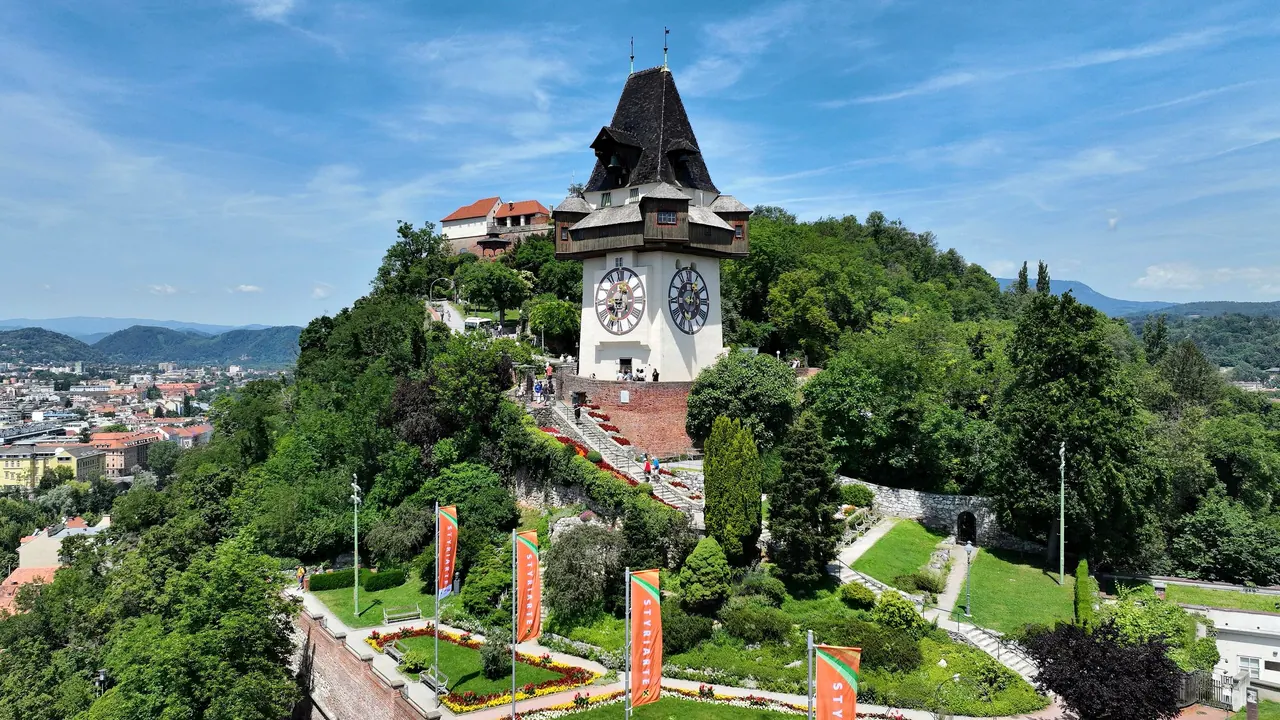
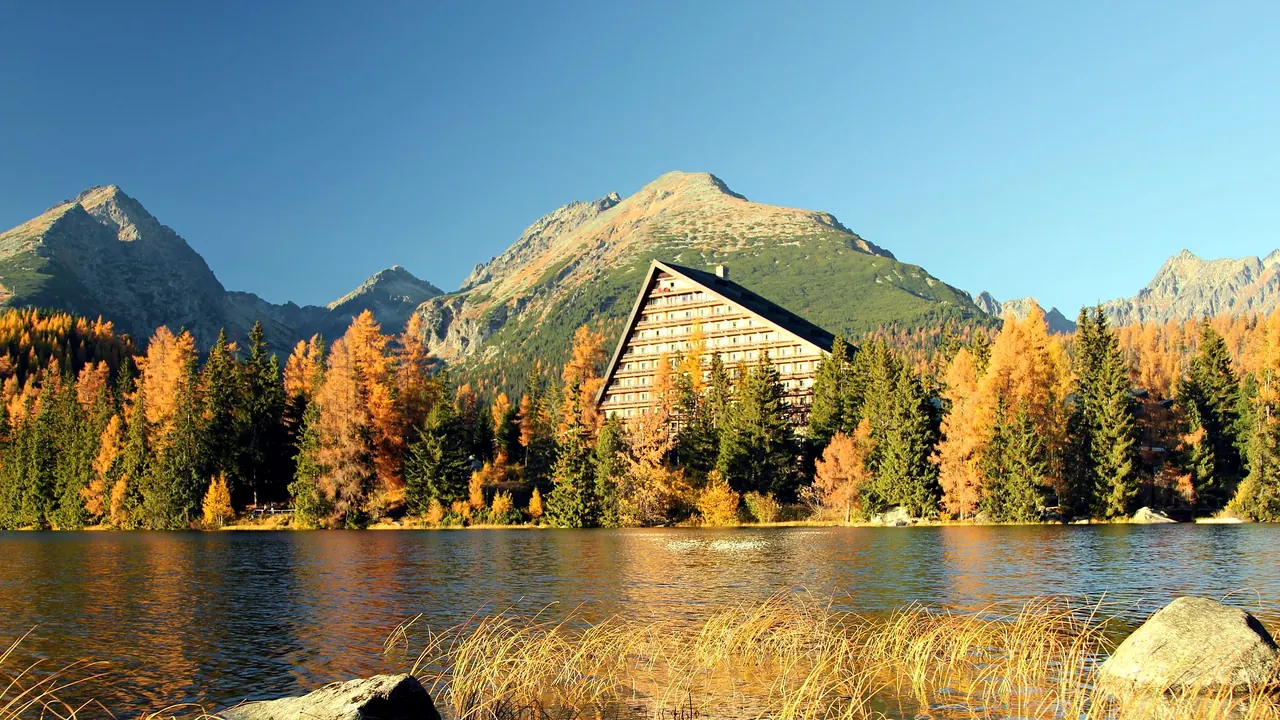
Photos: Graz by C.Stadler/Bwag, CC BY-SA 4.0, cropped; High Tatras by Marián Moravčík, Pexels License.
Graz or High Tatras?
Our verdict in twelve categories, each scored against the same fixed benchmark cities, and the climate month by month, so you can choose for your trip.
Choose Graz for
- live music and the arts
- culture and sights
- shopping
Graz suits travellers who want a proper city. It has a well-kept old town beneath the Schlossberg, Styrian cooking and wine, an opera house and festivals, and evenings in student bars, all within an easy walk or tram ride. It works best for a stay of a few days, with the wine hills and spa villages of Styria as extras rather than the main reason to go.
Choose High Tatras for
- nature and the outdoors
- prices
- wellness
Choose the High Tatras when the mountains themselves are the point. Granite peaks, tarns and hut-to-hut trails start a short walk from the resort railway, winter brings compact skiing, and evenings are early and quiet. Food, sights and nightlife are thin. In return, a mountain stay costs less than in the Alps, and the Spiš towns below the range supply the history.
Scoreboard
Twelve categories on one fixed scale from 0 to 100. The shaded stretch is the gap between the two.
Your match
Pick a travel style or drag the sliders, and both match scores follow your weighting.
Wins on live music and the arts and culture and sights with your weighting.
Wins on nature and the outdoors and prices with your weighting.
What matters to you?
Category by category
What the scores mean for a trip.
Beaches & swimming
Neither place is for swimming, but Graz has the slight edge. Its bathing lakes, such as the Schwarzlsee, are old gravel pits with grassy banks that warm to about 23°C in high summer, a real outdoor swim on a hot afternoon.
In the Tatras, swimming in the tarns is not allowed inside the national park. A swim there means the geothermal pools around Poprad or the water parks of the Liptov valley: warm water, but in a man-made setting rather than a lake.
Food & drink
Graz has a real regional cuisine to explore. Pumpkin seed oil goes on almost everything, Wurzelfleisch comes with horseradish, the farmers' markets at Kaiser-Josef-Platz and Lendplatz run every morning except Sunday, and wine from the southern hills is poured in town and at Buschenschank taverns.
The Tatras feed hikers well but within a narrow range. Bryndzové halušky, cabbage soup and grilled meats in kolíba taverns and mountain huts taste good after a climb, but the menus start to repeat within a few days, and Poprad adds more places rather than more variety.
Culture & sights
The gap here is wide. Graz has one of Central Europe's best-kept old towns, running from the Hauptplatz up to the Mausoleum of Ferdinand II, plus the armour-packed Landeszeughaus, Schloss Eggenberg and the modern Kunsthaus across the Mur.
The Tatra resorts have Art Nouveau villas and old sanatoria in Starý Smokovec and Tatranská Lomnica, and a museum of the national park. For anything more you have to go down to the Spiš towns, so in the Tatras culture is a day out rather than part of every day.
Nightlife
Thanks to its students, Graz has a small but genuine night out: bars spilling into the lanes around Mehlplatz, artier places in Lend and a few clubs at weekends, though it goes quiet in the summer break. The Tatras have almost nothing beyond hotel bars and a little après-ski in winter, and most people turn in early because the trails start at dawn.
Nature & outdoors
For high mountains, the Tatras are the stronger choice. Peaks above 2,600m, glacial valleys and more than a hundred tarns rise straight above the resorts. The cable car to Lomnický štít and the funicular to Hrebienok put you on the trails within minutes, and winter adds skiing and ski touring.
Graz is greener and gentler. The Schöckl, the Mur cycle path and the South Styrian wine hills suit walkers and cyclists, but the nearest proper alpine country, the Gesäuse and the Hochschwab, is about two hours away.
Day trips
Both make good bases for outings, but of different kinds. From Graz the trips are about wine and countryside: the South Styrian Wine Road, Riegersburg castle on its crag, the Lipizzaner horses at Piber, the library at Admont Abbey and Maribor across the border.
From the Tatras the trips are about medieval heritage: Levoča's square and Gothic altar, the ruins of Spiš Castle, Kežmarok's wooden church, and Zakopane over the Polish border. From either base, a car makes the day much easier.
Good for families
Both work well with children, in very different settings. Graz is a calm, compact city where the Schlossberg does most of the work, with its glass lift, underground slide and fairytale train, and the FRida & freD children's museum fills a wet morning.
The Tatras are a mountain playground. Children get the funicular and waterfalls at Hrebienok, the pushchair-friendly path around the lake at Štrbské Pleso, the Belianska cave, and ski schools and sledging in winter. On rainy days families go to the water parks, and the serious hikes are too much for small legs.
Getting around
Graz is easier. The centre is flat and largely pedestrianised, so the sights are minutes apart, and trams, buses, the Schlossberg funicular and the bike-friendly riverbanks cover the rest without a car.
The Tatras are manageable but slower. A narrow-gauge railway links the resorts along about 30km, and lifts reach the trailheads. Services run less often, though, and reaching the Spiš towns or the Pieniny by public transport takes planning, so many visitors hire a car.
Shopping & style
Graz gives you a modest but real afternoon of shopping. There are the Herrengasse and the Sporgasse, the long-standing Kastner & Öhler department store with its rooftop terrace, small design shops in Lend, and plenty of edible souvenirs, from pumpkin seed oil to Schilcher rosé.
In the Tatras the shops sell hiking gear, smoked sheep's cheese and local spirits, and Poprad's shopping centres are ordinary. Bring what you need with you.
Affordability
The Tatras are the cheaper of the two. Guesthouses, meals at taverns and huts, beer and the local railway cost noticeably less than in Austria, and staying in Poprad keeps costs down further, though cable cars and ski passes add up.
Graz is fair for Western Europe rather than cheap. Student lunch menus and a walkable centre help, but dinners, wine and hotels cost the usual Austrian amounts.
Live music & performing arts
Graz has a full calendar: the second-largest opera house in Austria, the Schauspielhaus, concerts at the Musikverein, Styriarte in early summer, steirischer herbst in autumn, and a strong jazz scene fed by the music university. The Tatras have no theatre or concert hall at all, only the odd folk ensemble and music with dinner in some taverns, so plan any performances for the Graz end of a trip.
Wellness & relaxation
The Tatras have the edge, because rest is part of the place itself. The resorts began as mountain-air cures, the big hotels keep pools and saunas, and the forest walks and quiet evenings are relaxing in their own right, best outside July and August.
Graz has no bathing tradition of its own, but the Styrian thermal villages are about an hour east, including Bad Blumau with its Hundertwasser design. In town, the coffee houses and the Stadtpark make for slow afternoons.
When should you go?
Pick your month. The climate figures are measured averages, not a forecast.
Graz in July
High Tatras in July
Daytime high, °C
Rainfall in the month, mm
Where the figures come from
High Tatras's station stands 272 m below the city centre, so the centre is likely a little cooler than the figures say.
Temperature and rainfall are climate normals, averaged over the years shown. Graz: 1991-2020 normals, Graz Airport (7.9 km from centre). High Tatras: 1991-2020 normals, Poprad / Tatry (8.4 km from centre).
Graz has the longer season for walking the streets. May and September are pleasant, and July reaches about 27°C, warm enough for the bathing lakes south of the city. Summer is also the wettest time of year, with heavy showers from June to August and about 125mm of rain a month. Winters are cold but fairly dry, which still suits a short city visit built around coffee houses and museums.
The High Tatras stay a few degrees cooler all year. Highs in July and August are close to 23°C, good for hiking but never beach weather, and summer rain is lighter than in Graz. Summer and September are the time for the high trails, since many close from November to mid-June. In December and January daytime highs stay around 1°C, which is the time for skiing. February is only a little milder, and March starts to thaw.
Which traveller are you?
For a culture and arts trip, Graz is the clear pick. Its Renaissance and Baroque old town, the Landeszeughaus armoury, Schloss Eggenberg and the Kunsthaus fill several days, and the Opera and the autumn festival fill the evenings. The Tatras offer old spa villas and little more.
On an outdoors trip, the High Tatras win. Cable cars and a funicular lift you straight into alpine country of granite peaks, tarns and the Tatranská magistrála trail, with skiing in winter. Graz has the Schöckl and good cycling, but real alpine hiking is two hours away.
For a food and nightlife trip, go to Graz. Pumpkin seed oil, cold fried chicken salad and South Styrian Sauvignon Blanc make a distinctive regional table, and the Bermuda Triangle and Lend keep the bars full. In the Tatras, evenings end with dumplings, a beer and an early night.
Before you go
| Measure | Graz | High Tatras |
|---|---|---|
| Official language | German, Austrian Sign Language | Slovak |
| Currency | Euro (EUR) | Euro (EUR) |
| Sockets | CF230 V, 50 Hz | CE230 V, 50 Hz |
| Driving side | Right | Right |
| Time zone | UTC+1, UTC+2 in summer | UTC+1, UTC+2 in summer |
| Emergency number | 112 | 112 |
| Elevation | 353 m | 966 m |
| Main airport | Graz Airport (GRZ)9 km from centre27 non-stop destinations | Poprad-Tatry Airport (TAT)8 km from centre4 non-stop destinations |
| Public holidays this year | 16 days | 15 days |
By the numbers
| Measure | Graz | High Tatras |
|---|---|---|
| Population | 306,971 | 3,749 |
| People per km² | 2,406 | 10 |
| Museums within 10 km | 29 | 1 |
| UNESCO World Heritage sites within 50 km | 1 | 4 |
Where else could you go?
Every comparison below shares a destination with this one, so you can follow Graz or High Tatras somewhere new.