Photos: Graz by C.Stadler/Bwag, CC BY-SA 4.0, cropped; Krakow by Jakub Hałun, CC BY-SA 4.0, cropped.
Graz or Krakow?
Our verdict in twelve categories, each scored against the same fixed benchmark cities, and the climate month by month, so you can choose for your trip.
Choose Graz for
- wellness
- nature and the outdoors
- getting around
Graz suits a slower trip built around landscape, wine and good walking. The old town is compact and easy to get around, the Schöckl and proper alpine hiking are within reach, the vineyard hills lie to the south and the thermal spa villages to the east. Pick it if you want calm evenings over a glass of Sauvignon Blanc rather than late nights, and don't mind hiring a car for the countryside.
Choose Krakow for
- nightlife
- prices
- culture and sights
Krakow is the stronger choice for history with real weight and for evenings that run late. Wawel, the Main Market Square and Kazimierz give it a deeper list of sights, and Wieliczka and Auschwitz-Birkenau are easy outings without a car. The cellar bars keep going long after Graz has gone to bed. It is also clearly the cheaper of the two, which makes a longer stay go further.
Scoreboard
Twelve categories on one fixed scale from 0 to 100. The shaded stretch is the gap between the two.
Your match
Pick a travel style or drag the sliders, and both match scores follow your weighting.
Wins on wellness and nature and the outdoors with your weighting.
Wins on nightlife and prices with your weighting.
What matters to you?
Category by category
What the scores mean for a trip.
Beaches & swimming
You won't choose either city for swimming, and in both the best water is in a flooded former pit or quarry. Graz has the more relaxed setting for a hot afternoon. The Schwarzlsee and the other gravel-pit lakes south of town have grassy banks, jetties and kiosks, and Stubenbergsee makes a half-day out in the eastern hills.
Krakow's Zakrzowek is the more striking place, with turquoise water under limestone cliffs only a tram ride away. Swimming there is limited to fenced areas, though, and many visitors end up at the indoor water park instead.
Food & drink
The two are close, and the difference is in character. Graz cooks from its region: pumpkin seed oil on almost everything, cold fried chicken salad, Wurzelfleisch, morning markets at Kaiser-Josef-Platz and Lendplatz, and crisp white wine from the southern hills, best drunk in a Buschenschank among the vines.
Krakow is heartier and cheaper to graze through. Think pierogi, zurek served in bread, milk-bar lunches, obwarzanek from street carts and zapiekanki late at night, with flavoured vodka and craft beer in place of wine. Graz offers little beyond Austrian cooking, and Krakow's fine-dining scene is small.
Culture & sights
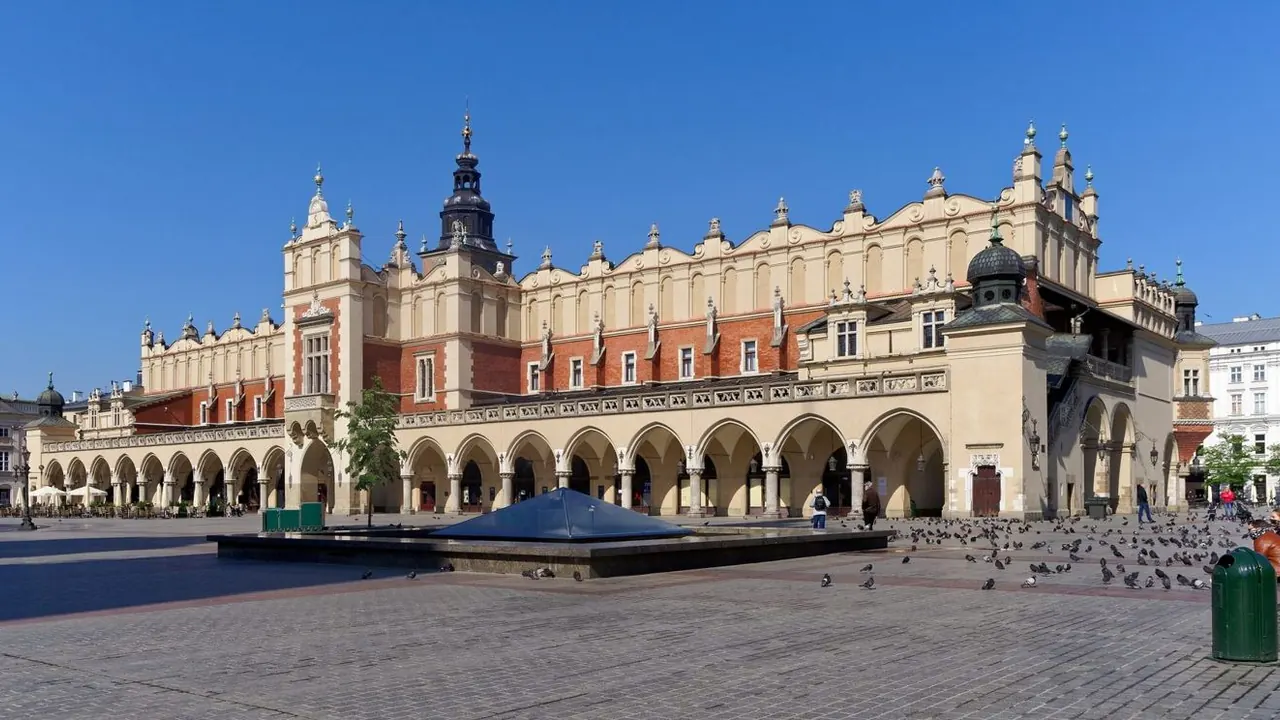
Krakow has the weightier sightseeing. The vast Main Market Square, St Mary's Basilica with the Veit Stoss altarpiece, the royal castle and coronation cathedral on Wawel, and the synagogues of Kazimierz tell the story of a kingdom and its wartime history. The Czartoryski Museum's Leonardo is a single masterpiece that Graz cannot match.
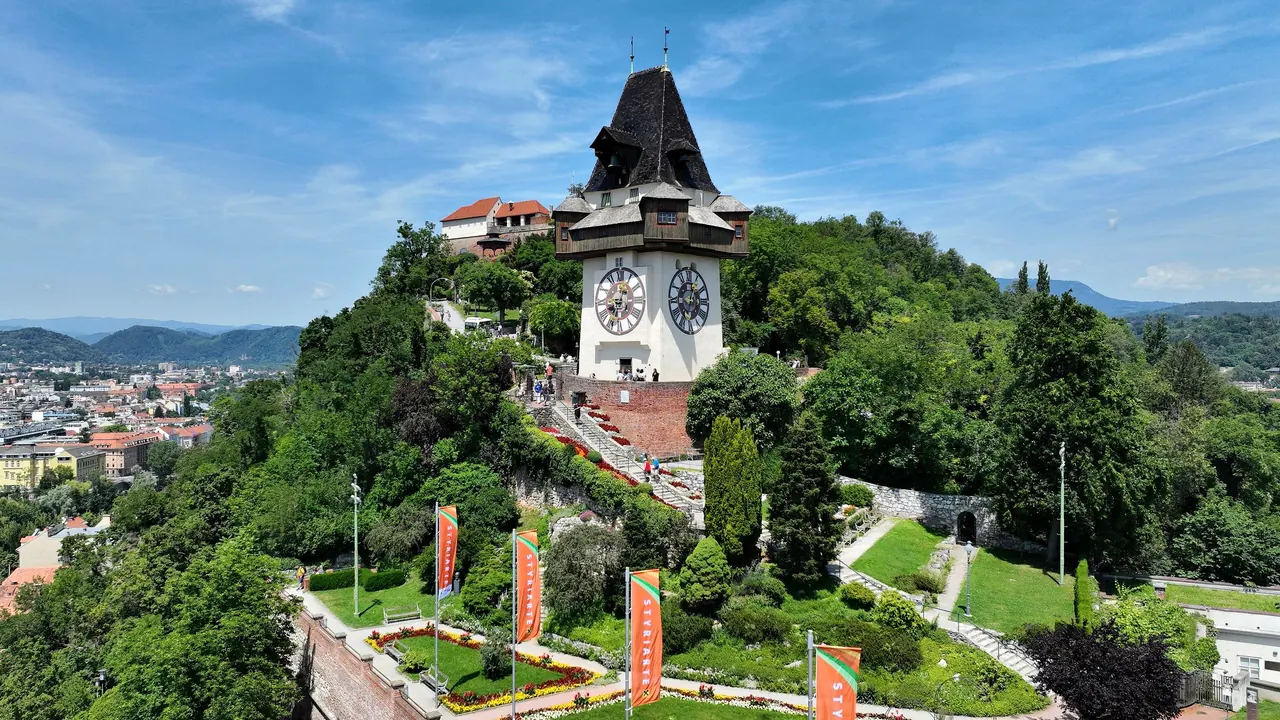
Graz has a smaller, gentler old town of red roofs and arcaded courtyards, with the Uhrturm on the Schlossberg and Baroque Schloss Eggenberg. Its Landeszeughaus armoury is remarkable, and the Kunsthaus adds a modern contrast. Both fill two or three days, but Krakow's days carry more history.
Nightlife
Nightlife is where the two differ most. Graz goes out on a small scale: wine bars and pub crawls in the Bermuda Triangle around Mehlplatz, artier places in Lend, and a town that goes noticeably quiet when the students leave for the summer.
Krakow goes out late and often, in the brick-vaulted cellars of the Old Town and the courtyards of Kazimierz around Plac Nowy. Drinks are cheap enough that bar-hopping is the main event. The downside is stag and hen groups on weekend nights, which is why many visitors head to Kazimierz or Podgorze instead.
Nature & outdoors
Graz has the mountains closer. The Schöckl rises above the city with a cable car, walking trails and paragliders, the Grazer Bergland is a short bus ride away, and the Gesäuse and Hochschwab offer real alpine hiking within about two hours. The South Styrian wine hills add gentle walking in autumn.
Krakow's green spaces near the centre are milder: the Planty, Blonia meadow, the Wolski Forest and the Kosciuszko Mound. Ojcow's limestone valley is half an hour away, but the Tatras and rafting on the Dunajec take a long day.
Day trips
Krakow's day trips carry more weight. The Wieliczka Salt Mine, with its underground church, is half an hour out, and Auschwitz-Birkenau is a sobering visit that most travellers give a full day. Zakopane, Wadowice and Czestochowa extend the list, and almost all of it works by train, bus or minibus.
The trips from Graz are quieter and more rural. They include the South Styrian Wine Road, Riegersburg castle on its volcanic crag, the Lipizzaners at Piber, the abbey library at Admont, and Maribor across the Slovenian border by train. They make lovely days, but most are far easier with a car.
Good for families
Both are safe, compact cities that work well with children, but they keep them busy in different ways. In Graz the best day is on the Schlossberg: the funicular up, the underground slide down and the Märchenbahn train through the rock. The FRida & freD museum and buggy-friendly trams help too, but there is no big zoo or theme park.
Krakow has the bigger attractions: the fire-breathing dragon below Wawel, a zoo in the Wolski Forest, a water park open all year and Energylandia an hour away. On the other hand, the cobbles are hard work with a pushchair, and several major sights are too heavy for young children.
Getting around
Graz is the easier of the two to get around. Its centre is small, flat and largely pedestrianised, and trams run through the heart of town on one simple ticket. A lift and a funicular take you up the Schlossberg. Krakow's Old Town, Wawel and Kazimierz are also within walking distance of each other, but the cobbles slow you down with luggage and trams can get stuck in traffic.
Outside the cities the balance flips. Krakow's big day trips are easy by train or bus, while the vineyards and mountains around Graz really call for a car.
Shopping & style
Neither city is a shopping destination, and each is best for local goods. In Graz those are mostly edible: pumpkin seed oil, Schilcher rosé, apple brandies and craft chocolate, plus loden and traditional costume. The old Kastner & Öhler department store has a rooftop terrace overlooking the old town.
In Krakow the equivalent is craft. The stalls of the medieval Cloth Hall sell amber, carved boxes, lace and blue-patterned Boleslawiec pottery, and Plac Nowy has a weekend flea market. Much of it is aimed at tourists, and neither city has much luxury shopping.
Affordability
Krakow is clearly the cheaper city. Beer, vodka, milk-bar lunches, trams and city museums all cost little, and moving away from the Main Square into Kazimierz or Podgorze brings prices down further.
Graz is reasonable for Austria rather than cheap. Student lunch menus and bakeries help during the day, but sit-down dinners and wine cost the usual Austrian amounts. The walkable centre and combined museum tickets help keep the rest of the budget in check.
Live music & performing arts
Both cities take music seriously and keep their theatre in their own language, so the difference is in scale and setting. Graz has the grander stage: its opera house, the second largest in Austria, runs a full season of opera, ballet and musicals. The year is framed by Styriarte for early music in early summer and steirischer herbst for avant-garde work in autumn.
Krakow's strengths are on a smaller scale: Chopin recitals in churches and palaces most evenings, jazz in brick cellars, klezmer in Kazimierz and the Jewish Culture Festival's open-air finale on Szeroka Street.
Wellness & relaxation
Graz is the better choice, though mostly for what lies outside the city. Styria's thermal villages are about an hour east, from Hundertwasser's Bad Blumau to Loipersdorf and Bad Radkersburg, and all are open to day visitors. Back in town, the coffee houses, the Stadtpark and the shaded Schlossberg paths suit an unhurried pace.
Krakow has less to offer: hotel spas, the water park's saunas and salt-air sessions deep in the Wieliczka mine. Its naturally hot thermal pools in the Podhale region are about two hours south, too far for an easy afternoon.
When should you go?
Pick your month. The climate figures are measured averages, not a forecast.
Graz in July
Krakow in July
Daytime high, °C
Rainfall in the month, mm
Temperature and rainfall are climate normals, averaged over the years shown. Graz: 1991-2020 normals, Graz Airport (7.9 km from centre). Krakow: 1991-2020 (sunshine 1961-1990) normals, Krakow (10.1 km from centre).
Winters are cold in both cities, with daytime highs only a few degrees above freezing from December to February, so these are months for museums and coffee houses rather than long walks. Graz has the drier January, but otherwise there is little to choose between them. Graz warms up faster and gets hotter, reaching about 27°C in July, warm enough for the bathing lakes, while Krakow stays a couple of degrees cooler and is a little easier for walking in high summer. Summer is the wettest season in both, more so in Graz, where June, July and August each bring around 125mm of rain.
Late spring and early autumn are the best times to visit either city. In May and September Graz reaches about 21°C with long sunny days, good weather for the Schöckl and the wine hills. Krakow is slightly cooler and drier in those months, and September highs of 19°C make for easy days walking between the Old Town, Wawel and Kazimierz.
Which traveller are you?
For a food and nightlife trip, Krakow is the easier pick. Cheap vodka and craft beer, brick cellar bars that stay open well past midnight and late zapiekanki on Plac Nowy make for long evenings. Graz's student bars and wine taverns suit a quieter night.
On an outdoors trip, Graz has the mountains much closer. The Schöckl rises right above the city, the Bärenschützklamm gorge and the Gesäuse are within reach, and the Mur cycle path runs through the centre. Krakow's Tatras are a long day away.
On a relaxing and wellness trip, Graz is ahead on two counts. The Styrian thermal villages, including Hundertwasser's Bad Blumau, are about an hour east, and the city itself moves slowly, with its coffee houses and the Stadtpark gardens. Krakow offers mostly hotel spas and weekend crowds to avoid.
Before you go
| Measure | Graz | Krakow |
|---|---|---|
| Official language | German, Austrian Sign Language | Polish |
| Currency | Euro (EUR) | Zloty (PLN) |
| Sockets | CF230 V, 50 Hz | CE50 Hz |
| Driving side | Right | Right |
| Time zone | UTC+1, UTC+2 in summer | UTC+1, UTC+2 in summer |
| Emergency number | 112 | 112 |
| Elevation | 353 m | 219 m |
| Main airport | Graz Airport (GRZ)9 km from centre26 non-stop destinations | Kraków John Paul II International Airport (KRK)11 km from centre132 non-stop destinations |
| Public holidays this year | 16 days | 14 days |
By the numbers
| Measure | Graz | Krakow |
|---|---|---|
| City population | 306,971 | 804,237 |
| People per km² | 2,406 | 2,459 |
| Museums within 10 km | 29 | 113 |
| UNESCO World Heritage sites within 50 km | 1 | 4 |
Where else could you go?
Every comparison below shares a destination with this one, so you can follow Graz or Krakow somewhere new.