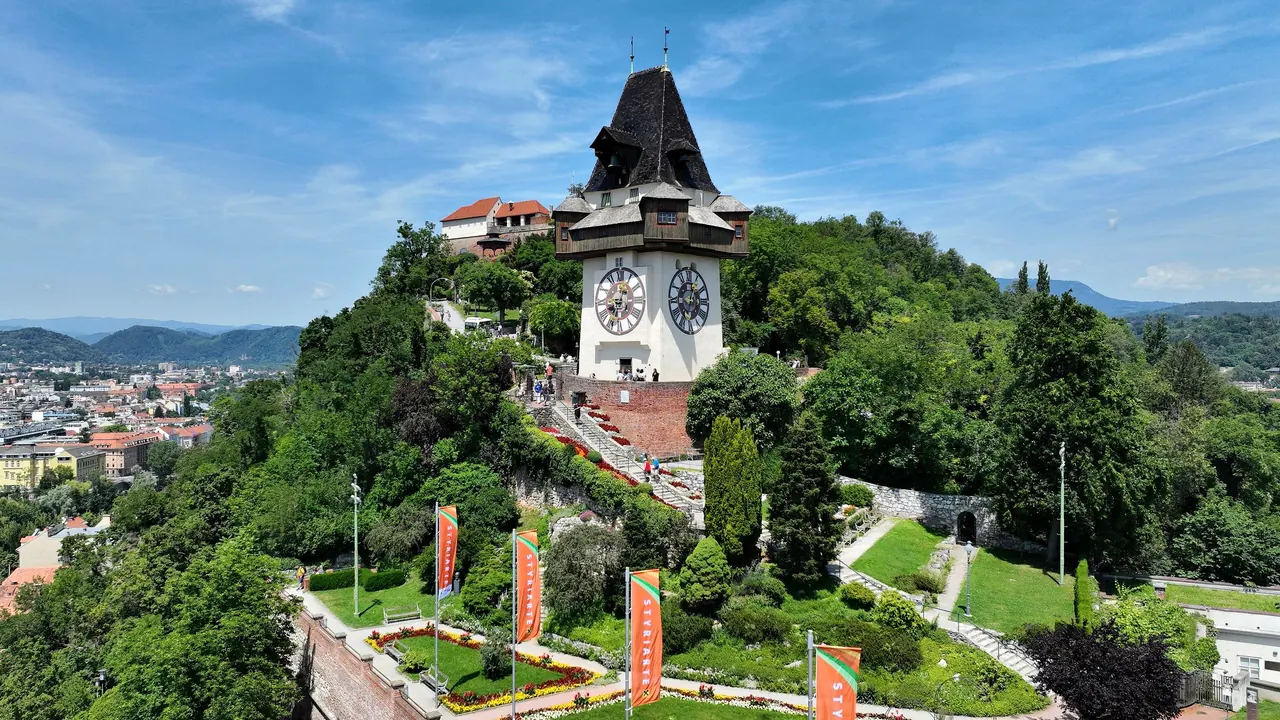
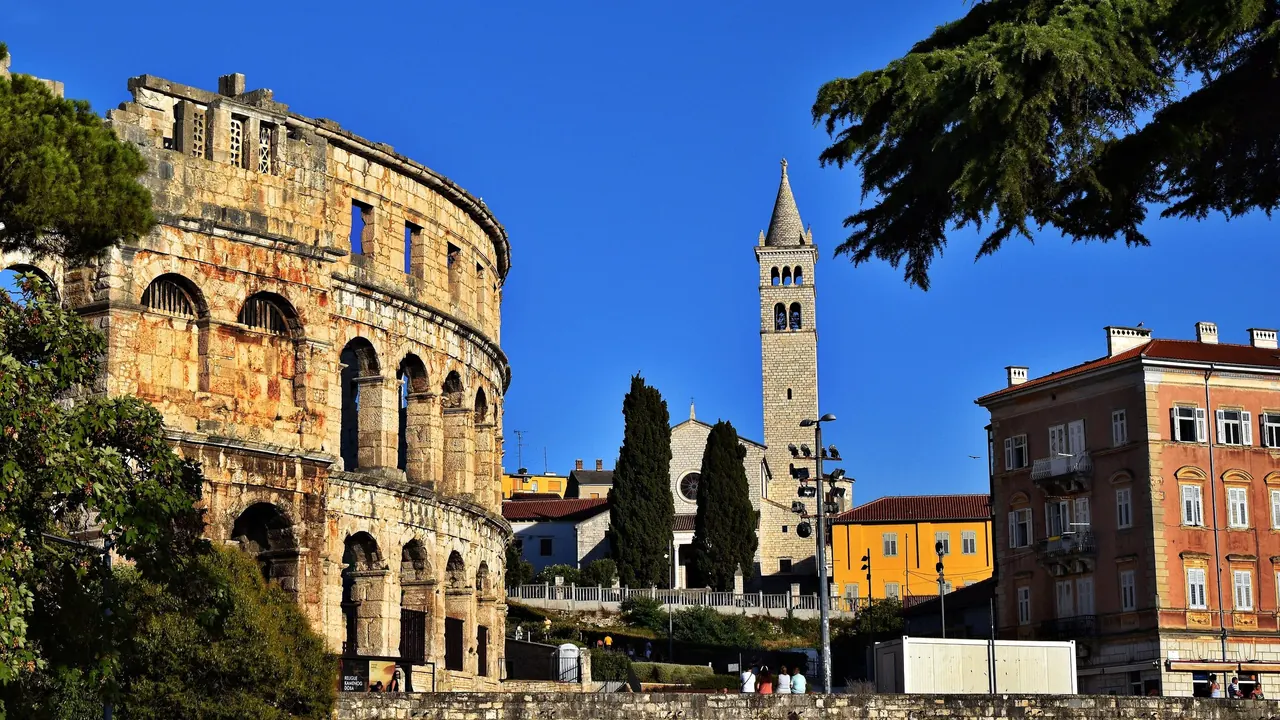
Photos: Graz by C.Stadler/Bwag, CC BY-SA 4.0, cropped; Pula by Miroslav.vajdic, CC BY-SA 4.0, cropped.
Graz or Pula?
Our verdict in twelve categories, each scored against the same fixed benchmark cities, and the climate month by month, so you can choose for your trip.
Choose Graz for
- getting around
- live music and the arts
- wellness
Graz suits a traveller who wants a complete small city: a well-kept old town of arcaded courtyards and Baroque façades, an opera house and two serious festivals, trams that make a car unnecessary, and thermal spas and alpine walking within reach. It is the better choice for a culture-led city break, a spring or autumn trip built around food and wine, or a stay where the evenings matter as much as the days.
Choose Pula for
- beaches
- day trips
- prices
Choose Pula for the sea. Clear Adriatic water, pine-shaded rocky coves and the wild headland of Kamenjak make it a summer swimming base, with a Roman amphitheatre in town and the whole of Istria to tour by car, from Rovinj to the hill towns of Motovun and Hum. It rewards travellers who want warm days outdoors and are happy to drive, and it asks less of them in theatres and shops.
Scoreboard
Twelve categories on one fixed scale from 0 to 100. The shaded stretch is the gap between the two.
Your match
Pick a travel style or drag the sliders, and both match scores follow your weighting.
Too close to call, 2 points apart
Wins on getting around and live music and the arts with your weighting.
Wins on beaches and day trips with your weighting.
What matters to you?
Category by category
What the scores mean for a trip.
Beaches & swimming
Here the two cities are as far apart as they get. Graz lies far inland, the Mur is not for swimming, and a dip means the former gravel pits south of town such as the Schwarzlsee, pleasant on a hot afternoon but never a reason to go.
Pula has the Adriatic right on its edge, with very clear water off rocks, concrete platforms and pebble coves around Verudela and Stoja, and the wild inlets of Cape Kamenjak about 10km south. There is no sand, so water shoes are worth packing, and families with small children do best in the shallow bays of Medulin.
Food & drink
The two eat equally well in quite different ways. Graz cooks the inland Styrian way, with pumpkin seed oil on almost everything, boiled pork with horseradish, and farmers' markets at Kaiser-Josef-Platz and Lendplatz every morning except Sunday. Good meals are easy to find in the city itself.
Pula's Istrian kitchen leans to the sea and the truffle, with scampi buzara, grilled squid and fuži in game sauce, washed down with Malvazija or Teran. The catch is that the tables around the Forum and Arena lean towards tourist menus, so the best eating means driving out to village konobas or harbours along the coast.
Culture & sights
Both cities need about two days, but they are different kinds of history. Graz is an intact Renaissance and Baroque townscape climbing to the Schlossberg, with indoor treasures such as the armour-packed Landeszeughaus and the palace at Eggenberg, plus the Kunsthaus for a modern counterpoint.
Pula is Roman first and foremost. The Arena, the Temple of Augustus on the Forum and the Arch of the Sergii stand in the open air, with a Venetian fortress and Habsburg naval forts adding later layers. It suits someone who likes monuments over museums.
Nightlife
Neither is a clubbing city, and the real difference is timing. Graz runs on its students, so the bars of the Bermuda Triangle, Lend and the university quarter are busiest in term and go quiet in the long summer break. Pula works the other way round: terraces by the Forum and beach bars on Verudela and around Medulin fill in summer, and the city has gone to bed early by late autumn.
Nature & outdoors
Graz has the edge for walkers. The Schöckl rises above the city with a cable car and trails, the Bärenschützklamm gorge climbs past waterfalls, and the Gesäuse and Hochschwab offer real alpine hiking within about two hours.
Pula's outdoors is low, stony and coastal: Kamenjak's car-free cliffs for walking and cycling, sea kayaking among islets, windsurfing at Premantura and diving on old naval wrecks. The nearest real high ground, Učka, is about an hour and a half away, and summer heat limits midday activity.
Day trips
Pula opens onto a richer spread of outings. Within an hour or so lie Rovinj on its peninsula, the Byzantine mosaics of the Euphrasian Basilica at Poreč, the hill towns of Motovun, Grožnjan and Hum, and the Brijuni islands by boat from Fažana, with Piran and Trieste further out.
Graz's excursions are quieter and more rural: the South Styrian Wine Road, Riegersburg on its volcanic crag, the Lipizzaners at Piber and the great library at Admont, with Maribor an hour away by train. In both regions a car makes most of these far easier.
Good for families
Both are safe, relaxed places with children, but the days look different. Graz is a city experience, with the glass lift up the Schlossberg and the long slide down inside the hill, the Märchenbahn through the rock and the FRida & freD children's museum, all reached by trams that take buggies.
In Pula, family time revolves around the water, especially the shallow bays at Medulin and Premantura, with the aquarium in a Verudela fort and the Arena's underground passages for a break. Rocky shores, summer heat and car journeys make it more effort than it first appears.
Getting around
Graz is much easier without a car. Trams run through the pedestrianised centre to the station, Eggenberg and the suburbs on one simple ticket, a funicular climbs the Schlossberg, and the flat ground along the Mur makes cycling easy.
Pula's centre is just as walkable, with the Arena, Forum and harbour minutes apart, but buses only reach the hotel areas and Premantura. Kamenjak, most beaches and the Istrian towns really need a car or scooter, and central parking is tight in high season.
Shopping & style
Graz gives shoppers more to do. The Herrengasse and steep Sporgasse put traditional shops and high-street names into historic buildings, a grand nineteenth-century department store has a rooftop over the old town, and Lend adds small design and vintage shops. Loden and traditional costume are a local speciality.
In Pula, the best buys are food: olive oil, truffle products, honey, pršut and rakija from the market hall or straight from producers. The main old-town street offers little beyond chains and souvenirs.
Affordability
Overall costs are similar, but they behave differently through the year. Graz is steady and fair, with student lunch menus and bakeries keeping daytime eating reasonable, and only big festivals and trade fairs pushing hotels up.
Pula swings with the season: private apartments and simple konobas make spring and autumn good value, while July and August rooms reach Western European coastal levels. Car hire and boat trips, which most visitors need, add up quickly.
Live music & performing arts
Graz offers a full performing season. Its opera house, the second largest in Austria, stages opera, ballet and operetta, the Musikverein hosts orchestral and chamber concerts, and Styriarte and steirischer herbst bring early music and avant-garde work, with a strong jazz scene fed by the music university.
Pula has one memorable stage: the Arena on a summer night, hosting touring concerts and Pula Film Festival screenings. For the rest of the year there is mainly Croatian-language theatre at the Istrian National Theatre.
Wellness & relaxation
Graz is the better base for a proper soak. The Styrian thermal villages about an hour east, from the Hundertwasser resort at Bad Blumau to Loipersdorf and Bad Radkersburg, open their warm pools and saunas to day visitors, and the Stadtpark and Schlossberg paths offer calm closer to hand.
Pula has no spa tradition beyond resort hotel facilities on Verudela and in Medulin. Its relaxation is simpler: long coffees on the Forum and evening walks along pine-shaded shore paths outside high summer.
When should you go?
Pick your month. The climate figures are measured averages, not a forecast.
Graz in July
Pula in July
Daytime high, °C
Rainfall in the month, mm
Where the figures come from
Pula's temperatures are measured 87 km from the centre, at Trieste.
Pula has no rain gauge within 25 km of the centre, so its rainfall comes from a gridded climate dataset read at the city rather than from a gauge further away.
Temperature and rainfall are climate normals, averaged over the years shown. Graz: 1991-2020 normals, Graz Airport (7.9 km from centre). Pula: 1991-2020 normals, Trieste (87 km from centre).
Graz has a continental year. Winters are cold and walking the old town in January is a wrapped-up affair, while July peaks around 27°C. Summer is also the wettest stretch, with about 125mm a month from June to August, so May and September, warm, sunny and less wet, are the most comfortable months for the streets, the Schöckl and the wine hills. Only July and August are hot enough for an afternoon at the bathing lakes.
Pula is milder in winter and drier in summer, the reverse of Graz. July and August bring the most sunshine and highs near 29°C, which makes midday sightseeing hard work, and the sea reaches 25°C in August. From June to late September the water is warm enough for a long swim. Rain arrives in autumn and peaks in November at about 107mm, so late May, June and September give the best mix of swimming and comfortable walking.
Which traveller are you?
On a beach and sun trip, Pula is the obvious pick. Its clear water, pebble coves and the protected inlets of Cape Kamenjak give a proper swimming season, while Graz has only gravel-pit lakes for a hot afternoon.
For a culture and arts trip, Graz offers more evenings out. The old town and Landeszeughaus match Pula's Roman monuments for interest, and the opera house, Styriarte and steirischer herbst add a full performance calendar that Pula only has in summer.
On a relaxing and wellness trip, Graz has the advantage. Styria's thermal villages, including Hundertwasser's Bad Blumau, lie about an hour east and take day visitors, while Pula's spas are limited to resort hotels, however calm the coastal paths are.
Before you go
| Measure | Graz | Pula |
|---|---|---|
| Official language | German, Austrian Sign Language | Croatian |
| Currency | Euro (EUR) | Euro (EUR) |
| Sockets | CF230 V, 50 Hz | CF230 V, 50 Hz |
| Driving side | Right | Right |
| Time zone | UTC+1, UTC+2 in summer | UTC+1, UTC+2 in summer |
| Emergency number | 112 | 112 |
| Elevation | 353 m | 5 m |
| Main airport | Graz Airport (GRZ)9 km from centre26 non-stop destinations | Pula Airport (PUY)7 km from centre34 non-stop destinations |
| Public holidays this year | 16 days | 14 days |
By the numbers
| Measure | Graz | Pula |
|---|---|---|
| City population | 306,971 | 52,220 |
| People per km² | 2,406 | 971 |
| Museums within 10 km | 29 | 4 |
| UNESCO World Heritage sites within 50 km | 1 | 1 |
| Swim season, months above 21 °C | - | 4 months |
Where else could you go?
Every comparison below shares a destination with this one, so you can follow Graz or Pula somewhere new.