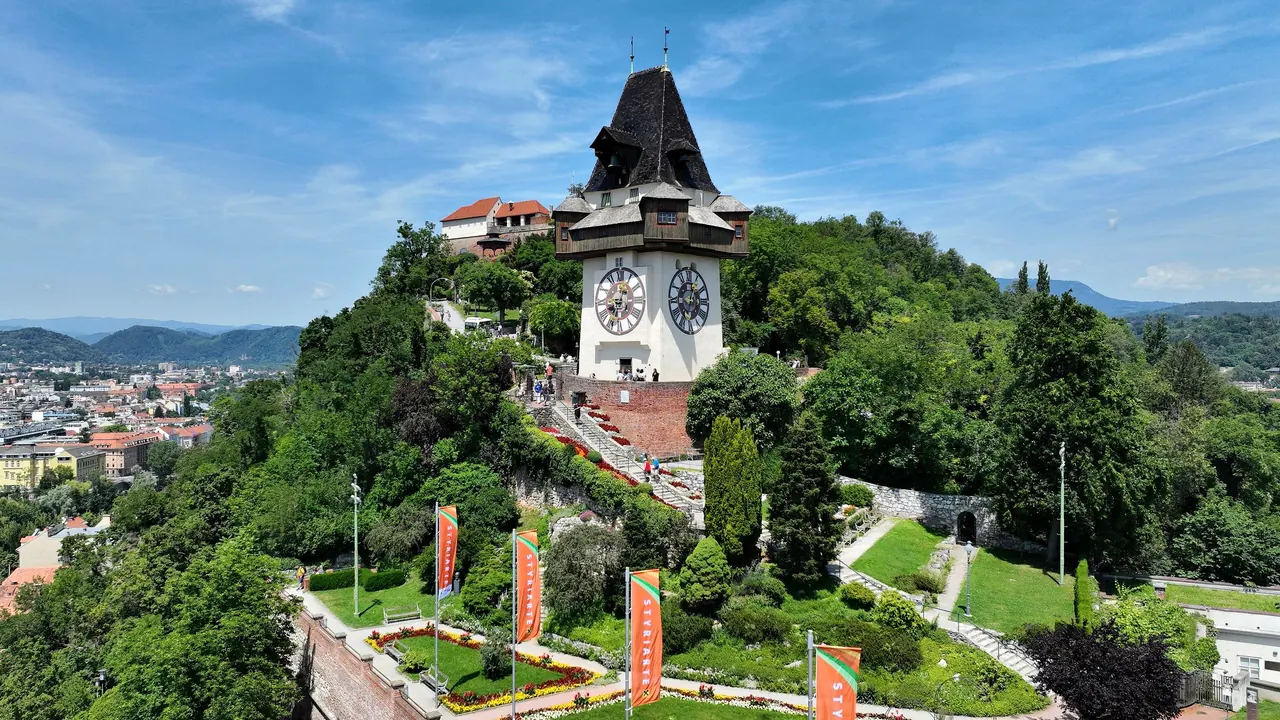
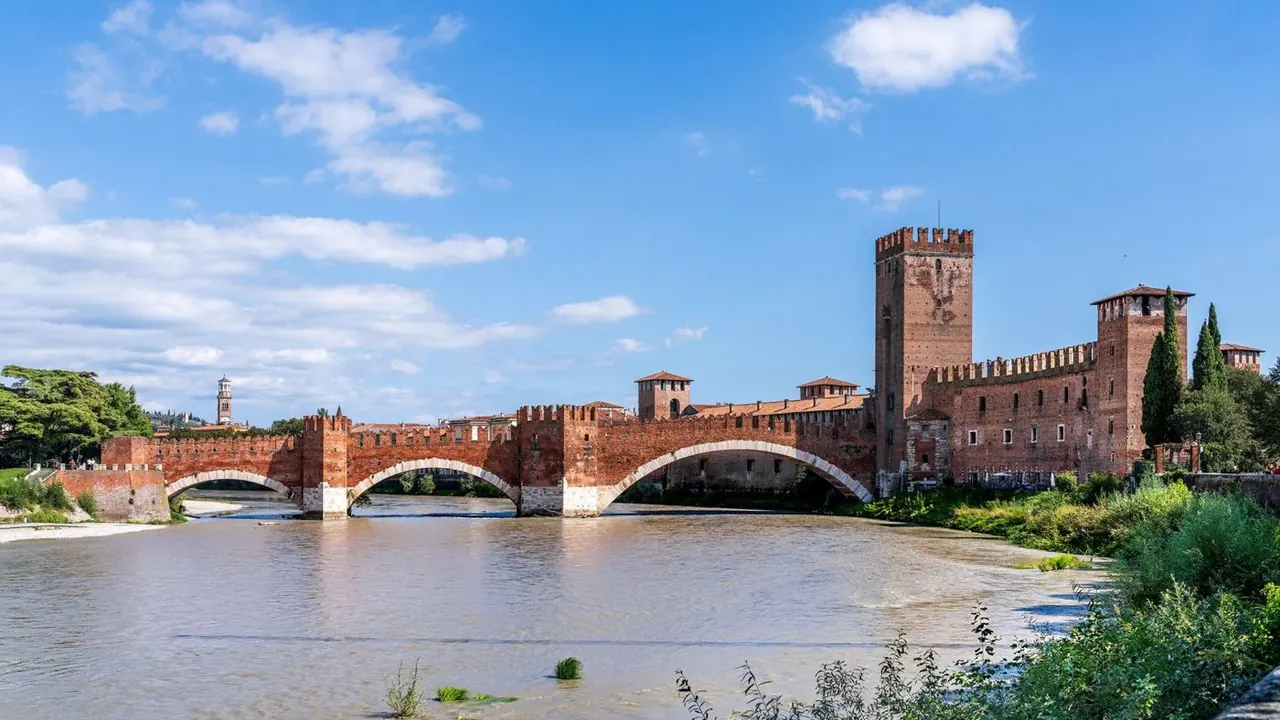
Photos: Graz by C.Stadler/Bwag, CC BY-SA 4.0, cropped; Verona by NorbertNagel, CC BY-SA 4.0, cropped.
Graz or Verona?
Our verdict in twelve categories, each scored against the same fixed benchmark cities, and the climate month by month, so you can choose for your trip.
Choose Graz for
- getting around
- nature and the outdoors
- nightlife
Graz is for travellers who want a calm, easy Central European city with green hills all around it. The old town and the Schlossberg can be walked in a morning, trams and a funicular handle the rest, and the mountains, gorges and wine hills of Styria are close enough for walkers and cyclists to reach without much planning. It suits a quieter trip built around Styrian food, coffee houses and long days outdoors.
Choose Verona for
- beaches
- day trips
- culture and sights
Verona gives more to anyone who wants a full Italian vacation from one base. Its Roman and medieval centre goes deeper, summer evenings can end with opera on the stone tiers of the Arena, and Venice, Padua, Vicenza, Mantua and Lake Garda are all close enough for day trips. Choose it if you would rather spend your days on the move, at the lake, in the next art city or in a wine cellar, than in the hills.
Scoreboard
Twelve categories on one fixed scale from 0 to 100. The shaded stretch is the gap between the two.
Your match
Pick a travel style or drag the sliders, and both match scores follow your weighting.
Wins on getting around and nature and the outdoors with your weighting.
Wins on beaches and day trips with your weighting.
What matters to you?
Category by category
What the scores mean for a trip.
Beaches & swimming
Neither city has a coast, but Verona has much better swimming. Lake Garda's southern shore is a short drive or train ride away, with clear, calm water, lidos with sunbeds and Sirmione's flat rock shelves, so a few lake days fit easily into a summer stay.
In Graz, swimming means the Schwarzlsee and similar former gravel pits on the plain south of town, pleasant for an afternoon on a grassy bank but nothing more. The large Carinthian lakes are too far for a casual outing.
Food & drink
Both cities eat regional food from their own farmland and vineyards, and Verona takes the lead. Its osterie around Piazza delle Erbe and in Veronetta serve Amarone risotto, bigoli with duck and bollito with pearà, and Valpolicella, Soave and Bardolino are poured with snacks at the counter every evening.
Graz is more of an acquired pleasure, built on pumpkin seed oil, cold fried chicken salad and the morning farmers' markets at Kaiser-Josef-Platz and Lendplatz, with crisp Styrian whites in rustic Buschenschank taverns. Neither city offers much beyond its own cuisine.
Culture & sights
Verona has the deeper history. Two thousand years are layered inside the loop of the Adige: the Roman Arena and theatre, the Scaliger tombs, the Romanesque masterpiece of San Zeno and Castelvecchio's art collection. The whole centre carries UNESCO recognition.
Graz offers a beautifully kept old town of red roofs and arcaded Renaissance courtyards, with two real standouts in the Landeszeughaus armoury and Schloss Eggenberg. The Kunsthaus and Murinsel add a modern contrast that Verona lacks. Both reward two or three days, but Verona's sights carry more weight.
Nightlife
Neither is a party city, and the difference is one of style. Graz's large student population fills the bars of the Bermuda Triangle around Mehlplatz and the artier places in Lend, and a few clubs stay open late at weekends, though the city empties in the summer break.
Verona's evenings revolve around the aperitivo, spritz and Valpolicella at tables in Piazza delle Erbe, with younger wine bars in Veronetta. In summer, the Arena crowd brings the centre back to life near midnight.
Nature & outdoors
Both sit where the Alps give way to lower ground, and Graz has the slightly wilder surroundings. It has its own mountain, the Schöckl, with a cable car and paragliding, the ladders of the Bärenschützklamm gorge, and the limestone walls of the Gesäuse and Hochschwab within reach for proper alpine hiking.
Verona's outdoors is gentler and more watery: walking among the vineyards and cypresses of Valpolicella, ridge walks on Monte Baldo above Garda, and wind for sailing and windsurfing at the lake's northern end.
Day trips
Graz's outings are rural and take some planning. The South Styrian Wine Road starts about forty minutes south, Riegersburg castle stands on its volcanic crag an hour to the east, and the Lipizzaner stud at Piber and the relocated farmhouses of the Stübing open-air museum are both short drives. Further out are Admont's vast monastic library and the basilica at Mariazell, and Maribor is an hour away across the Slovenian border by train.
They make good days, but most are much easier with a car.\n\nVerona is a far stronger base. By train, Palladio's Teatro Olimpico in Vicenza, Giotto's Scrovegni Chapel in Padua and Gonzaga Mantua are all within an hour, Venice is only a little further, and Bologna or Milan fit into a longer day. Sirmione's castle and the Valpolicella and Soave cellars are closer still. You could fill a week with very different outings, and the rail line handles most of them.
Good for families
Verona has the bigger outings for children. Gardaland, the water parks around the lake and the drive-through safari at Parco Natura Viva are all about half an hour away, though most need a car and summer afternoons are hot.
Graz is easier day to day in the city itself. Children can take the lift up the Schlossberg and the underground slide down, ride the fairytale Märchenbahn and visit the FRida & freD children's museum, but there is no theme park or zoo to round off a longer stay.
Getting around
Graz is easier to get around. Its pedestrianised old town is backed by trams to the station, Eggenberg and the suburbs, plus a funicular up the Schlossberg and flat cycling along the Mur, all on one ticket.
Verona works almost entirely on foot within the river loop, but it has no tram or metro, and the station is a fair walk from Piazza Bra. Its strength lies further out, with fast trains to Venice, Milan and the lake. In both places, the countryside is far simpler with a car.
Shopping & style
Graz's best shopping is in Kastner & Öhler, its grand nineteenth-century department store, where the rooftop terrace looks over the old town, and in the small design, vintage and studio shops of Lend across the river. The things to take home are pumpkin seed oil, Schilcher rosé, apple brandy and craft chocolate from the markets, or loden from a costume specialist.
Verona's shopping is a little smarter but just as provincial. Most of it lines the marble-paved Via Mazzini, with its Italian fashion labels, and the boutiques and jewellers of Corso Porta Borsari. Amarone and pandoro are the souvenirs, and anyone after serious fashion goes on to Milan.
Affordability
The two cost about the same, but the expense falls in different places. In Graz, hotels are fair for Austria and student lunch menus keep daytime eating cheap, while dinner and wine cost what Austria usually charges.
In Verona, rooms are the main expense, especially inside the old centre on opera nights and during trade fairs, but wine counters and Veronetta's osterie keep meals reasonable.
Live music & performing arts
Verona has the more memorable night out. Grand Verdi or Puccini in the Roman Arena on a summer evening is the reason many people come, and Shakespeare, dance and jazz in the Roman theatre add to the season. Outside summer, though, its programme thins to the Teatro Filarmonico.
Graz is steadier year-round, with the second-largest opera house in Austria, the Musikverein's concerts, a strong jazz scene from its music university, and the Styriarte and steirischer herbst festivals.
Wellness & relaxation
Both are calm cities whose real spas lie about an hour out, and only the setting differs. From Graz you go into the hills to the east, to the Styrian thermal villages, Hundertwasser's grass-roofed Bad Blumau, and the large pools at Loipersdorf.
From Verona the warm water is by the lake, with the sulphur springs of Sirmione facing Garda, the spring-fed lake in a villa garden near Lazise and the ancient springs at Caldiero.
When should you go?
Pick your month. The climate figures are measured averages, not a forecast.
Graz in July
Verona in July
Daytime high, °C
Rainfall in the month, mm
Temperature and rainfall are climate normals, averaged over the years shown. Graz: 1991-2020 normals, Graz Airport (7.9 km from centre). Verona: 1991-2020 normals, Verona / Villafranca (11.6 km from centre).
Both cities have cold, grey winters and are at their best from late spring to early autumn, but the summers differ. Verona runs hotter and sunnier, around 30°C in July and August with long bright days, which is good for Garda swimming but heavy going on the streets in the afternoon. Graz peaks a few degrees cooler at about 27°C, but its summer is its wettest season, with thundery rain of around 125mm a month from June to August.
For sightseeing on foot, May, June and September suit both cities. Graz is drier in early spring and stays crisp and sunny into October, which is good for the wine hills. Verona's rain is spread more evenly through the year and is heaviest in autumn, so its late spring is the more reliable time to go. In winter Verona stays a few degrees milder.
Which traveller are you?
On a beach and sun trip, Verona wins easily. The southern shore of Lake Garda is about half an hour away, with lidos, lawns and Sirmione's limestone shelves, while Graz has only gravel-pit bathing lakes for a hot afternoon.
For a culture and arts trip, Verona gives more: a Roman arena and theatre, San Zeno, Castelvecchio's Scarpa galleries and summer opera under the stars. On top of that, Venice, Padua and Vicenza are each within an hour or so by train.
On an outdoors trip, Graz has the edge. The Schöckl rises at the edge of town, the Bärenschützklamm gorge and the Grazer Bergland are close, and real alpine hiking in the Gesäuse is within two hours, where Verona's Dolomites are too far for a day.
Before you go
| Measure | Graz | Verona |
|---|---|---|
| Official language | German, Austrian Sign Language | Italian |
| Currency | Euro (EUR) | Euro (EUR) |
| Sockets | CF230 V, 50 Hz | CFL230 V, 50 Hz |
| Driving side | Right | Right |
| Time zone | UTC+1, UTC+2 in summer | UTC+1, UTC+2 in summer |
| Emergency number | 112 | 112 |
| Elevation | 353 m | 59 m |
| Main airport | Graz Airport (GRZ)9 km from centre26 non-stop destinations | Verona Villafranca Valerio Catullo Airport (VRN)10 km from centre96 non-stop destinations |
| Public holidays this year | 16 days | 13 days |
By the numbers
| Measure | Graz | Verona |
|---|---|---|
| City population | 306,971 | 255,588 |
| People per km² | 2,406 | 1,285 |
| Museums within 10 km | 29 | 18 |
| UNESCO World Heritage sites within 50 km | 1 | 5 |
Where else could you go?
Every comparison below shares a destination with this one, so you can follow Graz or Verona somewhere new.