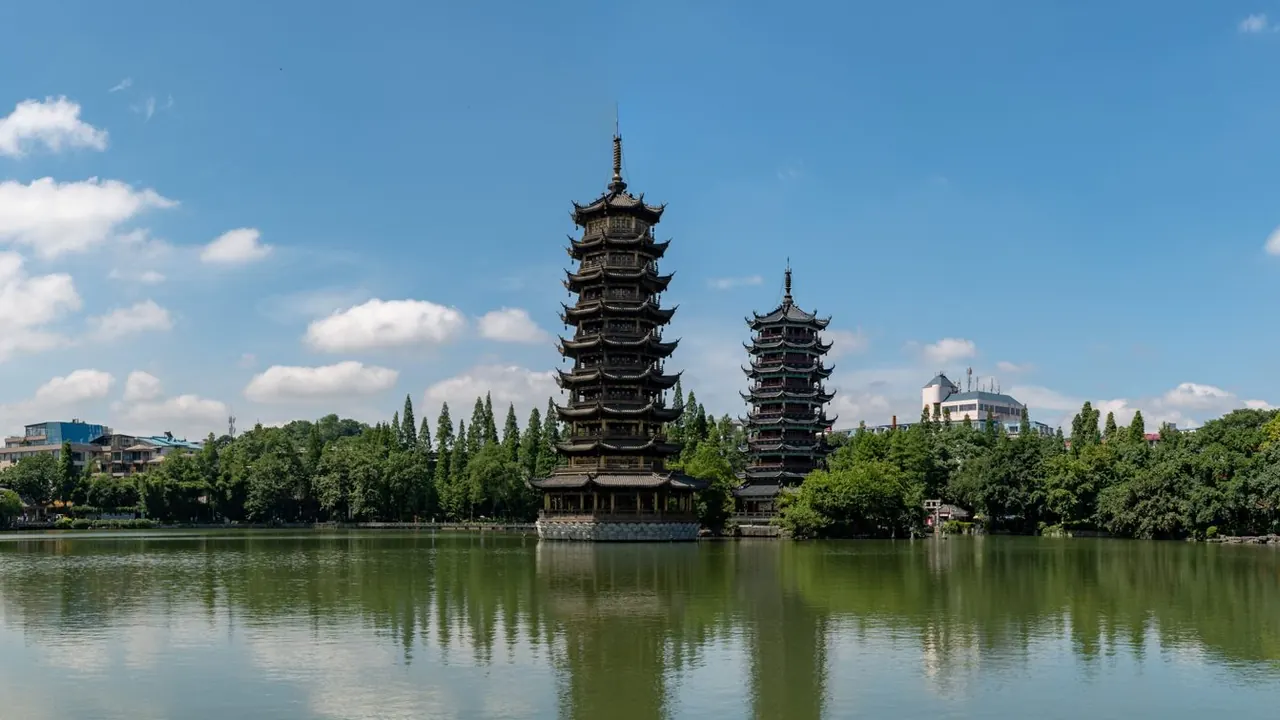
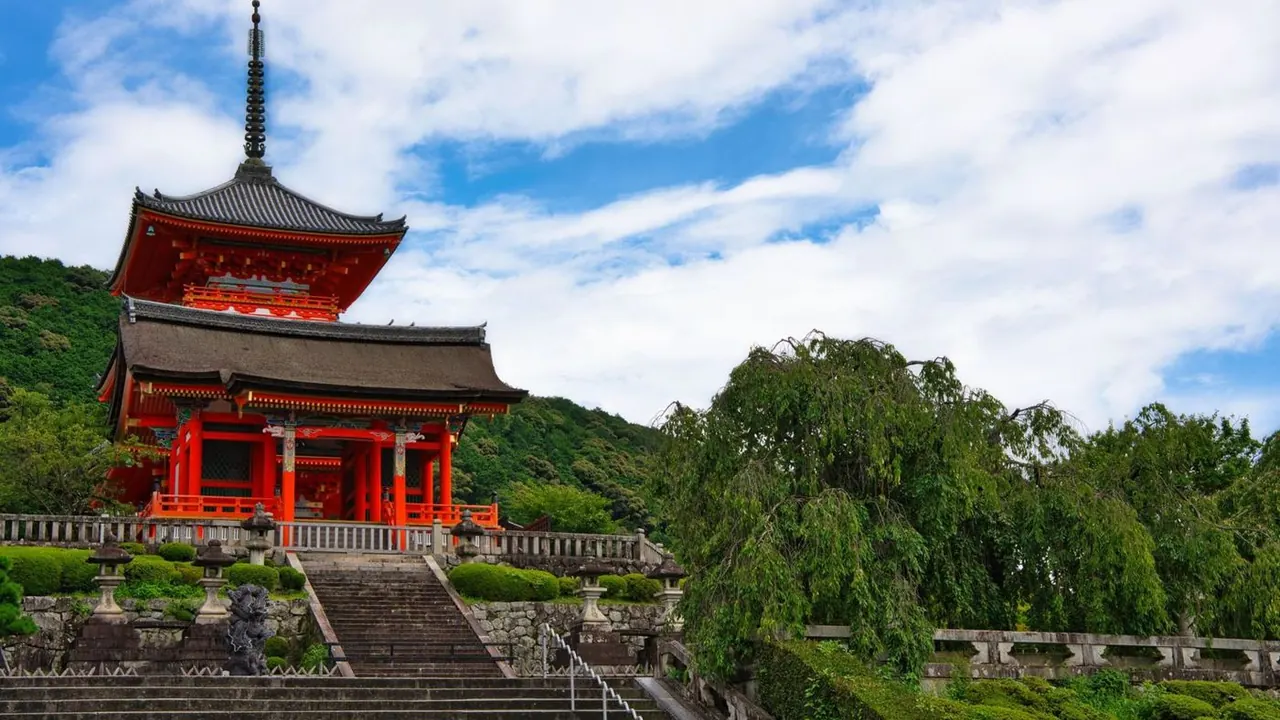
Photos: Guilin by xiquinhosilva, CC BY 2.0, cropped; Kyoto by Bert Mulder, Pexels License.
Guilin or Kyoto?
Our verdict in twelve categories, each scored against the same fixed benchmark cities, and the climate month by month, so you can choose for your trip.
Choose Guilin for
- prices
- nature and the outdoors
Guilin is the trip for scenery. The karst peaks along the Li River, the cycling lanes and climbing crags around Yangshuo and the Longji rice terraces are the reason to go, and the city itself is mostly a base. It suits travellers who want days outdoors among some of China's most famous landscapes, don't mind thin English, and want to spend very little on everyday costs.
Choose Kyoto for
- culture and sights
- shopping
- food and drink
Kyoto rewards those who come for depth. A thousand years as the imperial capital left temples, gardens, wooden lanes and craft traditions that could fill a week, along with refined cooking, real bathhouses and fast trains to Nara, Osaka and Himeji. It costs more and gets crowded in the peak seasons, but for culture, food and ease of travel it is the stronger choice.
Scoreboard
Twelve categories on one fixed scale from 0 to 100. The shaded stretch is the gap between the two.
Your match
Pick a travel style or drag the sliders, and both match scores follow your weighting.
Wins on prices and nature and the outdoors with your weighting.
Wins on culture and sights and shopping with your weighting.
What matters to you?
Category by category
What the scores mean for a trip.
Beaches & swimming
Neither city is a beach destination. Around Guilin, swimming means a summer dip in a calm bend of the Yulong or Li near Yangshuo, with the peaks rising above you. It is a pleasant way to cool down, but there is no sandy shore to spend a day on.
Kyoto gives you slightly more choice. In July and August the sandy western shore of Lake Biwa, at places like Omi-Maiko, makes an easy afternoon out with warm freshwater, and Suma on Osaka Bay is a plain city beach about an hour away. For clear sea and white sand, the Sea of Japan coast needs an overnight trip.
Food & drink
Kyoto is one of Asia's great food cities. Kaiseki in old Gion houses, temple cuisine at Daitokuji and Tenryuji, tofu, yuba and tea sweets, the stalls of Nishiki Market and the sake breweries of Fushimi give a stay real depth.
Guilin's eating is honest but narrow. A mifen breakfast with fermented chilli, river snails and Yangshuo beer fish are worth trying, but after a few days the night-market skewers and tour-group restaurants start to repeat themselves.
Culture & sights
Here the gap is widest. Kyoto has seventeen UNESCO sites, from Kinkaku-ji and Ryoan-ji to Nijo Castle, more than a thousand temples and shrines, and whole districts of wooden townhouses. A week barely covers it.
Guilin's sights are mostly limestone hills and caves turned into parks, such as Elephant Trunk Hill and Reed Flute Cave. The Jingjiang Princes' City and the Longyin Cave inscriptions supply the history, and a day or two is enough.
Nightlife
Both are quiet after dark, but the evenings feel different. In Kyoto you drink sake or whisky in small bars and izakaya along Pontocho and the Kiyamachi canal, and for a big night you take the train to Osaka.
Guilin's evenings are spent strolling past the lit-up lakes and eating skewers around Zhengyang Street. The only real party strip is Yangshuo's loud, touristy West Street.
Nature & outdoors
Guilin's karst is a landscape people cross the world to see: hundreds of peaks rising from the plain along the Li River, rafting on the Yulong, cycling and climbing around Yangshuo, and the Longji terraces carved into whole mountainsides.
Kyoto's nature is gentler and closer. It means forest trails in the Higashiyama hills, the bamboo of Arashiyama, the cedar path from Kurama to Kibune and the Hozu gorge, with cherry blossom and maple colour shaping the seasons. It is lovely and easy to reach, but not as dramatic.
Day trips
Kyoto sits at the centre of a remarkably rich region. Nara's Todai-ji, Uji's Byodo-in, Osaka, Kobe and Himeji Castle are all an hour or less away by fast train, so a different day trip every day is easy.
From Guilin the outings mostly follow the same theme of river villages and scenery: Yangshuo, Xingping and Daxu, the ancient Lingqu Canal, and the Zhuang and Yao villages among the terraces. They are rewarding but less varied.
Good for families
Kyoto is easier with children. It is safe and orderly, and the Railway Museum, aquarium, zoo and Toei's samurai shows break up the temple visits, with Nara's deer and Osaka's theme park close by.
In Guilin, children enjoy the rafting, the coloured caves and the river cruise, but there is little else made for them. With hot, wet summers and not much English spoken, families usually need a driver arranged in advance.
Getting around
Kyoto's flat grid is easy to walk and cycle, and a dense mix of JR, private railways, the Randen tram and buses reaches almost everything, though buses crawl in peak seasons.
Guilin's lake-ringed centre is compact on foot, but there is no metro and bus signs are mostly in Chinese. Visitors rely on taxis, ride-hailing and mobile payment apps, and reaching the terraces means a long, winding drive.
Shopping & style
Kyoto is a city for beautiful objects. Family-run shops sell Kiyomizu ceramics, Nishijin silk, lacquer, incense and hand-forged knives, and the arcades, department stores and the To-ji and Kitano Tenmangu flea markets add to the choice.
Guilin's shopping is limited to souvenir lanes and night markets. The best things to take home are edible or handmade: chilli sauce, osmanthus tea, Sanhua liquor and minority brocade.
Affordability
Guilin is much cheaper day to day. Meals, taxis, trains and countryside guesthouses cost very little, and only the entry fees for cruises, caves and parks add up.
Kyoto is mid-range. Noodle counters, food halls and transport are reasonable, but hotels, ryokan and kaiseki dinners are expensive, especially when rooms fill up for cherry blossom and autumn colour.
Live music & performing arts
Kyoto has real living traditions on stage: the spring geisha dances, kabuki at Minamiza, regular Noh performances, plus a concert hall and small jazz bars. On a random night, though, the choice can be thin.
What Guilin offers is spectacle made for visitors, above all Impression Liu Sanjie on the Li River at Yangshuo. Beyond that there are acrobatics and the occasional Gui opera.
Wellness & relaxation
Kyoto has a genuine culture of calm. There are century-old sento bathhouses, onsen at Kurama and Arashiyama, ryokan tubs, zazen sessions and gravel gardens to sit before, best enjoyed early in the day.
Guilin's version is simpler: cheap foot massage everywhere, hot springs at Longsheng two hours away, and slow days at a guesthouse among the rice fields outside Yangshuo.
When should you go?
Pick your month. The climate figures are measured averages, not a forecast.
Guilin in July
Kyoto in July
Daytime high, °C
Rainfall in the month, mm
Where the figures come from
Kyoto's sunshine is measured 43 km from the centre, at Osaka.
Temperature and rainfall are climate normals, averaged over the years shown. Guilin: 1991-2020 normals, Guilin (7.6 km from centre). Kyoto: 1971-2000 (sunshine 1991-2020) normals, Kyoto (3.2 km from centre).
Guilin is at its best in October and November, when days are warm to mild (around 26°C in October) and the rain has eased. Spring brings greener scenery, but the wet season builds fast and peaks in June at about 442mm, with mist over the peaks and the rivers running high. July and August are hot and sticky for walking, and winter is cool but rarely cold.
Kyoto has two clear high points: April and May, then October and November, when the weather is mild and good for long days of temple walking. June to September is hot, humid and often wet, with a second spell of heavy rain in September, though the sea within reach warms to about 27°C in August, which is also the sunniest month. Winters are colder than in Guilin, with highs around 9°C, but they are often clear.
Which traveller are you?
On a culture and arts trip, Kyoto wins easily. Its UNESCO temples and gardens, the machiya lanes of Higashiyama and Gion, kabuki at Minamiza and the spring geisha dances go far beyond Guilin's hill parks and its one Ming palace.
For an outdoors trip, Guilin is the better choice. The Li River cruise, bamboo rafting on the Yulong, cycling between the peaks around Yangshuo, world-class limestone climbing and the Longji terraces offer more than Kyoto's gentle forested hills and riverside paths.
On a trip with a tight budget, Guilin stretches money further. Noodle breakfasts, guesthouses in the Yangshuo countryside, taxis and trains all cost little. In Kyoto, hotels and ryokan are expensive, especially during the cherry blossom and autumn colour seasons.
Before you go
| Measure | Guilin | Kyoto |
|---|---|---|
| Official language | Putonghua | Japanese |
| Currency | Yuan Renminbi (CNY) | Yen (JPY) |
| Sockets | ACI220 V, 50 Hz | AB100 V, 50 and 60 Hz depending on the region |
| Driving side | Right | Left |
| Time zone | UTC+8 | UTC+9 |
| Emergency number | Police 110, ambulance 120, fire 119 | Police 110, fire 119 |
| Elevation | 153 m | 51 m |
| Main airport | Guilin Liangjiang International Airport (KWL)25 km from centre43 non-stop destinations | Kansai International Airport (KIX)81 km from centre62 non-stop destinations |
| Public holidays this year | 6 days | 16 days |
By the numbers
| Measure | Guilin | Kyoto |
|---|---|---|
| City population | 4,931,137 | 1,463,723 |
| People per km² | - | 1,768 |
| Museums within 10 km | 1 | 77 |
| UNESCO World Heritage sites within 50 km | 1 | 4 |
| Swim season, months above 21 °C | - | 5 months |
Where else could you go?
Every comparison below shares a destination with this one, so you can follow Guilin or Kyoto somewhere new.