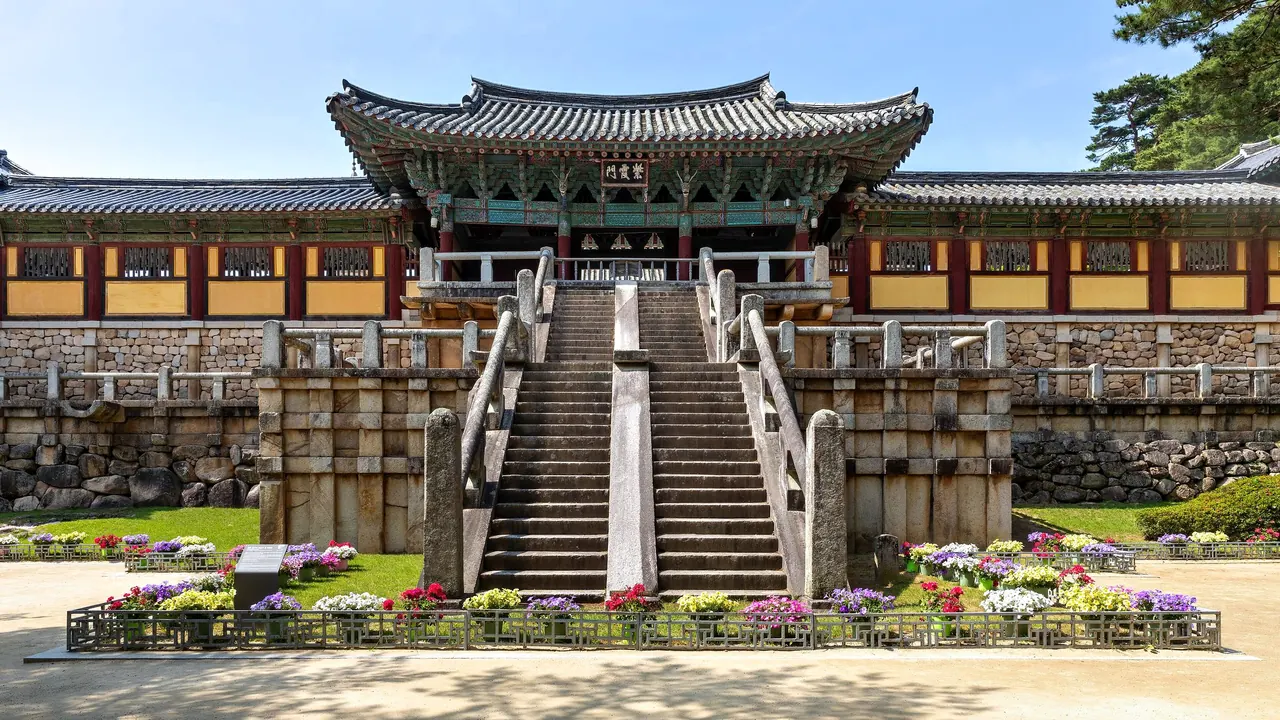
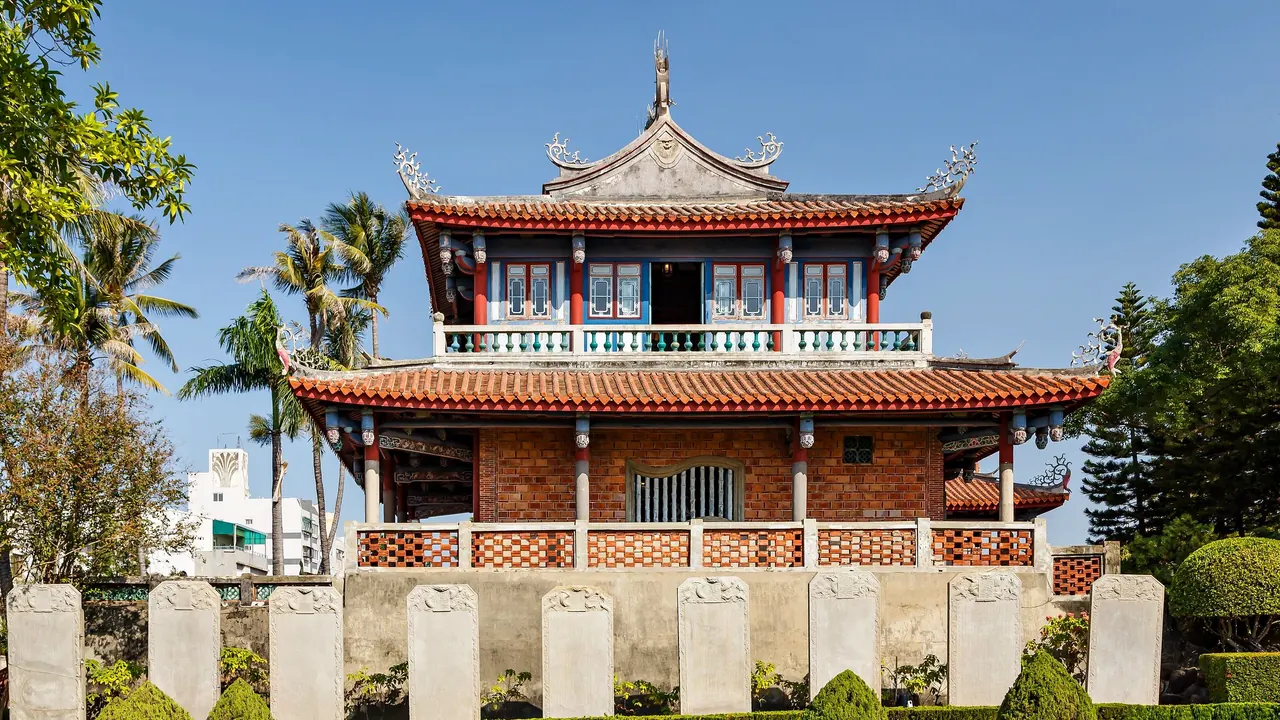
Photos: Gyeongju by Basile Morin, CC BY-SA 4.0, cropped; Tainan by CEphoto, Uwe Aranas, CC BY-SA 3.0, cropped.
Gyeongju or Tainan?
Our verdict in twelve categories, each scored against the same fixed benchmark cities, and the climate month by month, so you can choose for your trip.
Choose Gyeongju for
- getting around
- nature and the outdoors
- wellness
Gyeongju suits travellers who want ancient history laid out in the open and a calm place to take it in. The Silla burial mounds, Cheomseongdae and Wolji Pond sit close together on flat ground you can cycle around, and Bulguksa, Seokguram and the carved Buddhas of Namsan are within reach. Temple stays and lakeside bathhouses keep the pace slow, Bomun Lake gives children a break from the heritage, and Busan is a short train ride away.
Choose Tainan for
- food and drink
- nightlife
- shopping
Tainan is for people who travel to eat. Its days are built around beef soup at breakfast, generations-old snack stalls and weekend night markets, all cheap, and these sit among hundreds of incense-filled temples and the Dutch, Koxinga and Japanese layers of Taiwan's old capital. It also makes a warm escape in the northern winter. In return you need to put up with scooter-crowded pavements, plenty of taxi rides and less in the way of quiet.
Scoreboard
Twelve categories on one fixed scale from 0 to 100. The shaded stretch is the gap between the two.
Your match
Pick a travel style or drag the sliders, and both match scores follow your weighting.
Too close to call, level with your weighting
Wins on getting around and nature and the outdoors with your weighting.
Wins on food and drink and nightlife with your weighting.
What matters to you?
Category by category
What the scores mean for a trip.
Beaches & swimming
Neither city is a beach destination, and the two coasts disappoint in different ways. Gyeongju's shore is about forty minutes from the centre, with small sandy and pebbly coves at Bonggil, Jeonchon and Gampo. You can swim there, but only in July and August, and the sea is cold the rest of the year.
Tainan sits right on the water, but the grey sand and lagoons west of Anping are for sunset walks over the Taiwan Strait rather than swimming, because of strong currents and frequent bans. Bonggil, with King Munmu's underwater tomb offshore, is the more memorable half-day out.
Food & drink
This is where Tainan pulls far ahead. Taiwanese travel there just to eat. Stalls that have cooked one dish for three generations serve beef soup, shrimp rolls, oyster omelettes and almond tofu around the temples and along Guohua and Minzu roads, and night markets carry on into the evening.
Gyeongju feeds you well but without that depth: ssambap spreads near the royal tombs, boxes of Hwangnam bread, beopju rice wine from Gyochon and market soups. Neither city does fine dining, but in Tainan eating is the main reason to go.
Culture & sights
For close to a thousand years Gyeongju was the Silla capital, and its sights are the deeper draw. What survives is mostly earth and stone: the grassy mounds of Daereungwon, the bottle-shaped Cheomseongdae observatory, the reconstructed pavilions on Wolji Pond and the bare foundations of Hwangnyongsa, with the gold crowns and the Emille Bell in the museum. The finest work stands up on Tohamsan, where Seokguram's granite Buddha and the stone stairways of Bulguksa rank among East Asia's great monuments.
Tainan's history is shorter but more layered, and much of it is still in use. The Confucius Temple, Anping's Fort Zeelandia from the Dutch period, Chihkan Tower on the site of another Dutch fort, Japanese-era courts and hundreds of working temples thick with incense share the old city. The Chimei Museum adds European painting and violins, which Gyeongju cannot match, but nothing here carries the weight of Seokguram and Bulguksa.
Nightlife
Both towns are quiet after dark, but Tainan gives you a little more to do. Its evenings revolve around food, and a handful of cocktail, whisky and craft-beer bars are tucked into old townhouses around Shennong Street and Haian Road. Kaohsiung, for a bigger night, is a short train ride away.
In Gyeongju the evening highlight is the floodlit Wolji Pond. After that come a few bars in Hwangnidan-gil and soju over grilled meat downtown, and then the town goes to bed early.
Nature & outdoors
Gyeongju has the more rewarding countryside. Namsan's trails pass Buddhas carved into the rock, the wooded ridges of Tohamsan look towards the sea at sunrise, and the flat valley and Bomun Lake path are made for cycling under cherry blossom or autumn colour. The basalt columns on the Yangnam shore add a coastal walk.
Tainan's outdoors is flat and wet: boat rides through the Sicao mangrove tunnel, the salt mountain at Qigu, and the black-faced spoonbills that arrive in winter. Summer heat confines most of it to early mornings.
Day trips
From Singyeongju station, Busan is about half an hour by high-speed train, and the outings around Gyeongju are the stronger set. The lived-in clan houses of Yangdong and the great monastery of Tongdosa are each under an hour away, and Haeinsa's Tripitaka woodblocks and Hahoe village make longer outings.
Tainan's best day out is Kaohsiung, under an hour away, with Lotus Pond, Pier-2 and the ferry to Cijin, and beyond it Foguangshan's Buddha Museum and the umbrella town of Meinong. Chiayi, the start of the Alishan forest railway, adds options to the north.
Good for families
Gyeongju is easier with children, mainly because of Bomun Lake. It has roller coasters, a water park, swan pedal boats and a bird park, and in the centre the flat tomb paths take a buggy and family bikes. Hanbok dress-up and the museum's gold crowns help too, though the steps at Bulguksa can tire small legs.
Tainan is warm towards children, and night market games, the Anping forts and the mangrove boats go down well. Nothing there is built for children, though, and heat, scooter-lined pavements and taxi hops make days harder. The nearest theme park and zoo are in Kaohsiung.
Getting around
Both cities put their high-speed stations outside town, but Gyeongju is much easier once you arrive. Its main sights share a compact, flat core with footpaths and cycle lanes, and buses run to Bomun Lake and Bulguksa. Only Seokguram, Yangdong and the coast need long bus rides or a taxi.
Tainan has no metro, its buses are slow, and even the walkable old quarter is broken up by parked scooters and steps. Anping and the Chimei Museum need a ride, so most visitors use taxis, ride-hailing or bike-share.
Shopping & style
Tainan gives you more to browse. The townhouse lanes off Shennong and Zhengxing streets sell Taiwanese design, tea, ceramics and indigo-dyed cloth. The 1930s Hayashi Department Store, with a Shinto shrine on its roof, is worth a visit in itself, and the night markets add cheap clothes.
Gyeongju's equivalent is a stretch of Hwangnidan-gil with stationery and Silla-motif souvenirs, plus dried seafood in the markets and boxes of Hwangnam bread to take home. Neither city suits a fashion trip.
Affordability
Tainan is the cheaper of the two. A whole day of snack grazing costs little, most temples are free, and rooms cost clearly less than in Taipei. The main costs are taxis and the occasional cocktail bar.
Gyeongju is also good value for Korea: the tomb parks are free, bike hire is cheap, and weekday guesthouses are fairly priced. Weekends, blossom and foliage seasons and the Bomun resort hotels push costs up noticeably.
Live music & performing arts
Tainan's street performance gives it the edge. On gods' birthdays, stages go up outside temples for Taiwanese opera and glove puppetry, and processions bring drum troupes, lion dances and the Eight Generals. Formal concerts mostly mean a trip to Kaohsiung's national arts centre.
Gyeongju offers open-air traditional music and Silla-themed shows at Bomun in the warmer months. Its real moment is the autumn Silla Cultural Festival, with court music and processions among the tombs.
Wellness & relaxation
Gyeongju is the more restful stay. Hot-spring water fills bathhouses and hotel spas around Bomun Lake, the neighbourhood jjimjilbang are part of daily life, and temple stays at Bulguksa or the sunmudo cave temple of Golgulsa offer early chanting and silence.
Tainan's standout is Guanziling's rare mud hot spring, about an hour into the hills. In town, reflexology parlours and slow afternoons in tea rooms help, but scooters and heat get in the way of real rest.
When should you go?
Pick your month. The climate figures are measured averages, not a forecast.
Gyeongju in July
Tainan in July
Daytime high, °C
Rainfall in the month, mm
Where the figures come from
Gyeongju's temperatures are measured 25 km from the centre, at Pohang.
Gyeongju has no rain gauge within 25 km of the centre, so its rainfall comes from a gridded climate dataset read at the city rather than from a gauge further away.
Tainan has no rain gauge within 25 km of the centre, so its rainfall comes from a gridded climate dataset read at the city rather than from a gauge further away.
Temperature and rainfall are climate normals, averaged over the years shown. Gyeongju: 1991-2020 normals, Pohang (25.3 km from centre). Tainan: 1949-2025, 35 years observed (rainfall 1991-2020) normals, Tainan Tw-Afb (4.7 km from centre).
Gyeongju has four distinct seasons. April, May and October are the best months for walking, and the cherry blossom and autumn colour fall in those weeks. Winter is cold but bright, with highs around 7°C in January and plenty of sunshine. July and August are hot and wet, with about 221mm of rain in August. The East Sea is warmest from late July into September, reaching about 25°C in August, but the official swimming season covers only July and August.
Tainan stays warm all year. Highs are about 23°C even in January, and the sea is warm in every month, though local beaches discourage swimming. From October to April it is dry and pleasant for exploring the temples and lanes. From May to September the heat makes walking hard work, and the rain is very heavy, peaking at about 588mm in August. The two cities suit opposite seasons: Gyeongju is at its best in spring and autumn, Tainan through the winter months.
Which traveller are you?
For a culture and arts trip, Gyeongju is the stronger choice. A thousand years of Silla rule left royal tombs you can enter, an early observatory, gold crowns in the National Museum and two UNESCO-listed temple sites on Tohamsan, all within a few days' reach.
On a food and nightlife trip, Tainan wins clearly. You can graze from milkfish porridge to danzai noodles, coffin bread and shaved ice, spend the evening at a night market and finish in a townhouse cocktail bar. Gyeongju has little beyond ssambap and an early night.
For a relaxing and wellness trip, Gyeongju is the calmer base. It has hot-spring bathhouses around Bomun Lake, temple stays with dawn chanting at Bulguksa or Golgulsa, and quiet mornings among the tombs. Tainan's scooter noise and summer heat make real rest harder to find.
Before you go
| Measure | Gyeongju | Tainan |
|---|---|---|
| Official language | Korean, Korean Sign Language | Taiwanese Sign Language, Amis, Taiwanese Hokkien, Rukai, Bunun, Kanakanavu, Standard Taiwanese Mandarin, Paiwan, Yami, Atayal, Saaroa, Kavalan, Tsou, Seediq, Puyuma, Saisiyat, Sakizaya, Taiwanese Hakka, Truku, Matsu dialect, Kinmen dialect, Wuqiu dialect |
| Currency | Won (KRW) | New Taiwan Dollar (TWD) |
| Sockets | CF220 V, 60 Hz | AB110 V, 60 Hz |
| Driving side | Right | Right |
| Time zone | UTC+9 | UTC+8 |
| Emergency number | Police 112, ambulance 119, fire 119 | 110 or 112 or 119 |
| Elevation | 46 m | 1 m |
| Main airport | Gimhae International Airport (PUS)79 km from centre49 non-stop destinations | Kaohsiung International Airport (KHH)48 km from centre35 non-stop destinations |
| Public holidays this year | 18 days | - |
By the numbers
| Measure | Gyeongju | Tainan |
|---|---|---|
| City population | 245,365 | 1,849,762 |
| People per km² | 185 | 844 |
| Museums within 10 km | 3 | 17 |
| UNESCO World Heritage sites within 50 km | 6 | 0 |
| Swim season, months above 21 °C | 4 months | 12 months |
Where else could you go?
Every comparison below shares a destination with this one, so you can follow Gyeongju or Tainan somewhere new.
- Busanvs Gyeongju
- Taipeivs Tainan
- Fukuokavs Gyeongju
- Seoulvs Gyeongju
- Hiroshimavs Gyeongju
- Kyotovs Gyeongju