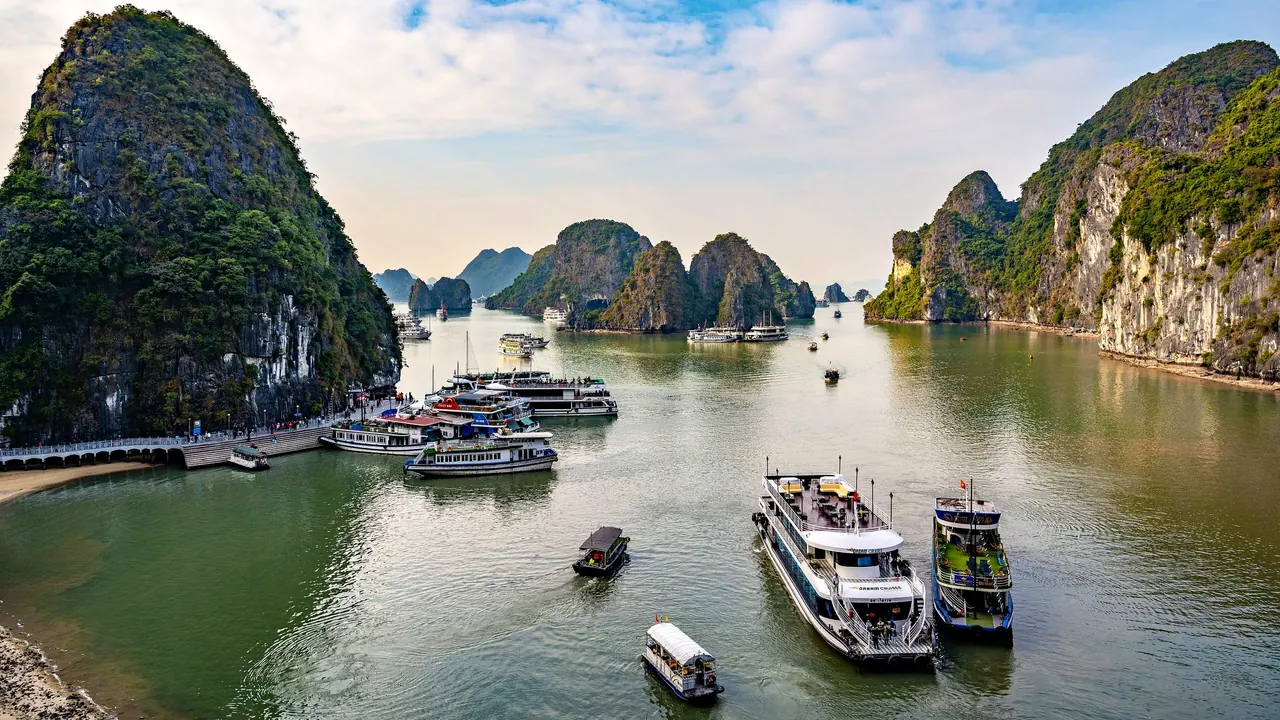
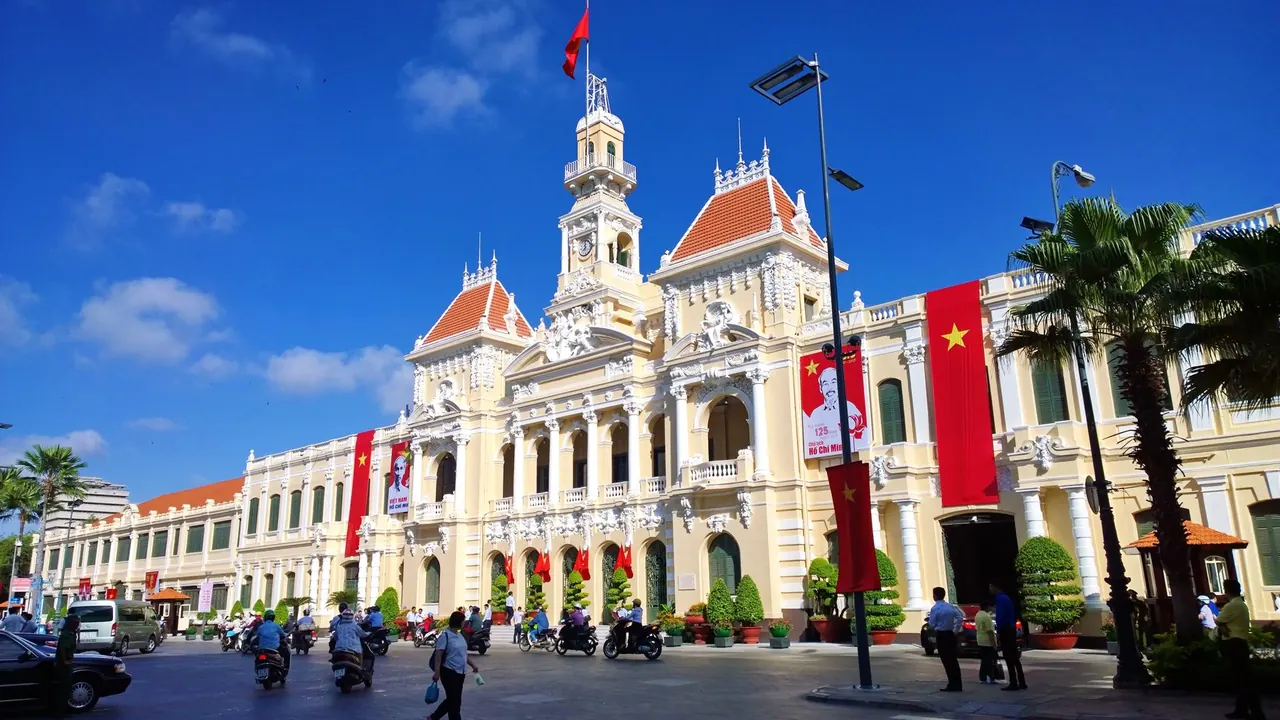
Photos: Ha Long by Takeshi Aida from Hong Kong, Hong Kong, CC BY-SA 2.0, cropped; Ho Chi Minh City by trungydang, CC BY 3.0, cropped.
Ha Long or Ho Chi Minh City?
Our verdict in twelve categories, each scored against the same fixed benchmark cities, and the climate month by month, so you can choose for your trip.
Choose Ha Long for
- nature and the outdoors
- beaches
- families
Ha Long suits travellers who want one extraordinary landscape and are happy to plan the trip around it. A night or two on a boat among the limestone towers, with caves, kayaking into lagoons and swimming off the deck, is the whole experience. It works especially well for families and for anyone who would rather have scenery than city life. On land the town is quiet and goes to bed early.
Choose Ho Chi Minh City for
- nightlife
- food and drink
- shopping
Choose Ho Chi Minh City if you travel for appetite and energy. Its street food, coffee culture and late nights are far ahead. It adds wartime and colonial history, markets, tailors and a modest stage scene, and daily costs are even lower. There is no real beach or wild scenery close by, so it is the pick for urban travellers rather than those who want open water.
Scoreboard
Twelve categories on one fixed scale from 0 to 100. The shaded stretch is the gap between the two.
Your match
Pick a travel style or drag the sliders, and both match scores follow your weighting.
Wins on nature and the outdoors and beaches with your weighting.
Wins on nightlife and food and drink with your weighting.
What matters to you?
Category by category
What the scores mean for a trip.
Beaches & swimming
Neither city is a beach destination, but Ha Long at least puts swimming within reach. The town beach at Bai Chay is shallow and often cloudy. The real swimming comes on cruises, with stops at island beaches such as Ti Top and dips off the boat in quiet coves, roughly from May to October.
Ho Chi Minh City has no swimming coast of its own, only the muddy mangrove shore at Can Gio. Vung Tau, two hours away, has warm but murky water and weekend crowds. In practice a swim here means a hotel or rooftop pool.
Food & drink
Ha Long is a good place for a seafood dinner, and Ho Chi Minh City is worth travelling to just to eat. In Ha Long the best things are cha muc squid cakes and crabs or mantis shrimp picked from the tanks near Ha Long market and along Bai Chay, plus northern breakfasts of pho and banh cuon. Beyond that, cruise menus are fixed and there is barely any café culture.
Saigon's sweeter, herb-heavy southern cooking runs from banh xeo and hu tieu on plastic stools to Cholon's Chinese-Vietnamese kitchens and snail streets after dark. Add a proper coffee culture, modern Vietnamese restaurants and the international dining in Thao Dien, and you could eat differently at every meal for a week.
Culture & sights
Ha Long's great sight is natural, and there are few cultural stops in town. The black-glass Quang Ninh Museum in Hon Gai, Long Tien pagoda and the old floating village of Cua Van on the bay fill a day at most.
Ho Chi Minh City has far more, mostly from the twentieth century. The War Remnants Museum and the Reunification Palace bring the war close. The Dong Khoi quarter keeps the French-era cathedral, post office and Opera House, and Cholon's incense-filled assembly halls add an older layer. Two or three days cover it well.
Nightlife
Evenings in Ha Long are short and gentle. In Bai Chay that means beer halls, karaoke and seafood that wind down before midnight. On a cruise it means a drink on the sundeck and squid fishing off the stern.
Ho Chi Minh City goes out properly. Pavement beer leads to the neon noise of Bui Vien, rooftop and speakeasy-style bars around Dong Khoi and Nguyen Hue, and clubs with a young local crowd. Thao Dien has a calmer expatriate scene, and many places stay open into the small hours.
Nature & outdoors
Nature is Ha Long's whole case. Close to two thousand forested limestone islets rise from the bay. You can explore caves such as Sung Sot and paddle under rock arches into lagoons. For more, the quieter Lan Ha and Bai Tu Long bays have the same scenery, and Cat Ba adds trails and climbing.
Ho Chi Minh City is flat and built up. Its nature is the Can Gio mangroves, with boardwalks and macaques, and the canals and paddies of the Mekong Delta. These are pleasant by boat or bicycle but gentle next to the karst seascape.
Day trips
Ha Long has one excellent outing, and Ho Chi Minh City has more range. From Ha Long the highlight is Yen Tu, the holy mountain of Truc Lam Zen, with pagodas climbing through old forest. Hai Phong's colonial streets and the Bach Dang battlefield are close too. The islands work better as overnight trips, and Hanoi is too far to go and come back in a day.
From Saigon there are several distinct days out. You can crawl through the Cu Chi tunnels, watch the midday ceremony at the Cao Dai temple in Tay Ninh, or take a boat through the coconut canals around My Tho and Ben Tre. Vung Tau's hilltop statue and lighthouse make another option.
Good for families
Ha Long gives children more to remember. A day on the water, with caves full of odd rock shapes, kayaking and swimming off the deck, feels like an expedition. Sun World in Bai Chay adds a cable car over the bay, a Ferris wheel and a water park. On cheaper boats, check the railings and lifejackets, and save overnight cruises for older children.
Ho Chi Minh City is openly fond of children, but its attractions are modest: Dam Sen, the eccentric Suoi Tien park and the old zoo. Families manage best with a hotel pool, short trips by car and sightseeing in the mornings.
Getting around
Both cities rely on cheap ride-hailing cars, but Ho Chi Minh City gives a visitor a little more to work with. Ha Long stretches along the bay in two halves joined by the Bai Chay bridge. The waterfront is easy to walk, but pavements are patchy beyond it and the buses are little use. Cruise transfers from Tuan Chau take care of the boat side.
Saigon's colonial core around Dong Khoi and Ben Thanh is compact enough to walk. A metro line runs east from Ben Thanh, and a river bus is a pleasant extra. Motorbike taxis are quick. Crossing the traffic takes nerve, and phones are best kept away from the kerb.
Shopping & style
Ha Long has little to offer shoppers: the Bai Chay night market, pearl showrooms, and dried squid or fish sauce from Ha Long market in Hon Gai.
Ho Chi Minh City is a real shopping stop. Ben Thanh and the wholesale Binh Tay Market in Cholon are good for haggling, and tailors make suits and ao dai to measure. Lacquerware, embroidery and Song Be ceramics are worth packing. The malls on Dong Khoi and Le Loi carry international labels and Thao Dien has small design shops, though the tourist stalls are full of copies.
Affordability
Both cities are very cheap, and Ho Chi Minh City comes out a little ahead because nothing forces a big spend. In Ha Long, hotels, street food and taxis cost little, but almost everyone books a cruise, and that becomes the largest single cost. At the waterfront seafood places, agree the weight and price before anything is cooked.
In Saigon, street food, coffee, draught beer and motorbike taxis barely touch a budget, and museum fees are low. Only the international layer of rooftop bars, imported wine and smart hotels comes close to Western prices, and it is easy to avoid.
Live music & performing arts
Ha Long has almost nothing on stage, just staged shows in the Bai Chay entertainment complex and some folk singing on cruise boats.
Ho Chi Minh City has enough for an evening or two. The French-built Opera House is home to the city's ballet and symphony orchestra and stages acrobatic shows about southern village life. Water puppetry plays in the centre, cai luong reformed opera survives in a few theatres, and small jazz rooms add live music.
Wellness & relaxation
In Ha Long, rest comes from the water: a slow day among the karsts, tai chi on deck at dawn and the small spas on the better boats. The mineral springs at the Quang Hanh onsen resort, forty minutes east, are a proper bathing option. The town itself is noisy.
Ho Chi Minh City has the edge for being looked after, because massage is part of daily life. Foot massage parlours stay open late across the centre, and the signature ritual is the long reclining shampoo with a scalp massage and warm towels. Calm outside the treatment room is harder to find, but parks at dawn, temple courtyards and the quieter streets of Thao Dien help.
When should you go?
Pick your month. The climate figures are measured averages, not a forecast.
Ha Long in July
Ho Chi Minh City in July
Daytime high, °C
Rainfall in the month, mm
Where the figures come from
Ha Long's temperatures are measured 50 km from the centre, at Phu Lien.
Ha Long has no rain gauge within 25 km of the centre, so its rainfall comes from a gridded climate dataset read at the city rather than from a gauge further away.
Temperature and rainfall are climate normals, averaged over the years shown. Ha Long: 1991-2020 normals, Phu Lien (49.9 km from centre). Ho Chi Minh City: 1991-2020 normals, Ho Chi Minh (6 km from centre).
Ha Long has real seasons. From December to March it is cool and often grey, with January highs around 19°C, little sunshine and a sea too cold for most swimmers. Warmth comes back in April and May. From June to September the heat brings heavy rain and storms, peaking at about 553mm in July. October is the sweet spot: still hot, dry again and sunny, with the sea warm enough to swim from the boats.
Ho Chi Minh City is hot every month, with highs from 32°C up to around 35°C in April and May, so the real question is rain rather than temperature. December to April is dry and the easiest time to walk the streets. May to November brings heavy downpours, wettest in October at around 306mm, and the sea off the coast stays warm all year. The two fit together well: October suits Ha Long, and December to February suits Saigon while the bay is chilly.
Which traveller are you?
For an outdoors trip, Ha Long wins easily. You get days of activity from the karst islands, sea caves and kayak routes into enclosed lagoons, plus the trails and climbing on Cat Ba. Ho Chi Minh City offers flat parks, mangroves and quiet delta canals.
On a food and nightlife trip, Ho Chi Minh City is the clear choice. Pavement stalls, Cholon's Chinese-Vietnamese cooking and serious coffee lead on to rooftop bars, stairwell cocktail rooms and Bui Vien's late street. Ha Long offers seafood halls and early nights.
On a family trip with children, Ha Long is the easier base. A cruise with caves, kayaks and deck swimming feels like an adventure, and Sun World adds rides. In Saigon, motorbike traffic and crowded pavements make outings with small children hard work.
Before you go
| Measure | Ha Long | Ho Chi Minh City |
|---|---|---|
| Official language | Vietnamese | Vietnamese |
| Currency | Dong (VND) | Dong (VND) |
| Sockets | ACFG220 V, 50 Hz | ACFG220 V, 50 Hz |
| Driving side | Right | Right |
| Time zone | UTC+7 | UTC+7 |
| Emergency number | Police 113, ambulance 115, fire 114 | Police 113, ambulance 115, fire 114 |
| Elevation | 8 m | 13 m |
| Main airport | Noi Bai International Airport (HAN)136 km from centre91 non-stop destinations | Tan Son Nhat International Airport (SGN)7 km from centre91 non-stop destinations |
By the numbers
| Measure | Ha Long | Ho Chi Minh City |
|---|---|---|
| City population | - | 14,002,598 |
| People per km² | - | 2,068 |
| Museums within 10 km | 1 | 9 |
| UNESCO World Heritage sites within 50 km | 2 | 0 |
| Swim season, months above 21 °C | 9 months | 12 months |
Where else could you go?
Every comparison below shares a destination with this one, so you can follow Ha Long or Ho Chi Minh City somewhere new.
- Hanoivs Ha Long
- Phnom Penhvs Ho Chi Minh City
- Da Latvs Ho Chi Minh City
- Nha Trangvs Ho Chi Minh City
- Sapavs Ha Long
- Siem Reapvs Ho Chi Minh City