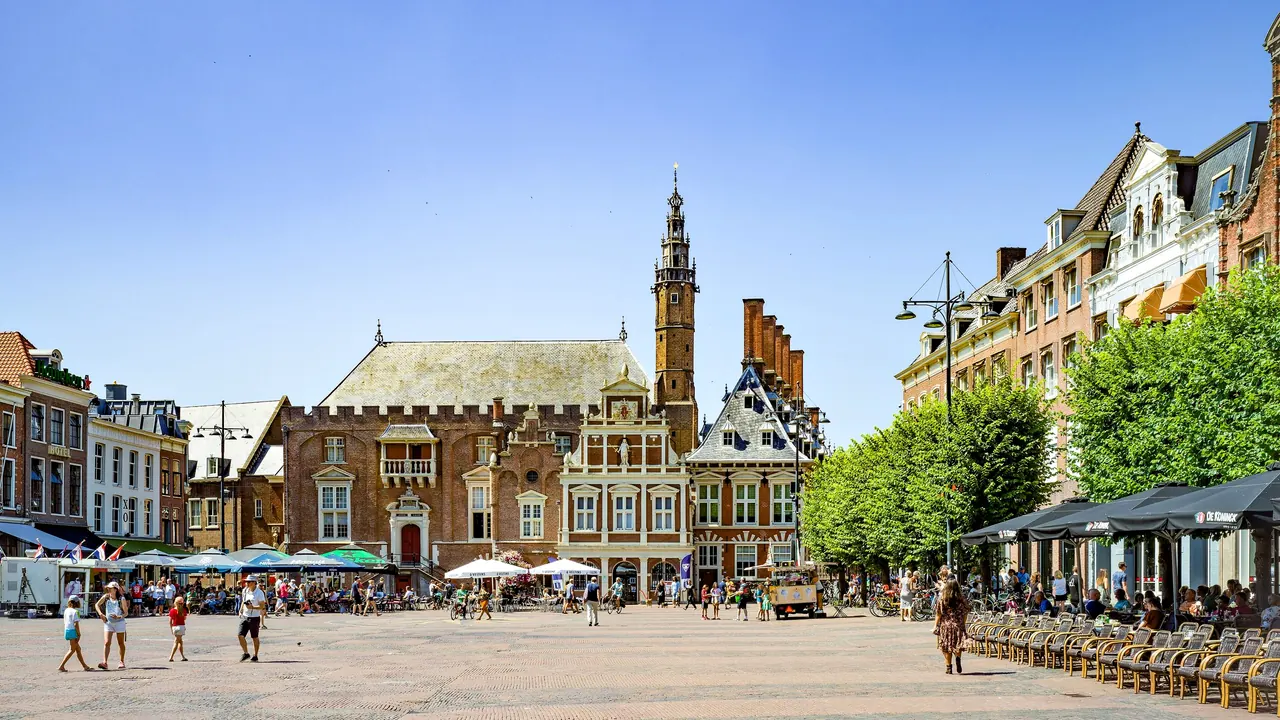
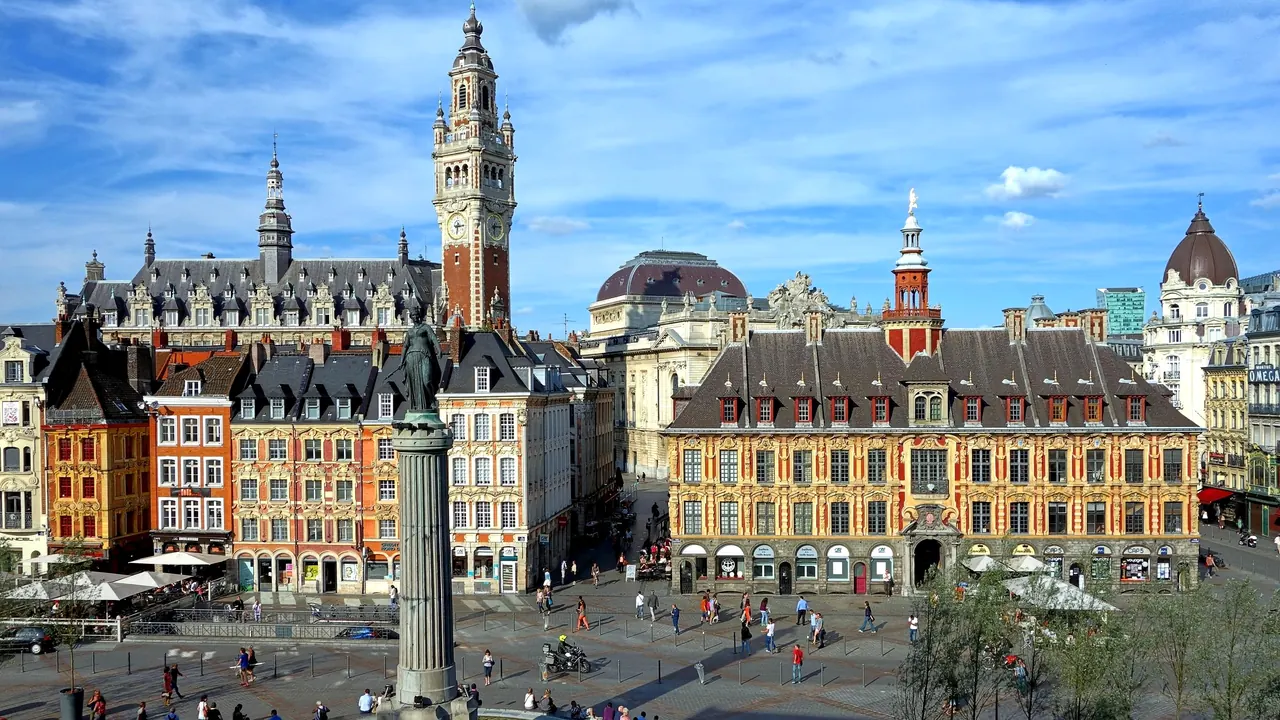
Photos: Haarlem by Moroder, CC BY-SA 4.0, cropped; Lille by Velvet, CC BY-SA 3.0, cropped.
Haarlem or Lille?
Our verdict in twelve categories, each scored against the same fixed benchmark cities, and the climate month by month, so you can choose for your trip.
Choose Haarlem for
- nature and the outdoors
- beaches
- wellness
Haarlem suits travellers who want a calm, good-looking small town with the countryside starting at the edge of the streets. You can cycle through dune woods to the sea in the morning, walk among almshouse courtyards in the afternoon, and be in Amsterdam within a quarter of an hour whenever you want more. Evenings are quiet, the food is pleasant without being a draw, and you pay northwest European prices for small rooms. It is the better pick for an unhurried stay built around walking, cycling and the outdoors.
Choose Lille for
- nightlife
- food and drink
- prices
Lille is the livelier and more generous choice for people who travel to eat, drink and go out. Its Flemish taverns and beer culture outclass anything in Haarlem, a large student population keeps the bars busy, and opera and a national orchestra give the evenings more weight. It also stretches a budget further. You give up easy beaches and wild scenery, but in return you get a crossroads base where Brussels, Bruges and even Paris make easy days out.
Scoreboard
Twelve categories on one fixed scale from 0 to 100. The shaded stretch is the gap between the two.
Your match
Pick a travel style or drag the sliders, and both match scores follow your weighting.
Too close to call, 1 point apart
Wins on nature and the outdoors and beaches with your weighting.
Wins on nightlife and food and drink with your weighting.
What matters to you?
Category by category
What the scores mean for a trip.
Beaches & swimming
Haarlem is the one with a beach you would actually use. Zandvoort is about ten minutes away by train, and Bloemendaal aan Zee is a bike ride away through the dunes. On summer days, beach pavilions line the sand. The North Sea stays cool, though, so a beach afternoon there means walking, sheltering from the wind and taking a quick dip.
From Lille, the coast is a separate expedition. The nearest sand is at Dunkirk, about an hour away by train, and the Opal Coast resorts are further still. From Lille the sea is an occasional day out, but from Haarlem you can go on any warm afternoon.
Food & drink
Lille eats far better. Its wood-panelled estaminets serve carbonnade cooked in beer, potjevleesch, waterzooi and the cheese-laden welsh, and pungent Maroilles cheese turns up everywhere. Then there are vanilla waffles from an eighteenth-century pastry house and the multi-ethnic Sunday market at Wazemmes.
Haarlem offers comfortable, well-made meals on the terraces around the Grote Markt, plus herring and kibbeling at the Saturday market, but no regional cuisine to explore. Both cities care about beer. Haarlem's comes from local craft brewers, while Lille draws on the wider tradition of northern French and Belgian ales.
Culture & sights
Both cities have rich historic centres, but each rewards you in a different way. Haarlem's charm is intimate: the hofjes behind plain doors, the Grote Kerk of St Bavo and its Mozart organ, Frans Hals in his home town, and the eighteenth-century oval room of Teylers Museum.
Lille has one great museum. The Palais des Beaux-Arts holds Flemish and Dutch masters alongside Goya and Delacroix, and Vieux-Lille's Flemish baroque streets surround it. La Piscine in Roubaix and the LaM modern art museum are a metro or tram ride away, so a stay in Lille feels like exploring a city, while Haarlem feels like wandering a town.
Nightlife
Lille has much more going on after dark. Thanks to its large student population, Rue Masséna and Rue Solférino are packed on Thursday nights, while Vieux-Lille has beer cafés and cocktail bars in old brick cellars for an older crowd. For clubbing, people cross into Belgium.
Haarlem's evenings mean brown cafés and terraces around the Grote Markt and the Botermarkt, sociable but early to close. Anyone in Haarlem who wants a big night takes the short train to Amsterdam.
Nature & outdoors
Here Haarlem is well ahead. Zuid-Kennemerland National Park begins at the western edge of town, with dunes, pine and oak woods, small lakes, grazing highland cattle and the tame fallow deer of the water-supply dunes next door. In spring, the bulb fields towards Leiden add colour to the flat polders.
Lille's outdoor life is the Citadel park, the Bois de Boulogne and level towpaths along the Deûle, with short walks on the low Monts de Flandre. Its most dramatic scenery, the chalk cliffs of Cap Blanc-Nez, takes a long day to reach.
Day trips
Both are superb bases, but they point in different directions. From Haarlem, the dense Dutch rail network brings Amsterdam, Leiden, The Hague, Delft and Utrecht within easy reach, with the Keukenhof and Alkmaar's cheese market close by. Every outing stays in a single, compact country.
Lille is a crossroads for several countries. Brussels is about half an hour away, Ghent and Bruges are around an hour, and Paris is reachable by TGV. Closer to home, there are Arras, Amiens cathedral and the First World War battlefields of Ypres and the Somme. That gives Lille a wider range of day trips, but the travel times are longer.
Good for families
Haarlem gives children open space rather than attractions. The centre is flat and mostly car-free, local families get about by cargo bike, and the dunes and beach are close enough for an afternoon of running about. Inside the town there is no zoo or aquarium, though, so for those families take the train to Amsterdam.
Lille has more for children within the city itself. The Citadel park has a small zoo, playgrounds and fairground rides, and the hands-on Forum des Sciences is a metro ride away. Pairi Daiza and Nausicaá make bigger outings further afield, but the cobbles of Vieux-Lille are hard going with a pushchair.
Getting around
Getting around is equally easy in both. Each has a flat, walkable centre and needs no car, but the transport works differently. Haarlem is a cycling town, with separate paths running into the dunes and to the sea, and quick trains to Zandvoort and Leiden.
In Lille, you rely on your feet and public transport. The driverless VAL metro and the tram cover the wider metropolitan area, and the two main stations stand side by side near the old town.
Shopping & style
The two are evenly matched for shopping. In Haarlem, the best of it is independent: boutiques, design shops, bookshops and delicatessens in the lanes around Gierstraat and Kleine Houtstraat, with flowers and cheese on market days.
Lille offers more choice: the chains on Rue Neuve, the Euralille mall by the stations, and a few luxury labels in Vieux-Lille. It also has the Braderie, a vast flea market in early September that takes over kilometres of streets, and nothing in Haarlem compares.
Affordability
Lille is noticeably easier on the wallet. Hotel rooms are reasonably priced for most of the year, estaminet meals and beer are good value, and the metro and main museums cost little.
Haarlem has few hotels for the demand, and rooms are small for what they cost and book up early in tulip season and summer. Bakeries, market stalls and a hired bike help keep daily costs down, but frequent train trips and museum tickets add up.
Live music & performing arts
Lille offers the fuller programme. Its grand Opéra stages opera and dance, the Orchestre National de Lille plays a full symphonic season, and the Théâtre du Nord is one of France's national theatres. For rock and pop, touring acts play the Zénith and the Aéronef.
Haarlem has the nineteenth-century Philharmonie and a theatre where most shows are in Dutch. Its unique draw is the organ: regular concerts on St Bavo's great instrument and a long-running international organ festival. For opera, you have to go to Amsterdam.
Wellness & relaxation
Haarlem is the better place to unwind. Sauna-going is a normal Dutch habit rather than a luxury, and the town has small saunas and beauty spas of its own, with larger garden spa complexes further out in the region. The rest is simply the pace of the place: a long sit on a terrace, or an unplanned ride out into the dunes.
In Lille, relaxing means hotel spas, tea rooms and slow afternoons on café terraces in Vieux-Lille. Its most famous pool is now an art museum, and for a real thermal bath you take the train to Saint-Amand-les-Eaux.
When should you go?
Pick your month. The climate figures are measured averages, not a forecast.
Haarlem in July
Lille in July
Daytime high, °C
Rainfall in the month, mm
Where the figures come from
Haarlem has no rain gauge within 25 km of the centre, so its rainfall comes from a gridded climate dataset read at the city rather than from a gauge further away.
Haarlem's sunshine is measured 49 km from the centre, at De Bilt.
Temperature and rainfall are climate normals, averaged over the years shown. Haarlem: 1991-2020 normals, Amsterdam Airport Schiphol (12.7 km from centre). Lille: 1991-2020 normals, Lille (7.8 km from centre).
The two climates are close, and both cities are at their best from May to September. Haarlem tops out around 22°C in July and August, while Lille, further inland, reaches about 24°C, so Lille's summer is slightly better for long days in the streets. Neither gets uncomfortably hot. From November to February both are grey and cold, with highs around 7°C and short days with little sunshine. That is weather for museums and taverns rather than walking.
Rain is where they differ. Haarlem gets wetter as summer turns to autumn, with the most rain in October at about 109mm, so late spring is the safer bet there. April is its driest month, May its sunniest, and both coincide with the bulb fields. The North Sea off Haarlem is warmest in August at about 19°C, which is fine for short dips and beach walks but not for long swims. Lille's rain is spread fairly evenly through the year, so no season there is notably wetter than the rest.
Which traveller are you?
On an outdoors trip, Haarlem is the clear choice. The dunes, woods and lakes of Zuid-Kennemerland begin at the edge of town, bike paths run straight to the beach, and in spring the bulb fields make a classic ride. Around Lille, the countryside is mostly flat farmland.
For a food and nightlife trip, choose Lille. Its estaminets serve hearty Flemish dishes with serious northern ales, and its student bars and Vieux-Lille cellars keep going well into the night. Haarlem offers pleasant terraces and brown cafés that wind down early.
On a relaxing and wellness trip, Haarlem has the edge. Its canals and courtyards go quiet after dark, Dutch sauna complexes are within reach, and an afternoon in the dunes is restorative. Lille has little more than hotel spas, and its energy comes from going out.
Before you go
| Measure | Haarlem | Lille |
|---|---|---|
| Official language | Dutch | French |
| Currency | Euro (EUR) | Euro (EUR) |
| Sockets | CF230 V, 50 Hz | CE230 V, 50 Hz |
| Driving side | Right | Right |
| Time zone | UTC+1, UTC+2 in summer | UTC+1, UTC+2 in summer |
| Emergency number | 112 | 112 |
| Elevation | 2 m | 17 m |
| Main airport | Amsterdam Airport Schiphol (AMS)12 km from centre287 non-stop destinations | Lille Airport (LIL)8 km from centre61 non-stop destinations |
| Public holidays this year | 11 days | 11 days |
By the numbers
| Measure | Haarlem | Lille |
|---|---|---|
| City population | 162,543 | 238,246 |
| People per km² | 5,064 | 6,846 |
| Museums within 10 km | 28 | 23 |
| UNESCO World Heritage sites within 50 km | 5 | 6 |
| Swim season, months above 21 °C | None | - |
Where else could you go?
Every comparison below shares a destination with this one, so you can follow Haarlem or Lille somewhere new.
- Amsterdamvs Haarlem
- The Haguevs Haarlem
- Utrechtvs Haarlem
- Rotterdamvs Haarlem
- Brugesvs Lille
- Ghentvs Lille