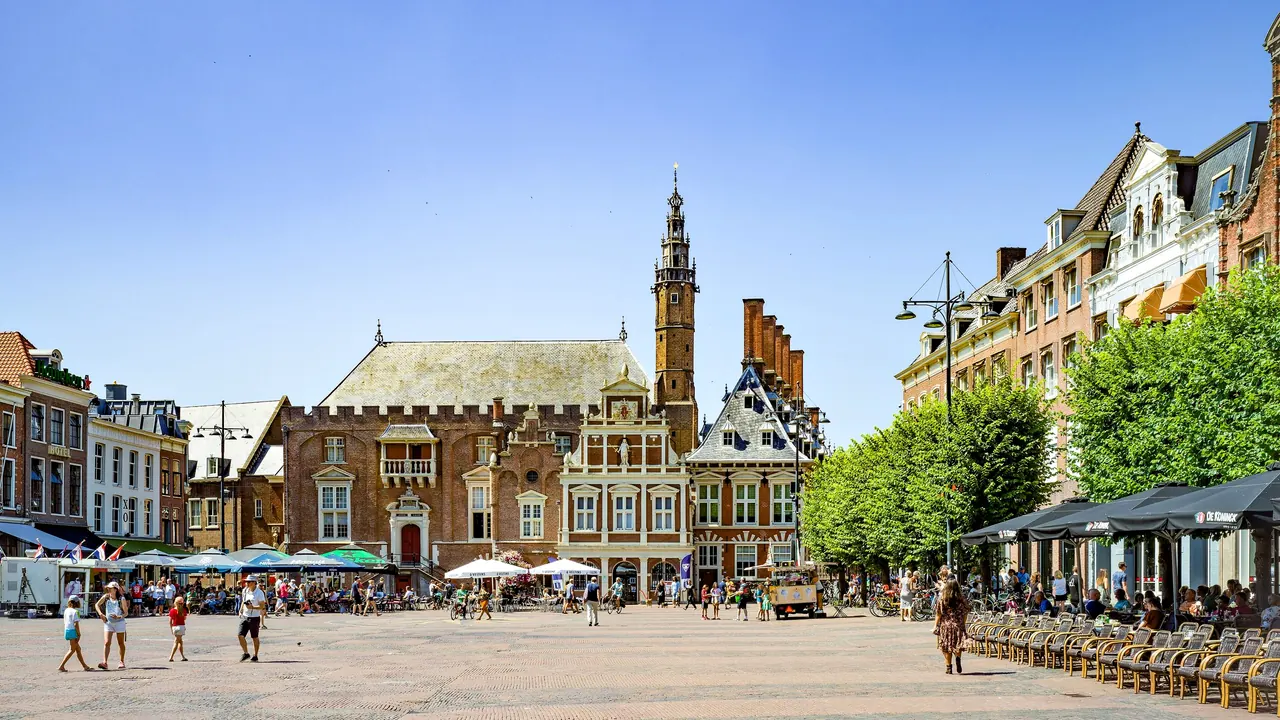
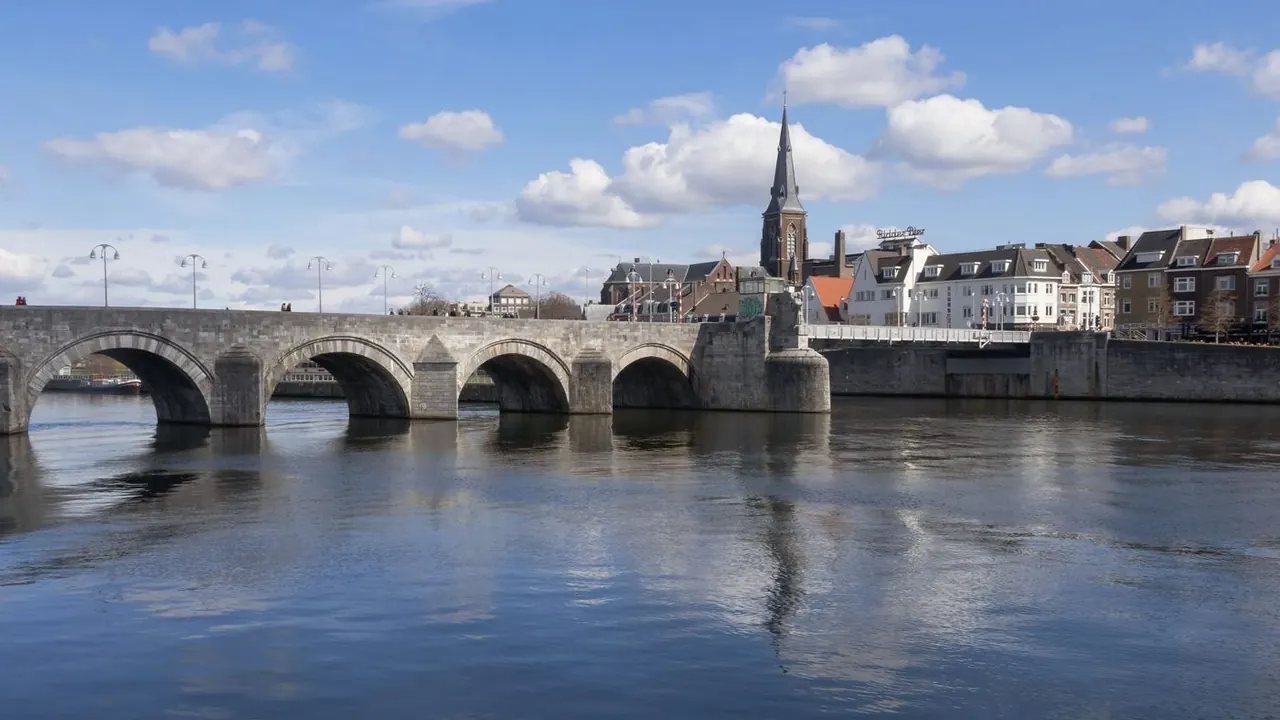
Photos: Haarlem by Moroder, CC BY-SA 4.0, cropped; Maastricht by Michielverbeek, CC BY-SA 4.0, cropped.
Haarlem or Maastricht?
Our verdict in twelve categories, each scored against the same fixed benchmark cities, and the climate month by month, so you can choose for your trip.
Choose Haarlem for
- beaches
- day trips
- live music and the arts
Haarlem suits travellers who want a calm, handsome base from which to see the western Netherlands. Amsterdam, Leiden, The Hague and Delft are all a short train ride away, the dunes and the North Sea begin at the edge of town, and the bulb fields lie just to the south in spring. Choose it if you want Golden Age painting, cycling to the beach and easy outings by rail, and can live with fairly quiet evenings.
Choose Maastricht for
- food and drink
- nightlife
- wellness
Maastricht is the better pick for eating well and slowing down. It has hearty Limburg cooking, Belgian beer, livelier cafés full of students and thermal baths in the hills nearby. With its hills, its Romanesque churches and Belgium and Germany on the doorstep, it feels less Dutch than anywhere else in the country, and it costs a little less.
Scoreboard
Twelve categories on one fixed scale from 0 to 100. The shaded stretch is the gap between the two.
Your match
Pick a travel style or drag the sliders, and both match scores follow your weighting.
Too close to call, level with your weighting
Wins on beaches and day trips with your weighting.
Wins on food and drink and nightlife with your weighting.
What matters to you?
Category by category
What the scores mean for a trip.
Beaches & swimming
Haarlem has a real coastline on its doorstep. Zandvoort's long sandy beach is a short train ride away, and the quieter strand at Bloemendaal aan Zee, backed by dunes, can be reached by bike. The North Sea is cool and windy, so a beach day here usually means walking, sitting in a pavilion and perhaps a quick dip, not hours in the water.
Maastricht is about as far from the sea as you can get in the Netherlands. In summer, locals swim in old gravel-pit lakes along the Maas, which are fine for an afternoon, but anyone who wants the coast should choose Haarlem.
Food & drink
Maastricht eats better. Its Limburg dishes include sweet-sour zuurvlees, vlaai in every bakery, and asparagus and game in season, and it serves Belgian beer and white wine from its own hillsides. The top end of its dining is strong for a city this size, especially in the old centre and in Wyck.
Haarlem's food is well made but plainer. The Saturday market sells herring and kibbeling, the cafés around the Grote Markt are good for lunch, and the town's long brewing history shows in its craft beer taps. You will eat good meals there, but rarely memorable ones.
Culture & sights
The two are evenly matched, but their history comes from different eras. Haarlem belongs to the Golden Age: the Frans Hals Museum, the gabled canal streets, the hidden hofjes and St Bavo with the organ Mozart played. Teylers Museum adds an 18th-century cabinet of curiosities that has hardly changed.
Maastricht goes back much further. It has two Romanesque basilicas, stretches of medieval wall with the Helpoort gate, and a 13th-century bridge over the Maas. The guided tunnels inside the Sint-Pietersberg have no counterpart in Haarlem. Each city fills two unhurried days.
Nightlife
Maastricht has more going on after dark. Its large student population keeps the cafés around the Markt and the Platielstraat busy late at weekends during term, and at carnival the whole city parties in the streets for days.
Haarlem's evenings are gentler: terraces on the Grote Markt and the Botermarkt, brown cafés, and most places closing well before dawn. Its advantage is that Amsterdam's clubs are only fifteen minutes away by train, so a big night out is easy to arrange.
Nature & outdoors
There is plenty of countryside close to both cities, but the landscapes are very different. Haarlem's is flat and coastal: the dunes, pine woods and small lakes of Zuid-Kennemerland, with grazing ponies and fallow deer, long beach walks, and the bulb fields in bloom in spring.
Maastricht is where the Netherlands finally gets hills. There are marl cliffs on the Sint-Pietersberg, the green Jeker valley, and the sunken lanes and short climbs of the Heuvelland, which road cyclists love. The heath of Hoge Kempen and the Ardennes are both within reach across the border.
Day trips
Haarlem has the edge for easy day trips because the Dutch rail network is so dense around it. Amsterdam is fifteen minutes away, Leiden twenty, and The Hague and Delft under an hour. Keukenhof, Alkmaar and Zaanse Schans are simple outings, and you can decide where to go on the morning.
Maastricht's strength is variety rather than ease. In half an hour you can be in Aachen or Liège, Tongeren and Valkenburg are nearer still, and Cologne, Brussels and Leuven are possible on longer days. Some of these trips go better with a car.
Good for families
Both cities are equally easy with children: small, flat, safe and relaxed. The difference is what there is to do. In Haarlem, it is mostly outdoors, with sand and dunes to run on, playgrounds in the national park and Teylers' fossils on a rainy day, but no zoo or theme park in town.
Maastricht's one children's highlight in the city is the dark tunnel tour. Most family outings are a short trip away, at Valkenburg's caves, cable car and fairy-tale park, or the zoo in Kerkrade.
Getting around
Both centres are compact and flat, so you can walk almost everywhere. The difference shows once you leave the centre. Haarlem's bike paths run straight to the dunes and the beach, and fast trains make a car pointless.
In Maastricht, you cross the Maas between the old town and Wyck, where the station is, and the cobbles are the only nuisance. Buses do reach Valkenburg and the hill villages, but the countryside is much easier with a bike or a car.
Shopping & style
There is little to choose between them; both are good for an afternoon of browsing rather than a reason to travel. Haarlem's strength is independent fashion, design and bookshops on Gierstraat, Kleine Houtstraat and Schagchelstraat, with the chains on the Grote Houtstraat.
Maastricht has a little more polish. Designer boutiques fill the restored houses of the Stokstraat quarter, and Belgian and German visitors come for the weekend just to shop. Smaller shops for vintage and interiors are in Wyck.
Affordability
Neither city is cheap, but Maastricht is somewhat easier on the budget. Simple lunches and Belgian beer in a brown café cost less than in the larger Dutch cities, the walkable centre keeps transport spending low, and staying from Sunday to Thursday saves the most.
Haarlem is priced like the prosperous Randstad. It has few hotels for the number of visitors who want to stay there, so rooms are small for what they cost and book up early in tulip season and summer. Regular train outings also add to the bill.
Live music & performing arts
For live performance the two are broadly level, though their strengths differ. Haarlem's speciality is the organ: St Bavo's great instrument and a long-running international organ festival, plus classical music at the Philharmonie and a pop venue for touring bands. For opera, you go to Amsterdam.
Maastricht has its regional symphony orchestra and opera company at the theatre on the Vrijthof. In summer the square itself hosts large open-air concerts, and at carnival brass bands march through every street.
Wellness & relaxation
The difference is water. Haarlem has none to bathe in, so unwinding there means heat and fresh air. The Dutch take their saunas seriously, and you can book a session in town or go out to one of the big garden sauna complexes in the region. Most visitors find more calm outdoors, though, cycling out through the dunes towards the sea and coming back to canals and hofjes that are almost silent by evening.
Maastricht is the better choice because warm mineral water rises out of the ground in this border country, and people have bathed in it since Roman times. A long soak in a heated pool on a wooded hillside is an easy half-day trip from the city. The city also helps you slow down. Locals like to eat and drink well and take their time over it, lunches often run into the afternoon, and the river paths suit a slow walk better than a brisk one.
When should you go?
Pick your month. The climate figures are measured averages, not a forecast.
Haarlem in July
Maastricht in July
Daytime high, °C
Rainfall in the month, mm
Where the figures come from
Haarlem has no rain gauge within 25 km of the centre, so its rainfall comes from a gridded climate dataset read at the city rather than from a gauge further away.
Haarlem's sunshine is measured 49 km from the centre, at De Bilt.
Temperature and rainfall are climate normals, averaged over the years shown. Haarlem: 1991-2020 normals, Amsterdam Airport Schiphol (12.7 km from centre). Maastricht: 1991-2020 normals, Maastricht Airport Zuid Limburg (10 km from centre).
The two cities follow much the same pattern through the year: cold, grey winters at about 6°C, a spring that brightens quickly from April, and the most sunshine from May to August. Maastricht is the warmer of the two, inland and further south, with summer highs around 24°C against 22°C in Haarlem. Neither city gets too hot for walking the streets, and the best walking months in both are May, June and September.
In Haarlem, July and August are the only months worth trying for the beach, and even then the North Sea stays cool. Rain builds through late summer and peaks in October at about 109mm, so autumn there is wet and windy. Maastricht's rain is spread more evenly, and September stays fairly dry at around 58mm. That makes early autumn a good time for the hills and the terraces, at a point when Haarlem's weather has already turned.
Which traveller are you?
For a beach and sun trip, Haarlem is the only one of the two that works. Zandvoort's sand is a few minutes away by train and Bloemendaal can be reached by bike through the dunes, while Maastricht has only lakes in old gravel pits. Expect cool water, though.
For a food and nightlife trip, Maastricht is the better choice. Zuurvlees, vlaai, local white wine and a good fine-dining tier make for better meals, and a student population keeps the brown cafés busy late. There is also carnival, which takes over the whole city.
On a relaxing and wellness trip, Maastricht pulls ahead. The thermal pools above Valkenburg and the historic baths of Aachen are both close, and Spa itself is within an hour. In Haarlem, unwinding mostly means a terrace or a bike ride in the dunes.
Before you go
| Measure | Haarlem | Maastricht |
|---|---|---|
| Official language | Dutch | Dutch |
| Currency | Euro (EUR) | Euro (EUR) |
| Sockets | CF230 V, 50 Hz | CF230 V, 50 Hz |
| Driving side | Right | Right |
| Time zone | UTC+1, UTC+2 in summer | UTC+1, UTC+2 in summer |
| Emergency number | 112 | 112 |
| Elevation | 2 m | 49 m |
| Main airport | Amsterdam Airport Schiphol (AMS)12 km from centre287 non-stop destinations | Maastricht Aachen Airport (MST)9 km from centre5 non-stop destinations |
| Public holidays this year | 11 days | 11 days |
By the numbers
| Measure | Haarlem | Maastricht |
|---|---|---|
| City population | 162,543 | 120,227 |
| People per km² | 5,064 | 2,000 |
| Museums within 10 km | 28 | 21 |
| UNESCO World Heritage sites within 50 km | 5 | 6 |
| Swim season, months above 21 °C | None | - |
Where else could you go?
Every comparison below shares a destination with this one, so you can follow Haarlem or Maastricht somewhere new.
- Amsterdamvs Haarlem
- The Haguevs Haarlem
- Utrechtvs Haarlem
- Rotterdamvs Haarlem
- Dusseldorfvs Maastricht
- Colognevs Maastricht