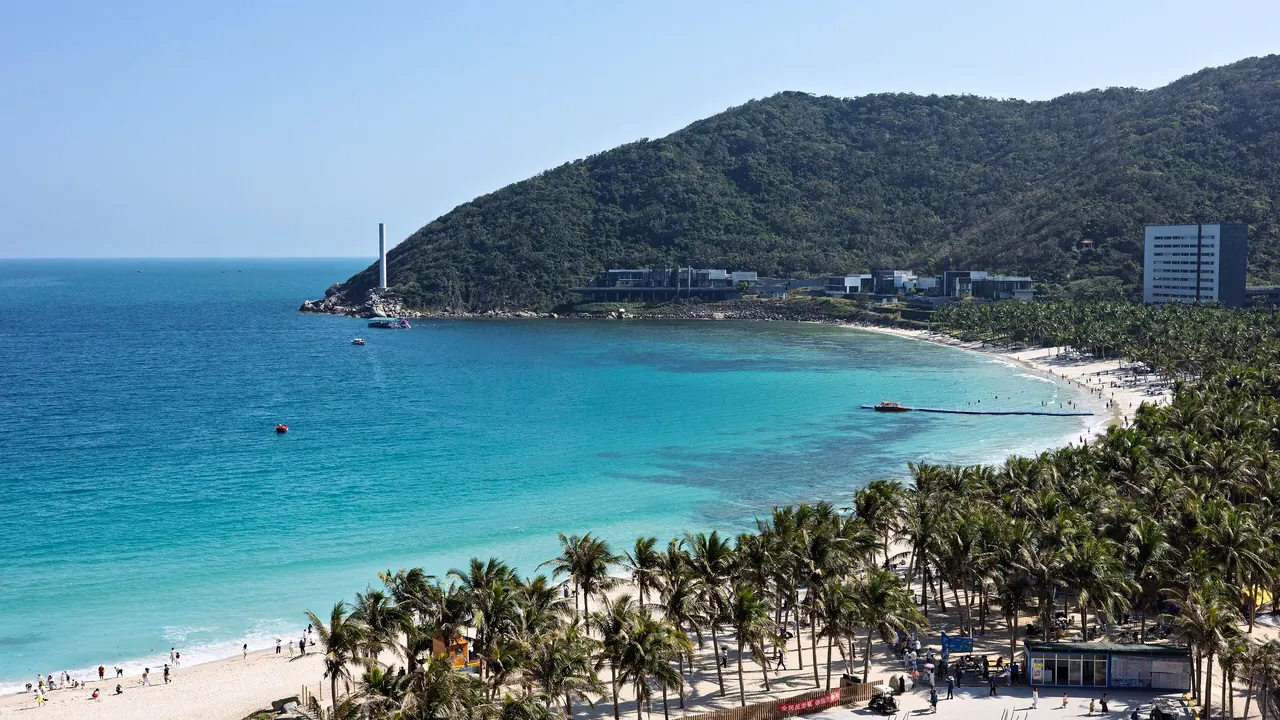
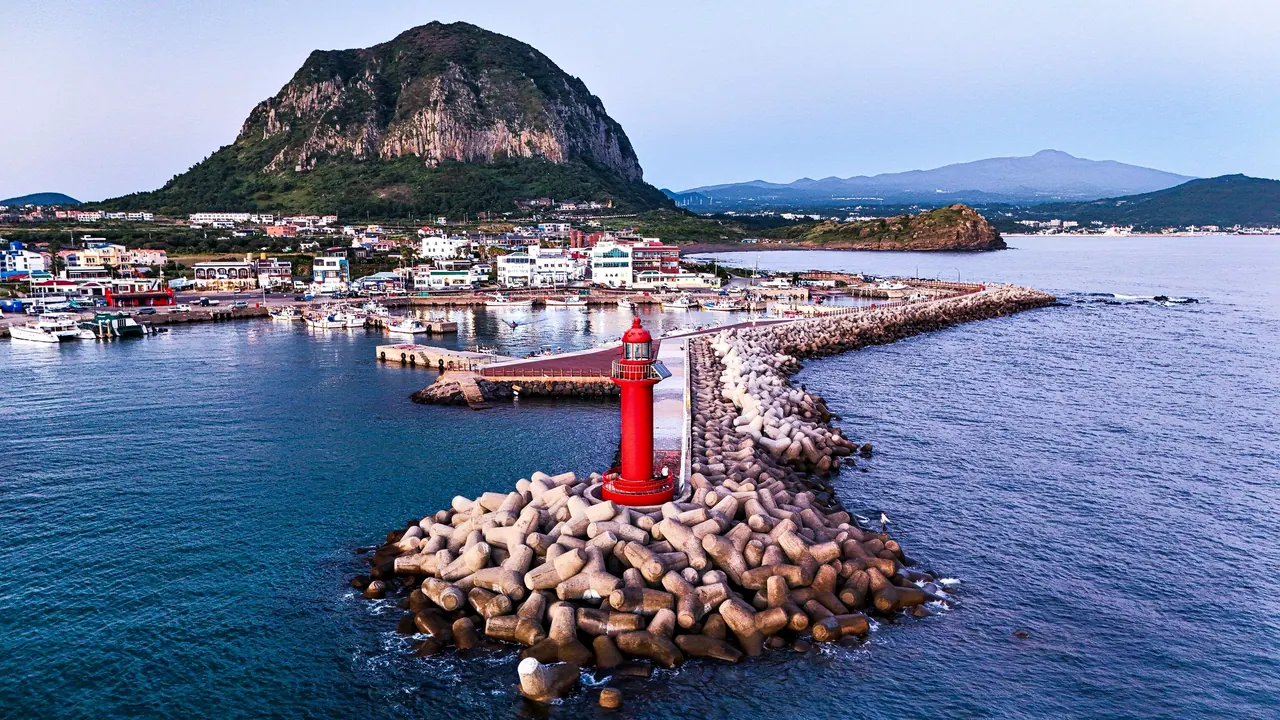
Photos: Hainan by Steven Sun, CC BY-SA 4.0, cropped; Jeju by Nuhyil Ahammed, Pexels License.
Hainan or Jeju?
Our verdict in twelve categories, each scored against the same fixed benchmark cities, and the climate month by month, so you can choose for your trip.
Choose Hainan for
- shopping
- beaches
- wellness
Hainan is the pick for a warm-water beach vacation, above all during the northern winter, when the Sanya bays are dry and the sea stays warm enough for a long swim. It also suits travellers who want to settle into a resort and stay there, with hot-spring pools in the hills, full spas and the big duty-free complex at Haitang Bay. Sightseeing is something you fit around the beach.
Choose Jeju for
- nature and the outdoors
- getting around
- culture and sights
If the landscape is the point of the trip, go to Jeju. Its volcanic scenery, from the day-long climb up Hallasan to the grassy oreum cones and the Olle trails along the basalt coast, gives you far more to do on foot than Hainan's managed rainforest parks. The beaches are lovely but only swimmable for a short summer, so Jeju suits spring and autumn walkers who like a hire car, a café stop and a different stretch of coast each day.
Scoreboard
Twelve categories on one fixed scale from 0 to 100. The shaded stretch is the gap between the two.
Your match
Pick a travel style or drag the sliders, and both match scores follow your weighting.
Wins on shopping and beaches with your weighting.
Wins on nature and the outdoors and getting around with your weighting.
What matters to you?
Category by category
What the scores mean for a trip.
Beaches & swimming
Hainan has the stronger beaches. Yalong Bay's long curve of white sand and the quieter resort strip of Haitang Bay have calm water and a sea warm enough to swim in at any time of year. Riyue Bay and the empty east-coast sands near Wanning add surf.
Jeju's beaches look more striking than they swim. Hyeopjae and Geumneung have white sand and turquoise water facing Biyangdo, and black lava frames the coves at Hamdeok. But the swimming season lasts only from about July to September, and for the rest of the year the beaches are for walking.
Food & drink
The two islands eat about equally well, in quite different ways. Hainan's cooking rests on a handful of famous dishes, such as Wenchang chicken and Hele crab. Its most characterful setting is the laoba tea houses of Haikou, while Sanya is about choosing seafood in a market hall and around the resorts the food is buffet.
Jeju is built around charcoal-grilled black pork and the seafood brought up by the haenyeo divers, from abalone porridge to sea urchin soup. You graze at Dongmun Market or Seogwipo's Olle Market and spend afternoons in seaside cafés set in old stone farmhouses, though the good places are often a drive apart.
Culture & sights
Neither island is a sightseeing trip, and the heritage they have is of different kinds. Hainan's is built heritage in Haikou: the arcaded Qilou shophouses, the Five Officials Temple and the Dongpo Academy, linked to an exiled poet. Near Sanya, the giant Guanyin at Nanshan is more spectacle than history.
Jeju's culture is about how islanders lived. The thatched basalt houses of Seongeup Folk Village and the Haenyeo Museum's story of the diving women show it, and the 4.3 Peace Park adds a sober chapter of twentieth-century history.
Nightlife
Hainan has more going on after dark, though it is still modest. Dadonghai and the Sanya Bay seafront have beach bars, live-band bars and a few large clubs with table service, and Haikou's locals go out to KTV karaoke.
On Jeju, nights out mean Korean pubs and soju over barbecue in Nohyeong and Sinjeju in Jeju City, or a summer evening on the Tapdong seafront. Away from there, the night ends with dinner or a social evening at a guesthouse.
Nature & outdoors
Jeju is the better island for the outdoors. The whole place is a volcano listed by UNESCO, with Hallasan to climb to its crater lake, some 360 oreum cones with short paths up to their rims, the Manjanggul lava tube, sunrise over Seongsan Ilchulbong and the Olle trails running right round the coast. The cedar forests of Saryeoni and Bijarim stay cool for summer walks.
Hainan's interior has real rainforest, at Jianfengling and Diaoluoshan, and Wuzhishan can be climbed in a day. But the parks near Sanya are boardwalk affairs, and the coast by the resorts is built up. Its outdoor appeal is mostly in the water: winter surf at Riyue Bay and warm snorkelling around the offshore islands.
Day trips
Hainan gives you more to choose from because the high-speed railway runs round its coast. From Sanya or Haikou you can reach the fishing villages on the water at Lingshui, the coffee groves of Xinglong, the river-mouth town of Bo'ao or Wenchang's overseas-Chinese mansions without a car.
Jeju's outings are mostly ferry rides to smaller islands. You can cycle round Udo, walk among the barley fields of Gapado or stand at Korea's southern tip on Marado. The mainland is too far away for a day out.
Good for families
Both islands suit children well and are popular with families from their own countries. Hainan works best as a resort stay. The calm winter water at Yalong and Haitang Bays, kids' clubs, the aquarium and the water park near Sanya make a stay in one place easy, though little English and payment by app take some planning.
Jeju offers a more varied, outdoor kind of family trip. Children can pick tangerines in winter, ride horses, walk into a lava tube and paddle in shallow coves like Hamdeok. It is safe and clean, but you drive between the sights, and the sea is only warm enough in summer.
Getting around
Getting around is about equally easy, by different means. Hainan has a high-speed railway round the coast, so moving between towns is simple. Within Sanya, though, the bays are separate districts linked by taxi or ride-hailing, and the resort strips are not made for walking.
Jeju is small enough to cross in about an hour, and good roads make a hire car the usual choice, although foreign drivers need an international permit. Without a car, the slow and infrequent buses away from the towns make hopping between trailheads hard work.
Shopping & style
For shopping, Hainan is the clear winner, because duty-free is a real part of the trip there. The huge complex at Haitang Bay collects international luxury, watches, cosmetics and electronics in one place. The markets add pearls of mixed quality, coconut sweets and the island's Li brocade.
Jeju's duty-free stores are mostly for cosmetics. Beyond them, the island offers market stalls of dried fish and omija tea, and small coastal studios selling basalt pieces, natural-dye textiles and ceramics. Most visitors' main purchase is a box of tangerines.
Affordability
Hainan is a little easier on the budget, provided you avoid the big Sanya resorts in winter. Trains, ride-hailing and noodle shops are cheap, and Haikou and the east-coast towns are much cheaper places to stay. The hot, wet summer brings prices down.
Jeju costs about what a large Korean city does. Hiring a car adds to the bill, and black pork and haenyeo seafood are priced as delicacies, though guesthouses, market food and the free coastal trails help. Its expensive season is the reverse of Hainan's, with July and August costing the most.
Live music & performing arts
Neither island will fill your evenings with shows, but Hainan has slightly more. There is a large song-and-dance spectacle in Sanya, touring shows at Haikou's performing arts centre, and Qiong opera, the island's own regional form, at the occasional temple fair.
Jeju's live performance is mostly folk. Haenyeo work songs and shaman rituals turn up at festivals, alongside occasional concerts at the arts centres in Jeju City and Seogwipo.
Wellness & relaxation
Hainan is better for a restful stay, largely because of its hot springs. Qixianling has open-air pools in forest below jagged peaks, and Xinglong and Guantang have long-established spring resorts. The big resorts at Haitang and Yalong Bays have full spas with treatments based on traditional Chinese medicine.
On Jeju, slowing down means cedar forest walks, quiet stone-walled villages and long café stops by the sea, with hours in a Korean jjimjilbang and the rare carbonated spring near Sanbangsan. The busy summer coast is less peaceful than the interior.
When should you go?
Pick your month. The climate figures are measured averages, not a forecast.
Hainan in July
Jeju in July
Daytime high, °C
Rainfall in the month, mm
Temperature and rainfall are climate normals, averaged over the years shown. Hainan: 1991-2020 normals, Yaxian (2 km from centre). Jeju: 1991-2020 normals, Cheju (1.9 km from centre).
These two islands have opposite seasons. Around Sanya, Hainan is at its best from November to April. Those months are dry and sunny, January highs are about 24°C, and the sea is warm enough to swim in all winter. From May the heat and rain build together, and July to October is wet and stormy, with close to 300mm falling in September. That is typhoon season, so the beaches can close for a few days at a time.
Jeju is cold and grey in winter, with highs of about 9°C in January, which is good for walking the coast but not for the beach. April, May and October are the best months for hiking Hallasan and the oreum: mild, fairly dry and fairly sunny. Swimming only works from July to September, when the sea reaches about 27°C in August. Those are also Jeju's wettest months, so a summer stay there means warm water with frequent heavy rain.
Which traveller are you?
On a beach and sun trip, Hainan wins easily. Every day can revolve around the water, from a quiet resort bay to the town sands at Dadonghai, while Jeju's sea is only warm enough in high summer.
For an outdoors trip, pick Jeju. There the volcanic landscape is the reason to come rather than a backdrop, and a hire car puts a different walk within easy reach every morning. Hainan's best rainforest lies inland, away from the beach resorts.
On a shopping trip, Hainan is the island to choose, because duty-free buying is a serious part of a visit there, on a scale Jeju's stores do not approach. Jeju suits someone after small crafts and island produce rather than brands.
Before you go
| Measure | Hainan | Jeju |
|---|---|---|
| Official language | Putonghua | Korean, Korean Sign Language |
| Currency | Yuan Renminbi (CNY) | Won (KRW) |
| Sockets | ACI220 V, 50 Hz | CF220 V, 60 Hz |
| Driving side | Right | Right |
| Time zone | UTC+8 | UTC+9 |
| Emergency number | Police 110, ambulance 120, fire 119 | Police 112, ambulance 119, fire 119 |
| Main airport | Sanya Phoenix International Airport (SYX)93 non-stop destinations | Jeju International Airport (CJU)38 non-stop destinations |
| Public holidays this year | 6 days | 18 days |
By the numbers
| Measure | Hainan | Jeju |
|---|---|---|
| Population | 9,200,000 | 583,284 |
| People per km² | - | 316 |
| Swim season, months above 21 °C | 12 months | 4 months |
Where else could you go?
Every comparison below shares a destination with this one, so you can follow Hainan or Jeju somewhere new.