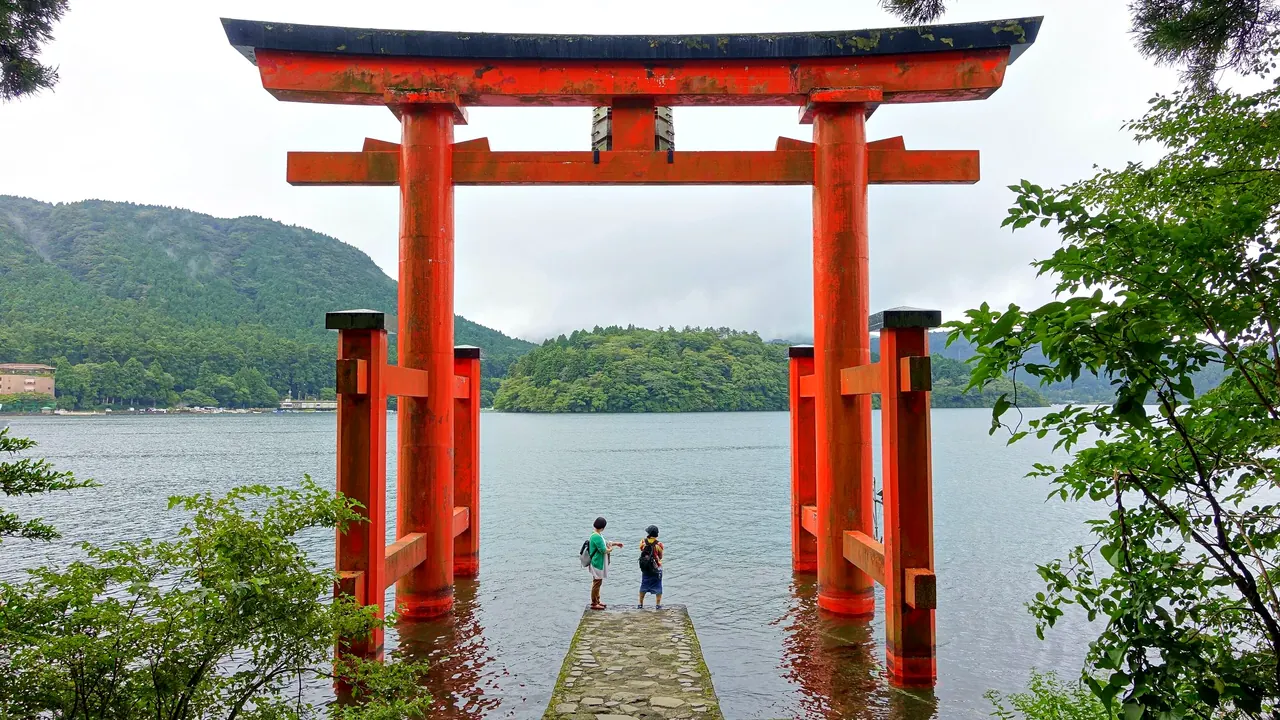
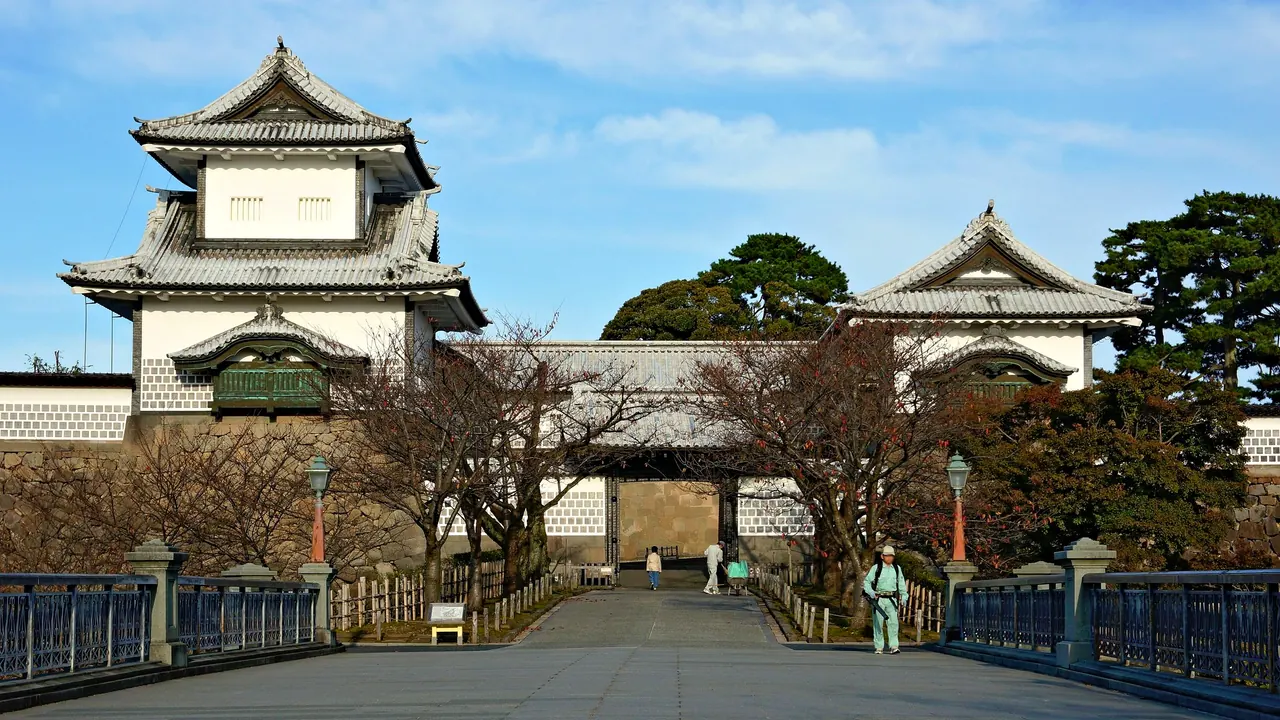
Photos: Hakone by Daderot, CC0; Kanazawa by 663highland, CC BY 2.5, cropped.
Hakone or Kanazawa?
Our verdict in twelve categories, each scored against the same fixed benchmark cities, and the climate month by month, so you can choose for your trip.
Choose Hakone for
- wellness
- nature and the outdoors
- families
Hakone suits a slow retreat into volcanic mountains. You stay a night or two at a ryokan with a kaiseki dinner and an outdoor bath, walk the old Tokaido road, and look across Lake Ashi to Fuji when the cloud lifts. It is for couples and tired travellers who want rest and scenery more than a town to explore, and it is close enough to Tokyo to fit into a wider trip.
Choose Kanazawa for
- food and drink
- live music and the arts
- shopping
Travellers who want a real city with depth will get more from Kanazawa. Its Edo-period streets, Kenroku-en, the geisha districts and the contemporary art museum give far more to see. Omicho and Kaga cooking make it a serious food city, and evenings bring sake bars, Noh and chamber concerts. It is also the cheaper base, with hot-spring villages close by when you want a soak.
Scoreboard
Twelve categories on one fixed scale from 0 to 100. The shaded stretch is the gap between the two.
Your match
Pick a travel style or drag the sliders, and both match scores follow your weighting.
Wins on wellness and nature and the outdoors with your weighting.
Wins on food and drink and live music and the arts with your weighting.
What matters to you?
Category by category
What the scores mean for a trip.
Beaches & swimming
Neither city is a beach destination, though Kanazawa has the sea close at hand. Long sandy beaches run along the coast at Uchinada and Chirihama, where cars drive on the hard sand, and the water is warm enough for a half-day swim in July and August.
Hakone lies in a caldera, and swimming in Lake Ashi is not allowed. A swim means going down to Atami's sheltered sand, under an hour away. In Hakone, the water you get into is volcanic, not salt.
Food & drink
In Hakone the meal that matters is dinner at your inn: a kaiseki procession of mountain vegetables, river fish and tofu that can be superb. Away from the ryokan it comes down to soba and tofu shops in Yumoto, black eggs at Owakudani and set lunches by the lake, and most places close early.
Kanazawa is a food city in its own right. Omicho Market serves sweet shrimp, nodoguro and, in winter, snow crab. Kaga dishes such as jibuni, teahouse wagashi and sake from the Kaga plain round it out, and Katamachi's izakaya give you somewhere to eat every night of a longer stay.
Culture & sights
For sightseeing, Kanazawa gives you much more. Hakone's culture comes in separate pieces around the mountain: a sculpture park on open lawns with its Picasso collection, the Pola's Impressionists in the forest, and what is left of the Tokaido, including a paved stretch under the cedars, the reconstructed barrier station and the shrine gate standing in the lake. Each is worth seeing, but you reach them one at a time by bus, boat or ropeway, and you will have seen them all quite quickly.
Kanazawa is a whole city of sights. The air raids missed it, so it still looks like the rich castle town of the Maeda lords, and a single walk takes you past Kenroku-en, the castle walls, the wooden teahouse streets of Higashi Chaya and the samurai lanes of Nagamachi. The 21st Century Museum and the D.T. Suzuki Museum add a modern side with more range than Hakone's art collections, fine as those are.
Nightlife
Hakone's evenings end with a last bath and a yukata. Apart from a few small izakaya in Yumoto, there is nowhere to go.
Kanazawa's Katamachi and Kigura-machi lanes are packed with izakaya, sake bars, snack bars and whisky bars that stay busy late at weekends. It is a night of drinking and talking rather than clubbing, but it is a real night out.
Nature & outdoors
Hakone's landscape is the reason to go. The sulphur vents of Owakudani, the crater lake of Ashi and Fuji on clear days are all within the national park, and trails to Mount Kintoki, Komagatake and the Sengokuhara grasslands start nearby.
Kanazawa has easy walks along the Sai and Asano rivers and wooded hills at its edge. Its big landscapes are further out, though: alpine Hakusan is two hours away and the Noto coast further north, and both are hard to reach without a car.
Day trips
Both are good bases for days out, but they lead in different directions. From Hakone the trips are urban and historic: Tokyo, Yokohama and Kamakura's Great Buddha, with Odawara's castle and the Izu Peninsula's spa towns closer by.
From Kanazawa the trips go into rural and religious Japan. The thatched villages of Shirakawa-go and Gokayama, the merchant streets of Takayama and the Zen monastery of Eihei-ji are the highlights, and the Shinkansen puts Takaoka's temple within half an hour.
Good for families
Hakone is the better choice with children, because the transport is the fun. They can ride the zigzag railway, the cable car, the ropeway over steaming vents and the pirate ship across the lake, then see the seals at Hakone-en and climb the net sculptures. A swimsuit onsen park gets around the nude communal baths.
Kanazawa is safe and easy, and the pool installation at the 21st Century Museum and the ninja temple's trap doors go down well. But the core of a stay is gardens and teahouses, and the zoo and the Fukui dinosaur museum mean leaving the city.
Getting around
Both are easy without a car, but in different ways. In Hakone, one regional pass covers a loop of mountain railway, cable car, ropeway, boat and bus, and the ride is part of the sightseeing. The villages are far apart, though, and weekend queues slow everything.
Kanazawa's main sights sit in a flat band about 2km from the station, so you can mostly walk, with loop buses and bike share to fill the gaps. Winter snow and slush are the main hindrance.
Shopping & style
Hakone has one craft worth buying, yosegi-zaiku wood marquetry from the Hatajuku workshops, plus snacks in Yumoto and the outlet mall over the ridge at Gotemba.
Kanazawa offers a whole range of crafts: gold leaf, which it makes almost all of in Japan, along with Kutani porcelain, Kaga yuzen silk and Ohi tea bowls, with work by serious makers at the prefectural craft centre. The department stores at Korinbo and the boutiques of Tatemachi cover everyday shopping as well.
Affordability
Hakone's main attraction, the ryokan night with dinner and a private bath, is also its main expense, and weekends and autumn cost the most. You can keep costs down with a hostel in Yumoto, soba for lunch and the day-bathhouses, and the transport pass is good value.
Kanazawa is easier on the budget. It has plenty of business hotels by the station, and set lunches and conveyor-belt sushi keep meals cheap. The splurges are optional: snow crab, kaiseki and a ryokan night in the Kaga onsen towns.
Live music & performing arts
Hakone has no theatre or concert hall, and apart from an occasional performance at an inn, you would go to Tokyo for a show.
Kanazawa has more than its size suggests. There is Noh at the prefectural theatre, and geisha dance and shamisen in the chaya teahouses. The Orchestra Ensemble Kanazawa plays a regular season beside the station, so an evening can be planned around the programme.
Wellness & relaxation
In Hakone, bathing is the whole stay. Seventeen hot-spring areas, from riverside Yumoto to the milky waters of Sengokuhara, mean an outdoor bath under the cedars is never far away, often right on your balcony.
Kanazawa offers calm as much as hot water: early mornings in Kenroku-en and matcha in a teahouse. A proper soak means Yuwaku, half an hour out, or an overnight stay in the Kaga onsen towns, although many city hotels have their own hot-spring baths.
When should you go?
Pick your month. The climate figures are measured averages, not a forecast.
Hakone in July
Kanazawa in July
Daytime high, °C
Rainfall in the month, mm
Where the figures come from
Hakone's temperatures are measured 43 km from the centre, at Kawaguchiko.
Hakone has no rain gauge within 25 km of the centre, so its rainfall comes from a gridded climate dataset read at the city rather than from a gauge further away.
Temperature and rainfall are climate normals, averaged over the years shown. Hakone: 1971-2000 (rainfall 1991-2020) normals, Kawaguchiko (42.9 km from centre). Kanazawa: 1991-2020 normals, Kanazawa (3.2 km from centre).
Hakone sits high in the mountains and stays cooler than lowland Japan. August reaches about 27°C, which is pleasant for hiking, but June to October is the wet stretch, and September and October are the rainiest months, with Fuji often hidden. Winter is cold, near 5°C in January, but it is the driest and clearest season and ideal for outdoor baths. The sea down at Atami is only warm enough for swimming in July and August.
Kanazawa is hotter in summer and wet at the other end of the year. August reaches around 31°C and is its sunniest month, good for the beaches but sticky for walking the old districts. The heaviest rain and snow fall from November to January, with December close to 300mm, the reverse of Hakone's dry winters. For walking, Kanazawa is at its best in sunny April and May, and Hakone in November, when the rain eases and the leaves turn.
Which traveller are you?
On a relaxing and wellness trip, Hakone is the clear choice. Bathing is the reason it exists, with seventeen hot-spring areas, private baths on inn balconies, misty mornings and early nights. Kanazawa's onsen are mostly a short trip out of town.
For a culture and arts trip, choose Kanazawa. It escaped wartime bombing, so it has Kenroku-en, samurai and geisha quarters and an outstanding contemporary art museum, plus Noh and a fine chamber orchestra. Hakone's museums are good but spread thinly around the caldera.
On a food and nightlife trip, Kanazawa wins easily. You get Omicho's seafood counters, Kaga cooking, gold-leaf sweets and local sake, then the izakaya and sake bars of Katamachi. In Hakone you eat dinner at your inn and the villages go dark soon after.
Before you go
| Measure | Hakone | Kanazawa |
|---|---|---|
| Official language | Japanese | Japanese |
| Currency | Yen (JPY) | Yen (JPY) |
| Sockets | AB100 V, 50 and 60 Hz depending on the region | AB100 V, 50 and 60 Hz depending on the region |
| Driving side | Left | Left |
| Time zone | UTC+9 | UTC+9 |
| Emergency number | Police 110, fire 119 | Police 110, fire 119 |
| Elevation | 734 m | 28 m |
| Main airport | Tokyo Haneda International Airport (HND)71 km from centre98 non-stop destinations | Komatsu Airport / JASDF Komatsu Air Base (KMQ)29 km from centre7 non-stop destinations |
| Public holidays this year | 16 days | 16 days |
By the numbers
| Measure | Hakone | Kanazawa |
|---|---|---|
| City population | 10,925 | 462,479 |
| People per km² | 118 | 989 |
| Museums within 10 km | 16 | 27 |
| UNESCO World Heritage sites within 50 km | 2 | 1 |
| Swim season, months above 21 °C | 5 months | 4 months |
Where else could you go?
Every comparison below shares a destination with this one, so you can follow Hakone or Kanazawa somewhere new.