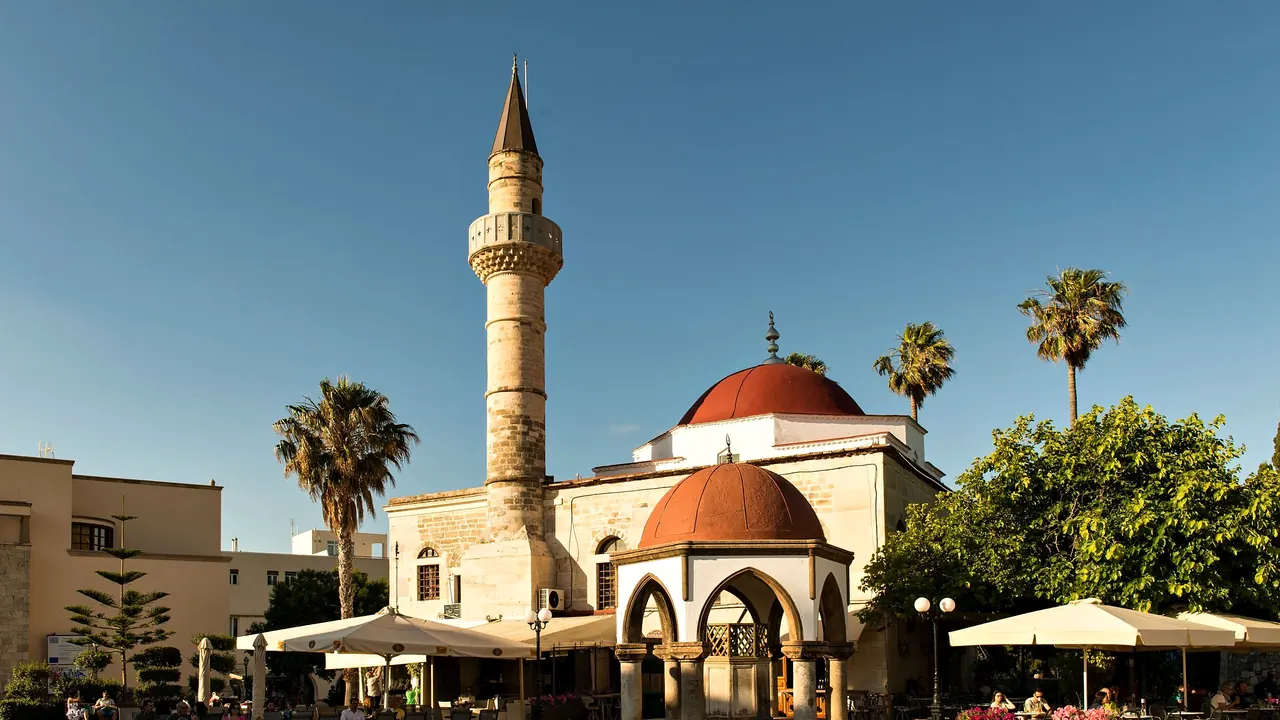
Photos: Kos by Wolfgang Weiser, Pexels License.
Halkidiki or Kos?
Our verdict in twelve categories, each scored against the same fixed benchmark cities, and the climate month by month, so you can choose for your trip.
Choose Halkidiki for
- nature and the outdoors
- food and drink
- live music and the arts
Halkidiki suits travellers who want sea, pine forest and space, and who are happy to drive. Its peninsulas give a choice of coast, from Kassandra's organised resorts to Sithonia's granite coves, and its tavernas, hill villages and the boat trip along Mount Athos reward anyone who explores. Thessaloniki within reach adds a proper city day.
Choose Kos for
- getting around
- nightlife
- culture and sights
Kos is the easier island for a trip without much planning. Kos Town puts Roman ruins, a crusader castle and the old quarter's late bars within a flat walk, buses and cycle paths reach the main beaches, and boats run to Bodrum and the volcano on Nisyros. Pick it for sand, sightseeing in small doses and livelier nights.
Scoreboard
Twelve categories on one fixed scale from 0 to 100. The shaded stretch is the gap between the two.
Your match
Pick a travel style or drag the sliders, and both match scores follow your weighting.
Too close to call, 2 points apart
Wins on nature and the outdoors and food and drink with your weighting.
Wins on getting around and nightlife with your weighting.
What matters to you?
Category by category
What the scores mean for a trip.
Beaches & swimming
Both are excellent beach destinations with warm water from June into October, so the choice comes down to the kind of shore. Halkidiki has far more coast, with pale sand and small pebble backed by pine forest, organised beaches with sunbeds on Kassandra and rocky, quieter coves on Sithonia such as Kavourotrypes and Karydi.
Kos is almost all sand. Its long north-coast strands from Tigaki to Mastichari have room to spread out but catch the meltemi wind in high summer, so the calmer, clearer swimming is on the south coast and at the Kefalos bays like Agios Stefanos.
Food & drink
Halkidiki eats better. Family tavernas in Nikiti, Toroni and Ouranoupoli and in the hill villages cook for Greek visitors, and there is local produce worth seeking out: big green olives, pine honey and wines from Athos and the slopes above Neos Marmaras. Thessaloniki's food scene is also an easy day away.
Kos has good island dishes such as pitaroudia and wine-matured krasotyri, best found in Zia, Pyli and Mastichari. The trouble is that more of its resort dining is all-inclusive and aimed at package tourists, so it takes more effort to eat well.
Culture & sights
Kos has more to see, and it is easier to reach. Kos Town has Hellenistic and Roman remains among its streets, the Knights' castle by the harbour and the Asklepieion on the hillside above, enough for two or three good days without a car.
Halkidiki's great monument, Mount Athos, is closed to women and needs a permit for men, so most visitors see the monasteries from a cruise boat. Beyond that there are Olynthos, ancient Stagira and the Petralona cave, which are spread out and make good half-days rather than a reason to go.
Nightlife
Kos makes going out simpler. The bars in Kos Town's old quarter stay loud into the small hours within walking distance of many hotels, and Kardamena is a resort built around late clubs for a young crowd.
Halkidiki's nightlife is on Kassandra: open-air clubs at Kallithea and bar strips in Pefkohori and Hanioti, livened up by Greeks driving in from Thessaloniki at weekends. On both, the rest of the region is quiet and everything closes after the summer.
Nature & outdoors
Halkidiki has more striking scenery. Pine forest runs down to clear water, and Sithonia adds granite headlands, islets and the wooded slopes of Mount Itamos, with good sea kayaking and boat trips to the Diaporos lagoon.
Kos is mostly low and dry. It has the Dikeos hills with trails up to Mount Christos, flamingos on the Alikes salt lake and a steady summer wind that suits windsurfers and kitesurfers at Marmari and Tigaki.
Day trips
There are about as many good day trips from each, but you travel differently. From Halkidiki you drive, to Thessaloniki for Byzantine churches and food, further to the royal tombs at Vergina, or north-east to Kavala and Amphipolis.
From Kos you go by boat: to Bodrum in Turkey with a passport, to the volcanic crater on Nisyros, or to sponge-diving Kalymnos. Boat trips depend on the timetables, while a car in Halkidiki lets you set your own day.
Good for families
Both work well for young children, with shallow sandy water, family resorts with pools and kids' clubs, and tavernas that welcome children late in the evening. Kos has the edge on the details: a large water park near Marmari, short distances and flat cycle paths around Kos Town.
Halkidiki's calm, shallow bays around Gerakini, Psakoudia and Kassandra are just as good for paddling, but long drives between peninsulas take more effort. Neither has a zoo or aquarium.
Getting around
Kos is far easier to get around. The island is small enough that nothing is much more than an hour away, Kos Town is flat with cycle lanes, and buses link the town, the airport and the main resorts, though you will still want a car for a day or two to reach the far south-west.
Halkidiki needs a car. Its peninsulas mean driving back up one before going down the next, southern Sithonia is nearly two hours from the airport, and the buses are too few to rely on.
Shopping & style
Neither is a shopping destination, though Kos has a little more. Kos Town's old quarter has leather, sandals and sponges, and the Italian-era market hall on Eleftherias Square sells herbs and local produce. Halkidiki has resort strips selling beachwear, but its more unusual buys are the icons and incense at Ouranoupoli, and serious shopping means a trip to Thessaloniki.
Affordability
Costs are much the same on both, and on both they climb in July and August. Halkidiki stays good value because so many Greek and Balkan families drive in and stay in simple rooms and village tavernas. Kos keeps prices down through package and all-inclusive travel, with plenty of mid-range apartments in Kardamena and Tigaki, and buses and bike hire are cheap.
Live music & performing arts
Halkidiki offers a little more on summer evenings. The Kassandra Festival puts on concerts and theatre in the open-air amphitheatre at Siviri, and the Sani Festival adds jazz and classical music, with Thessaloniki's stages within reach.
On Kos, the Hippokrateia festival uses the Asklepieion, the Odeon and the castle as stages, which is a fine setting. Otherwise there are only resort shows and village saints' days.
Wellness & relaxation
Each has a natural hot spring, and both are restful in their quieter corners. Halkidiki's is at Agia Paraskevi on Kassandra, where mineral pools sit above the sea, and for slow days Sithonia and the coast towards Ouranoupoli have the most pine shade.
On Kos, the sulphur spring at Therma spills onto a pebble beach, and bathers pile up stones to make pools in the sea. It is simpler and wilder. Kefalos, Mastichari and the hill villages are the island's calm places to stay.
When should you go?
Pick your month. The climate figures are measured averages, not a forecast.
Halkidiki in July
Kos in July
Daytime high, °C
Rainfall in the month, mm
Where the figures come from
Halkidiki's temperatures are measured 64 km from the centre, at Thessaloniki Airport.
Halkidiki has no rain gauge within 25 km of the centre, so its rainfall comes from a gridded climate dataset read at the destination rather than from a gauge further away.
Kos has no rain gauge within 25 km of the centre, so its rainfall comes from a gridded climate dataset read at the destination rather than from a gauge further away.
Temperature and rainfall are climate normals, averaged over the years shown. Halkidiki: 1991-2020 normals, Thessaloniki Airport (63.7 km from centre). Kos: 1993-2020 (rainfall 1991-2020) normals, Kos Airport (23.2 km from centre).
Both are summer places, but the year runs differently. Halkidiki has a real winter, with highs around 10°C in January and rain spread fairly evenly through the cooler months, so it only comes alive for swimming from June, when the sea warms up, until September. July and August are hot, with highs of 32°C, long sunny days and the warmest water, but too hot for walking in the middle of the day. May and late September are better for the hills and villages.
Kos is milder in winter but much wetter, with around 170mm of rain in January, and then almost completely dry from June to August. Its summer is a touch less fierce than Halkidiki's and its sea holds its warmth longer, so October is still a good swimming month on Kos when the water off Halkidiki is cooling. Spring is pleasant on both for walking, with Kos dry from April.
Which traveller are you?
For an outdoors trip, Halkidiki gives you more to explore. With a car and a few spring or autumn days, its peninsulas offer forest, open coast and plenty of time on the water. Kos suits gentler days of cycling and walking in the hills.
On a culture and arts trip, Kos is the easier base. Its history is a short walk from a hotel in the main town, so sightseeing fits around beach days. In Halkidiki the sites are far apart, and its greatest monument is largely closed to visitors.
For a food and nightlife trip, the two split. Halkidiki suits travellers who care most about dinner, with long meals in harbour and village tavernas that cook for Greek families. Kos suits those who want to stay out late, with bars and clubs a short walk or ride away.
Before you go
| Measure | Halkidiki | Kos |
|---|---|---|
| Official language | Greek | Greek |
| Currency | Euro (EUR) | Euro (EUR) |
| Sockets | CF230 V, 50 Hz | CF230 V, 50 Hz |
| Driving side | Right | Right |
| Time zone | UTC+2, UTC+3 in summer | UTC+2, UTC+3 in summer |
| Emergency number | 112 | 112 |
| Main airport | Thessaloniki Macedonia International Airport (SKG)93 non-stop destinations | Kos International Airport "Ippokratis" (KGS)75 non-stop destinations |
| Public holidays this year | 15 days | 15 days |
By the numbers
| Measure | Halkidiki | Kos |
|---|---|---|
| Population | 110,587 | 33,387 |
| People per km² | 38 | 115 |
| Swim season, months above 21 °C | 5 months | 5 months |
Where else could you go?
Every comparison below shares a destination with this one, so you can follow Halkidiki or Kos somewhere new.