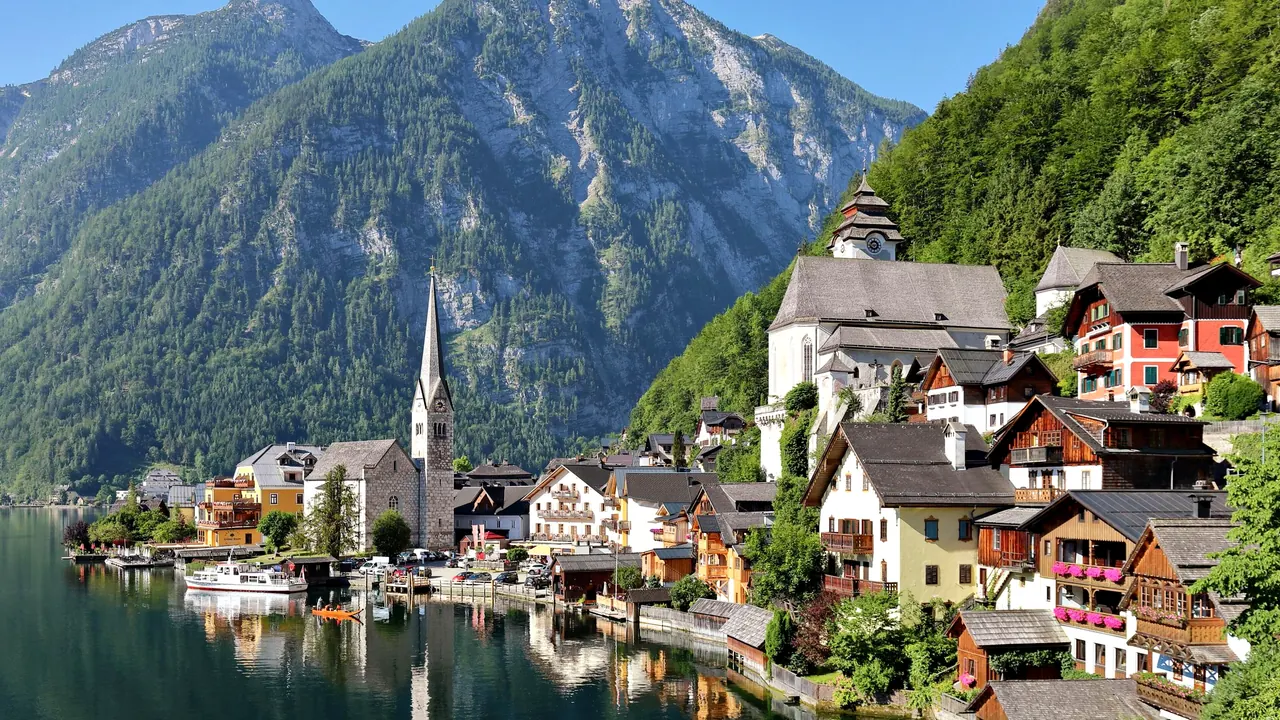
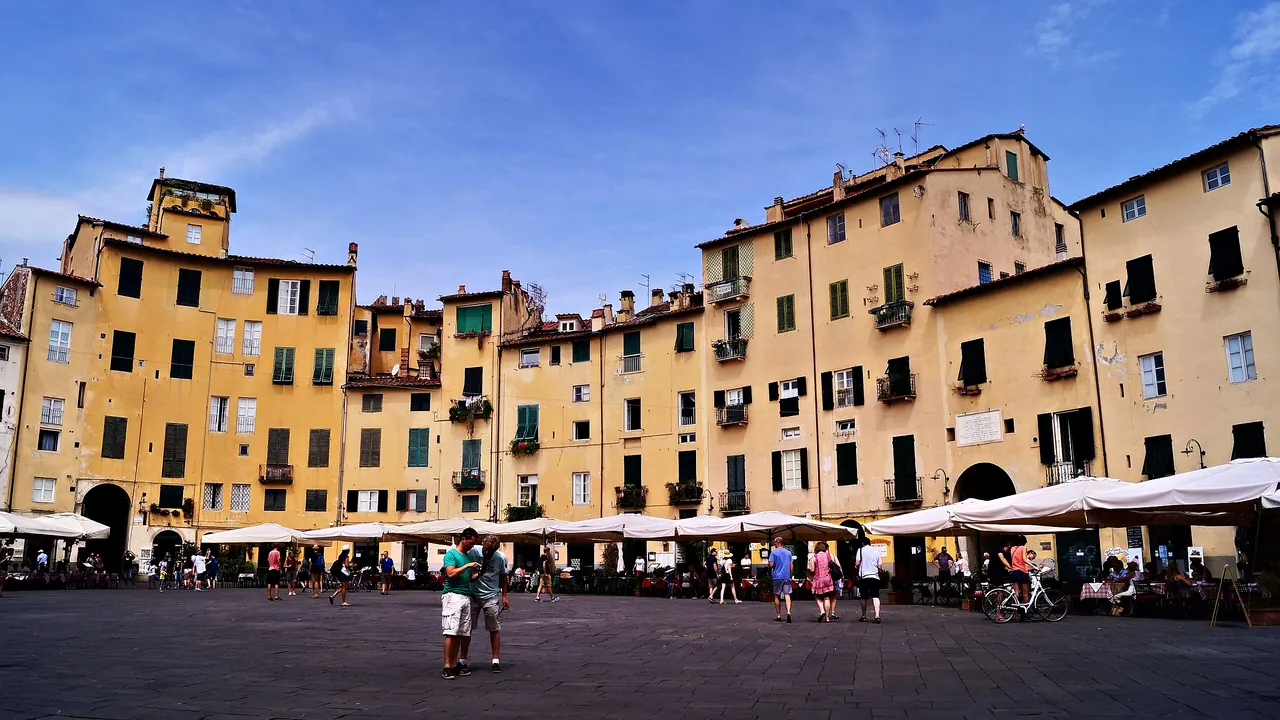
Photos: Hallstatt by C.Stadler/Bwag, CC BY-SA 4.0, cropped; Lucca by Stefano Sansavini, CC BY-SA 4.0, cropped.
Hallstatt or Lucca?
Our verdict in twelve categories, each scored against the same fixed benchmark cities, and the climate month by month, so you can choose for your trip.
Choose Hallstatt for
- nature and the outdoors
Hallstatt is the choice for travellers who come for mountains and water: a lake below the Dachstein, ice caves, a high karst plateau and the walk to the Gosausee, with seven thousand years of salt mining as the cultural thread. It suits a short, quiet stay of two or three nights built around hiking and early mornings on the shore, for people who don't mind simple food, empty evenings and high room rates.
Choose Lucca for
- live music and the arts
- food and drink
- culture and sights
Lucca gives more to fill each day away from the trails. Inside its unbroken walls are Romanesque churches, Puccini's music and rustic Tuscan cooking, and the train puts Pisa, Florence and the Versilia beaches within easy reach. It makes the better base for a week, for a family, and for anyone who wants their money to go a little further.
Scoreboard
Twelve categories on one fixed scale from 0 to 100. The shaded stretch is the gap between the two.
Your match
Pick a travel style or drag the sliders, and both match scores follow your weighting.
Wins on nature and the outdoors with your weighting.
Wins on live music and the arts and food and drink with your weighting.
What matters to you?
Category by category
What the scores mean for a trip.
Beaches & swimming
Neither place has a beach of its own, but Lucca reaches a far better one. The train to Viareggio takes about 25 minutes, and the long sand of the Versilia shelves gently into warm sea, with beach clubs set out in rows of umbrellas or the free dunes of the Lecciona backed by pine woods.
In Hallstatt, a swim is a cold plunge in a deep Alpine lake, from the jetty in the village or the lido at Obertraun. It is lovely after a hike, but short-lived and at the mercy of the weather. For proper lake bathing, the Wolfgangsee further north is the better bet.
Food & drink
Lucca eats far better. Its kitchens have a distinct local repertoire, from spelt soup and meat-filled tordelli to chestnut dishes and buccellato, served in family trattorias inside the walls with wine and olive oil from the surrounding hills.
Hallstatt has a handful of guesthouse dining rooms and terraces serving schnitzel, goulash and lake char, and the view makes the fish taste even better. Beyond that there is little to try, and kitchens can close early. Bad Ischl's patisseries are the nearest escape.
Culture & sights
Both towns are their own main sight, but Lucca has much more to see. Its complete Renaissance walls, the tiered arcades of San Michele, the oval Piazza dell'Anfiteatro and the tomb of Ilaria del Carretto in the cathedral fill two unhurried days.
Hallstatt's history goes back further, with seven thousand years of salt mining and an Iron Age culture named after its burial ground. Still, a day covers it: the mine, the small museum and the painted skulls of the Beinhaus.
Nightlife
Neither place is for a late night, and the gap between them is one of degree. Hallstatt has nothing to go out to after dinner. Once the coaches have gone, the evening is the lake and the silence, and people who stay overnight come for that.
Lucca has a small evening life of its own, with a few wine bars and pubs where students gather. It keeps enough going that couples or friends have somewhere to go after dinner, but it suits a slow evening outdoors more than a night out.
Nature & outdoors
Hallstatt is the outdoor destination of the two. The Dachstein massif rises straight from the village, and a cable car climbs to the Five Fingers platform, the ice caves and the high karst plateau, with waterfalls in the Echerntal and the Gosausee close by. Winter adds ski touring and freeride on the Krippenstein.
Lucca's own countryside is gentler: the 4km tree-lined ring of the walls, cycle paths along the Serchio, olive groves and villa gardens. For serious hiking in the marble peaks of the Apuan Alps or the Garfagnana woods, you need to drive for about an hour.
Day trips
Lucca is by far the better base for outings. Pisa is half an hour away by train and Florence a little over an hour, Pistoia, Pietrasanta, Carrara and the villa gardens of Marlia are all close, and the Cinque Terre is possible with an early start.
Hallstatt's outings are to the lake towns of the Salzkammergut: the Kaiservilla in Bad Ischl, St Wolfgang's altarpiece and Gmunden's lake castle, with Salzburg as a long day out. Without a car, each trip means planning around buses and the lakeside railway.
Good for families
Lucca is the easier choice with children. The centre is flat and largely free of traffic, and a ride round the walls on a family quadricycle, the trees on top of the Torre Guinigi, Pinocchio Park at Collodi and beaches within half an hour make the days easy to fill.
Hallstatt has some excellent moments, such as the miners' slides in the salt mine and the ice caves for older children. But the village is a single steep lane, crowded at midday and awkward with a pushchair, so families usually do better staying in Obertraun.
Getting around
You can walk across either centre, and both keep most cars out, but Lucca's is flat and well connected while Hallstatt's lane is steep, narrow and full of steps. Lucca's station sits just outside the walls, with regular trains to Pisa and Florence, and bikes are how the locals get about.
Hallstatt's station is on the far shore, so you cross by boat, and buses to Obertraun, Gosau and Bad Ischl thin out after summer. A car helps in both countrysides, though in Lucca it is a burden inside the walls.
Shopping & style
In Hallstatt, shopping takes half an hour on the one lane through the village, and nearly everything there is aimed at day visitors. The souvenir worth carrying home is salt from the mine above, which is light, genuinely local and makes an easy gift.
Lucca is no shopping destination either, but it has a proper town centre to browse rather than a single strip of souvenir shops. On Via Fillungo, clothes and jewellery shops sit behind old painted shopfronts, and the side streets are better for things to eat, such as the hill oil, spelt and anise bread. If a visit falls on the monthly antiques weekend around the cathedral, browsing becomes a reason to go, though for serious fashion you would look elsewhere.
Affordability
In Hallstatt most of the money goes on the bed. A village this small with this many visitors charges resort rates for rooms and meals, and the mine, the funicular and the Dachstein cable car are each paid separately, so a day there soon adds up. The usual answer is to sleep in a cheaper village nearby and come in by day, which works but makes a car or a bus timetable part of the plan.
In Lucca the room is also the biggest cost, but the rest of the day is far easier on the pocket. Much of what you come for costs nothing, from a circuit of the walls to the church façades and an evening walk, and everyday meals and train fares to Pisa or the coast stay reasonable. A budget traveller can base there for a week by sleeping just beyond the gates, which is much simpler than coming into Hallstatt by day.
Live music & performing arts
Lucca is the clear choice for an evening of music. Puccini was born here, so short recitals of his arias run for most of the year, the Teatro del Giglio has an opera season, and summer brings open-air opera by the lake at Torre del Lago and big concerts in Piazza Napoleone.
Hallstatt has a brass band on feast days and the odd church concert. For anything more, you need to go to Bad Ischl for its summer operetta or to Salzburg for its season.
Wellness & relaxation
Neither has thermal baths of its own, and both rely on nearby spa towns. From Hallstatt it is half an hour to the salt-brine baths of Bad Ischl, while from Lucca you can reach Montecatini, the cave pools of Monsummano and the steam grottoes of Bagni di Lucca. The real difference is in the everyday calm.
Lucca stays quiet all day, with traffic-free streets, long lunches and the shaded walls at dusk. Hallstatt's stillness belongs to misty mornings and empty evenings, but around midday its lane is crowded with tour groups.
When should you go?
Pick your month. The climate figures are measured averages, not a forecast.
Hallstatt in July
Lucca in July
Daytime high, °C
Rainfall in the month, mm
Where the figures come from
Hallstatt's temperatures are measured 56 km from the centre, at Salzburg.
Hallstatt has no rain gauge within 25 km of the centre, so its rainfall comes from a gridded climate dataset read at the city rather than from a gauge further away.
Temperature and rainfall are climate normals, averaged over the years shown. Hallstatt: 1991-2020 normals, Salzburg (55.5 km from centre). Lucca: 1991-2020 normals, Pisa / S. Giusto (21.4 km from centre).
Hallstatt has a short outdoor season. From June to September the days are mild, peaking around 25°C, which is ideal for hiking, but summer is also the wettest time, with up to 178mm of rain in July and mist that can settle on the lake. The lake is only warm enough for a brisk swim in July and August. Winter is cold, with highs barely above freezing, so it suits snow and ski touring more than strolling, and the short winter days are dim.
Lucca is warmer, sunnier and drier for most of the year. Spring and early autumn are best for walking the walls and visiting nearby towns. July and August reach 30°C on the plain and are better spent on the coast, where the sea reaches 25°C and rain is scarce. The wet season starts in September and peaks in November at 132mm, but even midwinter stays mild enough for sightseeing.
Which traveller are you?
On an outdoors trip, Hallstatt wins easily. Mountain country starts at the edge of the village, with the Krippenstein cable car, the Dachstein ice caves, hut-to-hut routes and the walk to the Gosausee. Lucca's Apuan Alps are serious too, but they are an hour's drive away.
For a culture and arts trip, Lucca is the stronger choice. Its walls, carved Romanesque façades and Puccini recitals fill two days, Florence and Pisa are on the railway, and the opera season adds evenings. Hallstatt's salt mine and Beinhaus make a fascinating half day, not a week.
On a food and nightlife trip, Lucca is the obvious pick, with tordelli, farro soup and cecina in the trattorias, aperitivo in Piazza San Michele and the Versilia clubs in summer. Hallstatt offers lake fish on a quiet terrace, and the village is asleep by evening.
Before you go
| Measure | Hallstatt | Lucca |
|---|---|---|
| Official language | German, Austrian Sign Language | Italian |
| Currency | Euro (EUR) | Euro (EUR) |
| Sockets | CF230 V, 50 Hz | CFL230 V, 50 Hz |
| Driving side | Right | Right |
| Time zone | UTC+1, UTC+2 in summer | UTC+1, UTC+2 in summer |
| Emergency number | 112 | 112 |
| Elevation | 511 m | 19 m |
| Main airport | Salzburg Airport (SZG)55 km from centre64 non-stop destinations | Pisa International Airport (PSA)21 km from centre82 non-stop destinations |
| Public holidays this year | 16 days | 13 days |
By the numbers
| Measure | Hallstatt | Lucca |
|---|---|---|
| City population | 741 | 88,798 |
| People per km² | 12 | 478 |
| Museums within 10 km | 3 | 20 |
| UNESCO World Heritage sites within 50 km | 2 | 4 |
| Swim season, months above 21 °C | - | 4 months |
Where else could you go?
Every comparison below shares a destination with this one, so you can follow Hallstatt or Lucca somewhere new.