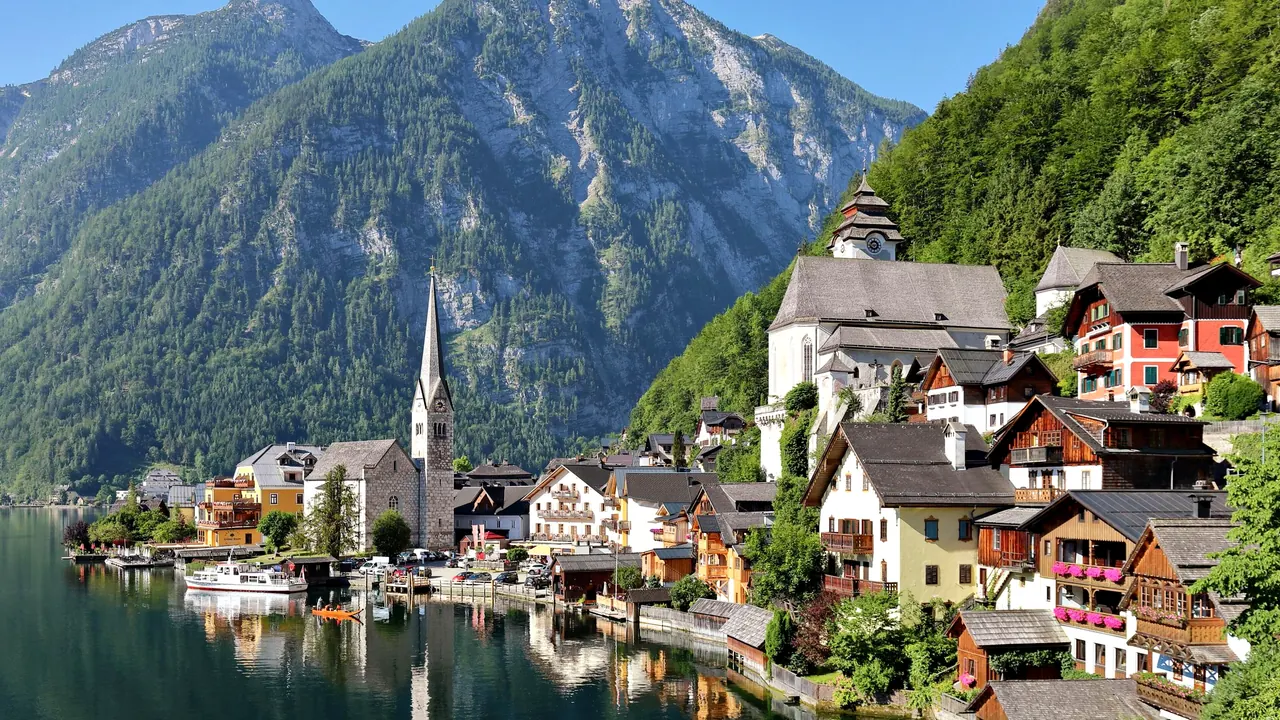
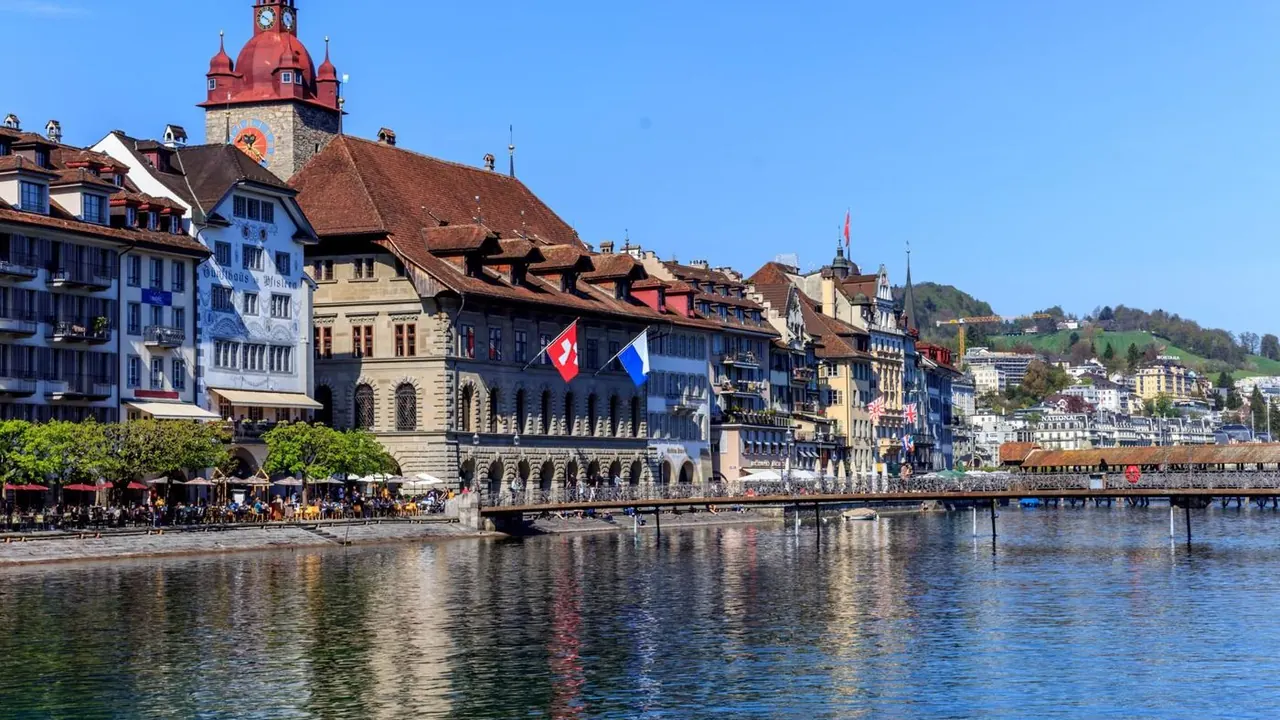
Photos: Hallstatt by C.Stadler/Bwag, CC BY-SA 4.0, cropped; Lucerne by ILOVESwitzerland, Pexels License.
Hallstatt or Lucerne?
Our verdict in twelve categories, each scored against the same fixed benchmark cities, and the climate month by month, so you can choose for your trip.
Choose Hallstatt for
- prices
Hallstatt suits travellers who want a village rather than a town: a night or two on a narrow ledge between lake and cliff, the salt mine and the painted skulls of the Beinhaus, then long days on the Dachstein and around the Gosausee. It rewards people who are happy with simple meals, silent evenings and a car for exploring the Salzkammergut. It is also the slightly less punishing of the two on cost, especially if you sleep in Obertraun or Bad Ischl.
Choose Lucerne for
- live music and the arts
- shopping
- getting around
Lucerne is the better choice for anyone who wants mountains and a proper small city in the same trip. It has a medieval Old Town, a world-class concert hall and the Transport Museum, and steamers and cogwheel trains leave from beside the station. With Zurich, Bern and Basel close by on fast trains, it suits first-time visitors to Switzerland, families and music lovers who would rather not drive. The price for all this is a very expensive stay.
Scoreboard
Twelve categories on one fixed scale from 0 to 100. The shaded stretch is the gap between the two.
Your match
Pick a travel style or drag the sliders, and both match scores follow your weighting.
Wins on prices with your weighting.
Wins on live music and the arts and shopping with your weighting.
What matters to you?
Category by category
What the scores mean for a trip.
Beaches & swimming
Neither has a beach, only cold Alpine water in July and August, but Lucerne makes more of it. Its Lido, the old wooden lake baths and the lawns at Ufschötti give the city a real summer bathing habit, and the water runs a degree or two warmer.
Hallstatt's deep, dark lake offers a jetty and lawn at the north end of the village and the lido at Obertraun. The shore is steep with little room to spread out, so it is a bracing dip after a hike rather than an afternoon by the water.
Food & drink
Neither is a food destination, but Lucerne gives you more choice. Its Old Town guild houses serve Chügelipastete, fondue and rösti, and there are riverside terraces along the Reuss, the Saturday market and a few modern bistros in the Neustadt.
Hallstatt comes down to a handful of guesthouse dining rooms where smoked or pan-fried char from the lake is the dish worth ordering, and kitchens close early once the day visitors leave. For a proper café stop, the imperial-era patisseries of Bad Ischl are the nearest answer.
Culture & sights
Hallstatt's culture is concentrated and ancient: seven thousand years of salt mining, the Iron Age burial finds that named a whole European culture, the mine itself and the Beinhaus skulls. It makes a fascinating day, but it is one story told in one village.
Lucerne has more to see and more variety. There is the Chapel Bridge and Water Tower, the climbable towers of the Musegg Wall, the Lion Monument and the Bourbaki Panorama, plus real art at the Rosengart Collection and Wagner's villa at Tribschen. It still fits into a day or two, but those days are fuller.
Nightlife
Hallstatt has no nightlife at all. After dinner the evening is a glass of wine on a terrace and a dark walk by the lake, which is exactly why some people stay the night.
Lucerne at least gives you a choice: pubs and wine bars by the river, a few cocktail bars and a small club scene near the station, and student weekends. During Fasnacht the whole town stays out until dawn. It is still a quiet place, and anyone after a late night will find it runs out early.
Nature & outdoors
Both sit beneath serious mountains, and both are superb. The difference is in how you reach them. In Hallstatt the wild country starts at the village edge. You walk the Echerntal to the waterfalls, hike to the Gosausee, or ride from Obertraun up the Krippenstein to the Five Fingers platform and the giant ice caves, and in winter there is freeride terrain.
Lucerne's mountains come with rails. You take the cogwheel railway up Pilatus, Europe's oldest mountain railway up Rigi, the open-top Stanserhorn cable car, and Titlis with its glacier, all tied together by lake steamers. Hallstatt feels wilder and more remote, while Lucerne lets you string boat, train and ridge walk into one easy day.
Day trips
Hallstatt's outings are the Salzkammergut lake towns: the Kaiservilla in Bad Ischl, the altarpiece at St Wolfgang and the lake castle at Gmunden. Salzburg is a long but worthwhile day. They are charming, but they take a car or careful bus planning.
Lucerne has more within easy reach and makes it simpler. Bern, Basel and Zurich are each under an hour by train, Einsiedeln and Zug are closer still, and the lake steamers run to the Rütli meadow and the William Tell country at Altdorf.
Good for families
Hallstatt has a few great moments for children, above all the salt mine with its funicular, wooden slides and underground lake, plus the ice caves for older ones. The village itself is a steep single lane, packed at midday and hard with a pushchair, so families often base themselves in Obertraun.
Lucerne is easier on parents. The Transport Museum and its planetarium can fill a whole day, the Glacier Garden and Goldau wildlife park add more, and the riverside centre is flat and safe with lawns for picnics.
Getting around
Hallstatt is small enough that you never need transport once you are there, though the lane is narrow and parts of the village are only reached by stairs. The trouble is arriving and leaving. Trains stop on the far shore, so you finish the journey on a little ferry, and the buses towards Obertraun, Gosau and Bad Ischl are few, and fewer still out of season. Most visitors exploring the wider Salzkammergut end up driving.
Lucerne is built for travelling without a car. You step off the train within sight of the steamers and the Chapel Bridge, cover most of the town on level ground, and use one ticket system for buses, boats, cogwheel railways and cable cars. A mountain day that links several of them means checking connections, but they run to time, so you can leave the car at home.
Shopping & style
Hallstatt's shopping is a half-hour stroll along the souvenir lane, and the one thing worth carrying home is salt from the local mine, alongside carved wood and schnapps.
Lucerne gives a shopper more to do, mostly if the shopper wants a Swiss watch. The big houses on Schwanenplatz dominate, with army knives, chocolate and a few Old Town boutiques around them, but fashion and design are thin.
Affordability
Neither is a cheap place to stay, but Hallstatt is easier to manage. Its few lakeside rooms are dear and the mine and cable car tickets add up, yet sleeping in Obertraun, Bad Goisern or Bad Ischl brings costs down noticeably.
Lucerne has no such escape route. Central hotels, ordinary restaurant meals and the mountain railways are all costly, and a Swiss travel pass and lakeside supermarket picnics only take the edge off.
Live music & performing arts
This is where the two are furthest apart. In Hallstatt live performance means the village brass band on feast days and the odd summer church concert, and for anything more you need Salzburg or the operetta season in Bad Ischl.
Lucerne is a serious music town. Leading orchestras come to the lakefront concert hall for the Lucerne Festival, the Lucerne Symphony Orchestra plays there through the year, and the city theatre stages opera, drama and dance.
Wellness & relaxation
Both are calm places with no bathing tradition of their own, and both crowd up in the middle of the day. Hallstatt's spa culture lies nearby, in the salt-brine baths of Bad Ischl, Bad Aussee and Bad Goisern, and its stillness is best at dawn with mist on the lake.
Lucerne's soaking spot is Mario Botta's mineral bath high on the Rigi. Otherwise relaxing there means slow promenades, the wooden lake baths and an unhurried afternoon on a steamer.
When should you go?
Pick your month. The climate figures are measured averages, not a forecast.
Hallstatt in July
Lucerne in July
Daytime high, °C
Rainfall in the month, mm
Where the figures come from
Hallstatt's temperatures are measured 56 km from the centre, at Salzburg.
Hallstatt has no rain gauge within 25 km of the centre, so its rainfall comes from a gridded climate dataset read at the city rather than from a gauge further away.
Lucerne has no rain gauge within 25 km of the centre, so its rainfall comes from a gridded climate dataset read at the city rather than from a gauge further away.
Lucerne's sunshine is measured 42 km from the centre, at Zurich Town / Ville..
Temperature and rainfall are climate normals, averaged over the years shown. Hallstatt: 1991-2020 normals, Salzburg (55.5 km from centre). Lucerne: 2005-2025 (sunshine 1991-2020, rainfall 1991-2020) normals, Emmen (4.2 km from centre).
Both places have a short warm season and a wet one, and in both they fall at the same time. From June to August daytime highs sit around 24°C to 25°C, warm enough for walking and for a quick lake swim. Those are also the wettest months, and Hallstatt, tucked in its steep trough, catches noticeably more rain, up to 178mm in July against 141mm in Lucerne. May and September are cooler, a little drier and good for hiking in either place, and October still gives mild days for walking.
From November to February both are cold, with highs only a few degrees above freezing. Winter is gloomier in Lucerne, where December brings barely 43 hours of sunshine, while Hallstatt's lake basin sees rather more. For high-summer sunshine Lucerne has a slight edge, but the difference through the year is small, and the real choice is between a summer visit with showers and a quiet, wintry one.
Which traveller are you?
On a culture and arts trip, Lucerne is the clear pick. It has the Chapel Bridge and the Old Town, the Picasso and Klee of the Rosengart Collection, and evenings at Jean Nouvel's concert hall, especially during the Lucerne Festival. Hallstatt has prehistory and the Beinhaus but no stage.
On a family trip with children, Lucerne works better. The Transport Museum fills a whole day, and the flat, safe riverside centre and lakeside lawns make life easy with a pushchair. Hallstatt's salt mine slides are a highlight, but its steep, crowded lane is tiring.
On a trip with a tight budget, Hallstatt is the more manageable of the two, if you sleep in Obertraun or Bad Goisern and come in for the day. Neither is cheap, but Lucerne's hotels, meals and mountain railways leave almost no way to economise.
Before you go
| Measure | Hallstatt | Lucerne |
|---|---|---|
| Official language | German, Austrian Sign Language | French, German, Italian, Romansh |
| Currency | Euro (EUR) | Swiss Franc (CHF) |
| Sockets | CF230 V, 50 Hz | CJ230 V, 50 Hz |
| Driving side | Right | Right |
| Time zone | UTC+1, UTC+2 in summer | UTC+1, UTC+2 in summer |
| Emergency number | 112 | 112 |
| Elevation | 511 m | 436 m |
| Main airport | Salzburg Airport (SZG)55 km from centre64 non-stop destinations | Zürich Airport (ZRH)49 km from centre226 non-stop destinations |
| Public holidays this year | 16 days | 12 days |
By the numbers
| Measure | Hallstatt | Lucerne |
|---|---|---|
| City population | 741 | 86,234 |
| People per km² | 12 | 2,963 |
| Museums within 10 km | 3 | 14 |
| UNESCO World Heritage sites within 50 km | 2 | 1 |
Where else could you go?
Every comparison below shares a destination with this one, so you can follow Hallstatt or Lucerne somewhere new.
- Zurichvs Lucerne
- Salzburgvs Hallstatt
- Interlakenvs Lucerne
- Bernvs Lucerne
- Baselvs Lucerne
- Colmarvs Lucerne