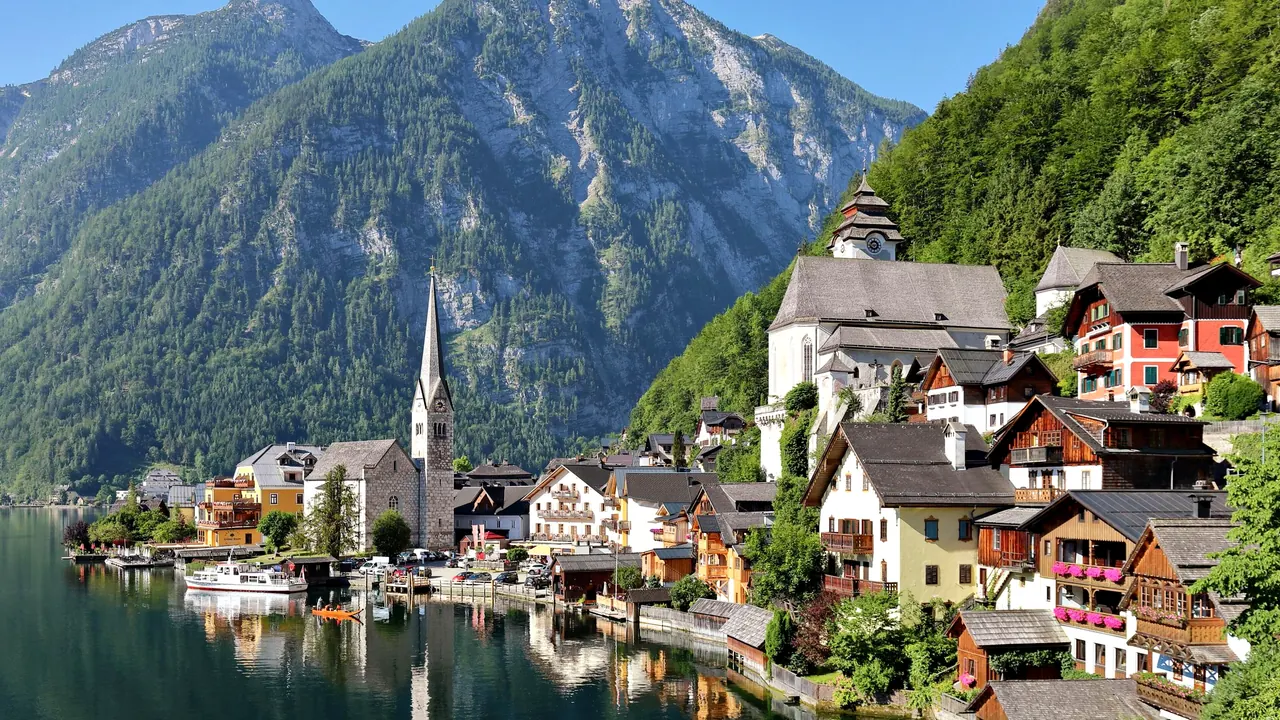
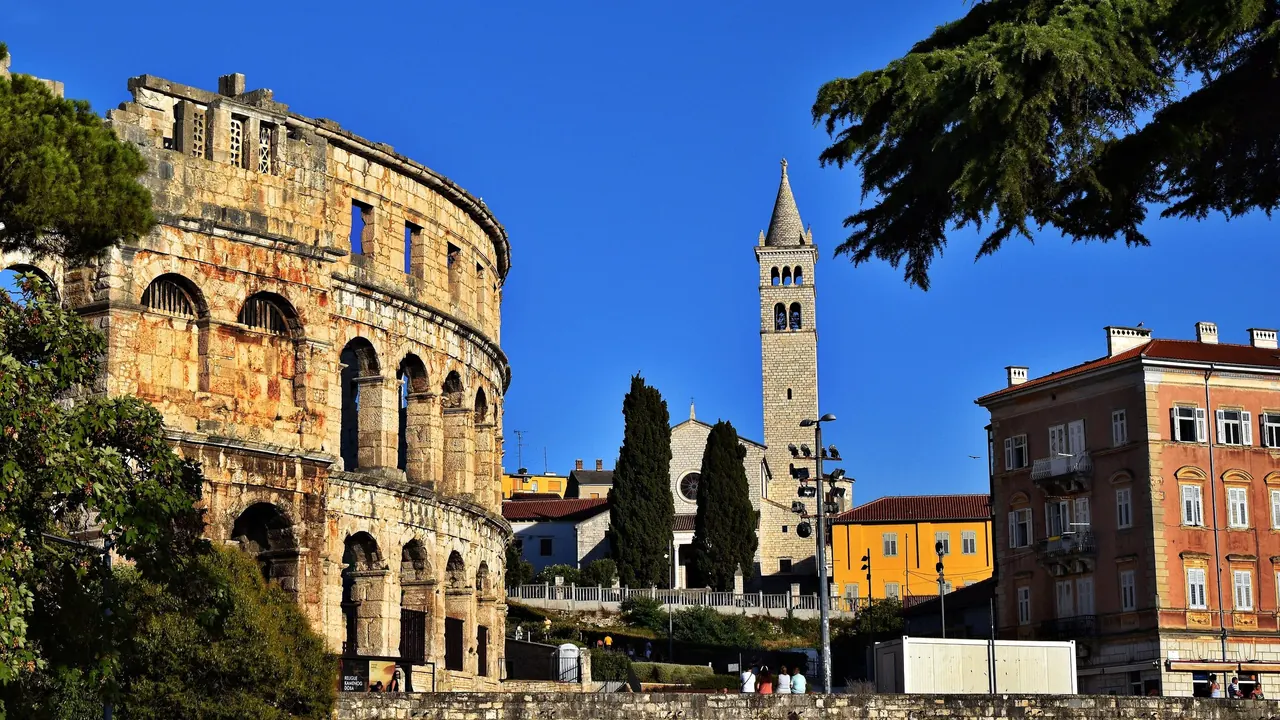
Photos: Hallstatt by C.Stadler/Bwag, CC BY-SA 4.0, cropped; Pula by Miroslav.vajdic, CC BY-SA 4.0, cropped.
Hallstatt or Pula?
Our verdict in twelve categories, each scored against the same fixed benchmark cities, and the climate month by month, so you can choose for your trip.
Choose Hallstatt for
- nature and the outdoors
- wellness
- getting around
Hallstatt is for travellers who want mountains more than anything else. The Dachstein rises straight from the lake, with ice caves, high plateau walks and the Gosausee within easy reach, and the quiet evenings after the day visitors leave feel restorative. It suits a short, scenic stay built around hiking, the salt mine and the spa towns of the Salzkammergut, for people happy with simple food and early nights.
Choose Pula for
- beaches
- food and drink
- nightlife
Pula makes more sense for a summer trip by the sea with more to fill the days and evenings. Clear Adriatic water, the wild coves of Kamenjak, Istrian truffles and wine, a Roman amphitheatre that still hosts concerts and a whole peninsula of towns to tour give it far more range, and it is the easier place to stay without spending heavily.
Scoreboard
Twelve categories on one fixed scale from 0 to 100. The shaded stretch is the gap between the two.
Your match
Pick a travel style or drag the sliders, and both match scores follow your weighting.
Wins on nature and the outdoors and wellness with your weighting.
Wins on beaches and food and drink with your weighting.
What matters to you?
Category by category
What the scores mean for a trip.
Beaches & swimming
These are very different kinds of water. In Hallstatt a swim means a short, bracing dip in the deep, dark green lake from a jetty in the village or the lido at Obertraun, and it only warms enough for that in high summer. The shores are steep and there is little space to lie out.
Pula is a real sea destination, though without sand. You swim from rocks, platforms and pebble coves around Verudela, Stoja and Medulin in very clear water, and the wild inlets of Cape Kamenjak are the best of it. Water shoes are a good idea, and families do best in the sheltered, shallow bays near Medulin.
Food & drink
Eating in Hallstatt is limited to Austrian standards in guesthouse dining rooms, with smoked or pan-fried char from the lake as the one local speciality. Kitchens close early, and anyone hungry for more goes to the patisseries of Bad Ischl.
Pula has much more to offer because it sits in Istria, one of the most distinctive kitchens on the Adriatic. Fuži with truffle, cured pršut, grilled squid, Teran and Malvazija all turn up on menus, and the covered market shows what is in season. The best meals are often in the konobas of the inland villages rather than near the Arena.
Culture & sights
Hallstatt's history is deep but compact: salt mining going back thousands of years, the Iron Age finds that named the Hallstatt culture, the salt mine itself and the Beinhaus with its painted skulls. The village scene is the main attraction, and a day covers it.
Pula has more to see and more layers of history. The Arena is one of the finest surviving Roman amphitheatres, and the Temple of Augustus, the Arch of the Sergii and the mosaics in the backstreets make the Roman town easy to follow. The Venetian fortress and the Austro-Hungarian naval buildings add later chapters, enough for a day or two.
Nightlife
Hallstatt has no nightlife. Evenings mean dinner, a glass of wine by the lake and a dark, silent walk along the water once the day visitors have left.
Pula is no party town either, but in summer there is a proper evening: terrace drinks around the Forum, then cocktail and beach bars on Verudela and around Medulin, some open late on weekends, plus a few small clubs. Out of season it quiets down to a handful of student bars.
Nature & outdoors
Hallstatt is the stronger choice by a wide margin. It sits in a glacial trough under the Dachstein, with the Five Fingers platform over a sheer drop, the giant ice caves, hut-to-hut routes, via ferratas, and freeride and ski touring in winter. The weather is often wet, but the scenery is real high mountain country.
Pula's landscape is low and coastal: macchia, pine and olive groves, the car-free cliffs of Kamenjak with dinosaur footprints, sea kayaking, windsurfing and wreck diving. For proper hiking you have to drive to the Učka range, and summer heat makes midday walking hard.
Day trips
Both make good bases, but Pula has more variety within reach. From Hallstatt the outings are lake towns such as Bad Ischl with the Kaiservilla, St Wolfgang and Gmunden, with Salzburg as a long day out.
Pula reaches Venetian Rovinj, the Byzantine mosaics of Poreč, the hill towns of Motovun and Hum with truffle and wine estates, and the Brijuni islands by boat. Opatija, Piran and Trieste are each a longer drive away. In both places a car makes these trips much easier.
Good for families
Hallstatt has a few memorable outings for children, the salt mine with its slides and underground lake and the ice caves for older ones, but the steep, crowded lane is hard going with a pushchair. Families usually stay in Obertraun and visit for a few hours.
Pula works better for a longer family stay because the sea fills most days, with the shallow bays at Medulin and Premantura best for small children. The aquarium in an old fort, climbing around the Arena, the Brijuni safari park and the water and dinosaur parks nearby add variety, although rocky shores and summer heat take some managing.
Getting around
Hallstatt is a little easier on the ground because there is so little ground to cover. The village is a few minutes end to end and largely closed to traffic, although steep steps and the boat from the station across the lake add some effort.
Pula's flat centre is equally walkable and city buses reach Verudela, but the wider area of coves, Kamenjak and the hill towns depends on a car or scooter. Both places have limited regional buses, so plan on driving for anything beyond the centre.
Shopping & style
Neither is a shopping destination. Hallstatt has a single lane of souvenir shops, where salt from the local mine is the one thing worth buying.
Pula offers a bit more, mainly to eat and drink: Istrian olive oil, truffle products, wine, rakija and pršut from the market hall, delicatessens and farms, plus everyday chains on the main old-town street.
Affordability
Hallstatt is the dearer place to stay. Rooms are few and in worldwide demand, meals are priced at Alpine resort level, and the salt mine and cable car fares add up, so budget travellers sleep in Obertraun, Bad Goisern or Bad Ischl.
Pula is mid-priced, with private apartments and simple konobas keeping costs reasonable, especially in spring and autumn. High summer and car hire push the total up, but the gap remains.
Live music & performing arts
Hallstatt has little beyond a brass band at feast days and the odd summer church concert. For real performances you go to Salzburg, or to Bad Ischl for its summer operetta.
Pula has one outstanding stage: in summer the Arena hosts pop and rock concerts, classical galas and film festival screenings under the Roman arches. The rest of the year the Istrian National Theatre puts on drama in Croatian, but there is no regular opera or classical programme.
Wellness & relaxation
Hallstatt has the edge for a restorative stay. It sits in an old spa region, with the brine baths and thermal complex of Bad Ischl half an hour away and more spa towns at Bad Aussee and Bad Goisern, and the misty mornings and empty evenings by the lake are deeply calm, as long as you avoid the midday crowds.
Pula has no spa tradition, only pools and saunas in the resort hotels on Verudela and in Medulin. Its way of slowing down is long coffees on the Forum and walks along the pine-shaded shore outside high summer.
When should you go?
Pick your month. The climate figures are measured averages, not a forecast.
Hallstatt in July
Pula in July
Daytime high, °C
Rainfall in the month, mm
Where the figures come from
Hallstatt's temperatures are measured 56 km from the centre, at Salzburg.
Hallstatt has no rain gauge within 25 km of the centre, so its rainfall comes from a gridded climate dataset read at the city rather than from a gauge further away.
Pula's temperatures are measured 87 km from the centre, at Trieste.
Pula has no rain gauge within 25 km of the centre, so its rainfall comes from a gridded climate dataset read at the city rather than from a gauge further away.
Temperature and rainfall are climate normals, averaged over the years shown. Hallstatt: 1991-2020 normals, Salzburg (55.5 km from centre). Pula: 1991-2020 normals, Trieste (87 km from centre).
Hallstatt is an Alpine place with a short warm season. Summer highs reach about 25°C in July and August, pleasant for hiking, but these are also the wettest months, with around 178mm of rain in July, so plan for showers and misty mornings. May to September is the walking season; from November to March the village is cold and the days are short and dull, which suits only winter sports on the Krippenstein.
Pula is warmer and sunnier almost all year. Summer highs around 29°C and a sea near 24°C in July make June to September the beach season, with the sunniest weather of the year. Spring and early autumn are better for sightseeing and cycling, before the heat or after it. Rain builds from September and peaks in November at about 107mm, so late autumn and winter are mild but grey.
Which traveller are you?
For a beach and sun trip, Pula is the clear choice. It has warm, very clear Adriatic water, pine-shaded rocky coves around Verudela and Kamenjak, and shallow bays at Medulin, while Hallstatt offers only brief, cold swims in a mountain lake.
On an outdoors trip, Hallstatt wins. Serious Alpine country begins at the village edge, with the Krippenstein cable car, the Dachstein ice caves, the Echerntal waterfalls and the walk to the Gosausee. Pula's coastal cycling and kayaking are enjoyable but much gentler.
For a food and nightlife trip, Pula is far better. Istrian pasta with truffle, scampi buzara and Malvazija give real substance at the table, and summer evenings move from Forum terraces to beach bars. Hallstatt has lake fish, a few guesthouse dining rooms and nothing after dinner.
Before you go
| Measure | Hallstatt | Pula |
|---|---|---|
| Official language | German, Austrian Sign Language | Croatian |
| Currency | Euro (EUR) | Euro (EUR) |
| Sockets | CF230 V, 50 Hz | CF230 V, 50 Hz |
| Driving side | Right | Right |
| Time zone | UTC+1, UTC+2 in summer | UTC+1, UTC+2 in summer |
| Emergency number | 112 | 112 |
| Elevation | 511 m | 5 m |
| Main airport | Salzburg Airport (SZG)55 km from centre64 non-stop destinations | Pula Airport (PUY)7 km from centre34 non-stop destinations |
| Public holidays this year | 16 days | 14 days |
By the numbers
| Measure | Hallstatt | Pula |
|---|---|---|
| City population | 741 | 52,220 |
| People per km² | 12 | 971 |
| Museums within 10 km | 3 | 4 |
| UNESCO World Heritage sites within 50 km | 2 | 1 |
| Swim season, months above 21 °C | - | 4 months |
Where else could you go?
Every comparison below shares a destination with this one, so you can follow Hallstatt or Pula somewhere new.