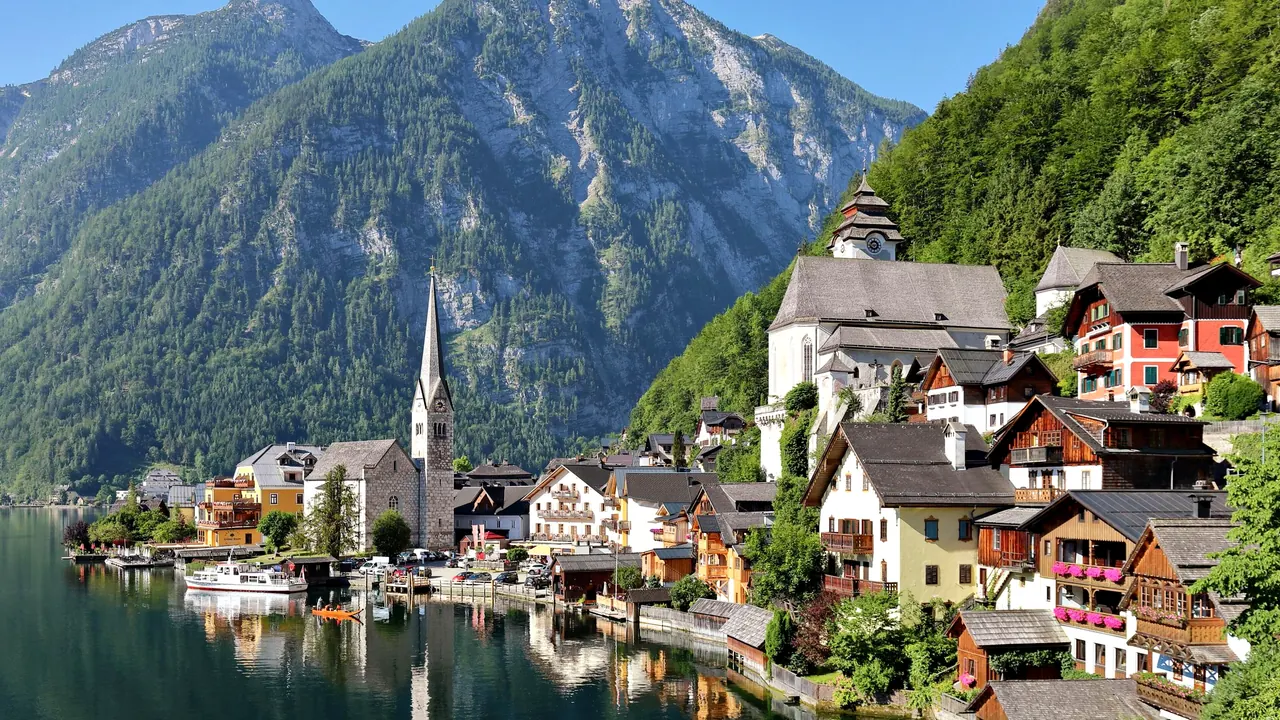
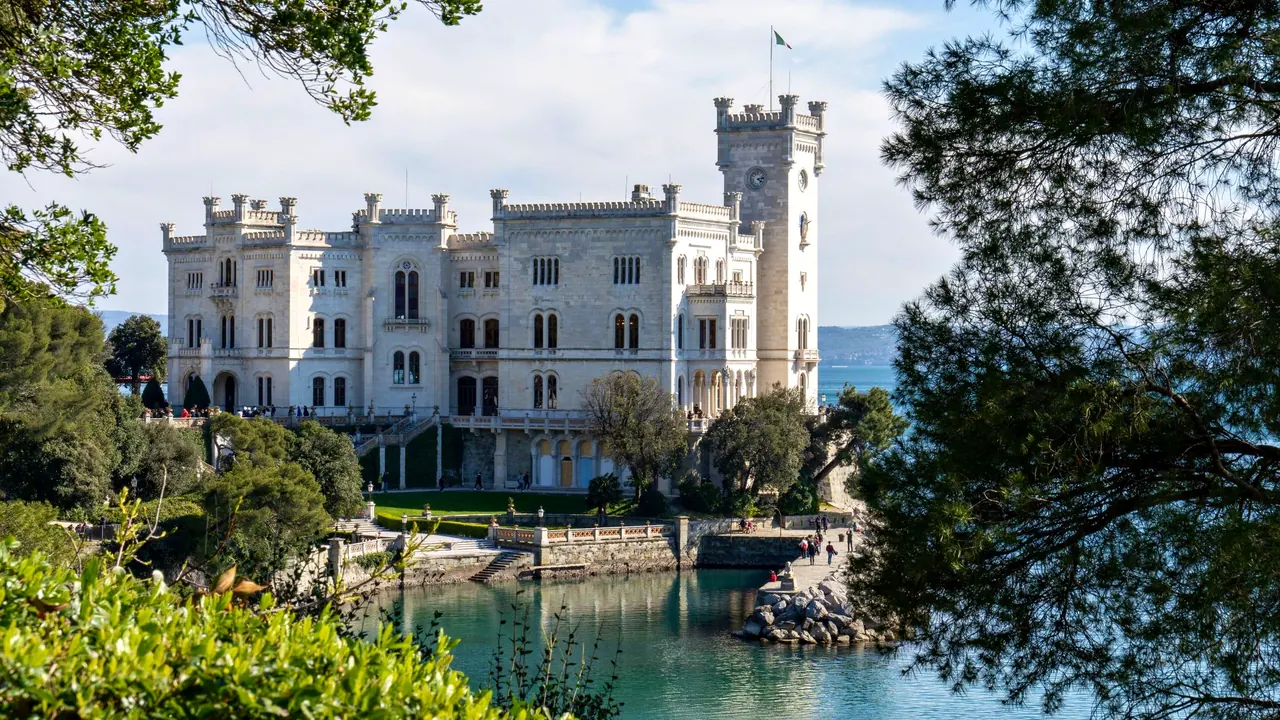
Photos: Hallstatt by C.Stadler/Bwag, CC BY-SA 4.0, cropped; Trieste by Tibor Szabo, Pexels License.
Hallstatt or Trieste?
Our verdict in twelve categories, each scored against the same fixed benchmark cities, and the climate month by month, so you can choose for your trip.
Choose Hallstatt for
- nature and the outdoors
- wellness
Hallstatt suits travellers who come for mountains and stillness. The Dachstein starts at the edge of the village, with cable cars, ice caves and the walk to the Gosausee, and the lake is at its most beautiful in the quiet hours after the day visitors leave. In return there is little to eat, do or see after dark, rooms are expensive, and the village itself fills a day at most. It works best as a short, scenic stop built around hiking.
Choose Trieste for
- live music and the arts
- food and drink
- beaches
For a trip with more to it, Trieste is the stronger choice. It is a real seaport with Habsburg squares, buffets and old coffee houses, an opera house, daily swimming off the Barcola seafront all summer and day trips into three countries. Prices are fairer too. Walks on the Karst are close by, but nothing there matches Hallstatt's Alpine scenery.
Scoreboard
Twelve categories on one fixed scale from 0 to 100. The shaded stretch is the gap between the two.
Your match
Pick a travel style or drag the sliders, and both match scores follow your weighting.
Wins on nature and the outdoors and wellness with your weighting.
Wins on live music and the arts and food and drink with your weighting.
What matters to you?
Category by category
What the scores mean for a trip.
Beaches & swimming
Neither place has sand, but Trieste offers far more swimming. Hallstatt's lake is deep and fed by mountain water, so a dip from the jetty in the village or at the Obertraun lido is a bracing reward after a hike rather than a way to spend the afternoon.
In Trieste the Adriatic is part of daily life. People sunbathe on the stepped platforms and pine-shaded lawns at Barcola, the old bathing establishments have changing cabins, and there are prettier pebble coves at Sistiana and Duino. The sea is much warmer for a long summer swim, as long as you are happy climbing down a ladder off rocks.
Food & drink
Eating in Hallstatt comes down to a few guesthouse dining rooms serving schnitzel and goulash, plus char or whitefish from the lake, which are worth trying once. Kitchens close early, and the nearest serious pastry is in Bad Ischl.
Trieste has a cuisine of its own, shaped by Italy, Austria and the Slavic world. You can stand at a buffet counter over boiled pork with horseradish, order jota or fried sardoni, and learn to ask for a 'capo in b' in an old coffee house. Then you can drive up to an osmiza on the Karst for Terrano and home-cured ham. Fine dining is limited in both places.
Culture & sights
Hallstatt's history goes back a very long way. Salt has been mined here for some seven thousand years, the Iron Age Hallstatt culture is named after the village, and the Beinhaus holds its painted skulls. Even so, the salt mine, the small museum and the lane of wooden houses fill a day at most.
Trieste is a whole Habsburg port city to explore. There is the huge seafront Piazza Unità, the canal-side grid of the Borgo Teresiano, the cathedral and castle on San Giusto above a Roman theatre, and the white Miramare Castle on the shore. The Revoltella museum, the great synagogue and the Risiera di San Sabba memorial add several more days.
Nightlife
In Hallstatt an evening out means dinner and a walk by the dark lake, and nothing more. Trieste is no party city either, with few clubs and quiet winter weeknights. Still, its aperitivo around Piazza Unità and the Canal Grande, the student wine bars and the summer kiosks along Barcola give you somewhere to go after dinner.
Nature & outdoors
This is Hallstatt's great strength. The lake lies in a glacial trough under the Dachstein, and from Obertraun a cable car climbs to the Five Fingers platform, the high karst plateau and the Giant Ice Cave. There are waterfall paths up the Echerntal, the reflected peaks at the Gosausee and ski touring in winter.
Trieste's outdoors is gentler and more varied: cliff walks along the Strada Napoleonica and the Rilke Path, climbing in Val Rosandra, the vast Grotta Gigante, and sailing and snorkelling off Miramare. It is good for mixing with city days, but it is not high mountain country.
Day trips
Hallstatt's outings stay within the Salzkammergut. You can visit the Kaiservilla in Bad Ischl, St Wolfgang's altarpiece and Gmunden's lake castle, while Salzburg is a long day away. Without a car, all of this takes careful planning around buses.
Trieste opens up three countries. Aquileia's mosaics, star-shaped Palmanova and the Collio wine villages are in Friuli. Piran and Ljubljana are across the Slovenian border, Istria is reachable by car, and Venice is about two hours by train.
Good for families
Hallstatt has a few outings children love, such as the miners' slides and underground lake in the salt mine and the icy caverns up the Krippenstein. Beyond those, its single steep lane is crowded at midday and hard work with a pushchair.
Trieste is easier to settle into. Families can use the Miramare gardens, the waterfront aquarium, a hands-on science centre and summer days at Barcola. Swimming off rocks and the stepped streets still make it better for older children than toddlers.
Getting around
Hallstatt takes minutes to cross on foot, but getting there is the awkward part. The station is across the lake, so you arrive by boat, and buses to Obertraun, Gosau and Bad Ischl are sparse outside summer, which is why many visitors bring a car.
Trieste's centre is flat and compact along the water. Frequent city buses run out to Barcola, Miramare and the Karst, and ferries cross to Muggia. Here a car is needed only for wine country and cross-border trips.
Shopping & style
Neither is a place to shop. Hallstatt has a lane of souvenir stalls where the one real find is salt from the mountain mine. Trieste has more to browse: antique and second-hand shops in the old town, ordinary Italian fashion along Corso Italia, and coffee, Karst wine and presnitz to take home.
Affordability
Hallstatt is costly for the little it offers in rooms and meals. The village has very few beds for a worldwide crowd, and the salt mine, funicular and cable car soon add up, so budget travellers often sleep in Obertraun or Bad Ischl and visit for the day.
Trieste is noticeably easier on the wallet. Buffet meals and coffee at the bar are cheap, the buses are inexpensive, and swimming at Barcola, the cathedral hill and the Karst walks cost nothing. Smarter hotels and seafood still charge normal Italian city prices.
Live music & performing arts
Trieste has a proper stage life. The waterfront Teatro Verdi runs seasons of opera and ballet, the Politeama Rossetti stages plays and musicals, and there is a Slovenian-language theatre, though live music outside the theatres is thin.
Hallstatt offers only a brass band on feast days and the occasional church concert. Both places share a Habsburg fondness for operetta, but to hear it from Hallstatt you have to go to Bad Ischl in summer.
Wellness & relaxation
The two are about equal for a restful stay, but the rest is of a different kind. From Hallstatt the salt-brine baths and thermal complex of Bad Ischl, along with the spa towns of Bad Aussee and Bad Goisern, are close at hand. The village's own calm comes in the misty mornings and evenings, either side of the crowded middle of the day.
Trieste has no thermal tradition and only hotel spas. What it offers instead is an unhurried city rhythm: long sittings in old coffee houses and sunset strolls out along the Molo Audace.
When should you go?
Pick your month. The climate figures are measured averages, not a forecast.
Hallstatt in July
Trieste in July
Daytime high, °C
Rainfall in the month, mm
Where the figures come from
Hallstatt's temperatures are measured 56 km from the centre, at Salzburg.
Hallstatt has no rain gauge within 25 km of the centre, so its rainfall comes from a gridded climate dataset read at the city rather than from a gauge further away.
Temperature and rainfall are climate normals, averaged over the years shown. Hallstatt: 1991-2020 normals, Salzburg (55.5 km from centre). Trieste: 1991-2020 normals, Trieste (1.6 km from centre).
Hallstatt has a short warm season. Days reach about 25°C in July and August, which is pleasant for hiking and a cold swim, but summer is also the wettest time of year, with around 178mm in July, so plan around showers and low cloud. Spring and early autumn are cool and good for walking, though they get less sun. From November to February the village is cold and often dull, and suits snow and quiet more than sightseeing.
Trieste is warmer and sunnier almost all year. Highs reach about 29°C in July and August, and the sea warms to around 25°C, so swimming is easy from June to September. Very hot days can make the climb to San Giusto hard work. The rain arrives in autumn, peaking at about 125mm in November, and winters are mild but can be raw when the Bora blows. Spring and late September are the best months for exploring the city on foot.
Which traveller are you?
On an outdoors trip, Hallstatt is the clear pick. You can hike hut to hut, climb via ferratas, take the Krippenstein cable car up to the ice caves and walk to the Gosausee from the village. Trieste's Karst walks and sailing are good, but on a much smaller scale.
For a food and nightlife trip, Trieste wins easily. It has buffet counters carving boiled pork, a coffee language all its own, farmhouse osmize on the Karst and aperitivo by the canal. Hallstatt offers lake fish, early-closing kitchens and silent evenings.
On a culture and arts trip, Trieste gives you several full days: Piazza Unità, San Giusto, Miramare Castle and a season of opera at the Teatro Verdi. Hallstatt's salt mine and painted skulls are remarkable but take only a day.
Before you go
| Measure | Hallstatt | Trieste |
|---|---|---|
| Official language | German, Austrian Sign Language | Italian |
| Currency | Euro (EUR) | Euro (EUR) |
| Sockets | CF230 V, 50 Hz | CFL230 V, 50 Hz |
| Driving side | Right | Right |
| Time zone | UTC+1, UTC+2 in summer | UTC+1, UTC+2 in summer |
| Emergency number | 112 | 112 |
| Elevation | 511 m | 2 m |
| Main airport | Salzburg Airport (SZG)55 km from centre64 non-stop destinations | Trieste Airport (TRS)31 km from centre32 non-stop destinations |
| Public holidays this year | 16 days | 13 days |
By the numbers
| Measure | Hallstatt | Trieste |
|---|---|---|
| City population | 741 | 198,417 |
| People per km² | 12 | 2,332 |
| Museums within 10 km | 3 | 33 |
| UNESCO World Heritage sites within 50 km | 2 | 5 |
| Swim season, months above 21 °C | - | 4 months |
Where else could you go?
Every comparison below shares a destination with this one, so you can follow Hallstatt or Trieste somewhere new.
- Salzburgvs Hallstatt
- Rovinjvs Trieste
- Ljubljanavs Trieste
- Bledvs Trieste
- Venicevs Trieste
- Bledvs Hallstatt