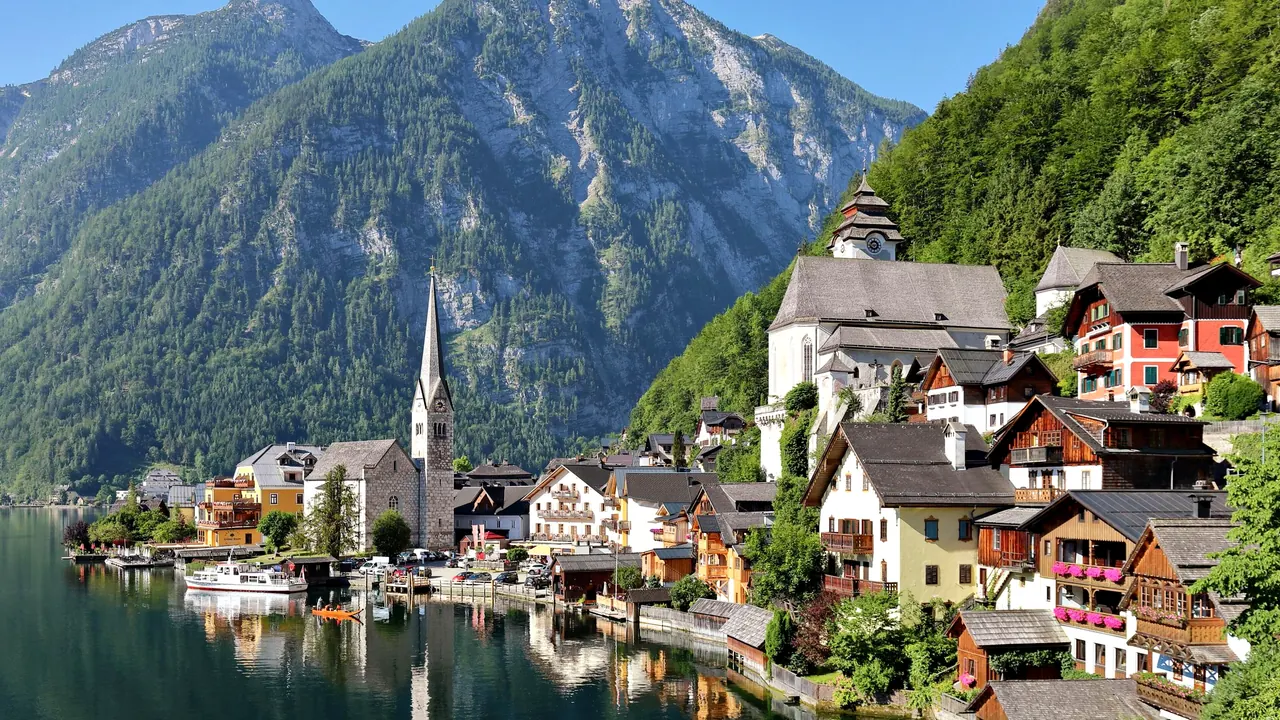
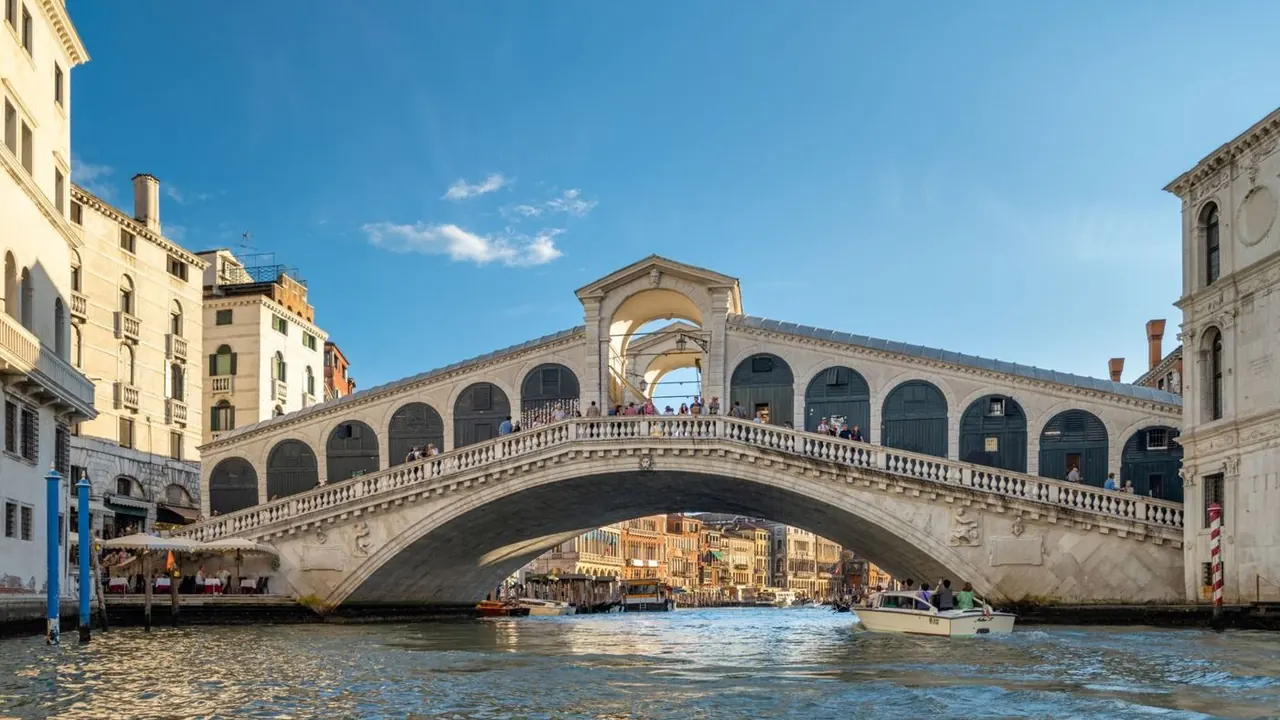
Photos: Hallstatt by C.Stadler/Bwag, CC BY-SA 4.0, cropped; Venice by David Vives, Pexels License.
Hallstatt or Venice?
Our verdict in twelve categories, each scored against the same fixed benchmark cities, and the climate month by month, so you can choose for your trip.
Choose Hallstatt for
- nature and the outdoors
- prices
- wellness
Hallstatt suits travellers who want mountains more than monuments. It is a base for walking into the Dachstein, riding the Krippenstein cable car to the ice caves and rowing on a still lake, and the evenings end quietly by the water. Its sights fill about a day, so it works best as one stop on a wider Salzkammergut or Alpine trip, ideally with a car.
Choose Venice for
- culture and sights
- live music and the arts
- shopping
For art, architecture and a night at the opera, Venice is the stronger pick by far. Its churches, scuole and galleries hold more than a week can cover, the bacari make eating out a pleasure, and fast trains reach Padua, Vicenza and Verona. Here the outdoors means the flat lagoon rather than mountains, and you should not expect late nights in either place.
Scoreboard
Twelve categories on one fixed scale from 0 to 100. The shaded stretch is the gap between the two.
Your match
Pick a travel style or drag the sliders, and both match scores follow your weighting.
Wins on nature and the outdoors and prices with your weighting.
Wins on culture and sights and live music and the arts with your weighting.
What matters to you?
Category by category
What the scores mean for a trip.
Beaches & swimming
Neither city is a swimming destination, but Venice comes out ahead because it has a real sandy beach a short boat ride away. The Lido's long Adriatic shore is shallow and warm in high summer, which is good for children, and Pellestrina beyond it is quieter.
At Hallstatt you swim in a cold, clear Alpine lake, from a small jetty area in the village or the lido at Obertraun. It makes a bracing dip after a hike rather than an afternoon on the sand, and the season is short.
Food & drink
Eating well is one of the real pleasures of Venice, as long as you avoid the picture-menu places around San Marco. You can stand at a bacaro counter with cicchetti and a spritz, then sit down to cuttlefish risotto or lagoon shellfish from the Rialto market. That is far more range than Hallstatt has.
Hallstatt's menus are a short list of Austrian standards in guesthouse dining rooms. The local highlight is smoked or pan-fried char from the lake, eaten on a terrace with the view. Kitchens close early, and for more choice people go to the old patisseries of Bad Ischl.
Culture & sights
Venice is in another league. The whole city is a monument, and beyond the landmarks of San Marco lie the Accademia, the Frari, the Scuola Grande di San Rocco, modern art at the Guggenheim and the Biennale, enough for a week or more.
Hallstatt's history is older and stranger than its size suggests. Salt has been mined here for some seven thousand years, the Iron Age finds from its burial ground gave the Hallstatt culture its name, and the Beinhaus holds rows of painted skulls. It makes a fascinating day, but a day is about what it takes.
Nightlife
Hallstatt has no bar to move on to after dinner. When the tour coaches have gone, the village is just the lake, a few lit windows and silence. That is lovely if you came for it, but there is no going out.
Venice clearly offers more after dark, though it is not a party city. Aperitivo time fills the canal-side bacari of Cannaregio and the lanes around the Rialto with locals, which gives the early evening a social buzz that Hallstatt never has. Near the university in Dorsoduro, a few bars keep going after the rest of the city has gone quiet. For clubs you still need the mainland, or the beach clubs at Jesolo in summer.
Nature & outdoors
Hallstatt is far stronger outdoors. The Dachstein rises straight from the village, with the Krippenstein cable car, the Five Fingers platform, the Giant Ice Cave, the waterfalls of the Echerntal and the walk to the Gosausee. Summer adds via ferratas, and winter brings ski touring.
Venice's nature is flat and watery: salt marshes around Torcello with egrets and flamingos, kayaking, Venetian rowing lessons and cycling along the Lido sea walls. Real mountains are more than two hours away.
Day trips
Venice has the easier and richer choice of outings. Fast trains reach Giotto's chapel in Padua, Palladio's Vicenza and the Roman arena in Verona without a car, and Murano, Burano and Torcello need only a boat across the lagoon.
Hallstatt's outings are to lake towns rather than art cities: the Kaiservilla at Bad Ischl, the altarpiece at St Wolfgang and Gmunden on the Traunsee, with Salzburg as a long day. Buses and the lakeside railway reach them, but a car makes it much simpler.
Good for families
Both work for a few days with children and get harder after that, for different reasons. In Hallstatt the highlights are the salt mine's wooden slides and underground lake, the ice caves for older children and the lakeside lawns. The single steep lane is awkward with a pushchair, and staying in Obertraun helps.
Venice has vaporetto rides, glass-blowing on Murano, the shallow Lido beach and no traffic to worry about. Stepped bridges, summer heat and a shortage of parks make it tiring.
Getting around
Venice is easier to get around over a bigger area. There is no traffic, most of the centre is within a long walk, vaporetti run to the islands and the Lido, and trains arrive right at Santa Lucia. The steps on every bridge are the main drawback.
You can cross Hallstatt in minutes, but arriving by train means taking a boat across the lake from the station, and regional buses thin out after summer. Many visitors bring a car.
Shopping & style
Venice has genuine crafts to look for: Murano glass, Burano lace, papier-mâché masks, marbled paper and furlane slippers from workshops in Dorsoduro and Castello, plus the big fashion names near San Marco. The trick is to skip the imported copies sold along the main routes.
Shopping in Hallstatt is a stroll past souvenir shops, and the one distinctive buy is salt from the mine above the village.
Affordability
Both are expensive places to stay, and in both the usual way to save is to sleep elsewhere and visit for the day. Hallstatt has few rooms and they fill early in summer, so Obertraun, Bad Goisern and Bad Ischl are the cheaper bases. The salt mine, funicular and cable car all add to the cost.
In Venice the costs come from hotels in the centre, water transport and entry to sights and churches. Eating cicchetti at the counter, staying in Cannaregio, Castello or Mestre, and visiting in late autumn or winter all help.
Live music & performing arts
Venice can fill your evenings: opera, ballet and concerts at La Fenice and the Teatro Malibran, drama at the Goldoni, the Biennale's festivals, and Vivaldi played in churches in the city where he worked, though the quality varies.
Hallstatt has a brass band on feast days and the occasional church concert. Music lovers staying there look to Salzburg's season or the summer operetta in Bad Ischl.
Wellness & relaxation
Neither has much of a spa scene of its own, but each has a thermal region nearby. From Hallstatt, the brine baths and thermal complex at Bad Ischl are half an hour away, and Bad Aussee and Bad Goisern are close too. From Venice, the hot mud and pools of Abano and Montegrotto are about an hour away, and several grand hotels have spas.
The quiet is different in each. In Hallstatt it means misty mornings on the lake and empty evenings, with the hills as an escape from the midday crowds. In Venice it is the hush of a city without traffic, found in Castello, Cannaregio or on Giudecca.
When should you go?
Pick your month. The climate figures are measured averages, not a forecast.
Hallstatt in July
Venice in July
Daytime high, °C
Rainfall in the month, mm
Where the figures come from
Hallstatt's temperatures are measured 56 km from the centre, at Salzburg.
Hallstatt has no rain gauge within 25 km of the centre, so its rainfall comes from a gridded climate dataset read at the city rather than from a gauge further away.
Temperature and rainfall are climate normals, averaged over the years shown. Hallstatt: 1991-2020 normals, Salzburg (55.5 km from centre). Venice: 1991-2020 (sunshine 1971-2000, rainfall 1981-2010) normals, Venezia / Tessera (6.7 km from centre).
Hallstatt's best time is summer, but summer comes with rain. From May to September the days are mild enough for long walks, reaching around 25°C in July and August. Those are also the wettest months, with about 178mm of rain in July, so expect some mist and showers in high season. April and October can be bright and clear. From November to March it is cold and the days are short, and the draw becomes snow on the Krippenstein rather than walks by the lake.
Venice is warmer and drier than Hallstatt in every month, and sunnier for most of the year, especially in high summer. July reaches around 29°C, and the humid heat makes sightseeing in the middle of the day hard work. The Adriatic at the Lido is warm enough for swimming from June to September and is warmest in August, near 26°C. Late spring and September are the most comfortable months for walking the city. Rain builds through the autumn to a peak in October, and winter is cool and grey but rarely harsh.
Which traveller are you?
On a culture and arts trip, Venice is far ahead. Titian in the Frari, Tintoretto at San Rocco, the Doge's Palace and an evening at La Fenice can fill several days. Hallstatt's salt mine, museum and Beinhaus make a rewarding half day.
For an outdoors trip, Hallstatt is the much better base. Trails up the Echerntal, the cable car to the ice caves, via ferratas, paddling on the lake and winter ski touring all start near the village. Venice offers lagoon kayaking and flat cycling.
On a food and nightlife trip, choose Venice, though neither city stays up late. Cicchetti and spritzes in the bacari of Rialto and Cannaregio, lagoon seafood and the student bars on Campo Santa Margherita easily beat Hallstatt's guesthouse schnitzel and silent evenings.
Before you go
| Measure | Hallstatt | Venice |
|---|---|---|
| Official language | German, Austrian Sign Language | Italian |
| Currency | Euro (EUR) | Euro (EUR) |
| Sockets | CF230 V, 50 Hz | CFL230 V, 50 Hz |
| Driving side | Right | Right |
| Time zone | UTC+1, UTC+2 in summer | UTC+1, UTC+2 in summer |
| Emergency number | 112 | 112 |
| Elevation | 511 m | 2 m |
| Main airport | Salzburg Airport (SZG)55 km from centre64 non-stop destinations | Venice Marco Polo Airport (VCE)7 km from centre103 non-stop destinations |
| Public holidays this year | 16 days | 13 days |
By the numbers
| Measure | Hallstatt | Venice |
|---|---|---|
| City population | 741 | 250,369 |
| People per km² | 12 | 602 |
| Museums within 10 km | 3 | 52 |
| UNESCO World Heritage sites within 50 km | 2 | 5 |
| Swim season, months above 21 °C | - | 4 months |
Where else could you go?
Every comparison below shares a destination with this one, so you can follow Hallstatt or Venice somewhere new.
- Salzburgvs Hallstatt
- Veronavs Venice
- Rovinjvs Venice
- Triestevs Venice
- Cortina d'Ampezzovs Venice
- Bolognavs Venice