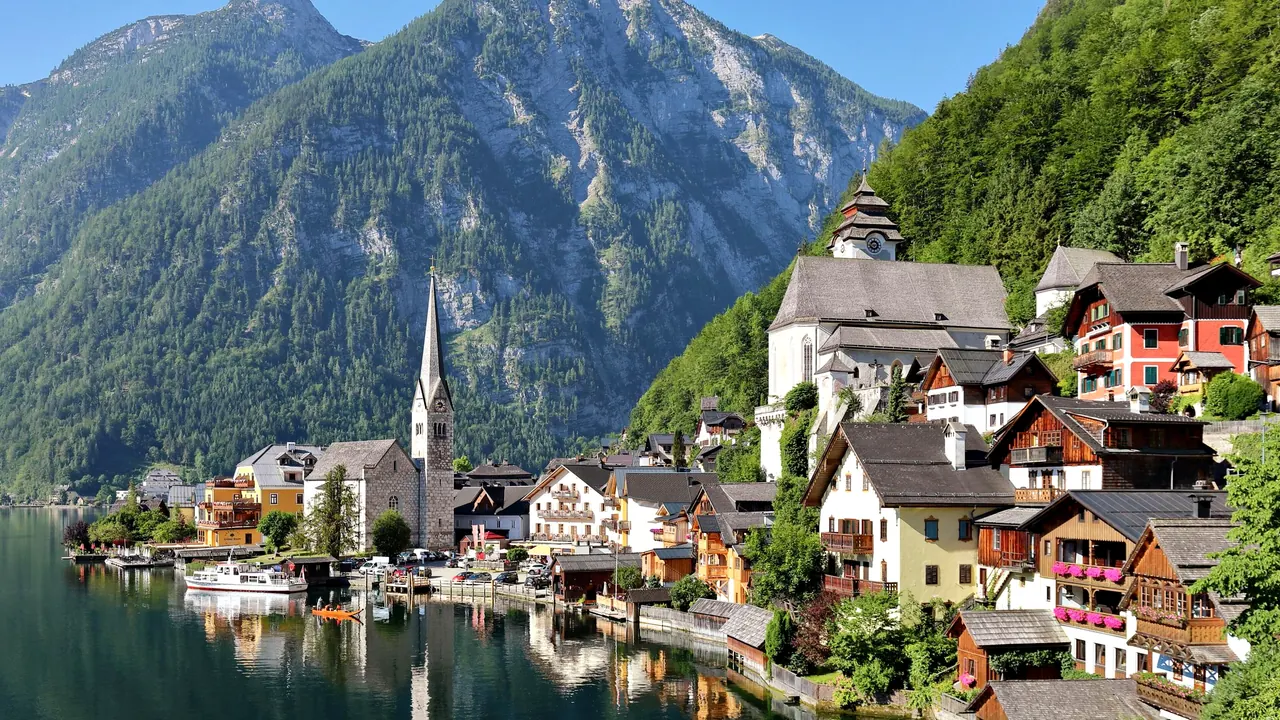
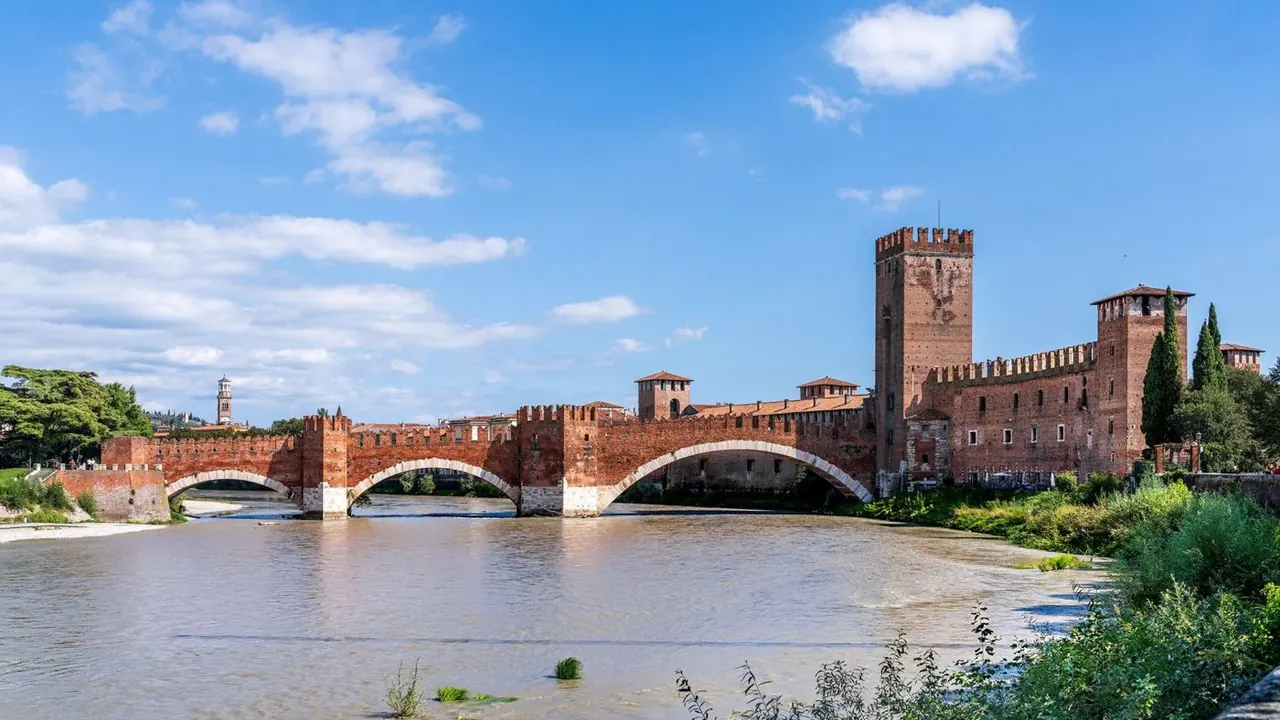
Photos: Hallstatt by C.Stadler/Bwag, CC BY-SA 4.0, cropped; Verona by NorbertNagel, CC BY-SA 4.0, cropped.
Hallstatt or Verona?
Our verdict in twelve categories, each scored against the same fixed benchmark cities, and the climate month by month, so you can choose for your trip.
Choose Hallstatt for
- nature and the outdoors
Hallstatt is for travellers who come for mountains and stillness. The Dachstein starts at the edge of the village, with ice caves, high plateau walks and the Gosausee within reach, and the evenings after the day visitors leave are quiet. It suits walkers, photographers and couples who want a few slow Alpine days. It is a poor choice for anyone who wants good food, a night out or a full sightseeing programme.
Choose Verona for
- live music and the arts
- food and drink
- culture and sights
Verona gives you more to do on almost every other front. It has a Roman and medieval centre you can walk in an afternoon, Veneto cooking with the Valpolicella wines, opera in the Arena on summer nights and fast trains to Venice, Padua and Vicenza. It makes the better base for a longer stay, for families and for anyone on a tighter budget, though its countryside is gentle hills and lake shore rather than high mountains.
Scoreboard
Twelve categories on one fixed scale from 0 to 100. The shaded stretch is the gap between the two.
Your match
Pick a travel style or drag the sliders, and both match scores follow your weighting.
Wins on nature and the outdoors with your weighting.
Wins on live music and the arts and food and drink with your weighting.
What matters to you?
Category by category
What the scores mean for a trip.
Beaches & swimming
Neither place has a coast, and in both a swim means a lake. Hallstatt's is the colder and less inviting one. Hallstätter See is deep and mountain-fed, and its bathing spots, the jetty lawn in the village and the lido at Obertraun, are good for a quick dip after a hike rather than an afternoon in the sun.
Verona's water is half an hour away at the southern end of Lake Garda, which warms up properly by midsummer. Its lidos, lawns and pebble coves at Lazise, Bardolino and Sirmione's limestone shelves make a full day of swimming possible, though it remains an outing from the city rather than a beach stay.
Food & drink
In Hallstatt you eat simply: schnitzel, goulash and the local char or whitefish in a guesthouse dining room, with the lake view doing much of the work. Kitchens close early, and for anything more you have to drive to Bad Ischl's patisseries.
Verona has a real regional table, with risotto made with Amarone, bigoli with duck, pastissada and bollito with pearà, served in plain osterie around Piazza delle Erbe and in Veronetta. Its greatest asset is the Valpolicella, Soave and Bardolino made on its doorstep. Avoid the tourist menus around the Arena.
Culture & sights
Hallstatt's history is deep but small in scale. It has seven thousand years of salt mining, the burial finds that named the Hallstatt culture, the painted skulls of the Beinhaus and the village itself as a UNESCO landscape, all seen in a day.
Verona has a whole city's worth of layers. There is the Roman Arena and theatre, the della Scala squares and tombs, San Zeno's bronze doors, the Gothic Sant'Anastasia and Scarpa's Castelvecchio museum. It fills two or three unhurried days and rewards an art-minded traveller far more.
Nightlife
Hallstatt has none to speak of. After dinner and a glass by the water, the village is silent, which is exactly why some people stay the night.
Verona's evenings are livelier without being wild. You get spritz and Valpolicella in Piazza delle Erbe, younger and later bars in Veronetta during term, and the crowd spilling out of the Arena near midnight in summer. Anyone wanting clubs will find little in the centre of either.
Nature & outdoors
This is Hallstatt's ground. The village sits in a glacial trough under the Dachstein. The Krippenstein cable car, the Giant Ice and Mammoth caves, the waterfalls of the Echerntal and the walk to the mirror-still Gosausee are all close by, with hut-to-hut routes in summer and freeride slopes in winter.
Verona's outdoors is gentler and further away. It offers vineyard walks and cycling in the Valpolicella, the Adige cycle route, beech woods on the Lessinia, and Monte Baldo's ridges and Garda's wind sports about an hour out. It is pleasant country, but not the high Alps.
Day trips
Hallstatt has a pretty circuit of Salzkammergut lake towns: the Kaiservilla at Bad Ischl, St Wolfgang's altarpiece, Gmunden's lake castle, and Salzburg as a long day. Without a car, buses and the lakeside railway make each trip a planning exercise.
Verona is one of the great bases in Italy. Vicenza's Palladio, Padua's Scrovegni Chapel, Mantua and Venice are all easy by train. Sirmione and the Garda harbours, Soave's walls and the Valpolicella cellars are closer still, so the variety and the ease are both on Verona's side.
Good for families
In Hallstatt, children love the salt mine, with its funicular, wooden slides and underground lake, and older ones enjoy the ice caves. Little else is built for them, and the steep, crowded single lane is hard work with a pushchair.
Verona does better. Gardaland, the water parks and Parco Natura Viva's safari are all within half an hour, the Arena catches young imaginations, and the flat pedestrian centre is easy going. The trade-offs are midsummer heat and needing a car to reach the parks.
Getting around
Both are places you walk once you are there. Hallstatt is a few minutes end to end but steep, with steps, and it is hard to reach: the station is across the lake and needs a boat, and the buses thin out outside summer.
Verona's centre is flat and compact, with Porta Nuova station about twenty minutes' walk from Piazza Bra. Its rail links to Venice, Milan and Garda are what make it easier to travel without a car. A car still helps for the Valpolicella and the Lessinia.
Shopping & style
Hallstatt has souvenir shops along one lane. Salt from the mine is the one buy worth making, alongside carved wood and schnapps.
Verona offers a proper afternoon on marble-paved Via Mazzini and the boutiques of Corso Porta Borsari, though it is smart rather than a fashion city. The best things to take home are Amarone, Garda olive oil and a pandoro.
Affordability
Hallstatt is the dearer place to sleep. It has few rooms and worldwide demand, prices are at Alpine-resort level, and the mine and cable car tickets add up, so budget travellers base themselves in Obertraun, Bad Goisern or Bad Ischl.
Verona is not cheap either, especially for central hotels on opera nights and during the trade fairs. But eating at student osterie and wine counters is fair value, walking costs nothing, and staying near the station or in Veronetta keeps a trip within reason.
Live music & performing arts
Hallstatt offers a brass band on feast days, the occasional church concert and no stage at all. Its nearest real options are Salzburg's season and Bad Ischl's summer operetta.
Verona has one of Europe's great summer nights out: grand Verdi or Puccini in the Roman Arena, with candles lit on the stone tiers. The Roman theatre's Shakespeare, dance and jazz festival adds to the summer, and the Teatro Filarmonico keeps a modest season going through the colder months.
Wellness & relaxation
Both rely on spa towns nearby rather than baths of their own, and they differ in mood. Around Hallstatt it is Alpine salt brine at Bad Ischl, Bad Aussee and Bad Goisern, and the calm of misty early mornings on the lake once the midday crowds have gone.
Verona's warm water is sulphurous and lakeside: the thermal pools at Sirmione, the spring-fed park near Lazise and the Roman-era springs at Caldiero. In the city itself, rest means long lunches, a riverside passeggiata and the terraces of the Giardino Giusti.
When should you go?
Pick your month. The climate figures are measured averages, not a forecast.
Hallstatt in July
Verona in July
Daytime high, °C
Rainfall in the month, mm
Where the figures come from
Hallstatt's temperatures are measured 56 km from the centre, at Salzburg.
Hallstatt has no rain gauge within 25 km of the centre, so its rainfall comes from a gridded climate dataset read at the city rather than from a gauge further away.
Temperature and rainfall are climate normals, averaged over the years shown. Hallstatt: 1991-2020 normals, Salzburg (55.5 km from centre). Verona: 1991-2020 normals, Verona / Villafranca (11.6 km from centre).
Hallstatt's summer is short and cool, and from May to August it is also the wettest stretch of the year, with July the peak at about 178mm. July and August reach around 25°C, warm enough for long walks and a quick cold swim, but showers and mist come with the scenery. September is the best compromise. The rain eases, and days of around 20°C still suit long hikes. From November to March the village is cold and grey, better for the Krippenstein's snow than for strolling the lanes.
Verona is warmer and drier all year, and sunnier for most of it. July and August reach about 30°C, which makes the stone piazzas tiring at midday, though the long, bright evenings are when the Arena operas play. April, May, September and early October are the most comfortable months for walking the city. Its rain is heaviest in autumn but never comes close to Hallstatt's summer totals. Winter is milder than in the Alps, though often dull.
Which traveller are you?
On an outdoors trip, Hallstatt is the clear choice. Real Alpine country starts at the edge of the village, so you can be on a high trail or a cable car early in the morning, summer or winter. Most of Verona's countryside is gentle and needs a drive to reach.
For a culture and arts trip, Verona wins easily. You can spend several days walking through two thousand years of a city, plan evenings around a stage, and reach other great art cities by train. Hallstatt's prehistory is fascinating, but it fills a single day.
On a food and nightlife trip, choose Verona. There, an evening has a shape: an aperitivo outdoors, then a long regional dinner with wine from the hills nearby, then later bars across the river. In Hallstatt, dinner is simple and the night ends with a walk by the dark lake.
Before you go
| Measure | Hallstatt | Verona |
|---|---|---|
| Official language | German, Austrian Sign Language | Italian |
| Currency | Euro (EUR) | Euro (EUR) |
| Sockets | CF230 V, 50 Hz | CFL230 V, 50 Hz |
| Driving side | Right | Right |
| Time zone | UTC+1, UTC+2 in summer | UTC+1, UTC+2 in summer |
| Emergency number | 112 | 112 |
| Elevation | 511 m | 59 m |
| Main airport | Salzburg Airport (SZG)55 km from centre64 non-stop destinations | Verona Villafranca Valerio Catullo Airport (VRN)10 km from centre96 non-stop destinations |
| Public holidays this year | 16 days | 13 days |
By the numbers
| Measure | Hallstatt | Verona |
|---|---|---|
| City population | 741 | 255,588 |
| People per km² | 12 | 1,285 |
| Museums within 10 km | 3 | 18 |
| UNESCO World Heritage sites within 50 km | 2 | 5 |
Where else could you go?
Every comparison below shares a destination with this one, so you can follow Hallstatt or Verona somewhere new.