Photos: Hallstatt by C.Stadler/Bwag, CC BY-SA 4.0, cropped; Zermatt by Roy Egloff, CC BY-SA 4.0, cropped.
Hallstatt or Zermatt?
Our verdict in twelve categories, each scored against the same fixed benchmark cities, and the climate month by month, so you can choose for your trip.
Choose Hallstatt for
- day trips
- beaches
- prices
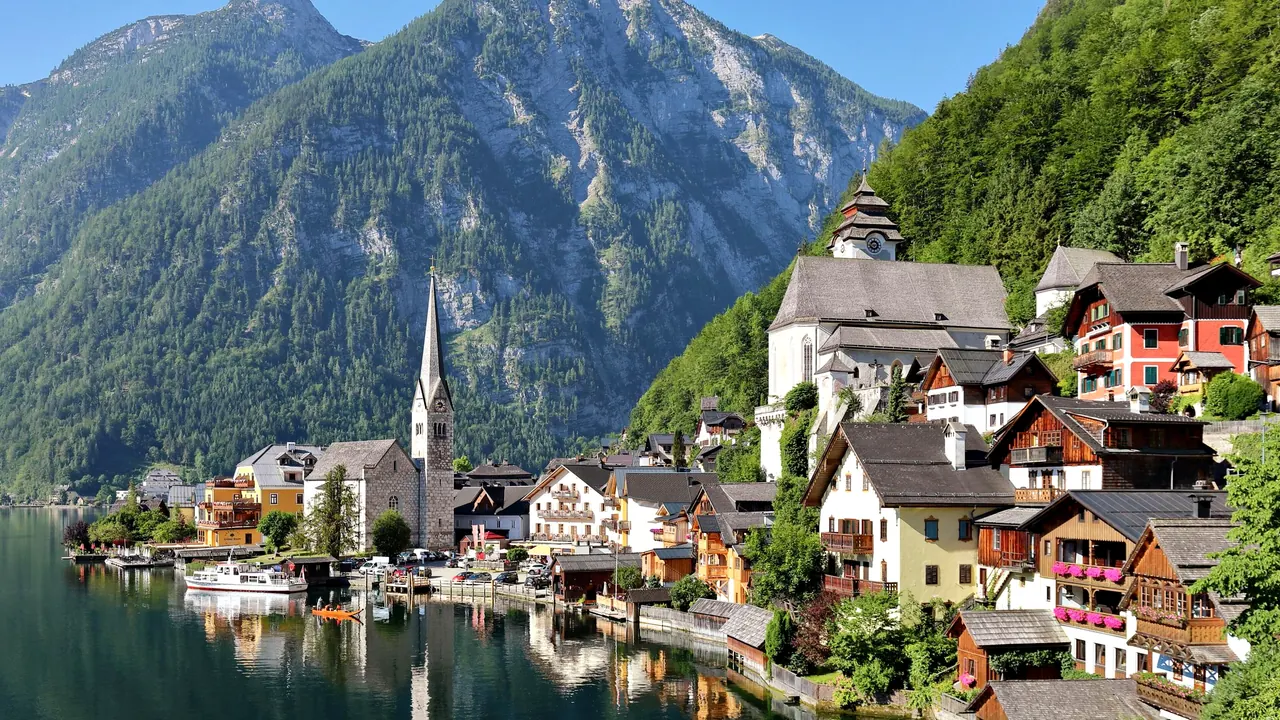
Hallstatt suits a traveller who wants mountains and history in one place, with water at the centre of it. The salt mine, the Iron Age story and the painted skulls of the Beinhaus give a day of real substance. The lake gives you a cold summer swim and a boat to row. The Salzkammergut towns and Salzburg are close enough for easy outings. It costs a lot, but less than Zermatt, and the evenings are completely quiet.
Choose Zermatt for
- nightlife
- food and drink
- getting around
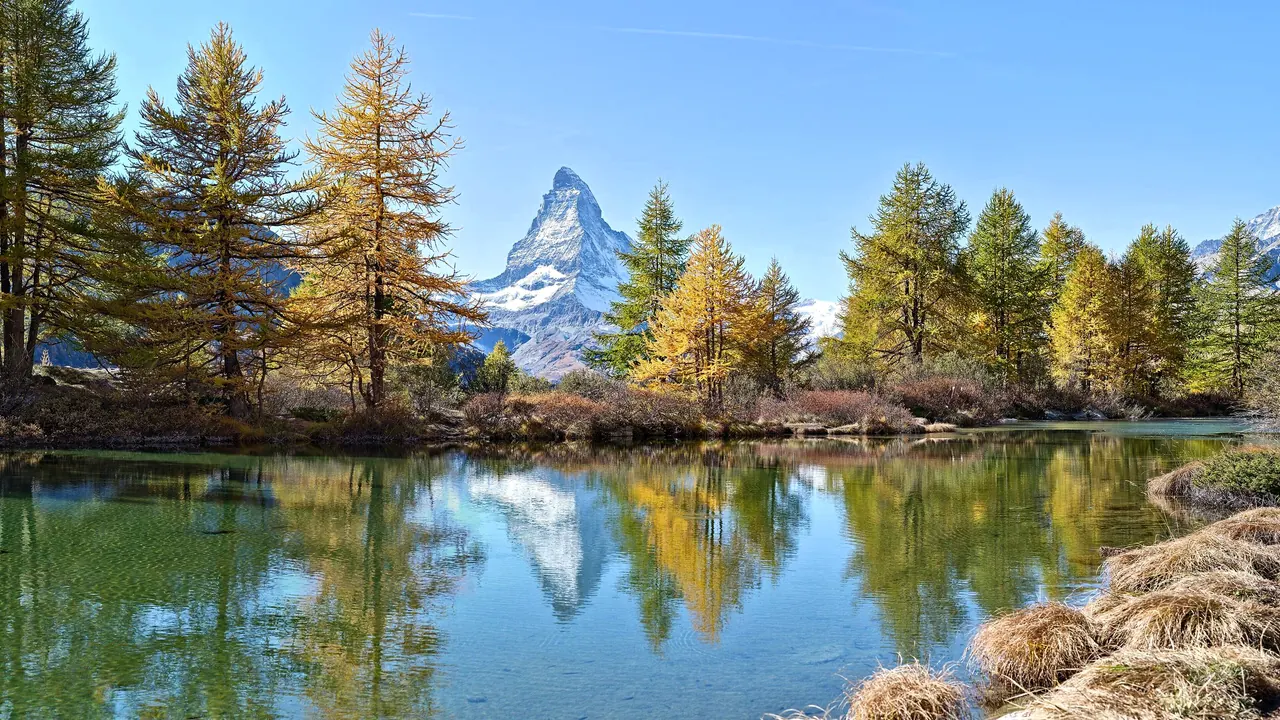
Choose Zermatt if the high Alps are the whole point. The Matterhorn rises above the village, lifts climb to glacier level, and the skiing runs across into Italy. Long lunches on chalet terraces and a winter après-ski scene give it more life after dark and at the table. You pay heavily for all of it, and you get little history and few towns within reach.
Scoreboard
Twelve categories on one fixed scale from 0 to 100. The shaded stretch is the gap between the two.
Your match
Pick a travel style or drag the sliders, and both match scores follow your weighting.
Too close to call, 1 point apart
Wins on day trips and beaches with your weighting.
Wins on nightlife and food and drink with your weighting.
What matters to you?
Category by category
What the scores mean for a trip.
Beaches & swimming
Neither is a place for a beach, but Hallstatt at least gives you somewhere to swim. Hallstätter See has a bathing lawn and jetty at the north end of the village and a lido at Obertraun. In high summer the water is cold but bearable for a bracing dip after a hike.
Zermatt has no bathing lake at all. Its mountain tarns are too cold to swim in even in August, so a swim there means a hotel pool.
Food & drink
Zermatt eats noticeably better. Its best meals are on the mountain, at chalets in the hamlets around Findeln, Furi and Zum See, where skiers and walkers settle in for long lunches. Raclette, air-dried beef and Valais wines such as Petite Arvine give the cooking a clear regional character, and the village also has a few ambitious fine-dining kitchens.
Hallstatt has a handful of guesthouse dining rooms serving schnitzel and goulash. The one local speciality is char or whitefish from the lake. Kitchens can close early, and for coffee and cake of real quality you go to the old patisseries of Bad Ischl.
Culture & sights
Hallstatt has far more history. People have mined salt in the mountain for millennia, and the Iron Age finds from the burial ground named a whole period of early European history. The salt mine, the Museum Hallstatt and the painted skulls in the Beinhaus fill a rich day in a village that is itself a UNESCO landscape.
Zermatt's heritage is almost all about mountaineering. The underground Matterhorn Museum tells the story of the 1865 first ascent, the cemetery holds the graves of climbers, and the old larch barns of the Hinterdorf stand on their stone slabs. Together they make a good morning.
Nightlife
Neither village is built for going out, but there is still a real gap between them. Hallstatt has nothing at all, while Zermatt has a scene for part of the year. Once the tour groups have gone, Hallstatt simply goes silent, and for many overnight guests that stillness on the water is the reason to stay.
Zermatt's nights depend on the snow. In winter, après-ski starts in the afternoon at the bars on the last runs into the village. At peak weekends a few main-street bars and small clubs carry on late, cheerful and pricey rather than varied. In summer the climbers and hikers go to bed early for dawn starts, and the village is nearly as quiet as Hallstatt.
Nature & outdoors
Both sit in magnificent Alpine country, and Zermatt is the more dramatic of the two. The Matterhorn and a ring of four-thousand-metre peaks rise around the village. Lifts reach glacier level at over 3,800m, there is summer skiing on the glacier, and guides take climbers up the big summits.
Hallstatt's scenery is lower, but it has more variety. There is a deep lake for rowing and paddling, the Dachstein ice caves, the Five Fingers platform on the Krippenstein, and the walk to the Gosausee. It suits a mix of water and hill days rather than days spent at high altitude.
Day trips
Hallstatt is much better placed for days out. It sits in the middle of the Salzkammergut, with Bad Ischl and its Kaiservilla about half an hour away, St Wolfgang's altarpiece and Gmunden's lake castle further on, and Salzburg as a long but rewarding day. A car makes it all easier.
From Zermatt, every outing starts with a long train ride down the valley. Sion, with its castle hills and vineyards, is the best of them, and Brig has the Stockalper Palace. Most visitors spend their spare days in the mountains instead.
Good for families
The two are about equal for families, but for different reasons. Hallstatt has a few memorable outings: the salt mine with its wooden miners' slides, the ice caves and boats on the lake. The village itself is a steep, narrow lane that is crowded at midday and hard with a pushchair, so families usually stay in Obertraun.
Zermatt works better as a base. Its car-free streets are safe, the ski school and Sunnegga nursery slopes are close by, and there are marmots to spot. However, rainy days are hard to fill, and the thin air at the highest viewpoints can be too much for small children.
Getting around
Both centres are free of cars and easy to cover on foot, but Zermatt connects far better. Its cog railway, underground funicular and gondolas all start within walking distance of the centre, electric taxis cover the outer stations, and the train ties smoothly into the Swiss rail network.
Hallstatt's railway station is on the far shore, so you cross the lake by boat to reach the village. The buses to Obertraun and Bad Ischl are limited, particularly outside summer, which is why many visitors bring a car.
Shopping & style
Hallstatt's shopping is one lane of souvenir shops. Salt from the mine above the village, sold in bags, grinders and bath mixes, is the one buy you won't find elsewhere.
Zermatt's main street, running from the station towards the church, gives you more to look at. It has Swiss watch and jewellery boutiques aimed at wealthy skiers, and ski and mountaineering outfitters good enough to equip a climb. Apart from the gear, there is no market and few independent shops to browse.
Affordability
Both are expensive, but Hallstatt is noticeably easier to manage. Its rooms and meals are at Alpine resort level, and staying in Obertraun, Bad Goisern or Bad Ischl cuts the cost a lot.
Zermatt is among the dearest places in the Alps. Even plain hotels charge heavily in season, and the lifts every visitor relies on add up fast. Self-catering and a bed down the valley in Täsch help, but only so far.
Live music & performing arts
Zermatt has a little more live music in the village itself. In spring, Zermatt Unplugged brings acoustic sets to tents and mountain stages, and a chamber music festival in late summer fills the church with serious classical players.
Hallstatt has a brass band on feast days and the odd church concert. For more, you go to the operetta season at Bad Ischl or to concerts in Salzburg.
Wellness & relaxation
The two are about equal for a relaxing stay, but the kind of rest differs. In Zermatt it happens inside the hotels, which have excellent spas with mountain views, and a few of them sell day passes. The car-free quiet adds to the calm, but the mood in peak weeks is active.
Hallstatt has little spa culture of its own, but it sits in an old bathing region, with the brine baths of Bad Ischl and Bad Aussee close by. Its calm comes at the edges of the day, with misty mornings and evenings by the lake.
When should you go?
Pick your month. The climate figures are measured averages, not a forecast.
Hallstatt in July
Zermatt in July
Daytime high, °C
Rainfall in the month, mm
Where the figures come from
Hallstatt's temperatures are measured 56 km from the centre, at Salzburg.
Hallstatt has no rain gauge within 25 km of the centre, so its rainfall comes from a gridded climate dataset read at the city rather than from a gauge further away.
Zermatt has no weather station within reach, so its figures come from a gridded climate model rather than a measured record, and read a broad area rather than the city itself.
Temperature and rainfall are climate normals, averaged over the years shown. Hallstatt: 1991-2020 normals, Salzburg (55.5 km from centre). Zermatt: 1991-2020 normals, TerraClimate 4 km grid at the town, no weather station within 90 km.
Hallstatt has a proper summer. Highs reach about 25°C in July and August, warm enough for a quick swim in the lake, and these are also the sunniest months. They are the wettest months too, with around 178mm of rain in July, so expect showers and mist. May to September is the main season. April and October bring cooler, drier days that are good for walking the lanes and the lower trails. In winter the days stay just above freezing, the light is short and the village is at its quietest.
Zermatt sits much higher and stays cool even in midsummer. Village highs only reach about 14°C in July and August, which is good hiking weather but never beach weather. From December to March the days stay below freezing, around -2°C, and that is the ski season. Rain and snow are spread fairly evenly through the year. November is the wettest month at about 130mm, and it falls between the two seasons, when little is open.
Which traveller are you?
On a culture and arts trip, Hallstatt is the better choice. It has seven thousand years of salt mining, an Iron Age burial ground that gave its name to a whole culture, and the Beinhaus. Bad Ischl and Salzburg are both close enough for a day out.
For a food and nightlife trip, Zermatt is ahead. It has chalet lunches above Findeln and Furi, Valais wines and raclette, and lively après-ski bars in winter. In Hallstatt, the evening ends with dinner and a walk by the lake.
Skiers should choose Zermatt. Its lift-served terrain is high, it links across the border into Italy, and the glacier keeps some runs open in summer. Hallstatt has freeride on the Krippenstein and pistes at Dachstein West, but on a much smaller scale.
Before you go
| Measure | Hallstatt | Zermatt |
|---|---|---|
| Official language | German, Austrian Sign Language | French, German, Italian, Romansh |
| Currency | Euro (EUR) | Swiss Franc (CHF) |
| Sockets | CF230 V, 50 Hz | CJ230 V, 50 Hz |
| Driving side | Right | Right |
| Time zone | UTC+1, UTC+2 in summer | UTC+1, UTC+2 in summer |
| Emergency number | 112 | 112 |
| Elevation | 511 m | 1,624 m |
| Main airport | Salzburg Airport (SZG)55 km from centre64 non-stop destinations | Geneva International Airport (GVA)128 km from centre150 non-stop destinations |
| Public holidays this year | 16 days | 9 days |
By the numbers
| Measure | Hallstatt | Zermatt |
|---|---|---|
| City population | 741 | 6,023 |
| People per km² | 12 | 25 |
| Museums within 10 km | 3 | 2 |
| UNESCO World Heritage sites within 50 km | 2 | 2 |
Where else could you go?
Every comparison below shares a destination with this one, so you can follow Hallstatt or Zermatt somewhere new.
- Salzburgvs Hallstatt
- Chamonixvs Zermatt
- Interlakenvs Zermatt
- Luganovs Zermatt
- Lausannevs Zermatt
- Turinvs Zermatt