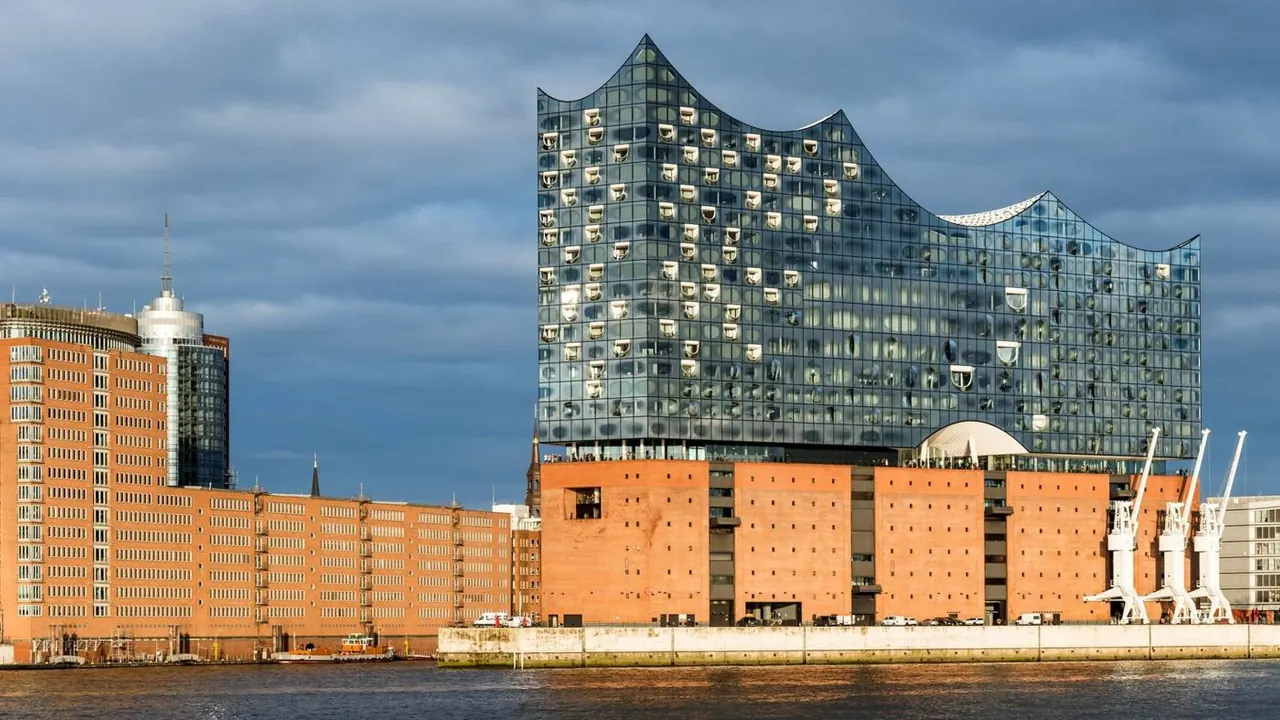
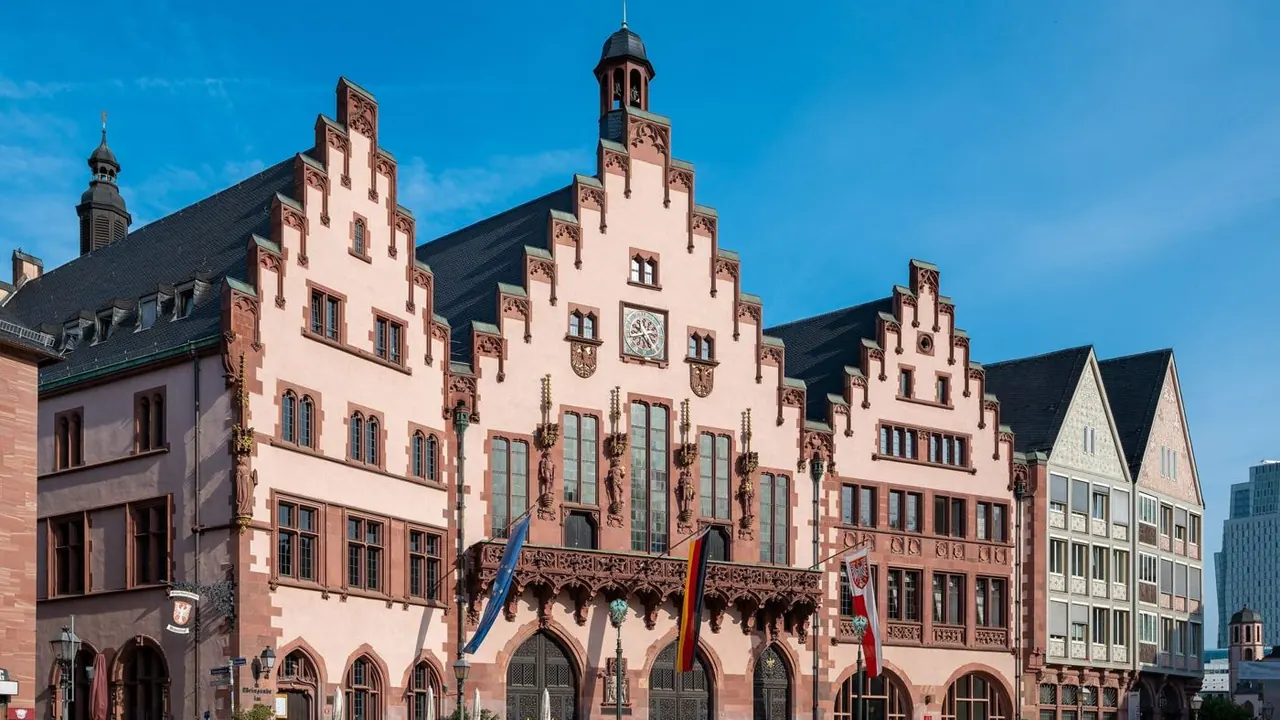
Photos: Hamburg by Wolfgang Weiser, Pexels License; Frankfurt by Thomas Wolf, CC BY-SA 3.0 DE, cropped.
Hamburg or Frankfurt?
Our verdict in twelve categories, each scored against the same fixed benchmark cities, and the climate month by month, so you can choose for your trip.
Choose Hamburg for
- nightlife
- beaches
- families
Pick Hamburg if the evenings matter as much as the days. The Reeperbahn and the Schanzenviertel stay out far later than anything in Frankfurt, and the Elbphilharmonie, the State Opera and the musical theatres give it the stronger stage. It is also the easier city with children, with Miniatur Wunderland, Hagenbeck and the harbour ferries, as long as you can live with grey skies and wind off the water.
Choose Frankfurt for
- day trips
- wellness
- nature and the outdoors
Frankfurt suits the traveller who wants a base more than a destination. Fast trains put Heidelberg, Cologne and the castle-lined Rhine Gorge within easy reach, and the Taunus hills begin at the edge of the suburbs. Spa towns such as Wiesbaden are close by. The Museumsufer and the rebuilt Römer fill the days you stay in town, and the summers are a little warmer and sunnier.
Scoreboard
Twelve categories on one fixed scale from 0 to 100. The shaded stretch is the gap between the two.
Your match
Pick a travel style or drag the sliders, and both match scores follow your weighting.
Wins on nightlife and beaches with your weighting.
Wins on day trips and wellness with your weighting.
What matters to you?
Category by category
What the scores mean for a trip.
Beaches & swimming
Neither city is a beach destination, but Hamburg at least has sand. Its Elbe beaches at Oevelgoenne and Blankenese are good for watching container ships at sunset, though currents rule out swimming. The Baltic resorts of Travemuende and Timmendorfer Strand are about an hour away.
From Frankfurt the sea is a full day's journey. Summer swimming means outdoor pools or forest lakes such as the Langener Waldsee.
Food & drink
The two eat equally well, but in different ways. Frankfurt's food centres on the apple-wine taverns of Sachsenhausen, with tart Apfelwein, Grüne Soße and Handkäs at long shared tables, and the Kleinmarkthalle for regional produce.
Hamburg eats like a harbour town. You get fish rolls on the Landungsbruecken, Labskaus and plaice, Franzbroetchen at breakfast and a real coffee-roasting culture, though dining out costs a little more.
Culture & sights
Frankfurt's sights are mostly indoors and Hamburg's mostly outdoors. Frankfurt is a museum city: more than a dozen institutions line the Museumsufer, led by the Städel. The rebuilt Römer, the cathedral and Goethe's birthplace sit beneath a skyline of towers like no other in Germany.
In Hamburg the cityscape itself is the main sight. The UNESCO-listed Speicherstadt warehouses and the Chilehaus are joined by the Elbphilharmonie plaza, and the Kunsthalle's Caspar David Friedrich paintings are the cultural high point.
Nightlife
Hamburg is far stronger at night. The Reeperbahn draws crowds every weekend, bars keep going until dawn, and each district has its own crowd, from the alternative Schanzenviertel to the smarter bars around the Alster.
Frankfurt is more selective. Its techno and house clubs carry a real musical pedigree, and the Bahnhofsviertel has character, but the city is a working one and only comes alive on Friday and Saturday.
Nature & outdoors
Frankfurt has the slight edge, mainly because it has hills. The beech forests and Roman frontier trails of the Taunus, rising to the Großer Feldberg at about 880m, are under an hour away. The Stadtwald and the Rheingau vineyard paths offer gentler walks.
Hamburg's outdoors is flat and built around water. You can sail or paddle on the Alster, cycle through the orchards of the Altes Land or follow the wooded Elbe bank at Blankenese, and Lueneburg Heath is about an hour south.
Day trips
Both are good bases, but Frankfurt is exceptional. Heidelberg and the Rhine Gorge are each about an hour away, high-speed trains reach Cologne cathedral in about the same time, and Mainz, Wiesbaden, Würzburg and Speyer could fill a week.
Hamburg's list is shorter but still strong. It centres on the brick Gothic towns of the north: Luebeck first, then Lueneburg, Bremen and Schwerin's lakeside castle, all on easy train routes.
Good for families
Hamburg gives children more to do. Miniatur Wunderland can fill a morning on its own, Hagenbeck shows its animals without bars, and a harbour day of ferries, museum ships and the old Elbe tunnel needs no planning. Rainy days are common, so plan indoor options for each day.
Frankfurt works well for a few days, with the Senckenberg dinosaurs, a central zoo and the Palmengarten glasshouses, but no single sight there matches Hamburg's best.
Getting around
Both are easy without a car, with walkable centres and integrated rail networks. Frankfurt's advantages are an airport about a quarter of an hour from the centre and a regional ticket network that reaches Mainz and the Taunus, though the zones take some learning. Hamburg puts harbour ferries on the same ticket and is flat enough to cycle, if you can cope with the wind.
Shopping & style
Hamburg is the better place to shop. Neuer Wall and the Jungfernstieg combine luxury labels with covered arcades that are useful in the rain, the Alsterhaus is an institution, and the Karolinenviertel adds vintage and streetwear.
Frankfurt is mainly practical. The Zeil has the department stores, Goethestraße the luxury houses and Berger Straße the independents, but the city has no shopping speciality of its own.
Affordability
Both are among Germany's more expensive cities, and in both the hotels are the main cost, especially in trade-fair weeks. In Frankfurt prices often drop at weekends and in summer when business travellers leave, and the cider taverns and Turkish grills are cheap places to eat. Hamburg's summer weekends stay expensive, but its day ticket includes the ferries, and the Elbphilharmonie plaza and the Speicherstadt cost nothing.
Live music & performing arts
Hamburg has the stronger stage by a clear margin. The Elbphilharmonie's main hall is one of the most celebrated anywhere, the State Opera and Hamburg Ballet have international standing, and long-running musicals add mass appeal. The St Pauli club circuit where the Beatles started out is still there.
Frankfurt has a highly respected, adventurous opera company, the Alte Oper for concerts and some old jazz cellars, but its season goes quiet in summer.
Wellness & relaxation
Frankfurt wins on its surroundings rather than the city itself. Wiesbaden's hot-spring Kaiser-Friedrich-Therme and the thermal baths of Bad Homburg are both easy to reach. Hamburg has no springs and relies on sauna culture, as at the art nouveau Holthusenbad, with slow Alster boat rides and the Japanese garden in Planten un Blomen as its calmer pleasures.
When should you go?
Pick your month. The climate figures are measured averages, not a forecast.
Hamburg in July
Frankfurt in July
Daytime high, °C
Rainfall in the month, mm
Temperature and rainfall are climate normals, averaged over the years shown. Hamburg: 1991-2020 normals, Hamburg Airport (9.3 km from centre). Frankfurt: 1991-2020 normals, Frankfurt Westend (2 km from centre).
Both cities are at their best from late May to September. Frankfurt runs warmer, with July and August highs around 26°C, more sunshine in most months from March to September, and fairly modest rain all year. That makes June to August the months for its lakes and riverbanks, and May and September the most comfortable for long days on foot. Hamburg peaks at about 23°C and is wetter in high summer, with July bringing around 82mm, so even its best weeks need a rain jacket.
November is already grey and short of sun in both. From December to February they are properly cold and dark, with highs of about 4°C to 7°C, and Hamburg's damp winter feels the harsher of the two. In spring Frankfurt warms up sooner, while Hamburg's April is its driest month and suits orchard cycling in the Altes Land.
Which traveller are you?
For a food and nightlife trip, Hamburg is the clear choice. Fish rolls on the piers and late bars in St Pauli and the Schanzenviertel lead into Reeperbahn nights with no fixed closing time, and those nights can end at the harbour at dawn. Frankfurt goes quiet much earlier.
On a family trip with children, Hamburg also comes out ahead. Miniatur Wunderland, Hagenbeck's open enclosures and its aquarium, and ferry rides past museum ships give you several full days. Frankfurt's Senckenberg dinosaurs and its zoo are good for a shorter stay.
On a relaxing and wellness trip, Frankfurt is the better base. Wiesbaden's Art Nouveau Kaiser-Friedrich-Therme, Bad Homburg's thermal baths and the old spa towns of Bad Nauheim and Bad Soden are all close by train. Hamburg has saunas but no hot springs.
Before you go
| Measure | Hamburg | Frankfurt |
|---|---|---|
| Official language | German | German |
| Currency | Euro (EUR) | Euro (EUR) |
| Sockets | CF230 V, 50 Hz | CF230 V, 50 Hz |
| Driving side | Right | Right |
| Time zone | UTC+1, UTC+2 in summer | UTC+1, UTC+2 in summer |
| Emergency number | 112 | 112 |
| Elevation | 6 m | 101 m |
| Main airport | Hamburg Helmut Schmidt Airport (HAM)9 km from centre120 non-stop destinations | Frankfurt Main Airport (FRA)13 km from centre281 non-stop destinations |
| Public holidays this year | 10 days | 10 days |
By the numbers
| Measure | Hamburg | Frankfurt |
|---|---|---|
| City population | 1,869,473 | 760,656 |
| People per km² | 2,476 | 3,063 |
| Museums within 10 km | 77 | 53 |
| UNESCO World Heritage sites within 50 km | 1 | 4 |
Where else could you go?
Every comparison below shares a destination with this one, so you can follow Hamburg or Frankfurt somewhere new.
- Heidelbergvs Frankfurt
- Stuttgartvs Frankfurt
- Colognevs Frankfurt
- Baden-Badenvs Frankfurt
- Dusseldorfvs Frankfurt
- Strasbourgvs Frankfurt