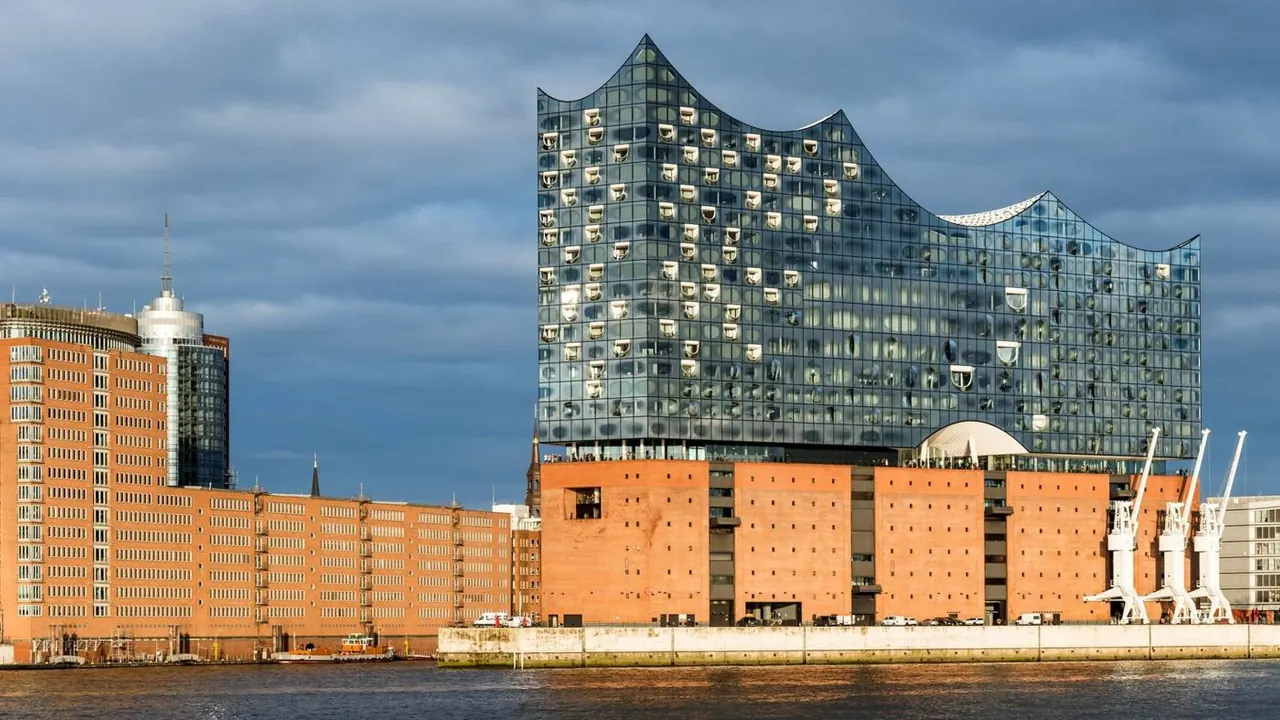
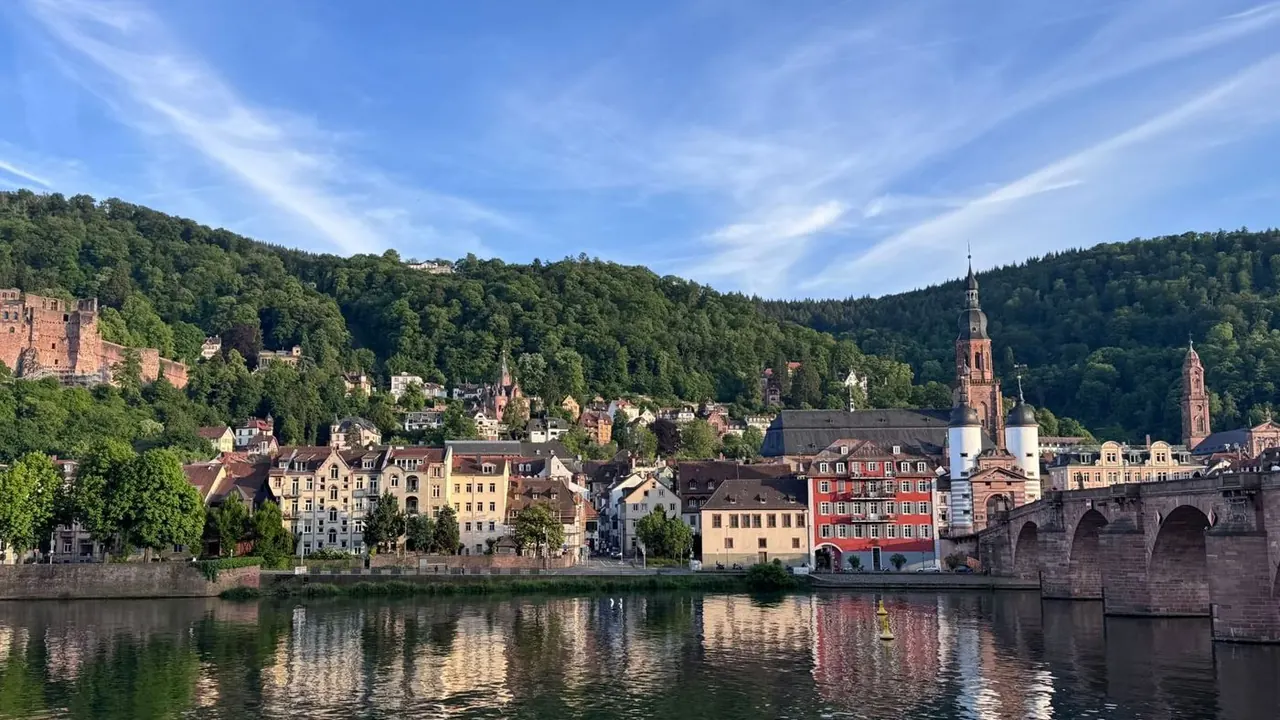
Photos: Hamburg by Wolfgang Weiser, Pexels License; Heidelberg by Kuanling Chen, Pexels License.
Hamburg or Heidelberg?
Our verdict in twelve categories, each scored against the same fixed benchmark cities, and the climate month by month, so you can choose for your trip.
Choose Hamburg for
- nightlife
- live music and the arts
- shopping
Hamburg is the choice for travellers who want a big, lively port city with plenty to fill the evenings. Its strengths are the ones a small town can't match: a world-class concert hall and opera, a late and rowdy night out in St Pauli, serious shopping streets, and a harbour that keeps children busy for days. Getting around is easy too, with trains and ferries on one ticket.
Choose Heidelberg for
- nature and the outdoors
- day trips
- prices
Pick Heidelberg if you want a smaller, prettier and greener trip. A castle ruin above one of Germany's best-preserved old towns, forest trails starting at the edge of the Altstadt and wine villages close by make for a slower kind of stay. It is also the better base for touring, with Romanesque cathedrals, palaces and Neckar castles all within easy reach.
Scoreboard
Twelve categories on one fixed scale from 0 to 100. The shaded stretch is the gap between the two.
Your match
Pick a travel style or drag the sliders, and both match scores follow your weighting.
Wins on nightlife and live music and the arts with your weighting.
Wins on nature and the outdoors and day trips with your weighting.
What matters to you?
Category by category
What the scores mean for a trip.
Beaches & swimming
Neither city is for a beach vacation, but Hamburg at least has some sand and a sea within reach. The Elbe beaches at Oevelgoenne are good for watching ships at sunset rather than swimming, and the Baltic resorts at Travemuende and Timmendorfer Strand are about an hour away for proper bathing in summer.
Heidelberg is several hours from any coast. On a hot day your options are the town's outdoor pools or the gravel-pit lakes on the Rhine plain, fine for an afternoon and no more.
Food & drink
Hamburg has the more varied eating, built around the port: fish rolls on the Landungsbruecken, Labskaus and eel soup, Franzbroetchen for breakfast and a strong coffee culture in Ottensen and the Schanzenviertel. Behind that there is a broad range of international places and a fine-dining tier.
Heidelberg's real draw is wine rather than cooking. Riesling and Pinot from the Bergstrasse and the Palatinate go with hearty Maultaschen, Schäufele and spring asparagus. The places on the Hauptstrasse are aimed at day-trippers, so the better meals are in Neuenheim and the village wine taverns, and the overall choice is that of a small city.
Culture & sights
These two are broadly level, but the experiences are quite different. Hamburg's sights are a merchant port: the UNESCO-listed Speicherstadt and Chilehaus, the Elbphilharmonie plaza above the harbour, and strong art at the Kunsthalle. Because the war destroyed much of the old city, you explore it district by district along the water rather than through one historic core.
Heidelberg gives you exactly that intact core. The red sandstone castle ruin stands above a baroque Altstadt and the Old Bridge, and Germany's oldest university left behind the Student Prison with its graffiti. It is compact and photogenic, and most visitors cover it in a day or two.
Nightlife
Hamburg is far ahead here. The Reeperbahn has dive bars, music clubs and cabaret with no fixed closing time, and nights often run until dawn at the harbour. Each district has its own mood, from the alternative pavement bars of the Schanzenviertel to the smarter bars around the Alster.
Heidelberg's evenings centre on the Untere Strasse, a single lane of small pubs, plus old student taverns with carved tables. It is lively in term time, but it goes quiet early on weeknights and when the students are away. For a real club night, people take the train to Mannheim or Frankfurt.
Nature & outdoors
Heidelberg has the better outdoors, because it has hills. The Odenwald forest starts at the edge of town, the Philosophers' Walk and the Königstuhl trails give long woodland walks with views, and the Neckar Valley cycle path runs past castles and villages. The Palatinate Forest, about an hour away, has sandstone crags.
Hamburg's outdoors is flat and built around water: sailing and paddling on the Alster, canoeing the northern canals, and cycling through the Altes Land orchards. Blankenese's wooded riverbank is as close as it gets to a climb.
Day trips
Both make good bases, but Heidelberg has the denser cluster of outings. Speyer's Romanesque cathedral and the Schwetzingen palace are half an hour away, Worms, Lorsch and Maulbronn are easy days out, and the Neckar castles and Palatinate wine villages add gentler options. Strasbourg is possible on a long day.
Hamburg's trips lead into the brick Gothic north. Luebeck is the standout, under an hour by train, and Lueneburg, Bremen, Schwerin and Wismar follow. In summer you can add the Baltic beaches, which Heidelberg cannot offer.
Good for families
Hamburg is the stronger family city. Miniatur Wunderland can fill half a day on its own, Tierpark Hagenbeck shows animals without bars, and a harbour day of ferries, museum ships and the old Elbe tunnel works for any age. The wide pavements are easy with a pram, though the frequent rain means you need indoor plans.
Heidelberg is small and safe, with the funicular, a fairy-tale park on the Königstuhl and a compact zoo. Its best family outing is the aircraft and space shuttle at the Technik Museum Speyer, a short trip out. The cobbled, sloping Altstadt is hard work with a pushchair.
Getting around
Hamburg has a full metro network and Heidelberg has one long walkable street. In Hamburg the centre, HafenCity and the Alster are within walking distance of each other. The U-Bahn and S-Bahn reach every district, and the airport is on the S-Bahn. The harbour ferries run on the same ticket and double as a sightseeing trip.
Heidelberg's sights sit along one strip by the river, but the main station is well west of it, so you will usually take a tram in. Cobbles and the steep climb to the castle slow you down on foot, though the funicular saves the hardest part. The regional fare system makes day trips simple.
Shopping & style
Hamburg is a proper shopping city, with luxury labels on Neuer Wall, the Alsterhaus by the water and covered arcades for rainy days. Vintage and streetwear in the Karolinenviertel and Schanzenviertel round it out. Tea, coffee and maritime goods make good things to take home.
Heidelberg's shopping is essentially the Hauptstrasse: chains at one end and souvenirs, beer steins and Studentenkuss chocolates at the other, with a few bookshops and boutiques in the side lanes. A bottle of Bergstrasse wine is the best buy, and for anything serious locals go to Mannheim or Frankfurt.
Affordability
Neither is a budget destination, and overall costs are similar, but the pressure points differ. In Hamburg, both hotels and restaurant meals are priced for a wealthy city. You save through the day ticket covering ferries and through free sights such as the Elbphilharmonie plaza and the Speicherstadt.
In Heidelberg the main expense is rooms, because there are few of them, and many visitors sleep in Mannheim and come in by train. Eating is cheaper thanks to the student cafés and simple taverns.
Live music & performing arts
Hamburg is one of Germany's great stages, and this is among the strongest reasons to choose it. The Elbphilharmonie and the Laeiszhalle carry full classical seasons, and the State Opera, the Hamburg Ballet and the Schauspielhaus are all major names. Long-running musicals and the St Pauli rock clubs where the Beatles started add a popular side.
Heidelberg has a full programme for a small town: a municipal theatre with opera and drama, the Heidelberger Frühling chamber music festival, and summer performances in the castle courtyard against the ruins. For a bigger opera house, though, you go to Mannheim.
Wellness & relaxation
The two are on a par, and neither has thermal springs in town. Hamburg's version is the sauna landscapes of its public baths, such as the art nouveau Holthusenbad, plus quiet hours on the Alster or in the Japanese garden.
Heidelberg gets its relaxation from just outside the town. Warm saline thermal pools in the Kraichgau are about half an hour away and Baden-Baden is about an hour, while evenings on the Neckar meadows and slow wine taverns make the town itself easy to slow down in.
When should you go?
Pick your month. The climate figures are measured averages, not a forecast.
Hamburg in July
Heidelberg in July
Daytime high, °C
Rainfall in the month, mm
Temperature and rainfall are climate normals, averaged over the years shown. Hamburg: 1991-2020 normals, Hamburg Airport (9.3 km from centre). Heidelberg: 1991-2020 normals, Heidelberg (4.5 km from centre).
Hamburg is at its best from late May to early September, when the days are long and bright and highs reach about 23°C. Summer is also its wettest stretch. July is the rainiest month at 82mm, so even in high season keep an indoor plan. From November to February the city is cold, grey and dark, with January highs near 4°C and very little sun. That is weather for indoor days, not long waterside walks.
Heidelberg warms up earlier and stays a little warmer than Hamburg in every month. April already reaches about 17°C, so the Philosophers' Walk and the Bergstrasse are good for walking from early spring. July and August highs around 26°C can make the steep castle climb hot in the middle of the day. It also gets more sun for most of the year, though May and October are about even between the two. Its January and February are drier than Hamburg's, but winter there is still cold and grey.
Which traveller are you?
On a food and nightlife trip, Hamburg is the clear pick. Fish rolls on the piers and the Sunday fish market lead into nights on the Reeperbahn and in the Schanzenviertel that often end at dawn. Heidelberg's student lanes quieten early outside term.
For an outdoors trip, Heidelberg suits better. Forest begins right above the old town, the funicular climbs the Königstuhl to trails that go on for hours, and the Neckar cycle path and Palatinate Forest add longer days. Hamburg's outdoors is mostly flat water and parks.
On a shopping trip, Hamburg wins easily. Luxury labels on Neuer Wall, covered arcades for wet days and independents in the Karolinenviertel give it a range far beyond Heidelberg, where the Hauptstrasse mixes chains with souvenirs and cuckoo clocks.
Before you go
| Measure | Hamburg | Heidelberg |
|---|---|---|
| Official language | German | German |
| Currency | Euro (EUR) | Euro (EUR) |
| Sockets | CF230 V, 50 Hz | CF230 V, 50 Hz |
| Driving side | Right | Right |
| Time zone | UTC+1, UTC+2 in summer | UTC+1, UTC+2 in summer |
| Emergency number | 112 | 112 |
| Elevation | 6 m | 114 m |
| Main airport | Hamburg Helmut Schmidt Airport (HAM)9 km from centre120 non-stop destinations | Frankfurt Main Airport (FRA)69 km from centre281 non-stop destinations |
| Public holidays this year | 10 days | 12 days |
By the numbers
| Measure | Hamburg | Heidelberg |
|---|---|---|
| City population | 1,869,473 | 156,092 |
| People per km² | 2,476 | 1,433 |
| Museums within 10 km | 77 | 17 |
| UNESCO World Heritage sites within 50 km | 1 | 4 |
Where else could you go?
Every comparison below shares a destination with this one, so you can follow Hamburg or Heidelberg somewhere new.