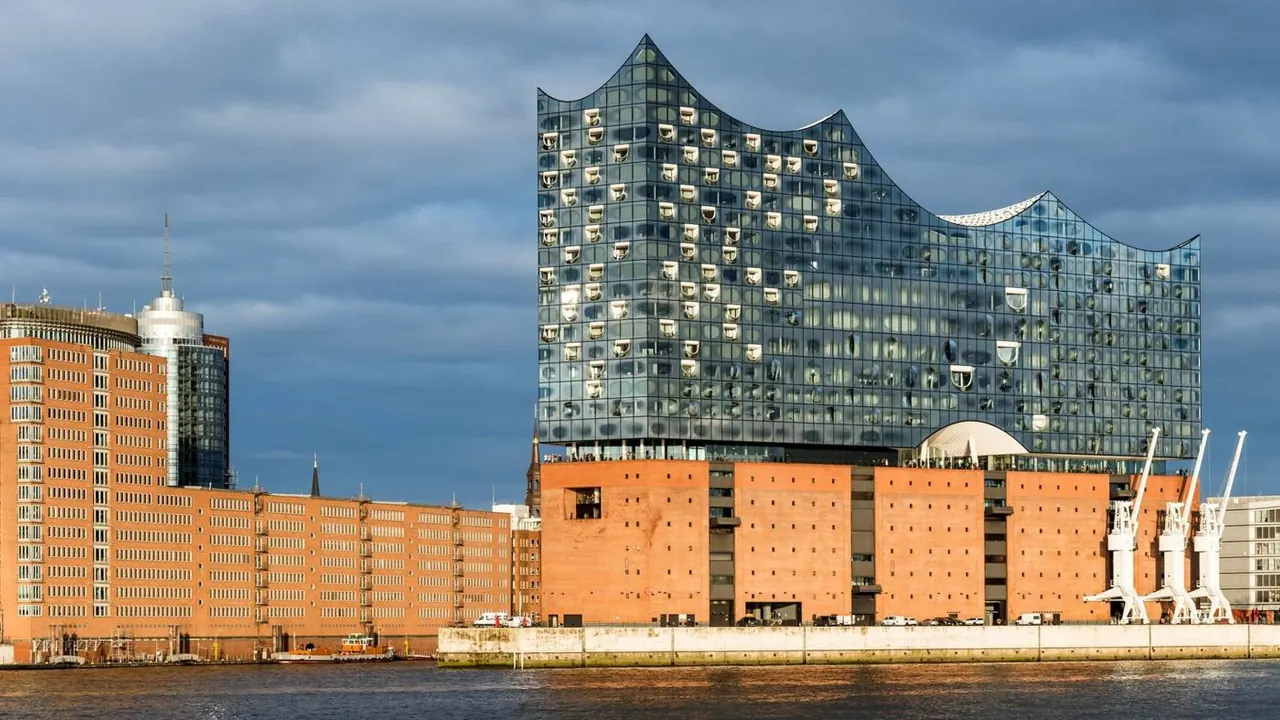
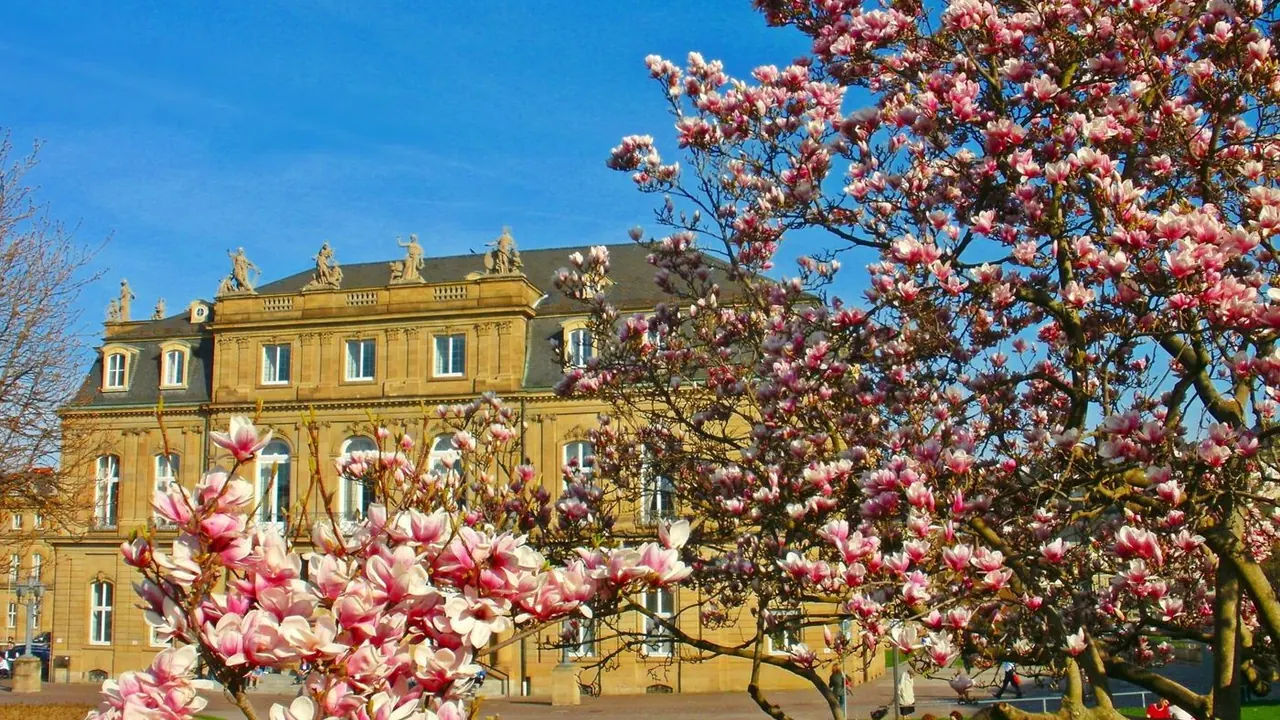
Photos: Hamburg by Wolfgang Weiser, Pexels License; Stuttgart by Baden de, CC BY 3.0, cropped.
Hamburg or Stuttgart?
Our verdict in twelve categories, each scored against the same fixed benchmark cities, and the climate month by month, so you can choose for your trip.
Choose Hamburg for
- nightlife
- beaches
- families
Hamburg suits travellers who want a big port city with a long night out at the end of the day. The harbour, the Speicherstadt warehouses and the Elbphilharmonie make up the sightseeing, St Pauli keeps going until dawn, and the flat, well-connected centre is easy for families with prams or anyone without a car. Choose it for concerts, late bars and a waterside city that changes from district to district.
Choose Stuttgart for
- wellness
- day trips
- nature and the outdoors
Stuttgart is the better pick for a slower trip built around landscape, wine and warm water. Vineyards and forest start at the edge of the centre, the mineral baths of Bad Cannstatt are a real reason to come, and Heidelberg, Tübingen and the Swabian Jura are all close enough for easy day trips. It suits walkers, wine drinkers and people who would rather have quiet evenings than late ones.
Scoreboard
Twelve categories on one fixed scale from 0 to 100. The shaded stretch is the gap between the two.
Your match
Pick a travel style or drag the sliders, and both match scores follow your weighting.
Wins on nightlife and beaches with your weighting.
Wins on wellness and day trips with your weighting.
What matters to you?
Category by category
What the scores mean for a trip.
Beaches & swimming
Neither is a beach destination, but Hamburg at least has sand. The Elbe beaches at Oevelgoenne and Blankenese are good for watching container ships at sunset, though the currents make the river unsafe for swimming. Proper bathing on the Baltic at Travemuende or Timmendorfer Strand, with its wicker beach chairs, is about an hour away.
Stuttgart has none of this. The Neckar is a working river and Max-Eyth-See is for boating rather than swimming, so summer swimming means the outdoor pools, some fed by mineral springs. The nearest open water worth the trip is Lake Constance, more than two hours south.
Food & drink
Both cities eat well, in different ways. Hamburg's food comes from the port: fish rolls eaten on the piers, Labskaus and plaice, Franzbroetchen with coffee from a long roasting tradition, plus a wider spread of Portuguese and Turkish cooking near the harbour.
Stuttgart's strength is Swabian home cooking and its own wine. Maultaschen and Käsespätzle come with Trollinger from vineyards inside the city limits, and the seasonal Besen taverns in growers' houses have no Hamburg equivalent. Cheap street food and international variety are thinner here.
Culture & sights
These two are evenly matched, and both lost much of their old centres in the war, but the sights could hardly be more different. Hamburg's culture is maritime and mercantile: the UNESCO-listed Speicherstadt and Chilehaus, St Michael's, and the Kunsthalle's Caspar David Friedrich paintings, best taken in on waterside walks between districts.
Stuttgart is the city of engineering and modern design. The Mercedes-Benz and Porsche museums are the main draws, alongside the Le Corbusier houses on the Weissenhof Estate and the Staatsgalerie's postmodern wing, with the palaces on Schlossplatz providing the older heritage.
Nightlife
Here the gap is wide. Hamburg's nights are among the longest in Germany: neon, cabaret and music clubs on the Reeperbahn, bunker clubs and harbour-side venues, and bars that stay open until the crowd goes home at dawn. Each district has its own style, from scruffy Schanzenviertel to the smarter bars by the Alster.
Stuttgart is pleasant for an evening out but tame by comparison. The bars along Theodor-Heuss-Strasse fill at weekends and the basement clubs serve a small electronic scene, but on weekdays the city winds down early. Its big nights are seasonal, in the beer tents of the Cannstatter Volksfest.
Nature & outdoors
Stuttgart has the better countryside, and it starts at the edge of town. The city sits in a basin of vineyards and forest, with deer in the Rotwildpark and wine trails above the Neckar, and both the limestone escarpments and caves of the Swabian Jura and the fir-covered ridges of the northern Black Forest are about an hour away.
Hamburg is flat, and its outdoors is mostly on the water: sailing and paddling on the Alster, canoeing the northern canals and walking the Elbe path to Blankenese. Cycling through the Altes Land orchards in blossom or out on Lueneburg Heath are lovely, but they are gentle outings rather than walks with real hills.
Day trips
Both are good bases, but Stuttgart has the stronger list. Heidelberg is about forty minutes by fast train, Tübingen and Esslingen are close, and the Ludwigsburg palace, Hohenzollern Castle, Maulbronn and Ulm Minster add plenty of variety. Strasbourg is even possible for a long day across the border.
From Hamburg the outings follow the brick Gothic towns of the old Hanseatic north. Luebeck is the standout, under an hour away, with Lueneburg, Bremen and Schwerin's lake castle close behind. In summer you can add a day on the Baltic.
Good for families
Hamburg has the edge with children. Miniatur Wunderland can fill hours on a rainy day, Hagenbeck shows animals across moats instead of bars, and a harbour day of ferries, museum ships and the old Elbe tunnel costs very little effort. Two theme parks are about an hour away, and the flat, wide pavements suit prams.
Stuttgart is safe and well organised too. Wilhelma's zoo and gardens among Moorish pavilions are a full day out, and the Killesberg railway and the rack railway are small treats. The hills make pushchairs harder work, though, and there is no big theme park nearby.
Getting around
Hamburg is the easier city to get around. It is flat, the centre, HafenCity and the Alster are an easy walk from each other, and the harbour ferries on the transit ticket double as sightseeing boats. Only Blankenese and Hagenbeck call for a longer ride.
Stuttgart's centre is just as walkable, but beyond Königstrasse and Schlossplatz the city climbs steeply. The Stadtbahn, a rack railway and a funicular handle the slopes, and the public stairways called Stäffele are the shortcuts on foot, so expect more climbing.
Shopping & style
Hamburg offers more variety. Luxury labels line Neuer Wall, covered arcades connect the streets around the Jungfernstieg on wet days, and the Alsterhaus sits right on the water. The Karolinenviertel and Schanzenviertel add vintage and streetwear, and the old trading houses sell coffee and tea worth taking home.
Stuttgart is more focused on brands. Königstrasse is a long run of high-street chains, Breuninger covers designer fashion, and many visitors make the half-hour trip to the outlet village at Metzingen. Browsers will find fewer independent streets than in Hamburg.
Affordability
Trade fairs push hotel rooms up in both cities, but the pattern around them differs. Hamburg also gets dearer on summer weekends and during its festivals, and meals in the centre and HafenCity are priced for a wealthy city. The savings are the free things, such as the Elbphilharmonie plaza, the Speicherstadt and the riverside walks, along with fish rolls in Altona and St Pauli and a day ticket that includes the harbour ferries.
Stuttgart's hotels depend on business travel, so rooms get noticeably cheaper at weekends and in the quieter months, which is the opposite of Hamburg's summer peak. Smart restaurants and central hotels are where the money goes, while Swabian taverns and beer gardens serve generous portions for what they cost.
Live music & performing arts
Both are serious stage cities, and Hamburg comes out a little ahead. The Elbphilharmonie gives it a concert hall famous worldwide, the Laeiszhalle, the State Opera and the Hamburg Ballet add to it, and it is Germany's capital for musicals. The Beatles' old St Pauli club circuit still supports dense rock and indie, with the Reeperbahn Festival every autumn.
Stuttgart's strongest card is its ballet, one of Europe's most respected companies since John Cranko's time, and tickets for it are the hardest to get. The opera is known for daring productions, and the Liederhalle's Bach tradition and a well-known jazz club round it out.
Wellness & relaxation
Stuttgart is the better choice for relaxing. Its springs at Bad Cannstatt and Berg are some of the most productive mineral sources in Europe, and baths such as the Mineralbad Leuze let you soak in warm, naturally carbonated water both indoors and outdoors, with saunas on top.
Hamburg has no springs, so it relies on the German sauna habit, at the art nouveau Holthusenbad and the larger bath complexes. Its calmer moments are a boat around the Alster or the Japanese garden in Planten un Blomen.
When should you go?
Pick your month. The climate figures are measured averages, not a forecast.
Hamburg in July
Stuttgart in July
Daytime high, °C
Rainfall in the month, mm
Temperature and rainfall are climate normals, averaged over the years shown. Hamburg: 1991-2020 normals, Hamburg Airport (9.3 km from centre). Stuttgart: 1991-2020 normals, Stuttgart / Neckartal (2.8 km from centre).
Both cities are at their best from May to September, but Stuttgart runs a few degrees warmer throughout the year, with summer highs around 26°C against Hamburg's 23°C. Neither gets too hot for walking the streets. Hamburg's summer is mild and often showery, and its wettest stretch falls in July and August, so a Baltic beach day needs a sunny forecast. Stuttgart's rain is also concentrated in early summer, from May to July, while its late summer and early autumn are drier and sunny, which suits vineyard walks and the Jura in autumn colour.
Winter is where the two differ most. Hamburg is grey, damp and dark, with about 67mm of rain in January and very little sunshine, so indoor plans matter. Stuttgart's winters are about as cold but much drier, with roughly half that rain, and they get noticeably more sun, which makes a winter afternoon in the outdoor mineral pools more appealing.
Which traveller are you?
For a food and nightlife trip, Hamburg is the clear choice. The two cities eat about equally well, but the Reeperbahn, the pavement bars of the Schanzenviertel and bars with no fixed closing time give Hamburg nights that Stuttgart, which goes quiet early on weekdays, cannot match.
On a relaxing and wellness trip, Stuttgart wins. Its naturally carbonated mineral springs feed indoor and outdoor pools at Bad Cannstatt and Leuze, and you can walk from there into quiet vineyards. Hamburg offers saunas and walks around the Alster, but nothing comparable.
For an outdoors trip, Stuttgart has more to offer. Wooded hills and wine trails start on the edge of the city, and the cliff-top paths of the Swabian Jura and the Black Forest ridges are about an hour away. Hamburg's outdoors means paddling and flat cycling.
Before you go
| Measure | Hamburg | Stuttgart |
|---|---|---|
| Official language | German | German |
| Currency | Euro (EUR) | Euro (EUR) |
| Sockets | CF230 V, 50 Hz | CF230 V, 50 Hz |
| Driving side | Right | Right |
| Time zone | UTC+1, UTC+2 in summer | UTC+1, UTC+2 in summer |
| Emergency number | 112 | 112 |
| Elevation | 6 m | 245 m |
| Main airport | Hamburg Helmut Schmidt Airport (HAM)9 km from centre120 non-stop destinations | Stuttgart Airport (STR)10 km from centre124 non-stop destinations |
| Public holidays this year | 10 days | 12 days |
By the numbers
| Measure | Hamburg | Stuttgart |
|---|---|---|
| City population | 1,869,473 | 609,365 |
| People per km² | 2,476 | 2,938 |
| Museums within 10 km | 77 | 42 |
| UNESCO World Heritage sites within 50 km | 1 | 3 |
Where else could you go?
Every comparison below shares a destination with this one, so you can follow Hamburg or Stuttgart somewhere new.