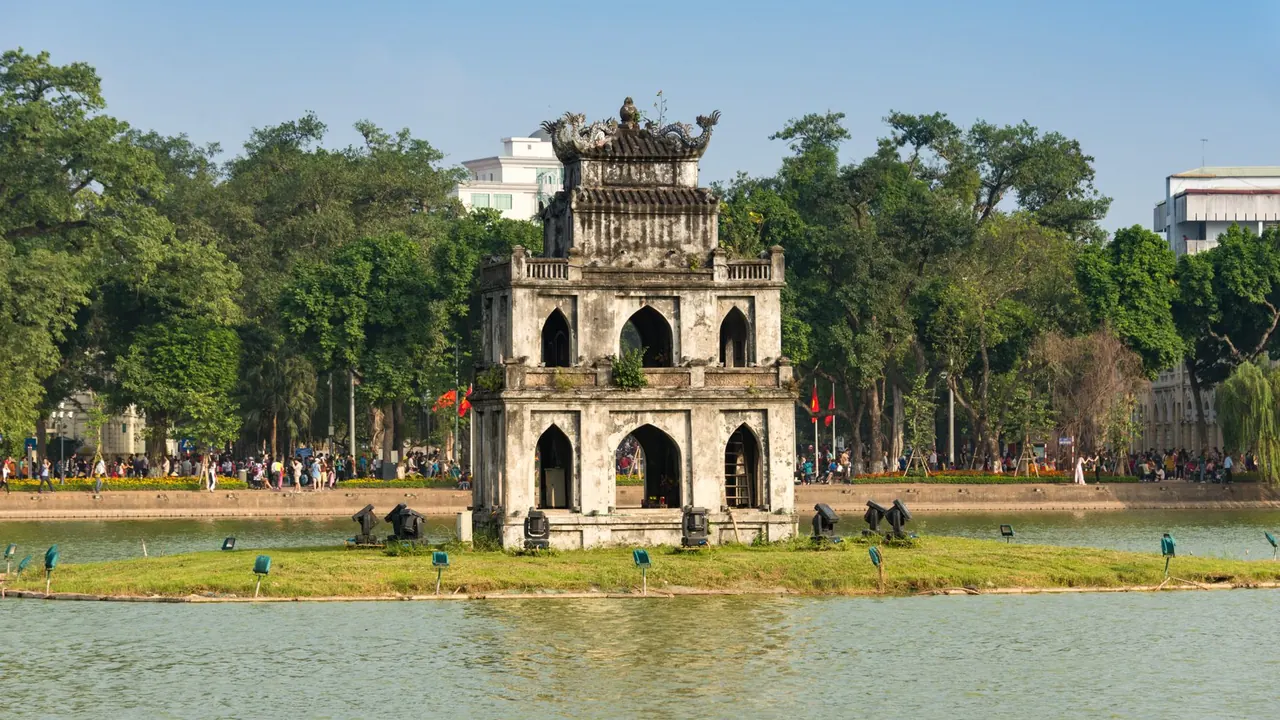
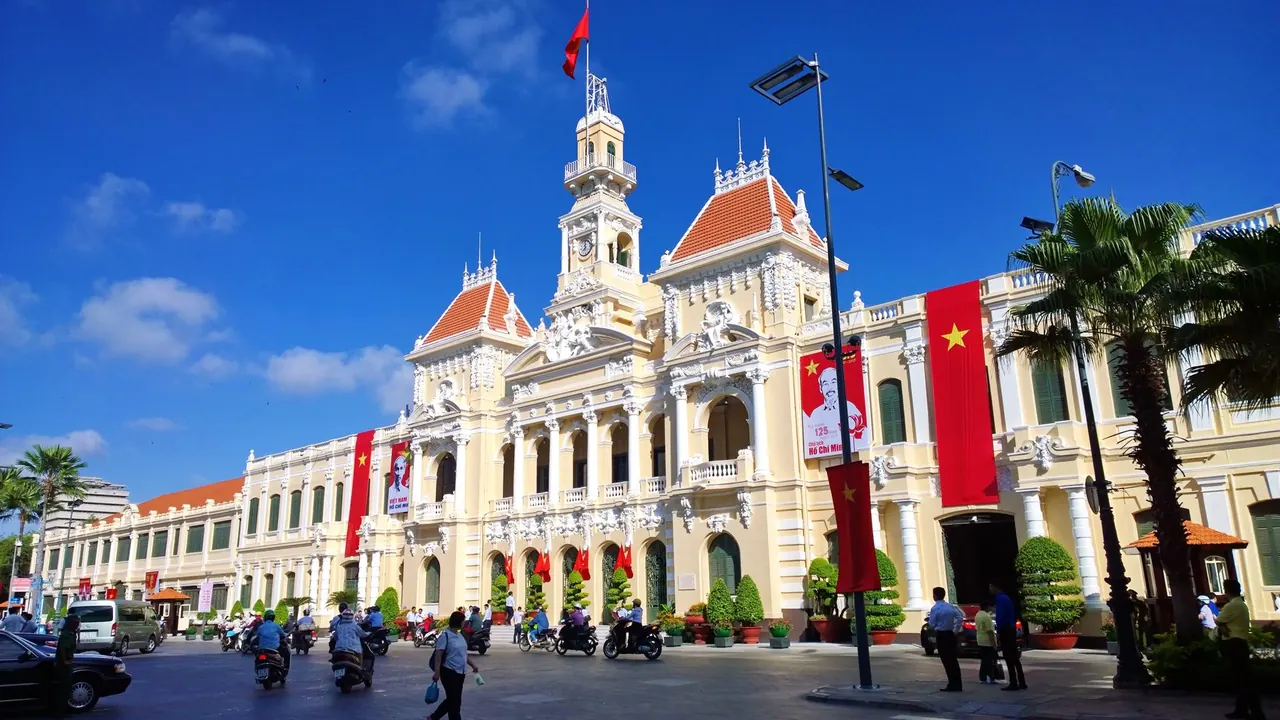
Photos: Hanoi by xiquinhosilva, CC BY 2.0, cropped; Ho Chi Minh City by trungydang, CC BY 3.0, cropped.
Hanoi or Ho Chi Minh City?
Our verdict in twelve categories, each scored against the same fixed benchmark cities, and the climate month by month, so you can choose for your trip.
Choose Hanoi for
- nature and the outdoors
- culture and sights
- prices
Hanoi suits travellers who want history and scenery as well as food. The Old Quarter, the Temple of Literature and the Imperial Citadel fill more days than anything in the south. Ninh Binh's limestone towers and rice paddies are close enough for a day out, and in winter the city is cool enough to walk for hours. It is also the slightly cheaper of the two and the more traditional in feel, with early evenings over draught beer on the pavement.
Choose Ho Chi Minh City for
- nightlife
- wellness
- beaches
Ho Chi Minh City is the better pick for a trip built around evenings, eating and being looked after. Its bar scene goes on much later, from Bui Vien's neon street to rooftop terraces and cocktail rooms up old stairwells. Its massage parlours and hair-wash salons are part of daily life, and a warm-water beach is within a couple of hours. Its sights centre on the twentieth century and the war, and the countryside around it is flat delta rather than mountains.
Scoreboard
Twelve categories on one fixed scale from 0 to 100. The shaded stretch is the gap between the two.
Your match
Pick a travel style or drag the sliders, and both match scores follow your weighting.
Too close to call, 1 point apart
Wins on nature and the outdoors and culture and sights with your weighting.
Wins on nightlife and wellness with your weighting.
What matters to you?
Category by category
What the scores mean for a trip.
Beaches & swimming
Neither city has a beach of its own, but Ho Chi Minh City gets you to the sea far more easily. Vung Tau is about two hours away by road or fast boat down the Saigon River. The water there is warm all year, though often cloudy, and the sand is busy at weekends. That makes it a workable day trip rather than a real beach vacation.
From Hanoi, the coast at Ha Long, Cat Ba or Sam Son is a long journey, so a swim means booking nights there or using a hotel pool or the water parks by West Lake.
Food & drink
The two cities eat equally well, but in different styles. Hanoi's cooking is restrained and northern: a clear beef pho at breakfast, bun cha at lunch and cha ca fried at the table. You drink bia hoi on street corners, and egg coffee in cafés up narrow stairs above the lakes.
Saigon cooks sweeter, with more herbs. You find broken-rice plates, banh xeo wrapped in mustard leaves and whole streets of shellfish stalls at night, and Cholon has a Chinese-Vietnamese cuisine of its own. It also has more serious modern and international restaurants, especially in Thao Dien, for when you want a break from the plastic stools.
Culture & sights
Hanoi has the richer and older heritage. The Old Quarter's tube houses and communal temples, the Temple of Literature and the excavated Thang Long citadel reach back many centuries. Add the Ba Dinh political district and an excellent ethnology museum, and you have three or four full days.
Ho Chi Minh City tells a more recent story, and tells it powerfully. The War Remnants Museum and the Reunification Palace sit beside a compact colonial cluster around Dong Khoi, with Cholon's incense-filled assembly halls for older layers. Two or three days covers it.
Nightlife
Ho Chi Minh City is the place for a late night. Bui Vien turns into a loud walking street every evening, and around Nguyen Hue you find rooftop bars with skyline views, cocktail rooms hidden in old apartment blocks and clubs full of young locals. Most places keep going into the small hours.
Hanoi's evenings are earlier and simpler. People drink beer on tiny stools from late afternoon, and Ta Hien fills with backpackers. At weekends the streets around Hoan Kiem close to traffic for a promenade, and most of the city is quiet by midnight.
Nature & outdoors
Hanoi has much better landscapes within reach. Ninh Binh, about two hours south, has limestone towers rising from rice paddies, where you can be rowed through caves at Trang An and Tam Coc. The Ba Vi hills offer forest walks, and Ha Long Bay and Sapa are there for a longer trip. In the city, the West Lake shore is good for walking or cycling.
Around Ho Chi Minh City the land is low and wet. The Can Gio mangroves with their macaques and the canals of the Mekong Delta are pleasant by boat or bike, but there are no mountains nearby, and the heat makes hard exercise tough for much of the year.
Day trips
Both cities offer a similar number of good outings, but the themes differ. From Hanoi you head for temples and crafts: Hoa Lu and the Bai Dinh pagoda at Ninh Binh, the cave shrine of the Perfume Pagoda, the ceramic and silk villages of Bat Trang and Van Phuc, and the laterite-walled houses of Duong Lam.
From Saigon the trips are about war, faith and the river. You can crawl the Cu Chi tunnels, watch the midday ceremony at the Cao Dai Holy See in Tay Ninh, take a boat through the canals at My Tho and Ben Tre, or spend a seaside day in Vung Tau. Beyond those four the choice runs out faster.
Good for families
Neither city is easy with small children, mainly because of the motorbike traffic, the blocked pavements and the hard road crossings. Ho Chi Minh City has a little more aimed at children: the Dam Sen rides and water park, the eccentric Suoi Tien park and the old zoo in the centre.
Hanoi's best family outings are gentler and more cultural. The short water puppet shows by Hoan Kiem and the full-size village houses at the Museum of Ethnology suit children of all ages, and the cool winter months make walking with them much more comfortable than in the heat of the south.
Getting around
Getting around is about equally hard in both, and in both you end up using ride-hailing cars and motorbike taxis. Hanoi's main sights sit fairly close together across the Old Quarter, the lake, the French Quarter and Ba Dinh, and cyclos add a slow way to see the old streets. The urban rail lines serve few places visitors go.
Saigon's walkable core is smaller. Its single metro line runs east from Ben Thanh, and a river bus is a pleasant extra. The heat makes walking harder, and phones should be kept away from the kerb because of bag snatchers on motorbikes.
Shopping & style
For shopping the two are close, but Ho Chi Minh City covers more ground. It has the Ben Thanh and Binh Tay markets, tailors who make ao dai in days, and luxury labels in the malls around Dong Khoi, with small design boutiques in Thao Dien.
Hanoi has no luxury street, but its Old Quarter still sorts trades by street. Go to Hang Gai for silk and tailoring, browse the weekend night market running up to Dong Xuan, and look for Bat Trang ceramics and textiles from the northern hills.
Affordability
Both are among the cheapest big cities anywhere, and Hanoi stretches money a little further. Its boutique hotels in the Old Quarter are especially cheap, and the main extra worth budgeting for is a Ha Long Bay cruise.
As the business capital, Ho Chi Minh City has a bigger expensive layer of international hotels, rooftop bars and smart restaurants that charge close to Western prices. Eat and drink where locals do, though, and it stays very cheap.
Live music & performing arts
The stage scene is modest in both cities, and each is worth an evening or two rather than a trip. Hanoi is the home of water puppetry, played several times a day beside Hoan Kiem Lake. It also has ca tru sung poetry in Old Quarter communal houses and an irregular programme at the Opera House.
Saigon's Opera House is busier, with ballet, the symphony and acrobatic shows about southern village life on most evenings. It also has cai luong, the local reformed opera, plus more small venues with live bands and jazz.
Wellness & relaxation
Ho Chi Minh City is the better place to be looked after. The long reclining shampoo with scalp and face massage, herbal water and warm towels is a local ritual. Foot and body massage parlours stay open late, and day spas offer herbal steam and hot stones. For quiet, there are the temple courtyards, alley cafés and the riverside streets of Thao Dien.
Hanoi's massage shops are cheap and plentiful, but there is less of a pampering culture. For calm, stay near West Lake or walk the lakes at dawn before the traffic builds.
When should you go?
Pick your month. The climate figures are measured averages, not a forecast.
Hanoi in July
Ho Chi Minh City in July
Daytime high, °C
Rainfall in the month, mm
Where the figures come from
Hanoi's sunshine is measured 86 km from the centre, at Phu Lien.
Ho Chi Minh City has no rain gauge within 25 km of the centre, so its rainfall comes from a gridded climate dataset read at the city rather than from a gauge further away.
Temperature and rainfall are climate normals, averaged over the years shown. Hanoi: 1991-2020 normals, Ha Noi (4.4 km from centre). Ho Chi Minh City: 1991-2020 normals, Ho Chi Minh (6 km from centre).
Hanoi has real seasons and Ho Chi Minh City does not. In the north, winter is cool and dry but grey, with highs around 19°C in January and little sunshine. Spring warms up gently, and summer turns hot and very wet, with highs near 35°C in June and about 311mm of rain in July. October and November are the sweet spot: drier, sunnier and warm without being heavy, and good for walking the streets.
Ho Chi Minh City stays hot all year, so it is never cool enough for long walks at midday. What changes is the rain. December to April is the dry season, with almost none in February (about 4mm), while May to October brings heavy afternoon downpours. The sea at Vung Tau stays warm all year, from about 26°C in winter to the high twenties later on, so a beach day works in any month, though it is most reliable in the dry season.
Which traveller are you?
On a culture and arts trip, Hanoi is the stronger base. The guild streets of the Old Quarter, the Temple of Literature, the Thang Long citadel and the Museum of Ethnology fill three or four days. The southern city's sights are fewer and focus mostly on the twentieth century.
For a food and nightlife trip, Ho Chi Minh City has the edge. The street food in both cities is equally good, but Saigon adds a deeper restaurant tier, snail streets that fill after dark, rooftop and speakeasy bars, and clubs that stay open long after Hanoi has gone quiet.
On an outdoors trip, choose Hanoi. You can cycle or walk the shore of West Lake, and Ninh Binh's karst towers, cave rivers and paddy lanes are a day away. The Ba Vi forest is close too. From Saigon, the nearest nature is flat mangrove and delta with no hills.
Before you go
| Measure | Hanoi | Ho Chi Minh City |
|---|---|---|
| Official language | Vietnamese | Vietnamese |
| Currency | Dong (VND) | Dong (VND) |
| Sockets | ACFG220 V, 50 Hz | ACFG220 V, 50 Hz |
| Driving side | Right | Right |
| Time zone | UTC+7 | UTC+7 |
| Emergency number | Police 113, ambulance 115, fire 114 | Police 113, ambulance 115, fire 114 |
| Elevation | 10 m | 13 m |
| Main airport | Noi Bai International Airport (HAN)22 km from centre91 non-stop destinations | Tan Son Nhat International Airport (SGN)7 km from centre90 non-stop destinations |
By the numbers
| Measure | Hanoi | Ho Chi Minh City |
|---|---|---|
| City population | 8,717,600 | 14,002,598 |
| People per km² | 2,595 | 2,068 |
| Museums within 10 km | 14 | 9 |
| UNESCO World Heritage sites within 50 km | 1 | 0 |
| Swim season, months above 21 °C | - | 12 months |
Where else could you go?
Every comparison below shares a destination with this one, so you can follow Hanoi or Ho Chi Minh City somewhere new.