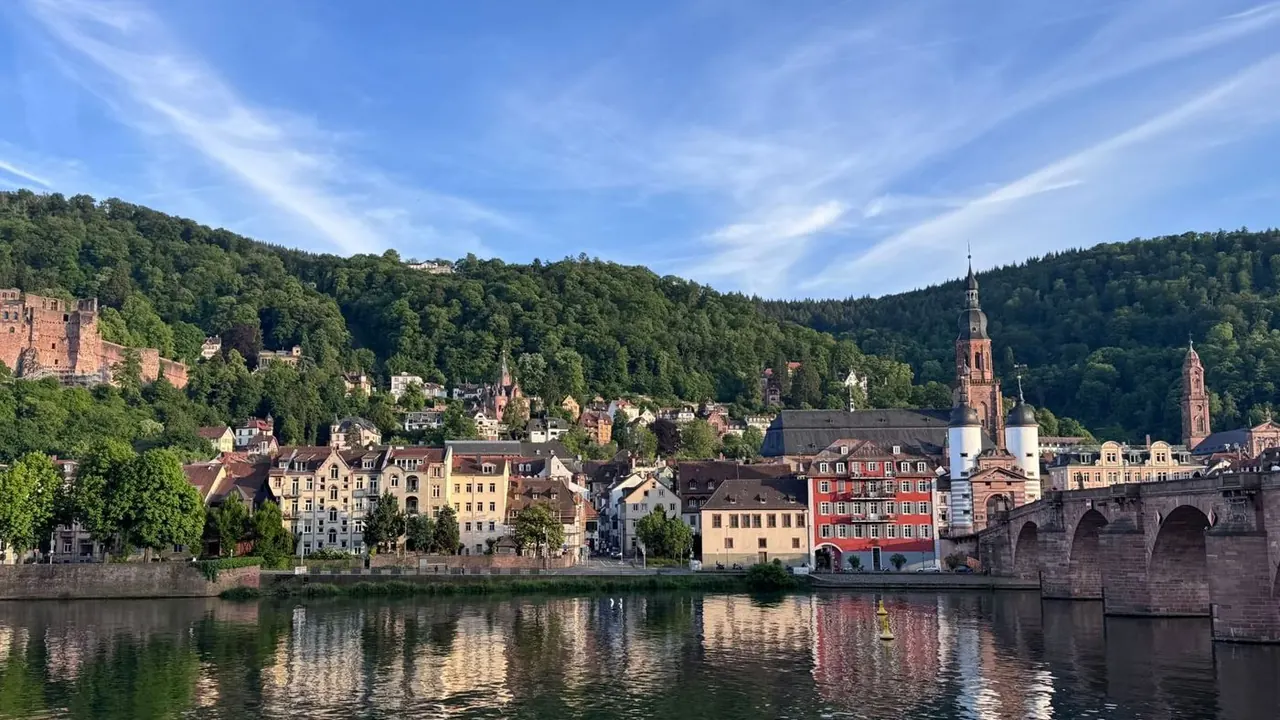
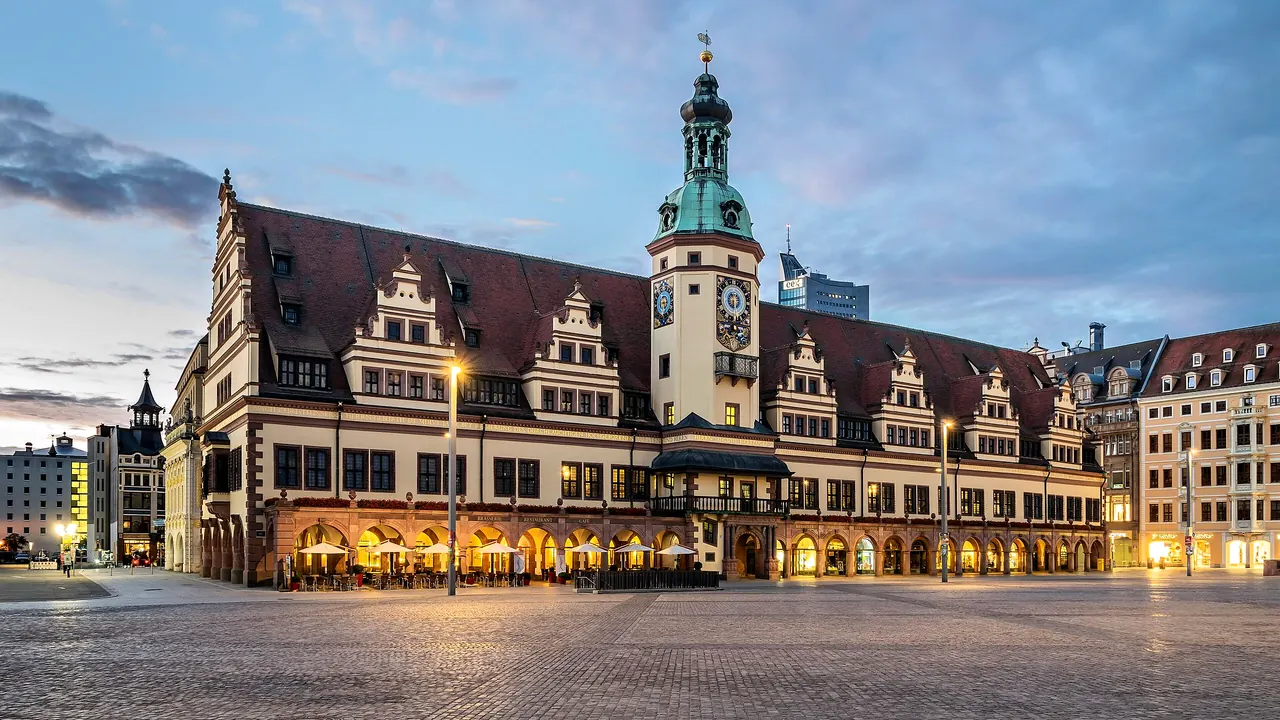
Photos: Heidelberg by Kuanling Chen, Pexels License; Leipzig by Krzysztof Golik, CC BY-SA 4.0, cropped.
Heidelberg or Leipzig?
Our verdict in twelve categories, each scored against the same fixed benchmark cities, and the climate month by month, so you can choose for your trip.
Choose Heidelberg for
- nature and the outdoors
- wellness
Heidelberg suits a slower, more scenic trip. A castle ruin above a compact baroque old town, forest trails that start at the edge of the streets and wine villages a short drive away make it a natural fit for couples, walkers and anyone who wants a few calm days with a glass of Riesling at the end of them. It also has thermal baths within easy reach, which Leipzig cannot really match.
Choose Leipzig for
- live music and the arts
- beaches
- nightlife
Leipzig is the better choice if music or a night out is part of the plan. Bach's churches, the Gewandhaus Orchestra and a club scene in old factories give it far more to do after dark, and its rooms cost less. In summer it adds swimmable lakes south of the city. It feels more like a working city than a postcard, and that suits travellers who like a place with its own rhythm.
Scoreboard
Twelve categories on one fixed scale from 0 to 100. The shaded stretch is the gap between the two.
Your match
Pick a travel style or drag the sliders, and both match scores follow your weighting.
Wins on nature and the outdoors and wellness with your weighting.
Wins on live music and the arts and beaches with your weighting.
What matters to you?
Category by category
What the scores mean for a trip.
Beaches & swimming
Neither city is a beach destination, but Leipzig comes much closer. Its flooded lignite mines south of the centre, the Cospudener See and Markkleeberger See among them, have sandy shores, clear water and beach bars, and you can reach them by tram or bike. In a hot July or August the water gets to about 22°C.
Heidelberg has only its outdoor pools and the gravel-pit lakes out on the Rhine plain, half an hour away. They are fine for a hot afternoon, but they are less of an outing than Leipzig's lake district.
Food & drink
The two are about level at the table, but they drink differently. Heidelberg is wine country, with Bergstrasse and Palatinate Riesling on every list, white asparagus in spring, and the best meals in Altstadt side streets, Neuenheim and village wine taverns rather than on the Hauptstrasse.
Leipzig leans towards beer and coffee: sour, salted Gose, Saxon roasts with dumplings and an old coffee-house tradition. Its more interesting eating is in the casual international kitchens and beer gardens of the Südvorstadt and Plagwitz.
Culture & sights
The sights are evenly matched but different in character. Heidelberg is the picture-book set: the red sandstone castle ruin, the Old Bridge, the oldest university in Germany and its graffiti-covered Student Prison, all seen comfortably in a day or two.
Leipzig's history is heavier and more recent. There is Bach's Thomaskirche, the Nikolaikirche where the 1989 protests began, the Stasi exhibition at the Runde Ecke and the brooding Battle of the Nations monument, along with the Grassi museums. It needs two or three days.
Nightlife
Leipzig is clearly the better place to go out. Its electronic club scene grew up in old factories and warehouses, weekend nights run past dawn, and door policies are relaxed. The Karli, Connewitz and the canal-side bars of Plagwitz each have their own crowd.
Heidelberg's evenings centre on the student pubs of the Untere Strasse and the old fraternity taverns. They are lively in term time, but the town goes quiet early otherwise, and a big club night means taking the train to Mannheim or Frankfurt.
Nature & outdoors
Heidelberg has the better landscape. Forested Odenwald hills rise straight from the old town, with the Philosophers' Walk, the funicular up the 568m Königstuhl and hours of woodland trails. The Neckar valley cycle path and the Palatinate Forest's sandstone crags are close by.
Leipzig's green is flat and watery. The Auwald floodplain forest runs through the city, you can canoe on the canals from Plagwitz, and the lakes are good for cycling and paddling. For proper hiking, though, Saxon Switzerland is two hours away.
Day trips
Both are excellent bases, and the difference lies in what they reach. From Heidelberg the outings are cathedral towns and countryside: Speyer, Worms, Lorsch and Maulbronn, castle villages up the Neckar and the half-timbered Palatinate wine villages, with Strasbourg possible on a long day.
Leipzig sits at a rail hub and reaches bigger names. Dresden, Weimar and Berlin are each an hour or so by train, and Luther's Wittenberg, the Bauhaus in Dessau and Naumburg's cathedral are close too, so the trips lean more towards cities and history.
Good for families
Heidelberg's cobbled, sloping old town and crowded main street are hard work with a pushchair. Its best moments with children are the funicular ride, the small fairy-tale park on the Königstuhl, riverboats past castles, and the planes and submarine at the Technik Museum Speyer nearby.
Leipzig's flat centre and easy trams make getting about with small children much simpler. Its zoo, with the covered Gondwanaland tropical hall, fills a whole day whatever the weather, and in summer the lake beaches and the Belantis theme park add more. After that, though, the list thins out much as it does in Heidelberg.
Getting around
Both are easy without a car, but Leipzig is a little simpler. Its old town is a compact ring you can cross on foot in about fifteen minutes, the main station sits right at its edge, and the flat streets and cycle lanes make a bike the quickest option.
Heidelberg's sights stretch along one long, narrow strip, the station is a tram ride west, and the castle approach is steep. In return, the funicular and the shared Rhine-Neckar fare system make the hill and the regional day trips straightforward.
Shopping & style
Neither is a shopping destination, and the shopping differs more in setting than in quality. Heidelberg has one long pedestrian street, chains at one end and steins, cuckoo clocks and Studentenkuss chocolates at the other, with Bergstrasse wine as the best souvenir.
Leipzig's covered trade-fair arcades are pleasant in the rain, and the west is more individual, with vintage and record shops on Karl-Heine-Strasse and the Spinnerei's galleries in a former cotton mill.
Affordability
The real gap between the two is the hotel bill. Heidelberg is a small, much-visited town with too few rooms to go round, so beds are scarce and dear, and plenty of visitors end up sleeping in a neighbouring town and travelling in. Leipzig is a large city with a deep supply of mid-range hotels and apartments, many within an easy walk of the ring, and they cost noticeably less, except in the weeks when a major trade fair fills the city.
Once you have a bed, the two cost about the same. Sit-down meals, wine and drinks are priced at the usual German level in both, large student populations keep simple food cheap, and sightseeing costs little. So Leipzig is the easier city on a budget, and the saving comes from where you sleep rather than from what you spend during the day.
Live music & performing arts
Here Leipzig is in a different class. The Gewandhaus Orchestra and the opera house face each other across Augustusplatz, the Thomanerchor sings Bach in his own church most term weekends, and the Bachfest in June and the Wave-Gotik-Treffen at Whitsun bring visitors from around the world.
Heidelberg does well for a small town, with its municipal theatre, the Heidelberger Frühling chamber festival and summer performances in the castle courtyard. For a larger opera house, its audiences go to Mannheim.
Wellness & relaxation
Heidelberg has the edge for a restorative stay. Within half an hour, the Kraichgau has thermal bath complexes with warm saline pools, Baden-Baden is about an hour away, and evenings on the Neuenheim meadows are calm once the castle crowds leave.
Leipzig's wellness is mostly sauna complexes and a few lakeside saunas, and its spa towns need a separate trip. What it offers is quiet: uncrowded parks, the floodplain forest and a slow Sunday pace.
When should you go?
Pick your month. The climate figures are measured averages, not a forecast.
Heidelberg in July
Leipzig in July
Daytime high, °C
Rainfall in the month, mm
Temperature and rainfall are climate normals, averaged over the years shown. Heidelberg: 1991-2020 (sunshine 1971-2000) normals, Heidelberg (4.5 km from centre). Leipzig: 1991-2020 (sunshine 1961-1990, rainfall 1961-1990) normals, Leipzig-Holzhausen (5.7 km from centre).
The two climates are very close, with cold, grey winters and warm summers. Heidelberg runs a degree or so warmer through the year, peaking at about 26°C in July and August, and it is a little sunnier in high summer. Leipzig's winter days barely reach 4°C, and its late winter and spring are noticeably drier. In both cities the heaviest rain falls in July, up to about 56mm in Leipzig, mostly as summer showers rather than long grey spells.
For walking the streets and the hills, May, June and September are the best months in both, warm without being tiring. July and August are the only months warm enough for an afternoon at the lakes, and that matters more in Leipzig, whose mine lakes are a real summer draw. From November to February both are cold and dim, better suited to concerts and museums than to the outdoors.
Which traveller are you?
On a culture and arts trip, Heidelberg suits a day or two of photogenic sightseeing, but Leipzig is the stronger pick. Its history and museums run deeper, and evenings of world-class orchestral music, opera and Bach sung in his own church make the trip far richer.
For an outdoors trip, Heidelberg is the one to choose, especially for walkers who like to leave the hotel on foot and be among trees within minutes, with enough hills and river valley to fill several days. Leipzig's flat, watery green suits gentle cycling and paddling better than hiking.
On a relaxing and wellness trip, Heidelberg suits travellers who want warm pools and saunas in the plan, since proper thermal baths make an easy half-day outing, and a small riverside town of wine taverns is easy to slow down in. Leipzig is restful but has little spa culture.
Before you go
| Measure | Heidelberg | Leipzig |
|---|---|---|
| Official language | German | German |
| Currency | Euro (EUR) | Euro (EUR) |
| Sockets | CF230 V, 50 Hz | CF230 V, 50 Hz |
| Driving side | Right | Right |
| Time zone | UTC+1, UTC+2 in summer | UTC+1, UTC+2 in summer |
| Emergency number | 112 | 112 |
| Elevation | 114 m | 110 m |
| Main airport | Frankfurt Main Airport (FRA)69 km from centre281 non-stop destinations | Leipzig/Halle Airport (LEJ)13 km from centre20 non-stop destinations |
| Public holidays this year | 12 days | 11 days |
By the numbers
| Measure | Heidelberg | Leipzig |
|---|---|---|
| City population | 156,092 | 615,932 |
| People per km² | 1,433 | 2,068 |
| Museums within 10 km | 17 | 40 |
| UNESCO World Heritage sites within 50 km | 4 | 1 |
Where else could you go?
Every comparison below shares a destination with this one, so you can follow Heidelberg or Leipzig somewhere new.
- Frankfurtvs Heidelberg
- Stuttgartvs Heidelberg
- Baden-Badenvs Heidelberg
- Dresdenvs Leipzig
- Strasbourgvs Heidelberg
- Berlinvs Leipzig