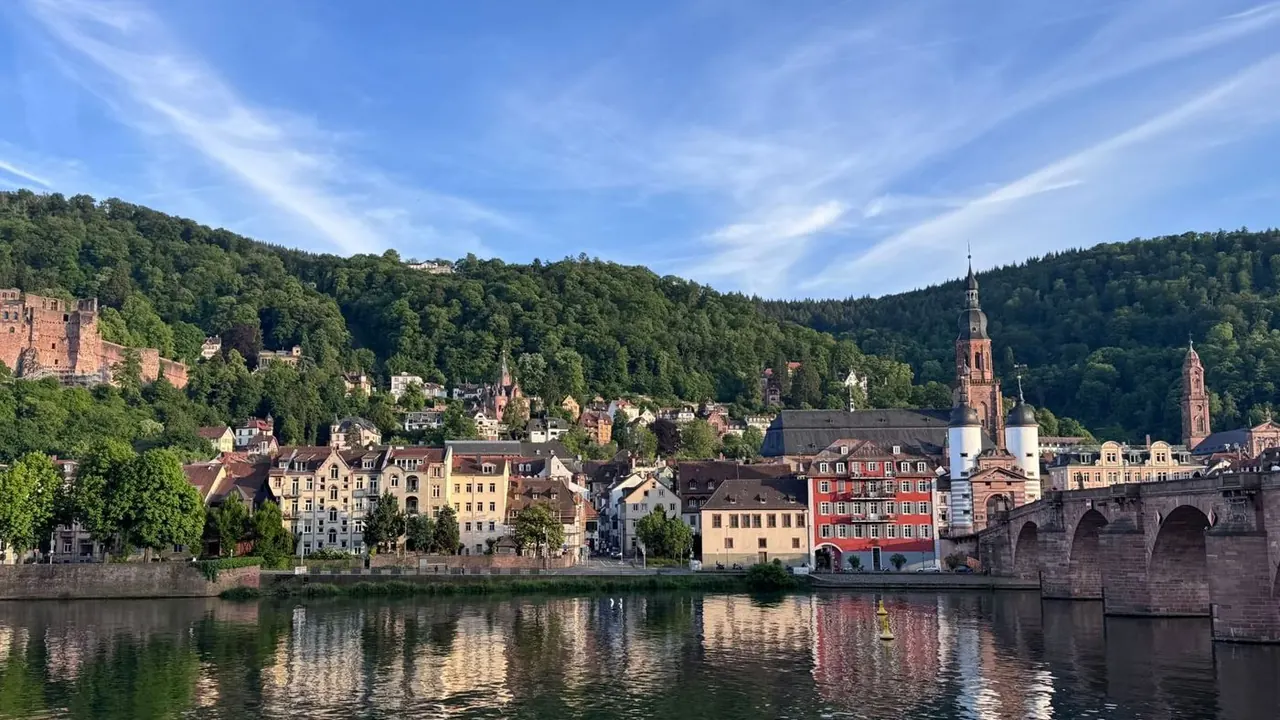
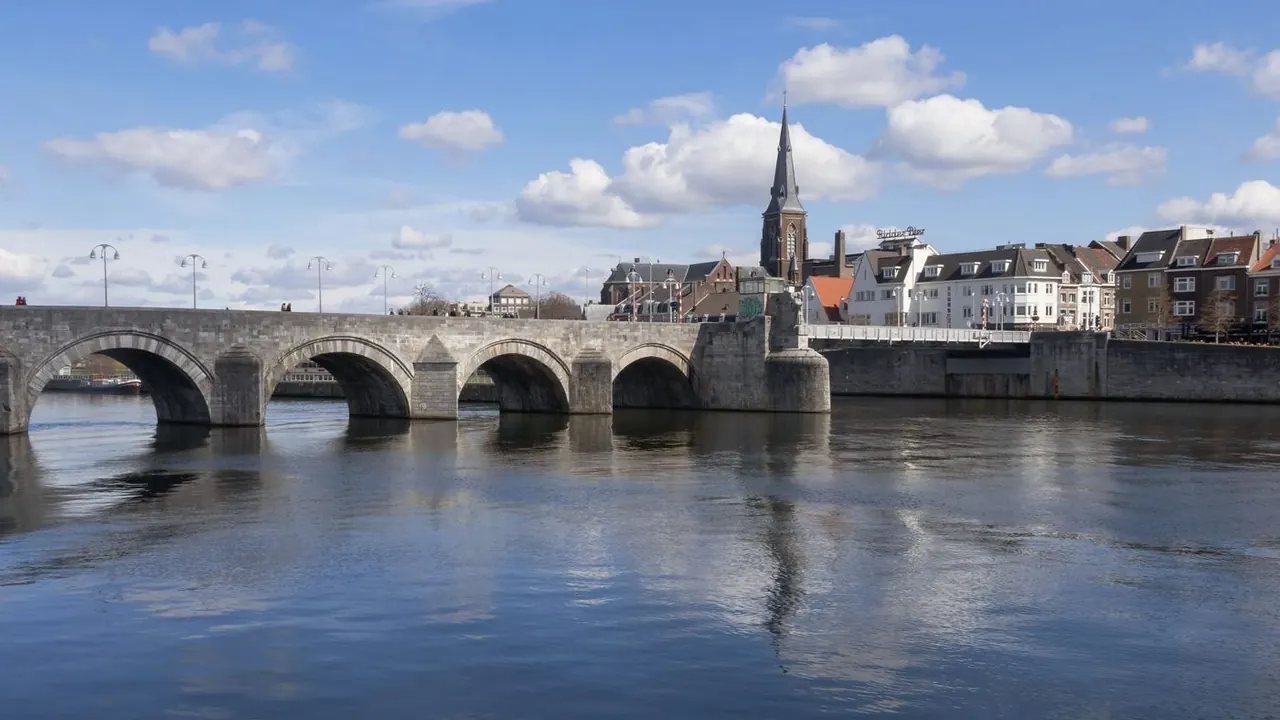
Photos: Heidelberg by Kuanling Chen, Pexels License; Maastricht by Michielverbeek, CC BY-SA 4.0, cropped.
Heidelberg or Maastricht?
Our verdict in twelve categories, each scored against the same fixed benchmark cities, and the climate month by month, so you can choose for your trip.
Choose Heidelberg for
- live music and the arts
- families
- prices
Heidelberg is for travellers who want a romantic setting and a stage to go with it. The castle ruin above the river and the forested hills behind make it the more striking of the two, its theatre and festivals give it the fuller arts calendar, and families will find more to do with children in town and close by. It also suits anyone who likes wine with their walks.
Choose Maastricht for
- shopping
- food and drink
- wellness
Maastricht suits the traveller who measures a city break by its lunches, its terraces and its shop windows. The eating is better, the boutique streets of the Stokstraat quarter are a real draw, and the thermal baths of Valkenburg and Aachen are close enough for an easy afternoon. Those who like to hop between countries on a short trip will like it too, with Belgium and Germany both on the doorstep.
Scoreboard
Twelve categories on one fixed scale from 0 to 100. The shaded stretch is the gap between the two.
Your match
Pick a travel style or drag the sliders, and both match scores follow your weighting.
Wins on live music and the arts and families with your weighting.
Wins on shopping and food and drink with your weighting.
What matters to you?
Category by category
What the scores mean for a trip.
Beaches & swimming
Neither city is a beach destination, and both send their swimmers to flooded gravel-pit lakes on hot days. Maastricht's lie right along the Maas, some with small sandy shores and lifeguards, while Heidelberg's are about half an hour out on the Rhine plain, with the town's outdoor pools as the nearer option.
Food & drink
Maastricht is the better place to eat. Its Dutch reputation for good living rests on Limburg dishes such as zuurvlees and vlaai, Belgian beer and a fine-dining tier that is unusually strong for a small city, spread through the old centre and Wyck.
Heidelberg's cooking is heartier and less polished: Schäufele, Maultaschen and spring asparagus, with uneven quality on the tourist-facing Hauptstrasse. Its real strength is wine, with Bergstrasse and Palatinate Rieslings close at hand, and the student population keeps cheap international food more plentiful than in Maastricht.
Culture & sights
Both are compact historic towns that reward a day or two, but the appeal differs. Heidelberg has the single great image, the red sandstone castle ruin above the Altstadt, along with the oldest university in Germany and its graffiti-covered Student Prison.
Maastricht has no single show-stopper but more layers of age: two Romanesque basilicas, the Helpoort and medieval walls along the Jeker, and the guided tunnels of the Sint-Pietersberg. The Bonnefanten gives it the stronger art museum, with contemporary work alongside old masters.
Nightlife
Evenings are modest and student-driven in both, quietening outside term. Heidelberg's going out is concentrated in the small pubs of the Untere Strasse and its historic student taverns, while Maastricht's revolves around brown cafés and terraces on the Markt and the Vrijthof with Belgian beer in hand. Maastricht's trump card is carnival, when the whole city parties in the streets for days; in both, a proper club night means a train to a bigger city.
Nature & outdoors
Heidelberg's walks lead into forest, while Maastricht's lead out into open farmland and marl hills. From Heidelberg the Philosophers' Walk and the trails on the Königstuhl, at 568m, climb straight into the woods of the Odenwald, and the Neckar cycle path follows the river past castles. The sandstone crags of the Palatinate Forest are about an hour away.
Maastricht has the only real hills in the Netherlands. The marl cliffs of the Sint-Pietersberg and the green Jeker valley start at the city's edge, and the Heuvelland further out has orchards, sunken lanes and short climbs that road cyclists come for. Belgium's Hoge Kempen adds heath and pine forest.
Day trips
Both are excellent bases, and the choice comes down to what you want to see. From Heidelberg the outings are cathedrals, palaces and monasteries of the Upper Rhine, Speyer, Worms, Schwetzingen and Maulbronn, plus Palatinate wine villages and riverside castles up the Neckar.
From Maastricht the draw is crossing borders: Aachen and Liège each about half an hour away, Tongeren and Valkenburg nearer still, and Cologne, Brussels and Leuven within a longer day.
Good for families
Heidelberg has more for children within the town itself: the funicular ride to the castle and the Königstuhl, a fairy-tale park at the top, a compact zoo and boat trips past castles. The aircraft and submarine of the Technik Museum Speyer and a large theme park are close by, though the cobbled, sloping Altstadt is hard work with a pushchair.
Maastricht is flatter and easier with a buggy, but in the city the tunnel tour is the main children's outing. The caves, cable car and fairy-tale park of Valkenburg and the zoo at Kerkrade mean most family days involve leaving town.
Getting around
Heidelberg's sights run along one long, narrow strip, while Maastricht's sit in a round, flat centre on both banks of the river. In Heidelberg most visitors take a tram in from the station, which is some way out, and reach the castle by funicular or a steep climb. One fare covers the whole region, so rail day trips are easy without a car.
In Maastricht almost everything is within a fifteen-minute walk, and the station is just over the bridge. Bikes are the usual way to get about, though the hill villages are easier to reach by car.
Shopping & style
Maastricht is a genuine shopping destination, drawing weekend visitors from three countries. The restored houses of the Stokstraat quarter hold fashion and designer boutiques, Wyck has independent interiors and vintage shops, and the weekly market fills the Markt.
Heidelberg's shopping is essentially the Hauptstrasse, with chains at one end and cuckoo clocks, beer steins and Studentenkuss chocolates at the other. A bottle of Bergstrasse wine is the best souvenir, and serious shoppers take the train to Mannheim or Frankfurt.
Affordability
Costs are much alike, at the ordinary level of western Germany and the Netherlands, with rooms the biggest expense in both. In Heidelberg the squeeze comes from congresses and graduations, and staying in Mannheim is the usual workaround; in Maastricht it is weekend demand, so arriving on a Sunday and leaving by Thursday saves the most. Heidelberg's student cafés and regional transport ticket help, while in Maastricht the walkable centre means transport costs next to nothing.
Live music & performing arts
Heidelberg has the richer programme. Its municipal theatre stages opera, drama and dance with its own philharmonic, the Heidelberger Frühling brings leading soloists in spring, and the castle courtyard becomes an open-air stage in summer, with Mannheim's larger opera house twenty minutes away.
Maastricht's arts centre on the Vrijthof theatre and its regional orchestra and opera, with conservatory recitals and church concerts filling in. Its distinctive moment is the summer open-air concerts on the Vrijthof, which draw crowds from across Europe.
Wellness & relaxation
Neither city has its own baths, but Maastricht's are closer and more varied: the thermal spa above Valkenburg is twenty minutes away, Roman-founded Aachen half an hour, and the Belgian town of Spa within an hour. Heidelberg's nearest thermal complexes are in the Kraichgau, with Baden-Baden an hour south.
Heidelberg makes up for it with quiet forest paths and evenings on the Neckar meadows, but its castle and Hauptstrasse crowds break the calm at midday. Maastricht's long lunches and slower, slightly southern pace make it the more restful town.
When should you go?
Pick your month. The climate figures are measured averages, not a forecast.
Heidelberg in July
Maastricht in July
Daytime high, °C
Rainfall in the month, mm
Temperature and rainfall are climate normals, averaged over the years shown. Heidelberg: 1991-2020 normals, Heidelberg (4.5 km from centre). Maastricht: 1991-2020 normals, Maastricht Airport Zuid Limburg (10 km from centre).
The two share a mild central European climate, with cold, grey winters of around 5°C to 6°C by day and the most pleasant walking weather from May to September. Heidelberg, in the shelter of the Rhine plain, gets the warmer and sunnier summer, peaking at about 26°C in July and August against a slightly fresher 24°C in Maastricht. That makes Heidelberg's high summer the better time for the gravel-pit lakes and the castle's open-air evenings, though occasionally warm enough to make the steep castle climb hard going at midday.
Rain falls through the year in both, but the pattern differs. Heidelberg's wettest month is July, with about 80mm, while Maastricht's comes in August and its winters are noticeably damper and a little brighter. Spring and early autumn are the best compromise in either city: April is one of the driest months in both, and September still feels warm enough for terraces and riverside walks.
Which traveller are you?
For a shopping trip, Maastricht is the clear pick. The Stokstraat quarter's designer boutiques, high-street brands on the Grote Staat and independent interiors and vintage shops in Wyck outclass Heidelberg's single long street of chains and souvenirs.
On a family trip with young children, Heidelberg has more to offer. The funicular, the fairy-tale park on the Königstuhl, the riverside zoo and boat trips are all in town, and the Technik Museum Speyer is close, whereas Maastricht's children's attractions mostly lie outside the city.
On a food and nightlife trip, Maastricht wins on the plate: Limburg cooking, vlaai, Belgian beer and a strong fine-dining tier for its size. The nights are similarly low-key in both, but a visit at carnival tips the balance firmly to Maastricht.
Before you go
| Measure | Heidelberg | Maastricht |
|---|---|---|
| Official language | German | Dutch |
| Currency | Euro (EUR) | Euro (EUR) |
| Sockets | CF230 V, 50 Hz | CF230 V, 50 Hz |
| Driving side | Right | Right |
| Time zone | UTC+1, UTC+2 in summer | UTC+1, UTC+2 in summer |
| Emergency number | 112 | 112 |
| Elevation | 114 m | 49 m |
| Main airport | Frankfurt Main Airport (FRA)69 km from centre281 non-stop destinations | Maastricht Aachen Airport (MST)9 km from centre5 non-stop destinations |
| Public holidays this year | 12 days | 11 days |
By the numbers
| Measure | Heidelberg | Maastricht |
|---|---|---|
| City population | 156,092 | 120,227 |
| People per km² | 1,433 | 2,000 |
| Museums within 10 km | 17 | 21 |
| UNESCO World Heritage sites within 50 km | 4 | 5 |
Where else could you go?
Every comparison below shares a destination with this one, so you can follow Heidelberg or Maastricht somewhere new.