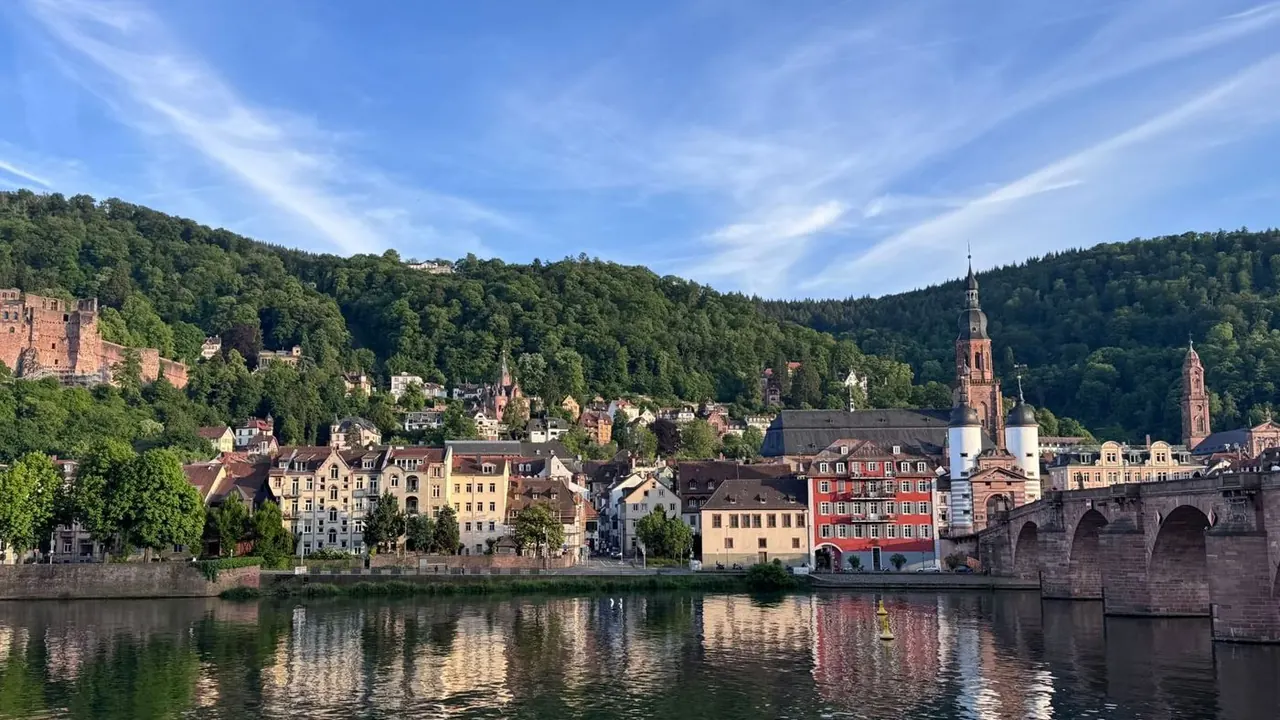
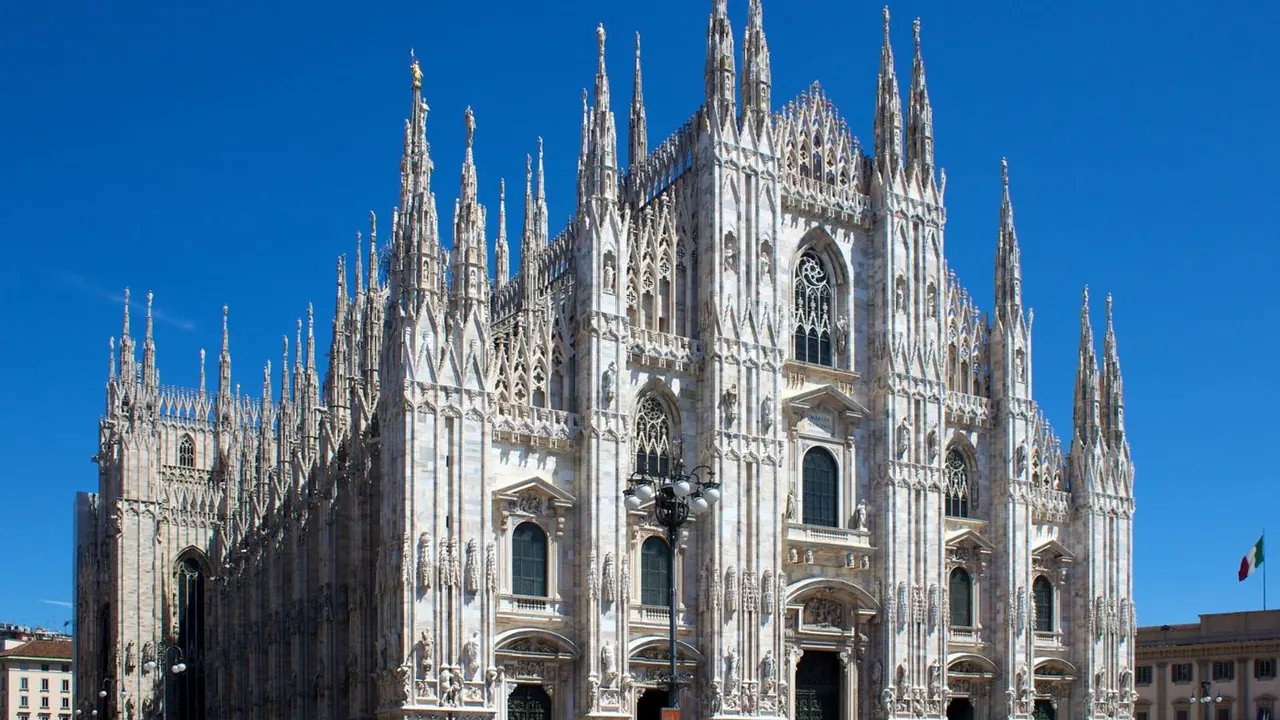
Photos: Heidelberg by Kuanling Chen, Pexels License; Milan by Jiuguang Wang, CC BY-SA 3.0, cropped.
Heidelberg or Milan?
Our verdict in twelve categories, each scored against the same fixed benchmark cities, and the climate month by month, so you can choose for your trip.
Choose Heidelberg for
- prices
- families
- wellness
Heidelberg suits travellers who want a small, walkable German university town with a castle ruin above the river, forest paths beginning at the edge of the old town and wine villages close by. It is the easier choice with children, a little kinder on the budget, and a calm base for gentle walking, cycling and Upper Rhine outings to cathedral towns and palaces, provided you don't expect much from the shops or the late nights.
Choose Milan for
- shopping
- food and drink
- live music and the arts
Milan is the choice for a trip built around great food, fashion, opera and evenings out. La Scala, the Last Supper and the Quadrilatero della Moda have no counterpart in Heidelberg, aperitivo culture fills the evenings, and the fast rail lines put Verona, Turin and the lakes within an easy day. It costs more and has less of a single unbroken old town, but it offers far more to do once you are there.
Scoreboard
Twelve categories on one fixed scale from 0 to 100. The shaded stretch is the gap between the two.
Your match
Pick a travel style or drag the sliders, and both match scores follow your weighting.
Wins on prices and families with your weighting.
Wins on shopping and food and drink with your weighting.
What matters to you?
Category by category
What the scores mean for a trip.
Beaches & swimming
Neither city has a coast, and in both swimming is a summer extra rather than a reason to go. Heidelberg relies on its outdoor pools and the flooded gravel-pit lakes on the Rhine plain about half an hour away, and the sea is several hours off.
Milan does somewhat better because of what lies an hour to the north. Lake Como and Lake Maggiore have pebbly lidos and swimming platforms in fine settings, and the Idroscalo near Linate gives the city a lido of its own. Even so, plan for a lake day out, not a beach vacation.
Food & drink
Heidelberg eats like the Kurpfalz: Schäufele, Maultaschen and Flammkuchen, white asparagus in spring, and wine as the real strength, with Bergstrasse Riesling and Pinot from vineyards on the edge of town. The best meals are in the Altstadt side streets, in Neuenheim and in the village wine taverns, since the tourist strip below the castle is hit and miss.
Milan offers far more. Alongside ossobuco, cotoletta and risotto alla milanese, you can eat well from almost every Italian region, and there is a serious tier of fine dining. The early evening aperitivo in Brera, Isola or along the Navigli is a ritual Heidelberg has nothing to match.
Culture & sights
Heidelberg gives you one complete and very photogenic picture: the red sandstone castle ruin, a baroque old town along the Neckar, the Old Bridge, and the oldest university in Germany with its graffiti-covered Student Prison. Most visitors have seen it properly in a day or two.
Milan's sights are fewer for its size but of a higher rank. Leonardo's Last Supper, the rooftop of the Duomo, the paintings of the Brera and Michelangelo's Rondanini Pietà in the Castello Sforzesco are world-class. The catch is that they sit in clusters within a modern business city rather than in one unbroken old quarter.
Nightlife
A night out in Heidelberg means the small pubs of the Untere Strasse and old student taverns with carved tables, cheerful and crowded in term time, with only a few clubs. Out of term and on weeknights the town goes quiet early.
Milan's evenings are longer and more varied. They start with aperitivo and carry on along the Navigli towpaths, in quieter, smarter Brera or in relaxed Porta Venezia, the centre of the gay scene. Clubs range from dressy venues on Corso Como, where appearance counts at the door, to warehouse nights on the edge of the city.
Nature & outdoors
The outdoors is roughly as good in both, but it works very differently. In Heidelberg it starts at the doorstep: the Philosophers' Walk, the funicular to the forest trails on the Königstuhl, Celtic ramparts on the Heiligenberg and the flat Neckar cycle path, all gentle, green country you can walk into from the old town.
Milan itself is flat and often hazy, with little more than Parco Sempione and the canal towpaths. An hour north by train, though, the scenery is grander: steep wooded shores around Como and Maggiore, sailing on the lakes, via ferrata on the Grigne ridges and, in winter, skiing for anyone willing to make a long day of it.
Day trips
Both make good bases, but Milan has the edge in scale. High-speed trains put Verona's arena, Turin's royal palaces and Bologna within easy reach, and Bergamo's upper town, Bellagio on Lake Como, the Certosa di Pavia and the Borromean Islands are closer still, with Lugano across the Swiss border.
Heidelberg's outings are quieter and more local: Speyer's Romanesque cathedral, the gardens at Schwetzingen, Worms, Maulbronn monastery, castles up the Neckar and the half-timbered villages of the Palatinate Wine Route. Strasbourg is possible on a long day.
Good for families
Heidelberg is the easier of the two with children. It is small and safe, the funicular ride is a treat in itself, there is a fairy-tale park on the Königstuhl, a compact zoo by the river and boat trips past castles. Within half an hour, the Technik Museum Speyer lets children climb into a submarine and see a space shuttle. Cobbles and crowds on the Hauptstrasse are the main nuisance.
Milan copes, with a flat centre, a hands-on science museum and playgrounds in Parco Sempione. However, its headline sights are aimed at adults, the summer heat can be hard on small children, and the theme parks at Leolandia and Gardaland take most of a day.
Getting around
Milan is the smoother city to move around. Its flat centre puts the Duomo, Brera and the Castello within a short walk, and five easy metro lines with contactless gates are backed by a dense tram network. The weak points are the stuffy metro in summer and the long ride in from Malpensa.
Heidelberg's Altstadt is a narrow strip you can walk end to end, but the station is some way west, so you start with a tram or bus. The cobbles and the steep climb to the castle are tiring. On the other hand, the single Rhine-Neckar fare makes regional trips without a car very simple.
Shopping & style
This is where the two differ most. Milan is a world fashion capital, with the Quadrilatero della Moda, the historic shops under the glass roof of the Galleria and La Rinascente by the Duomo, plus design showrooms, vintage shops in Porta Ticinese and antique markets on the Navigli.
Heidelberg's Hauptstrasse is long but ordinary, with high-street chains at one end and cuckoo clocks, beer steins and Studentenkuss chocolates at the other. A bottle of Bergstrasse wine is the best souvenir.
Affordability
Neither is cheap, but Heidelberg is somewhat easier on the wallet. Its main problem is a shortage of hotel rooms during congresses and graduations, so many visitors stay in Mannheim and take the train in. Bakeries, student cafés and simple taverns keep meals reasonable.
Milan is Italy's most expensive city, and rooms become very hard to find at fair rates during fashion weeks and trade fairs. Aperitivo snacks that stand in for supper, office-worker set lunches and a hotel near a metro stop outside the centre all help.
Live music & performing arts
Milan has one of the world's great opera houses in La Scala, whose season opens each December on the feast of Sant'Ambrogio, along with the Piccolo Teatro, a fine symphony orchestra at the Auditorium and big summer concerts at San Siro.
Heidelberg does well for a small town, with opera and drama at the municipal theatre and chamber music at the Heidelberger Frühling in spring. Its summer castle festival also stages plays and concerts in the ruined courtyard at the time of year when Milan's opera and classical calendar is quietest.
Wellness & relaxation
Neither is a spa town, and the two are about level, but the calm is found in different places. Heidelberg has no thermal baths of its own, yet the town is easy to slow down in, with evenings on the Neckar meadows and quiet forest paths. Thermal complexes in the Kraichgau are half an hour away and Baden-Baden is an hour.
Milan has a well-known thermal spa right in the city and the 1930s open-air pools of the Bagni Misteriosi in summer, but the city's pace is busy, and real rest means going to the lakes.
When should you go?
Pick your month. The climate figures are measured averages, not a forecast.
Heidelberg in July
Milan in July
Daytime high, °C
Rainfall in the month, mm
Where the figures come from
Milan has no rain gauge within 25 km of the centre, so its rainfall comes from a gridded climate dataset read at the city rather than from a gauge further away.
Milan's sunshine is measured 41 km from the centre, at Novara / Cameri.
Temperature and rainfall are climate normals, averaged over the years shown. Heidelberg: 1991-2020 normals, Heidelberg (4.5 km from centre). Milan: 1991-2020 normals, Milano / Linate (8 km from centre).
Heidelberg is at its best from May to September, when afternoons are warm without being heavy, topping out around 26°C in July and August, and the long sunny days suit the hillside paths and the riverbanks. Rain is spread fairly evenly through the year, with summer showers slightly the heaviest, so no month is a washout. Winter is grey and cold, with highs near 5°C in January and very little sun, fine for museums and wine taverns but not for long walks in the woods.
Milan runs warmer and sunnier through the summer, reaching 29°C in July, and the humid heat makes midsummer tiring on the streets, though it is the season for swimming in the lakes. June and the start of September are the most comfortable for sightseeing. From September the rain sets in properly: each month from September to November is wetter than anything Heidelberg gets, peaking at 127mm in November. Winters are slightly milder than Heidelberg's but still cold.
Which traveller are you?
On a shopping trip, Milan is the clear pick. Heidelberg suits an afternoon's browse and a few bottles of local Riesling, little more. In Milan, shopping can fill the whole trip, from designer labels to vintage finds and Italian furniture and lighting.
For a food and nightlife trip, Milan wins. Heidelberg suits a wine lover who is happy with a tavern supper and an early night. Milan turns eating and going out into one long evening, from aperitivo to dinner to a late club.
On a family trip, Heidelberg is gentler, above all with younger children: distances are small and most outings fill an easy half-day. Milan works better with teenagers, who cope with long days in the heat and can make a day at Gardaland worthwhile.
Before you go
| Measure | Heidelberg | Milan |
|---|---|---|
| Official language | German | Italian |
| Currency | Euro (EUR) | Euro (EUR) |
| Sockets | CF230 V, 50 Hz | CFL230 V, 50 Hz |
| Driving side | Right | Right |
| Time zone | UTC+1, UTC+2 in summer | UTC+1, UTC+2 in summer |
| Emergency number | 112 | 112 |
| Elevation | 114 m | 138 m |
| Main airport | Frankfurt Main Airport (FRA)69 km from centre281 non-stop destinations | Milan Malpensa International Airport (MXP)40 km from centre208 non-stop destinations |
| Public holidays this year | 12 days | 13 days |
By the numbers
| Measure | Heidelberg | Milan |
|---|---|---|
| City population | 156,092 | 1,354,196 |
| People per km² | 1,433 | 7,453 |
| Museums within 10 km | 17 | 88 |
| UNESCO World Heritage sites within 50 km | 4 | 4 |
Where else could you go?
Every comparison below shares a destination with this one, so you can follow Heidelberg or Milan somewhere new.