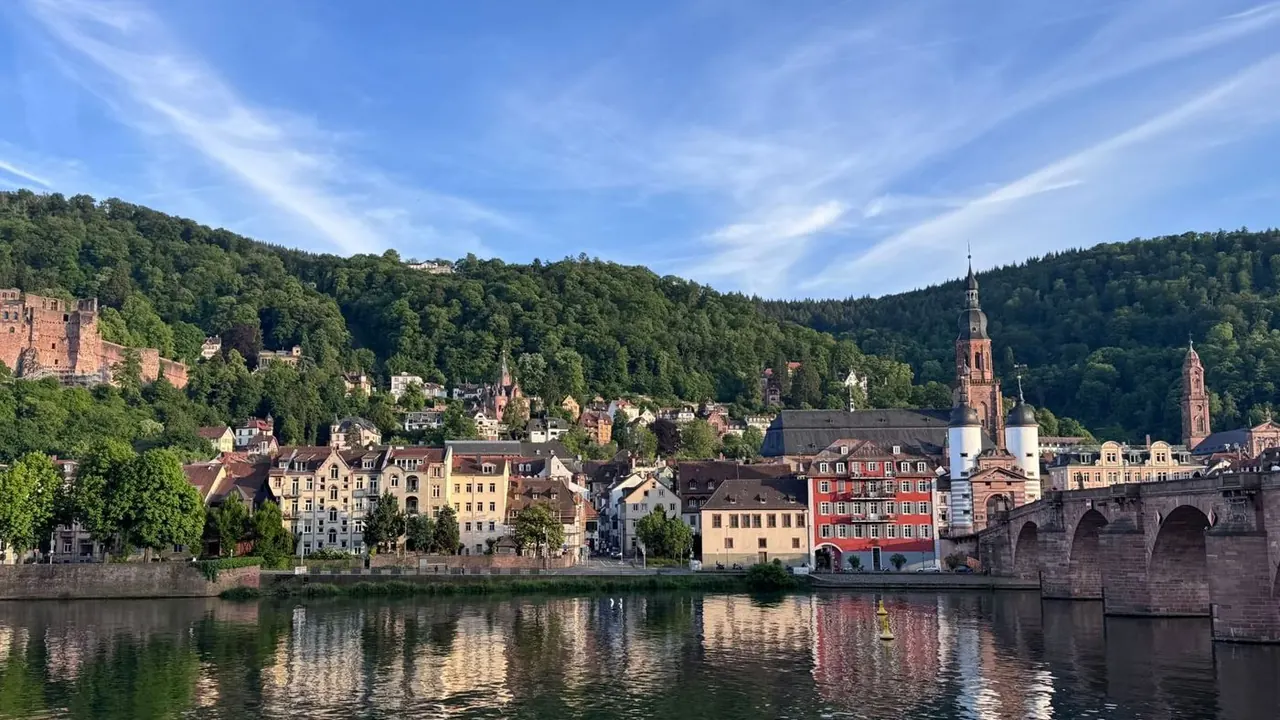
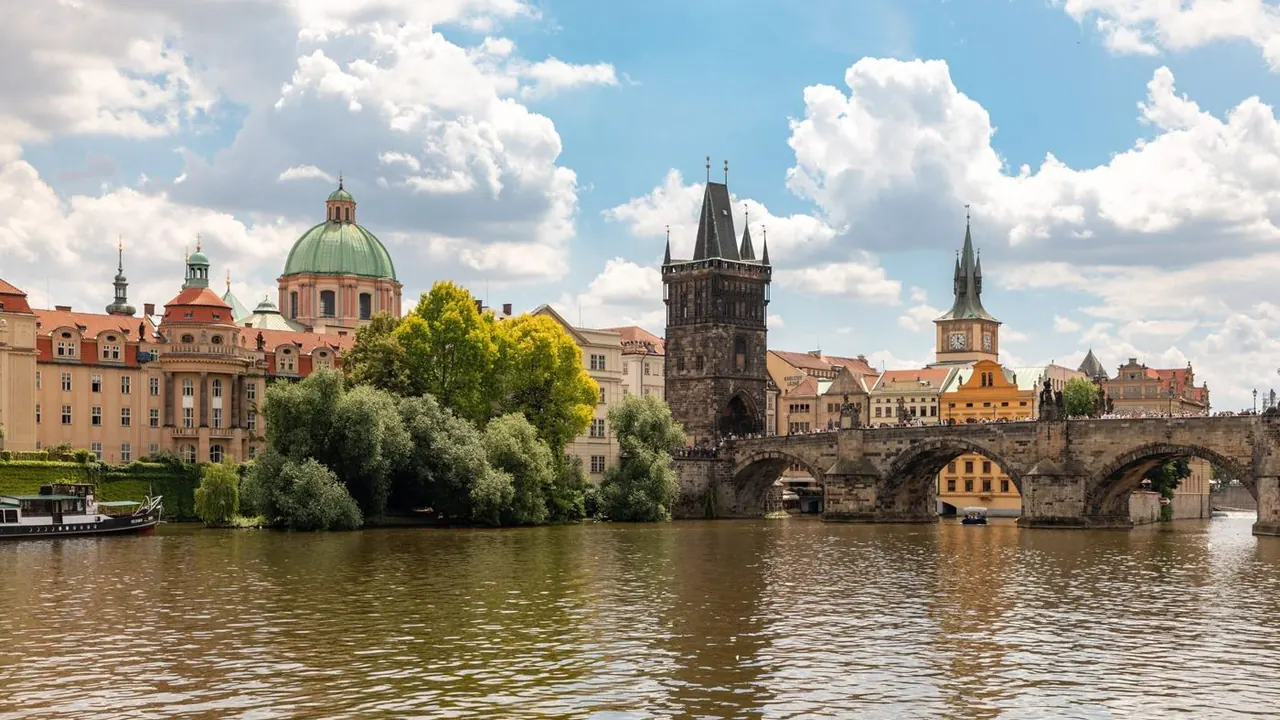
Photos: Heidelberg by Kuanling Chen, Pexels License; Prague by Dietmar Rabich, CC BY-SA 4.0, cropped.
Heidelberg or Prague?
Our verdict in twelve categories, each scored against the same fixed benchmark cities, and the climate month by month, so you can choose for your trip.
Choose Heidelberg for
- families
- wellness
- nature and the outdoors
Heidelberg suits a slower, smaller trip. It is a university town of one long street, a ruined castle and forest that starts where the houses stop, and it works well for families, walkers and anyone who likes wine. It also makes a calm base for the cathedrals and palaces of the Upper Rhine, but its sights, restaurants and evenings are those of a small city.
Choose Prague for
- live music and the arts
- nightlife
- culture and sights
Prague is the place for a trip built around the city itself. The historic centre is far larger and richer, the opera houses and concert halls rank among Europe's best, and the pubs and clubs keep going long after Heidelberg has gone quiet. Away from the tourist core, a stay also costs noticeably less. You pay for that in crowds, so it suits travellers happy to get up early and eat a tram ride from the main squares.
Scoreboard
Twelve categories on one fixed scale from 0 to 100. The shaded stretch is the gap between the two.
Your match
Pick a travel style or drag the sliders, and both match scores follow your weighting.
Wins on families and wellness with your weighting.
Wins on live music and the arts and nightlife with your weighting.
What matters to you?
Category by category
What the scores mean for a trip.
Beaches & swimming
Neither city is a beach destination, and both send swimmers inland to fresh water. From Heidelberg the choice is the outdoor pools or the gravel-pit lakes on the Rhine plain, half an hour away. Prague has the Dzban reservoir right on its north-western edge, plus Slapy on the Vltava, about an hour away, whose wooded banks and cabins feel more like a proper lakeside day out.
Food & drink
Prague eats better, though mainly if you like beer. Unpasteurised tank lager, microbreweries, svickova and goulash, and cheap chlebicky and buffet lunches give it a stronger and more distinctive table, as long as you eat in Vinohrady, Karlin or Letna rather than around Old Town Square.
Heidelberg's strength is wine instead. Riesling and Pinot come from the Bergstrasse vineyards on the edge of town, and the cooking runs to Schäufele, Maultaschen and spring asparagus. The best meals are in Neuenheim and in the village wine taverns, but the range is that of a small university town.
Culture & sights
Prague is in another league here. A whole UNESCO-listed centre runs from St Vitus Cathedral and Golden Lane down through Baroque Mala Strana, across the Charles Bridge to the Old Town and Josefov, with Art Nouveau and Cubist buildings on top. It takes three or four days and still leaves you wanting more.
Heidelberg's set is lovely but small: the red sandstone castle ruin with the Great Tun, the Old Bridge, the Church of the Holy Spirit and the university's Student Prison. Most visitors see it all in a day or two, and it is far easier to photograph without crowds in your way.
Nightlife
Prague offers far more after dark. It has packed pubs in Zizkov, wine and cocktail bars in Vinohrady, summer beer gardens on Letna, and two club circuits: big late venues in the centre and a more interesting techno scene in Holesovice.
In Heidelberg a night out mostly means the Untere Strasse, a single lane of small student pubs and old fraternity taverns. It is lively in term time and quiet on weeknights and out of term, and for a real club night locals take the train to Mannheim or Frankfurt.
Nature & outdoors
The two are about level, but in Heidelberg the outdoors begins at the door. You can take the Philosophers' Walk, ride the funicular up the Königstuhl into hours of Odenwald forest, or cycle the Neckar Valley path past castles.
Prague's green spaces sit inside the city, from Petrin Hill and Stromovka to the rocky Divoka Sarka gorge. Its best hiking, among the sandstone towers of Bohemian Switzerland, is about two hours away, so it needs a dedicated day out rather than an afternoon.
Day trips
Both make excellent bases, and the choice comes down to what you want to see. From Heidelberg the outings are Rhine cathedrals and palaces: Speyer, Worms, Schwetzingen, Lorsch and Maulbronn. Then there are the wine villages of the Palatinate, and Strasbourg for a long day.
Prague's day trips are Bohemian castles and towns: Karlstejn, Konopiste and silver-mining Kutna Hora with its ossuary. Add the sobering visit to Terezin and a train along the Elbe to Dresden. Cesky Krumlov is really better with an overnight stay.
Good for families
Heidelberg is the gentler place to bring children. The funicular up to the castle and the fairy-tale park on the Königstuhl, a compact zoo and river boats are all within easy reach. The space shuttle and submarine at the Technik Museum Speyer are half an hour away, and there is a theme park in the Palatinate.
Prague has one outstanding draw in the Troja zoo, with its chairlift and hillside enclosures, plus the astronomical clock and the Petrin mirror maze. But the summer crowds, long castle stairs and steep cobbles make it more tiring than Heidelberg.
Getting around
Prague is the easier city to move around. Three metro lines, a dense tram network that runs all night and integrated tickets take you almost anywhere, and a tram even does the castle climb for you. The one catch is pickpockets on the busy central lines.
Heidelberg is mostly a walk along the pedestrianised Hauptstrasse. But the station is well west of the Altstadt, so you need a tram in, and the castle approach is steep. Its real strength is the Rhine-Neckar fare system, which makes trips to Speyer or Mannheim simple.
Shopping & style
Prague gives a shopper more to do. Luxury labels line Parizska Street, chains fill Na Prikope, and the distinctive Czech buys are Bohemian crystal, garnets and marionettes. Small design and vintage shops in Vinohrady and Holesovice repay a browse.
Heidelberg has one long street, with high-street chains at the western end and steins and cuckoo clocks towards the market square. A bottle of Bergstrasse wine is the best thing to take home, and serious shopping means a train to Frankfurt.
Affordability
Prague goes further on a modest budget. Beer, pub lunches and transport are cheap, and staying a few tram stops out in Zizkov or Karlin keeps costs down, as long as you avoid the riverside restaurants and the exchange booths in the centre.
Heidelberg costs what western Germany costs. Rooms are scarce and get dearer around congresses and summer weekends, which is why many visitors stay in Mannheim. Student cafés and bakeries keep meals reasonable.
Live music & performing arts
Prague is a major music city. It has three opera stages, including the Estates Theatre where Don Giovanni had its premiere, the Czech Philharmonic at the Rudolfinum, the Prague Spring festival, and black-light and marionette theatre that need no Czech.
Heidelberg does well for its size. The municipal theatre stages opera and dance, the Heidelberger Frühling brings chamber music in spring, and in summer plays and concerts are staged in the castle courtyard against the ruins. For a bigger house you take the train to Mannheim.
Wellness & relaxation
Neither city has baths of its own, but Heidelberg is closer to real ones. The thermal complexes of the Kraichgau are about half an hour away and Baden-Baden is about an hour, while Prague's famous spa towns lie far off in western Bohemia, leaving it with hotel spas, massage studios and novelty beer baths.
For simply slowing down, both are pleasant. In Heidelberg that means evenings on the Neckar meadows in Neuenheim. In Prague it means a grand old coffee house or a quiet bench on Kampa island.
When should you go?
Pick your month. The climate figures are measured averages, not a forecast.
Heidelberg in July
Prague in July
Daytime high, °C
Rainfall in the month, mm
Temperature and rainfall are climate normals, averaged over the years shown. Heidelberg: 1991-2020 normals, Heidelberg (4.5 km from centre). Prague: 1991-2020 normals, Praha-Libus (8.1 km from centre).
The two climates are close, and May to September is the best stretch in both. Summer highs reach about 26°C in Heidelberg and a degree less in Prague. That is warm enough for a lake or reservoir swim in July and August, and rarely too hot for walking the streets. Summer is also the wettest season in both, with Prague's rain falling mostly from May to August. The two get much the same sunshine through the year, with the most in July and very little in December.
Winter is where they differ. Prague is colder, with January highs of about 2°C, but drier, at around 22mm to 31mm a month from November to April. Heidelberg stays a few degrees milder and gets roughly twice as much rain over those months. In spring Heidelberg warms a little sooner, which suits the early blossom on the Bergstrasse. September and early October are pleasant walking months in both.
Which traveller are you?
On a culture and arts trip, Prague will fill a week without repeating itself. You can spend the days in churches, palaces and galleries, the evenings at the opera or a concert, and take the castle towns of Bohemia as a change of scene. Heidelberg's own sights take a day or two, and after that the trip becomes a string of excursions.
On a tight budget, Prague makes the money go further over the whole stay. Meals, drinks and evenings out all cost less, and much of the old centre's beauty is in its streets, squares and bridges, which are free. In Heidelberg most costs are western German, although the regional ticket keeps excursions affordable.
On a family trip with young children, Heidelberg is the more relaxed choice. It is a small, safe town, so the hotel is never far away for a rest, and there are forest and river meadows where children can run off energy. Outings need little planning. Prague delights children with its storybook look, but it asks more stamina of everyone.
Before you go
| Measure | Heidelberg | Prague |
|---|---|---|
| Official language | German | Czech |
| Currency | Euro (EUR) | Czech Koruna (CZK) |
| Sockets | CF230 V, 50 Hz | CE230 V, 50 Hz |
| Driving side | Right | Right |
| Time zone | UTC+1, UTC+2 in summer | UTC+1, UTC+2 in summer |
| Emergency number | 112 | 112 |
| Elevation | 114 m | 235 m |
| Main airport | Frankfurt Main Airport (FRA)69 km from centre281 non-stop destinations | Václav Havel Airport Prague (PRG)12 km from centre178 non-stop destinations |
| Public holidays this year | 12 days | 13 days |
By the numbers
| Measure | Heidelberg | Prague |
|---|---|---|
| City population | 156,092 | 1,397,880 |
| People per km² | 1,433 | 2,817 |
| Museums within 10 km | 17 | 88 |
| UNESCO World Heritage sites within 50 km | 4 | 1 |
Where else could you go?
Every comparison below shares a destination with this one, so you can follow Heidelberg or Prague somewhere new.