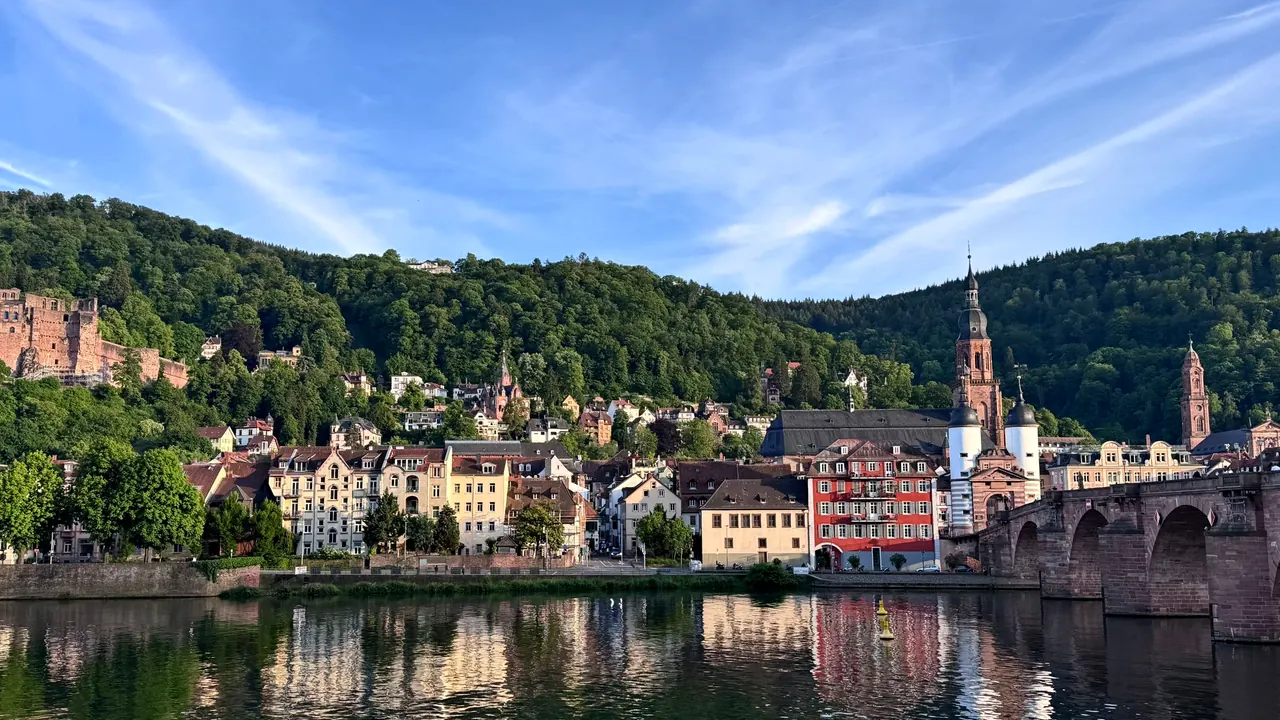
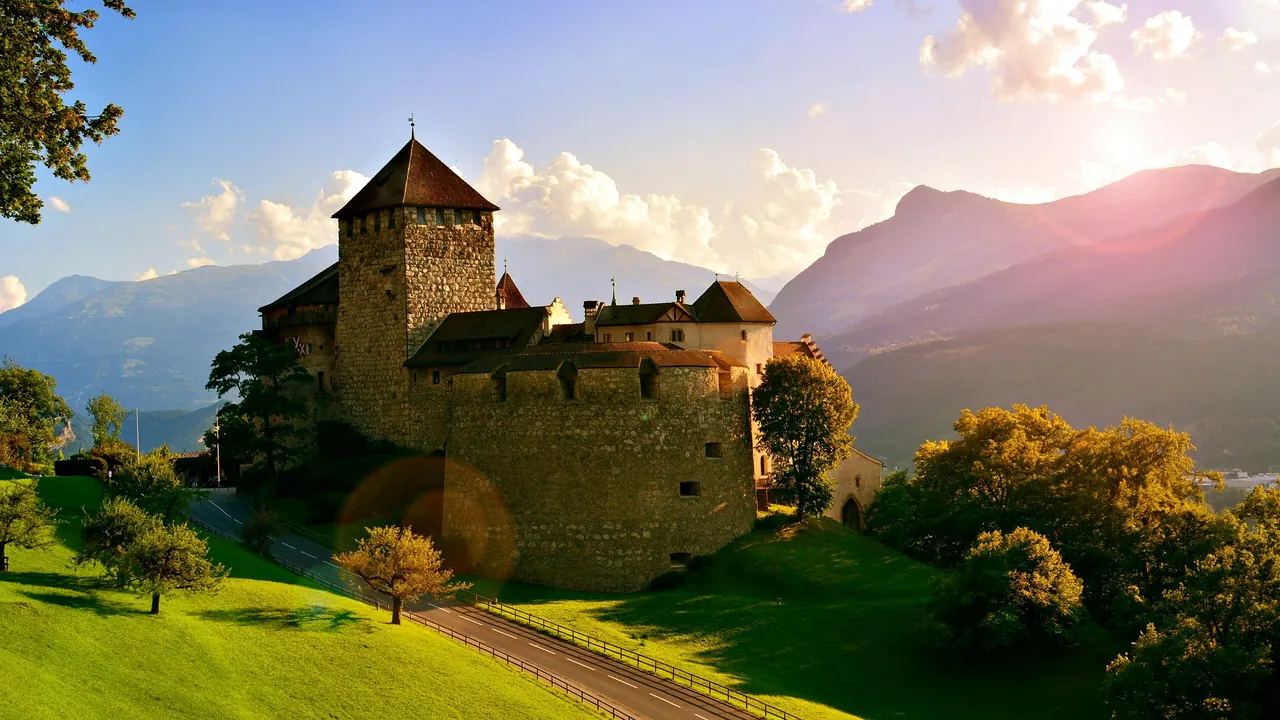
Photos: Heidelberg by Kuanling Chen, Pexels License; Vaduz by Justin LaBerge, CC BY 2.0, cropped.
Heidelberg or Vaduz?
Our verdict in twelve categories, each scored against the same fixed benchmark cities, and the climate month by month, so you can choose for your trip.
Choose Heidelberg for
- prices
- culture and sights
- nightlife
Heidelberg is the choice for a classic old-town trip. You get a castle ruin above the river, Germany's oldest university, wine taverns and student pubs, and a theatre with a real season. It also makes an easy rail base for Speyer, Worms and Frankfurt. It suits couples, culture lovers and families who want plenty to fill each day, and it costs far less to stay than Vaduz.
Choose Vaduz for
- nature and the outdoors
- beaches
Pick Vaduz if the mountains are the point. Trails start from the edge of town, the Rätikon peaks and the ski slopes at Malbun are half an hour up the road, and evenings are quiet and end early. Walkers and people who want a calm few days do best here, especially if they enjoy modern art and can live with Swiss prices and very little going on after dark.
Scoreboard
Twelve categories on one fixed scale from 0 to 100. The shaded stretch is the gap between the two.
Your match
Pick a travel style or drag the sliders, and both match scores follow your weighting.
Wins on prices and culture and sights with your weighting.
Wins on nature and the outdoors and beaches with your weighting.
What matters to you?
Category by category
What the scores mean for a trip.
Beaches & swimming
Neither town is a place to swim, but Vaduz has slightly better options. From Vaduz you can drive in about half an hour to the Walensee, a proper Alpine lake between steep mountain walls, or reach the shores of Lake Constance in under an hour. Heidelberg's choices are its outdoor pools and the flooded gravel pits on the flat Rhine plain, about half an hour out, which are fine for a hot afternoon but far less scenic.
Food & drink
Heidelberg has the wider choice. You'll find hearty Kurpfalz and Baden cooking, white asparagus in spring, and enough students to keep cheap kebab, pizza and Asian food easy to find. The better meals are away from the Hauptstrasse, in the Altstadt side streets, in Neuenheim and in the village wine taverns.
In Vaduz, eating out means a few hotel dining rooms, some restaurants on the Städtle and hill inns serving Käsknöpfle and rösti. The food is solid, but there is no street food or market and the choice is small. Both towns are strongest on wine from their own slopes: Bergstrasse Riesling in Heidelberg, the prince's Pinot Noir in Vaduz.
Culture & sights
Heidelberg has far more to see. The red sandstone castle ruin, the baroque Altstadt rebuilt after 1693 and the Old Bridge with its gate towers make one of Germany's finest old-town settings. The university, founded in 1386, adds the Old University and the graffiti-covered Student Prison.
Vaduz fits into a single day, but it has one real strength: the Kunstmuseum and the Hilti Art Foundation, side by side, hold a modern and contemporary collection that Heidelberg cannot match. The castle, by contrast, is the prince's home and you can only see it from outside.
Nightlife
Heidelberg at least has a night out. In term time the Untere Strasse fills with small pubs and bars until late, old student taverns with carved tables sit nearby, and a few clubs and late bars are out towards the station. Out of term the town goes quiet early.
Vaduz has a few wine bars and hotel lounges on the Städtle and nothing after that. There are no clubs and no late street life. Younger locals go to Feldkirch or Zurich, so plan on early nights.
Nature & outdoors
Vaduz is in a different league for the outdoors. Mountains rise straight from the valley floor, the road reaches Triesenberg and Malbun in about half an hour, and the Rätikon peaks offer exposed paths and long ridge hikes. Malbun adds skiing in winter, and larger Swiss resorts are within an hour.
Heidelberg's countryside is gentler. You can walk the Philosophers' Walk, take the funicular up the Königstuhl at 568m and follow forest trails, cycle the Neckar Valley path, or walk among almond blossom on the Bergstrasse. It is lovely walking and cycling country, but there are no mountains.
Day trips
Both are good bases, and Heidelberg is slightly easier. Speyer's Romanesque cathedral, Schwetzingen's palace, Worms, Lorsch and Maulbronn are all close, Frankfurt and Mainz are about an hour by train, and one regional fare system makes it simple to go without a car.
Vaduz gives more variety across borders. Feldkirch in Austria is twenty minutes away, St Gallen's abbey library and painted Appenzell are about an hour, and Lindau and Bregenz are on Lake Constance. The catch is the trains: connections often mean a change at Buchs or Sargans, so a car helps.
Good for families
Young children can spend a whole week busy around Heidelberg. The funicular ride to the castle is an outing in itself, there is a small fairy-tale park at the top of the Königstuhl, a well-kept zoo by the river and boat trips past castles. The Technik Museum Speyer, where children can climb into a space shuttle and a submarine, is about half an hour away, and a theme park is under an hour.
Vaduz has no zoo, aquarium or theme park, and its museums are about modern art and stamps. Its flat, quiet centre is easier with a pushchair than Heidelberg's cobbles and slopes, though. It works best for older children who enjoy mountain walks, open-air pools or the beginner slopes at Malbun.
Getting around
Both centres are easy on foot. Heidelberg's Altstadt is a long pedestrian strip along the Hauptstrasse, and the station is a tram ride west of it. Trams, buses and the S-Bahn share one fare system across the Rhine-Neckar area, so day trips by public transport are easy.
Vaduz's Städtle is even more compact and completely flat, and buses reach every village and climb up to Malbun. The town has no train station, though, so going further afield means changing at Buchs, Sargans or Feldkirch, and many visitors find a car easier.
Shopping & style
Heidelberg is a real shopping street, Vaduz is a handful of shops. The Hauptstrasse, one of Germany's longest pedestrian streets, has chains and department stores at one end and souvenirs, Studentenkuss chocolates and beer steins at the other, with independent bookshops and boutiques in the side lanes.
Vaduz's Städtle sells watches, jewellery and the collectable Liechtenstein stamps, and there are no department stores or markets. In both towns local wine is the best thing to take home. For serious shopping, Heidelberg is a short train ride from Frankfurt, while Vaduz is a longer trip from Zurich.
Affordability
Heidelberg is much the cheaper stay. It costs what you'd expect in western Germany, with hotels the main expense, especially during congresses and graduations. Student cafés and simple taverns keep meals reasonable, and staying in Mannheim is an easy way to save.
Vaduz charges Swiss prices for everything from a room to a simple lunch, and with only a few hotels there is little at the budget end. Buses and museums don't add much, but meals and rooms do, which is why some visitors sleep across the border in Austria.
Live music & performing arts
Heidelberg offers much more on stage. Its municipal theatre runs a full season of opera, drama and dance with its own philharmonic orchestra. In spring the Heidelberger Frühling festival brings chamber music, and in summer plays and concerts are staged in the castle courtyard. Mannheim's larger opera house is twenty minutes away by train.
Liechtenstein's main stage is in neighbouring Schaan, its symphony orchestra gives only a short season, and Vaduz has a summer classical festival. Over a week you'll probably find something to attend, but not much choice.
Wellness & relaxation
The two are about even here, and neither has thermal baths of its own. From Heidelberg you can reach the thermal complexes of the Kraichgau spa towns in about half an hour and Baden-Baden in an hour. From Vaduz, the centuries-old Tamina spring baths at Bad Ragaz are only twenty-five minutes away.
The difference is how calm the towns are. Vaduz is quiet all day, with mountain views from every street. Heidelberg's calm is in the Neckar meadows and forest paths, while the Hauptstrasse and the castle are crowded at midday.
When should you go?
Pick your month. The climate figures are measured averages, not a forecast.
Heidelberg in July
Vaduz in July
Daytime high, °C
Rainfall in the month, mm
Where the figures come from
Vaduz's temperatures are measured 51 km from the centre, at Sigmarszell-Zeisertsweiler.
Vaduz has no rain gauge within 25 km of the centre, so its rainfall comes from a gridded climate dataset read at the destination rather than from a gauge further away.
Temperature and rainfall are climate normals, averaged over the years shown. Heidelberg: 1991-2020 (sunshine 1971-2000) normals, Heidelberg (4.5 km from centre). Vaduz: 1991-2020 normals, Sigmarszell-Zeisertsweiler (51.3 km from centre).
Both towns are at their best from late May to September. Heidelberg is the warmer and drier of the two, with July and August highs around 26°C and rain spread fairly evenly through the year. That is warm enough for long evenings on the Neckar meadows and an afternoon at the gravel-pit lakes, though midsummer can feel close in the sloping Altstadt. Vaduz stays a little cooler at about 24°C, which is good walking weather. Summer is also its wettest season, though, with rain rising to 126mm in August, so mountain days need a flexible plan.
December and January are cold in both, with highs of only 4°C to 6°C, and November and February are only a little milder, so walking the streets takes a good coat. Vaduz gets noticeably more sunshine in these dark months, and with Malbun's slopes close by it has a real winter season. Heidelberg's grey winters are better spent in museums and taverns. Spring comes a little earlier in Heidelberg, which stays a couple of degrees warmer through March and April.
Which traveller are you?
On an outdoors trip, Vaduz is the clear pick. Trails climb from the town centre, the Rätikon offers high ridge walks and the Fürstensteig, and Malbun has skiing in winter. Heidelberg's Odenwald forest is pleasant but gentle by comparison.
On a trip on a tight budget, go to Heidelberg. Hotels can be dear at busy times, but student cafés, bakeries and the regional transport ticket keep costs down. In Vaduz, Swiss-level prices for rooms and meals make even a short stay expensive.
For a culture and arts trip, Heidelberg has much more to offer: the castle, the Old Bridge, the Student Prison, and opera and drama at the municipal theatre. Vaduz has two excellent modern art collections but little else to fill a second day.
Before you go
| Measure | Heidelberg | Vaduz |
|---|---|---|
| Official language | German | German |
| Currency | Euro (EUR) | Swiss Franc (CHF) |
| Sockets | CF230 V, 50 Hz | CJ230 V, 50 Hz |
| Driving side | Right | Right |
| Time zone | UTC+1, UTC+2 in summer | UTC+1, UTC+2 in summer |
| Emergency number | 112 | 112 |
| Elevation | 114 m | 455 m |
| Main airport | Frankfurt Main Airport (FRA)69 km from centre297 non-stop destinations | Zürich Airport (ZRH)81 km from centre226 non-stop destinations |
| Public holidays this year | 12 days | 21 days |
By the numbers
| Measure | Heidelberg | Vaduz |
|---|---|---|
| Population | 156,092 | 5,668 |
| People per km² | 1,433 | 328 |
| Museums within 10 km | 17 | 7 |
| UNESCO World Heritage sites within 50 km | 4 | 3 |
Where else could you go?
Every comparison below shares a destination with this one, so you can follow Heidelberg or Vaduz somewhere new.
- Frankfurtvs Heidelberg
- Stuttgartvs Heidelberg
- Zurichvs Vaduz
- Baden-Badenvs Heidelberg
- Lucernevs Vaduz
- Rothenburg ob der Taubervs Heidelberg