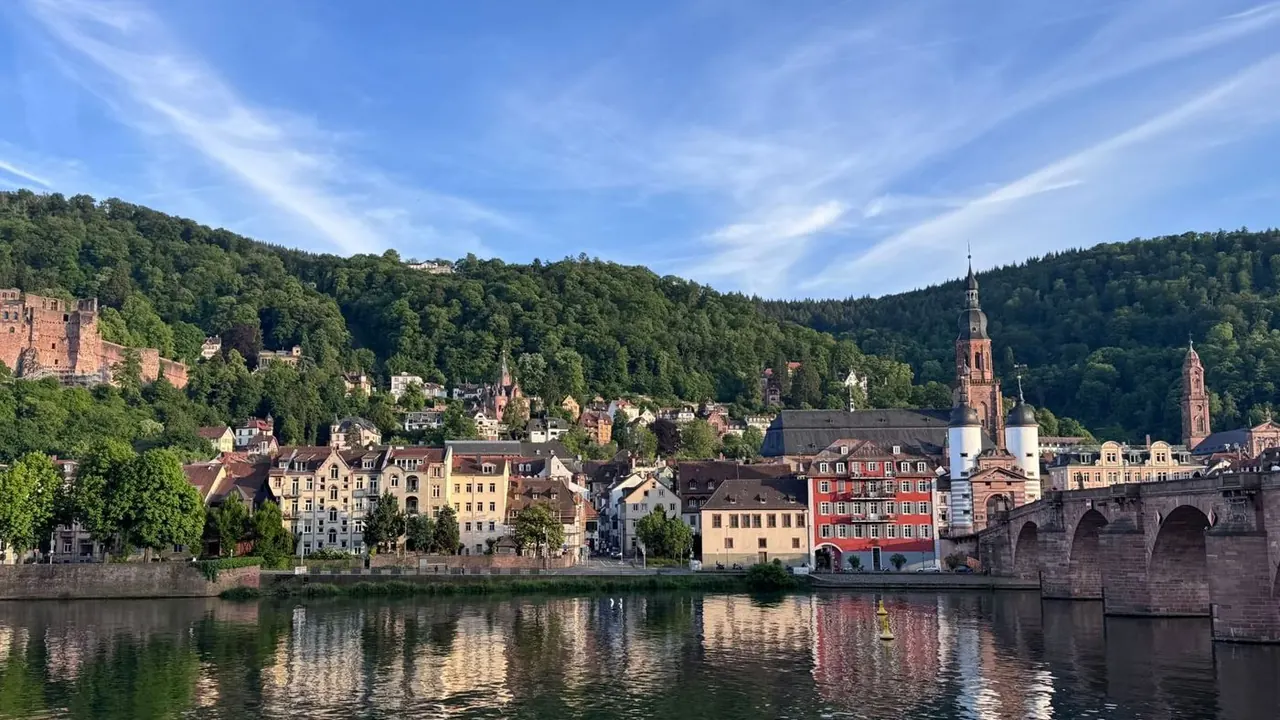
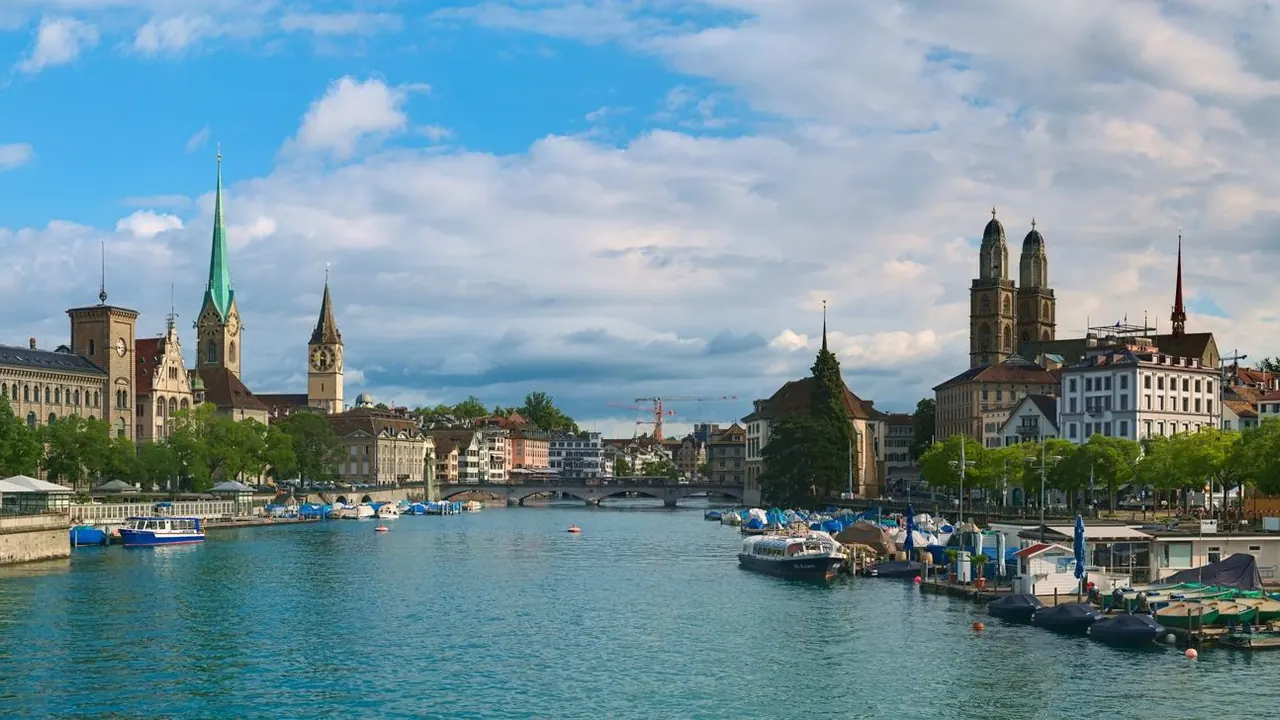
Photos: Heidelberg by Kuanling Chen, Pexels License; Zurich by Daniel Kraft, CC BY-SA 3.0, cropped.
Heidelberg or Zurich?
Our verdict in twelve categories, each scored against the same fixed benchmark cities, and the climate month by month, so you can choose for your trip.
Choose Heidelberg for
- prices
Heidelberg suits travellers who want a romantic old university town without Swiss prices: a red sandstone castle ruin above the Neckar, wine taverns in the Bergstrasse villages, student pubs in the Altstadt and short train rides to Speyer, Worms and Schwetzingen. It makes a calm, compact stop of two days, or a cheaper base for exploring the Upper Rhine.
Choose Zurich for
- beaches
- shopping
- nightlife
Zurich is the better choice for a fuller, more active trip, provided the budget can take it. The lake gives you summer swimming and boat trips, real Alps lie within an hour, the opera house and the Tonhalle set a higher standard on stage, and the clubs of Kreis 4 and 5 stay open until morning. Everything runs smoothly, and everything costs a great deal.
Scoreboard
Twelve categories on one fixed scale from 0 to 100. The shaded stretch is the gap between the two.
Your match
Pick a travel style or drag the sliders, and both match scores follow your weighting.
Wins on prices with your weighting.
Wins on beaches and shopping with your weighting.
What matters to you?
Category by category
What the scores mean for a trip.
Beaches & swimming
Neither city is a beach destination, but Zurich is much better for a swim. Its lake lidos at Utoquai, Mythenquai and Tiefenbrunnen and the Letten river baths on the Limmat put clean, clear water a short walk from the old town from June to early September, though you swim from grass and wooden decks rather than sand.
Heidelberg's Neckar is not for swimming. On a hot afternoon there your choices are the outdoor pools or a half-hour trip to the gravel-pit lakes on the Rhine plain.
Food & drink
Zurich is the more dependable place to eat. It has veal Geschnetzeltes with rösti, fondue in wood-panelled guild houses, a solid fine-dining tier and outstanding confectionery, with Luxemburgerli from the old tea rooms on Paradeplatz as the classic treat. What it lacks is street food and markets, and every meal is expensive.
Heidelberg's cooking is heavier and plainer, with Schäufele, Maultaschen and white asparagus in spring, and the restaurants aimed at visitors below the castle are uneven. Its strength is wine: Bergstrasse and Palatinate Riesling poured in village taverns for much less than Zurich charges.
Culture & sights
The two are evenly matched for sightseeing but very different in kind. Heidelberg is one famous view: the castle ruin above a baroque Altstadt and the Old Bridge, plus Germany's oldest university with its graffiti-covered Student Prison. You can see it all in a day or two.
Zurich relies on museums and churches. The Kunsthaus has Monet, Munch and Giacometti, alongside the Swiss National Museum, the Rietberg's art from Asia, Africa and the Americas, the Grossmünster where the Swiss Reformation began and the Chagall windows of the Fraumünster. Allow two or three days.
Nightlife
The difference is pubs against clubs. Heidelberg's evenings centre on the small bars of the Untere Strasse and the old student taverns with their carved tables. These fill up late in term time, but go quiet early on weeknights and outside term. For a real club night, people take the train to Mannheim or Frankfurt.
After dark, Zurich offers far more. Electronic music runs until morning at weekends in the clubs around Langstrasse and in the converted industrial spaces of Zurich West. The Street Parade fills the lake shore each August, and in summer the bathing houses double as bars. The catch is the price of every round.
Nature & outdoors
Zurich has the grander setting. The lake stretches towards the snow-capped Glarus Alps, the Uetliberg ridge is a short train ride away, and Rigi, Pilatus and ski slopes such as Flumserberg are all within about an hour.
Heidelberg is greener and gentler. Forest begins at the edge of the old town, the Philosophers' Walk and the Königstuhl trails lead into hours of woodland, and the Neckar cycle path and the Palatinate Forest suit walkers and cyclists, but there are no mountains.
Day trips
Both cities make excellent bases, and Zurich comes out slightly ahead because it sits at the centre of the Swiss rail network. Lucerne, Bern, Basel, St Gallen and the Rhine Falls are each about an hour away or less, and lake boats run up to Rapperswil.
Heidelberg's outings are shorter and lean more to history: the great cathedrals of Speyer and Worms, the palace at Schwetzingen, Maulbronn monastery and the half-timbered Palatinate wine villages, with Strasbourg possible on a long day.
Good for families
Zurich is the easier city with children. The zoo has a Madagascar rainforest hall and an elephant park, the lake lidos have shallow water in summer and the trams take buggies without fuss. Technorama is also a short train ride away.
Heidelberg works well too, with the funicular, the small fairy-tale park on the Königstuhl and the Technik Museum Speyer nearby. It also has a large theme park within reach, which Zurich does not. Its cobbled, sloping Altstadt is hard going with a pushchair.
Getting around
Zurich is close to effortless: trams reach every district, the S-Bahn, funiculars and even the lake boats share one ticket, and the airport is a short train ride from the main station. In Heidelberg the Hauptstrasse makes the Altstadt easy to walk, but you need a tram from the station, the castle approach is steep and the cobbles slow you down, although the Rhine-Neckar fare system makes day trips easy.
Shopping & style
Heidelberg is good for everyday shopping but is not a reason to make the trip. The long, pedestrianised Hauptstrasse gives you familiar German chains and souvenirs such as cuckoo clocks and Studentenkuss chocolates, cheaper than anything in Zurich but without its polish. The best thing to bring home is a bottle of wine from the nearby Bergstrasse vineyards. For serious fashion, people from Heidelberg take the train to Mannheim or Frankfurt.
Zurich is much better if you want to buy something special. Bahnhofstrasse runs from the station to the lake past watchmakers, jewellers and fashion houses, the Niederdorf lanes add antique shops, and the viaduct arches in Zurich West hold design stores. Outside luxury and design the choice is narrow, and nothing is cheap.
Affordability
This is where Heidelberg wins clearly. It costs what you would expect in western Germany, with hotels the main expense, and student cafés, bakeries and taverns keep eating out cheap.
Zurich is very expensive at every level, from a simple hotel room to a casual lunch or a drink. Supermarket picnics by the lake and the free lidos help, but the same week costs far more there than in Heidelberg.
Live music & performing arts
Zurich is clearly ahead here. The Opernhaus is one of Europe's most respected opera houses, the Tonhalle Orchestra plays in a restored nineteenth-century hall and the Schauspielhaus is a leading German-language theatre, while the Rote Fabrik covers jazz, indie and electronic music.
Heidelberg does well for a town of its size. Its municipal theatre stages opera and drama, the Heidelberger Frühling brings chamber music in spring, and summer performances in the castle courtyard are its most memorable setting.
Wellness & relaxation
Zurich has more to offer within the city. There are thermal pools and a rooftop pool in the vaults of the old Hürlimann brewery, the lake bathing houses become saunas with cold-water dips in winter, and the hot springs of Baden are twenty minutes away. Heidelberg has no baths of its own, so a proper soak means the Kraichgau spa towns or Baden-Baden. Evenings on the Neuenheim meadows and quiet forest paths still make it an easy town to unwind in.
When should you go?
Pick your month. The climate figures are measured averages, not a forecast.
Heidelberg in July
Zurich in July
Daytime high, °C
Rainfall in the month, mm
Temperature and rainfall are climate normals, averaged over the years shown. Heidelberg: 1991-2020 normals, Heidelberg (4.5 km from centre). Zurich: 1991-2020 normals, Zurich Town / Ville. (2.2 km from centre).
The two share a central European rhythm, with mild springs, warm summers and cold, grey winters, but Heidelberg runs a little warmer and much drier. In July and August its highs reach about 26°C against Zurich's 24°C. Zurich's wettest stretch is the summer itself, with around 126mm in May and again in July, while Heidelberg's wettest month brings only about 80mm. That makes Heidelberg the more reliable choice for long walking days from May to September, and its summers are also slightly sunnier.
For walking around either town, late spring and September are the most comfortable. Swimming in Zurich's lake and river baths is a June to early September affair, and the same months suit Heidelberg's outdoor pools and gravel-pit lakes. From November to February highs sit around 5°C in both, with short days and little sunshine. In Zurich, fog often lies over the lake while the mountains above are in sun.
Which traveller are you?
On a trip on a tight budget, Heidelberg is the obvious pick. Student cafés, bakeries and simple taverns keep meals reasonable, and the regional ticket makes day trips cheap. In Zurich even a casual lunch or one round of drinks strains most budgets.
For an outdoors trip, Zurich has the edge. The Uetliberg and the lakeside paths start in the city, and Rigi, Pilatus and the Glarus valleys put high-mountain hiking within an hour. Heidelberg offers gentler forest trails in the Odenwald and cycling along the Neckar.
On a food and nightlife trip, Zurich gives you more: Geschnetzeltes or guild-house fondue at dinner, then techno clubs in Kreis 4 and 5 and Zurich West until morning. Heidelberg's evenings centre on student pubs and go quiet outside term, although its local wine is better value.
Before you go
| Measure | Heidelberg | Zurich |
|---|---|---|
| Official language | German | French, German, Italian, Romansh |
| Currency | Euro (EUR) | Swiss Franc (CHF) |
| Sockets | CF230 V, 50 Hz | CJ230 V, 50 Hz |
| Driving side | Right | Right |
| Time zone | UTC+1, UTC+2 in summer | UTC+1, UTC+2 in summer |
| Emergency number | 112 | 112 |
| Elevation | 114 m | 408 m |
| Main airport | Frankfurt Main Airport (FRA)69 km from centre281 non-stop destinations | Zürich Airport (ZRH)9 km from centre226 non-stop destinations |
| Public holidays this year | 12 days | 10 days |
By the numbers
| Measure | Heidelberg | Zurich |
|---|---|---|
| City population | 156,092 | 440,935 |
| People per km² | 1,433 | 5,016 |
| Museums within 10 km | 17 | 63 |
| UNESCO World Heritage sites within 50 km | 4 | 1 |
Where else could you go?
Every comparison below shares a destination with this one, so you can follow Heidelberg or Zurich somewhere new.