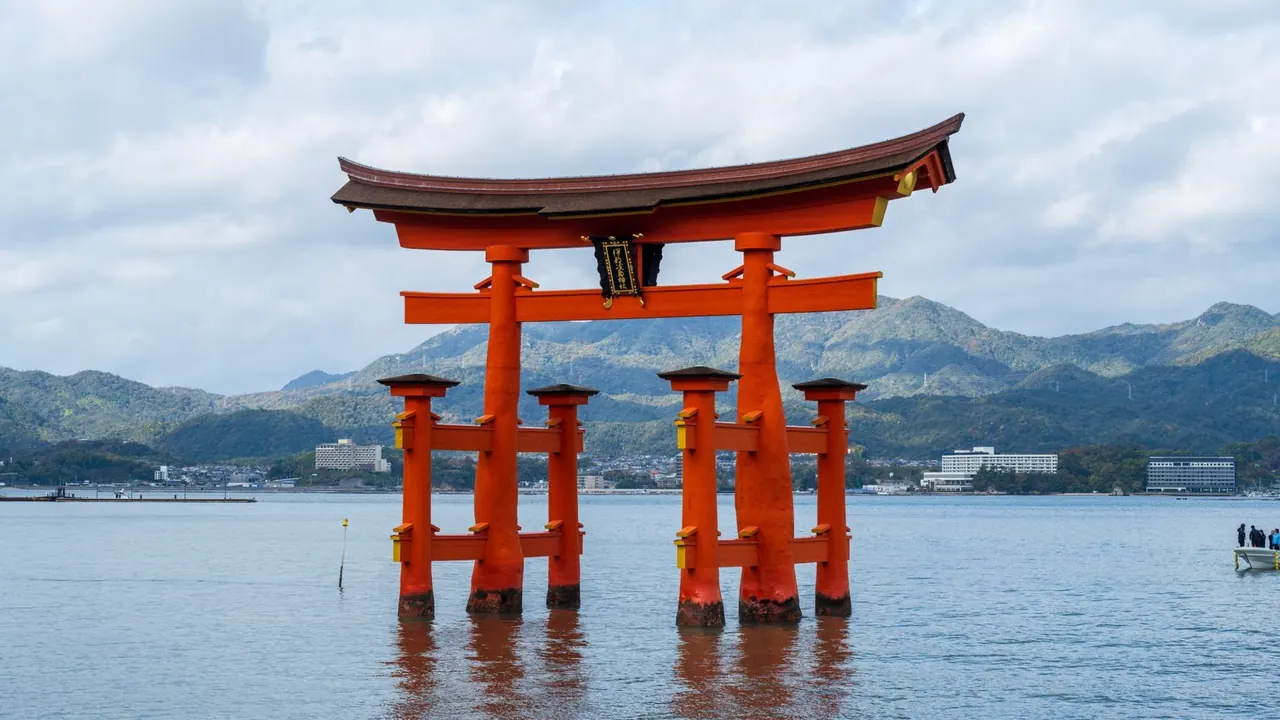
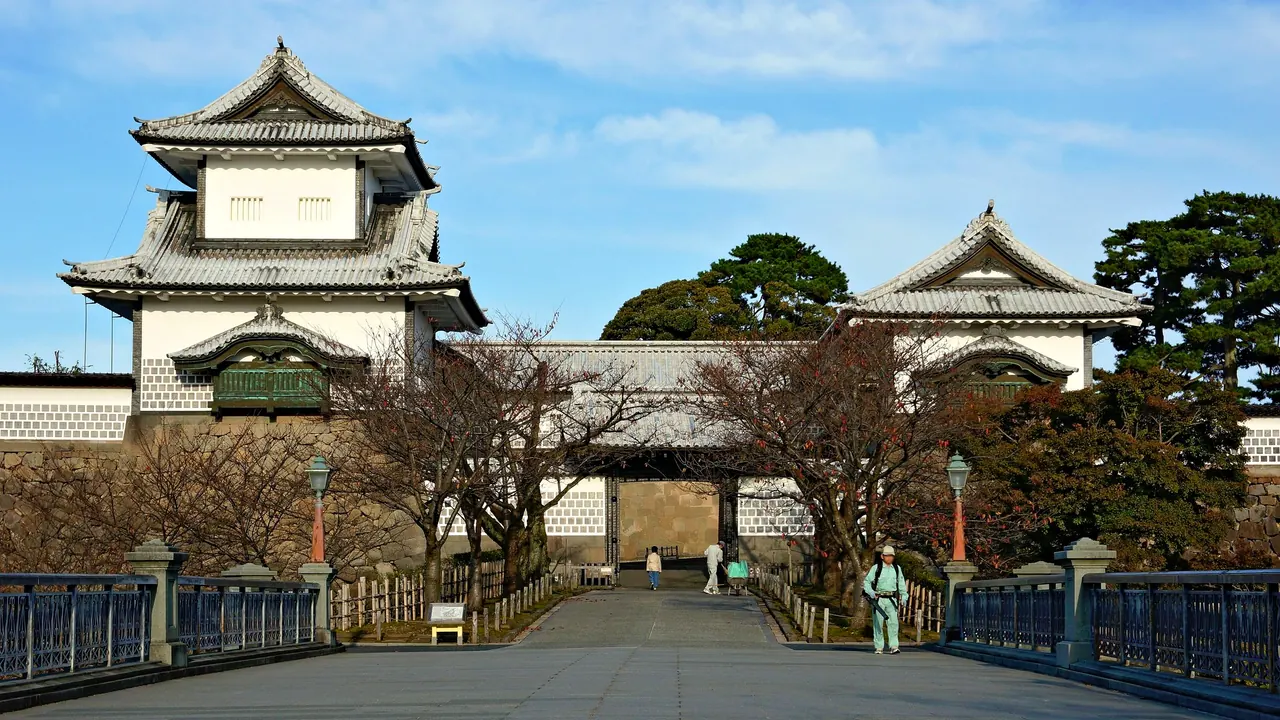
Photos: Hiroshima by Guohua Song, Pexels License; Kanazawa by 663highland, CC BY 2.5, cropped.
Hiroshima or Kanazawa?
Our verdict in twelve categories, each scored against the same fixed benchmark cities, and the climate month by month, so you can choose for your trip.
Choose Hiroshima for
- nightlife
- getting around
- nature and the outdoors
Hiroshima suits travellers who want to see the Peace Memorial Park and then spend the rest of the trip on the water. The Inland Sea islands, Miyajima and the coastal towns are all within easy reach by tram, train and ferry, so you never need a car. The evenings in Nagarekawa are livelier too, which makes it the better choice for an active trip with some nightlife.
Choose Kanazawa for
- wellness
- culture and sights
- shopping
Kanazawa is for the traveller who wants old Japan still standing. The Edo-period streets survived the war intact, so the gardens, geisha districts, samurai lanes and craft workshops fill whole days of slow wandering. Hot-spring villages are close by, and the tea and seafood culture runs deep, so a calm, refined stay works far better here than it does in Hiroshima.
Scoreboard
Twelve categories on one fixed scale from 0 to 100. The shaded stretch is the gap between the two.
Your match
Pick a travel style or drag the sliders, and both match scores follow your weighting.
Too close to call, 1 point apart
Wins on nightlife and getting around with your weighting.
Wins on wellness and culture and sights with your weighting.
What matters to you?
Category by category
What the scores mean for a trip.
Beaches & swimming
Neither city is worth choosing for the beach, and both have a swimming season of about two months. The beaches themselves are quite different. Hiroshima's swimming is on the calm, sheltered Inland Sea, but only on small island beaches reached by ferry, and jellyfish arrive late in the season.
Kanazawa has long, open sandy strands on the Sea of Japan just outside town, from Uchinada up to Chirihama, where cars drive on the hard sand. Outside high summer, though, that coast is windswept and grey.
Food & drink
Both cities eat well, but in very different ways. Hiroshima is casual and centred on one dish: layered okonomiyaki eaten off the griddle in buildings full of small stalls, along with winter oysters and sake tastings in Saijo.
Kanazawa has more depth and more refinement. Omicho Market's seafood bowls and winter snow crab, Kaga cooking such as jibuni and nodoguro, and wagashi with matcha in the chaya teahouses give it a fine-dining tier and a sweet tradition that Hiroshima lacks.
Culture & sights
Kanazawa has much more to see. The war left Hiroshima little older architecture, so its culture is concentrated in one deeply affecting place: the A-Bomb Dome and the Peace Memorial Museum. The castle grounds and Shukkeien garden are the main sights beyond them.
Kanazawa kept its Edo townscape. Kenroku-en, the wooden teahouses of Higashi Chaya and the canal-side samurai walls of Nagamachi can be explored on foot, and the 21st Century Museum and the D.T. Suzuki Museum add a strong modern side.
Nightlife
Hiroshima has the better nights out. Nagarekawa is the biggest entertainment district in its region, a grid of stacked bars, izakaya and karaoke that stays busy past midnight, with a few clubs and some bars used to foreign visitors. It gets busiest after a home baseball game.
Kanazawa's Katamachi is smaller and quieter, with sake bars and snack bars, plus a few bars in old wooden houses in the chaya districts. A long dinner followed by a drink or two is the realistic plan there.
Nature & outdoors
Hiroshima's outdoors is easier to reach and more varied. Ferries cross a calm sea of forested islands. On Miyajima you can walk or ride up Mount Misen among wild deer, Sandankyo Gorge has autumn colours, and the Shimanami Kaido is one of Japan's best-known cycling routes.
Kanazawa has grander country further out, with Mount Hakusan's alpine trails and ski slopes and the rugged Noto coast, but most of it needs a car. Its long, snowy winters suit skiers more than walkers.
Day trips
From Hiroshima the day trips follow the Inland Sea and the shinkansen line, and slightly more of them are easy to reach. Miyajima's floating torii is under an hour away, Iwakuni's arched bridge and the old ports of Onomichi and Tomonoura are close by, and Himeji Castle and Kurashiki are a fast train ride east.
Kanazawa's best trips head into the mountains instead. Shirakawa-go's thatched farmhouses are a bus ride away, and Takayama's merchant streets make a longer day. The Kaga spa towns and the Zen monastery of Eihei-ji lie to the south.
Good for families
Both cities are safe, clean and easy to manage with children, so the choice comes down to the kind of fun on offer. Hiroshima's is outdoors and lively: feeding the deer on Miyajima, the ropeway, the rabbits of Okunoshima and a singing baseball crowd. Parents need to think carefully about the Peace Memorial Museum's graphic displays.
In Kanazawa, the 21st Century Museum's pool installation and the trick doors of the ninja temple are the highlights. Beyond those, the gardens and teahouses can feel slow to small children, and the dinosaur museum in Fukui is a full day out.
Getting around
Hiroshima is easier to get around. Its flat centre is walkable, the largest tram network in Japan runs all the way to the Miyajima ferry, and the shinkansen stop puts you on the main line between Osaka and Fukuoka.
Kanazawa's sights fit into a pleasant walking band of about 2km. Beyond that, the city has only buses, and the loop lines get crowded. Bike-share helps outside winter, but snow and slush make the colder months harder going.
Shopping & style
Kanazawa is the more rewarding place to shop because its crafts are richer. It makes nearly all of Japan's gold leaf, and Kutani porcelain, Kaga yuzen silk and Wajima lacquer are sold by serious makers as well as souvenir shops.
Hiroshima's shopping centres on the long Hondori arcade. Its best finds are Kumano brushes, Miyajima wooden rice paddles, momiji manju cakes and Saijo sake, which make good things to take home but are a narrower range.
Affordability
Costs are much the same in both cities, with plenty of fairly priced business hotels and cheap everyday meals, but the extra costs fall in different places. In Hiroshima, okonomiyaki keeps food bills low and the Peace Park is free to walk. The costs add up through shinkansen day trips and nights on Miyajima.
In Kanazawa, the local specialities are the luxury: kaiseki dinners, snow crab and ryokan nights in the spa towns, plus the bus to Shirakawa-go.
Live music & performing arts
Kanazawa's traditional stage is a little richer. It has regular Noh at the prefectural theatre, geisha dance and shamisen in the chaya teahouses, and the Orchestra Ensemble Kanazawa, one of Japan's leading chamber orchestras.
Hiroshima's best evening is kagura, a loud, masked Shinto dance-drama staged with visitors in mind. Otherwise it relies on its symphony orchestra and touring shows, and in both cities spoken theatre is in Japanese.
Wellness & relaxation
Kanazawa is much the better place to unwind. Yuwaku Onsen is about half an hour away, the Kaga hot-spring towns about an hour, and many hotels in town have hot-spring baths. Teahouses and garden mornings set an unhurried pace.
Hiroshima has no hot springs of its own. Sento, super-sento and hotel rooftop baths fill the gap, and the nearest true onsen is about an hour away. A ryokan night on Miyajima is its quietest option.
When should you go?
Pick your month. The climate figures are measured averages, not a forecast.
Hiroshima in July
Kanazawa in July
Daytime high, °C
Rainfall in the month, mm
Temperature and rainfall are climate normals, averaged over the years shown. Hiroshima: 1991-2020 normals, Hiroshima (1.7 km from centre). Kanazawa: 1991-2020 normals, Kanazawa (3.2 km from centre).
Hiroshima is the drier and sunnier of the two for most of the year. Its winters are cool but bright and fairly dry, which is good weather for walking the city. The rainy season builds through June and peaks in July at around 299mm. August is the hottest month at 33°C and is heavy going on foot, though the sea is warm enough for an island swim in July and August. April, May, October and November are the most comfortable months.
Kanazawa is wet in every season. Its worst stretch is winter, when grey skies, snow and the year's heaviest rain arrive together, with around 301mm in December. Summer is slightly less hot than Hiroshima's, and the Sea of Japan reaches about 26°C or more in August for a beach afternoon. Late April, May and October are the best months, when the gardens are at their finest and the weather is at its kindest.
Which traveller are you?
On an outdoors trip, Hiroshima is the better base. Most days begin on a ferry or a bike and end back in town for dinner, with the sea in view almost the whole time. From Kanazawa, reaching real country turns each outing into an expedition.
On a culture and arts trip, Kanazawa gives more. Hiroshima offers one profound half-day and some quiet grounds around it, while Kanazawa fills several days of slow walking between old quarters, with a traditional performance or a modern gallery to round them off.
For a relaxing and wellness trip, Kanazawa is the calmer choice. Hiroshima has city bathhouses and riverside strolls, but in Kanazawa a night at a hot-spring inn slips easily into the stay, and the days themselves pass slowly.
Before you go
| Measure | Hiroshima | Kanazawa |
|---|---|---|
| Official language | Japanese | Japanese |
| Currency | Yen (JPY) | Yen (JPY) |
| Sockets | AB100 V, 50 and 60 Hz depending on the region | AB100 V, 50 and 60 Hz depending on the region |
| Driving side | Left | Left |
| Time zone | UTC+9 | UTC+9 |
| Emergency number | Police 110, fire 119 | Police 110, fire 119 |
| Elevation | 3 m | 28 m |
| Main airport | Hiroshima Airport (HIJ)43 km from centre10 non-stop destinations | Komatsu Airport / JASDF Komatsu Air Base (KMQ)29 km from centre7 non-stop destinations |
| Public holidays this year | 16 days | 16 days |
By the numbers
| Measure | Hiroshima | Kanazawa |
|---|---|---|
| City population | 1,198,021 | 462,479 |
| People per km² | 1,324 | 989 |
| Museums within 10 km | 18 | 27 |
| UNESCO World Heritage sites within 50 km | 2 | 1 |
| Swim season, months above 21 °C | 4 months | 4 months |
Where else could you go?
Every comparison below shares a destination with this one, so you can follow Hiroshima or Kanazawa somewhere new.
- Kyotovs Kanazawa
- Fukuokavs Hiroshima
- Naravs Kanazawa
- Osakavs Kanazawa
- Hakonevs Kanazawa
- Osakavs Hiroshima