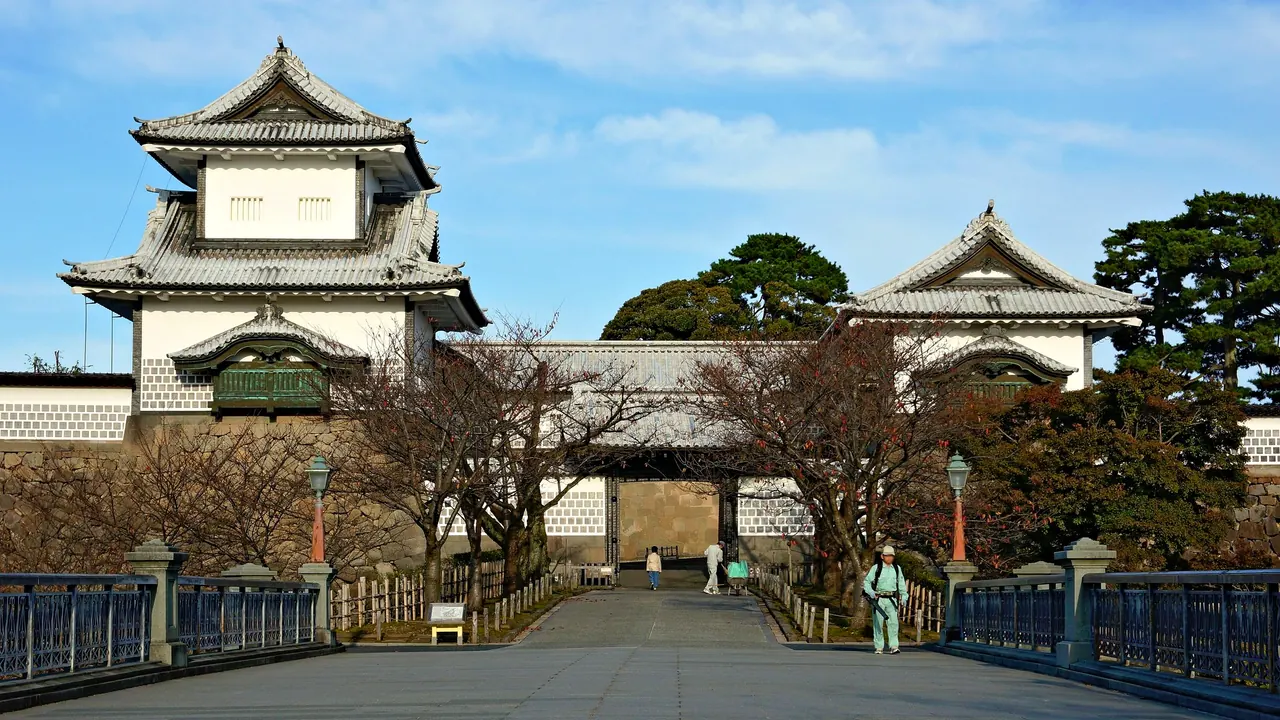
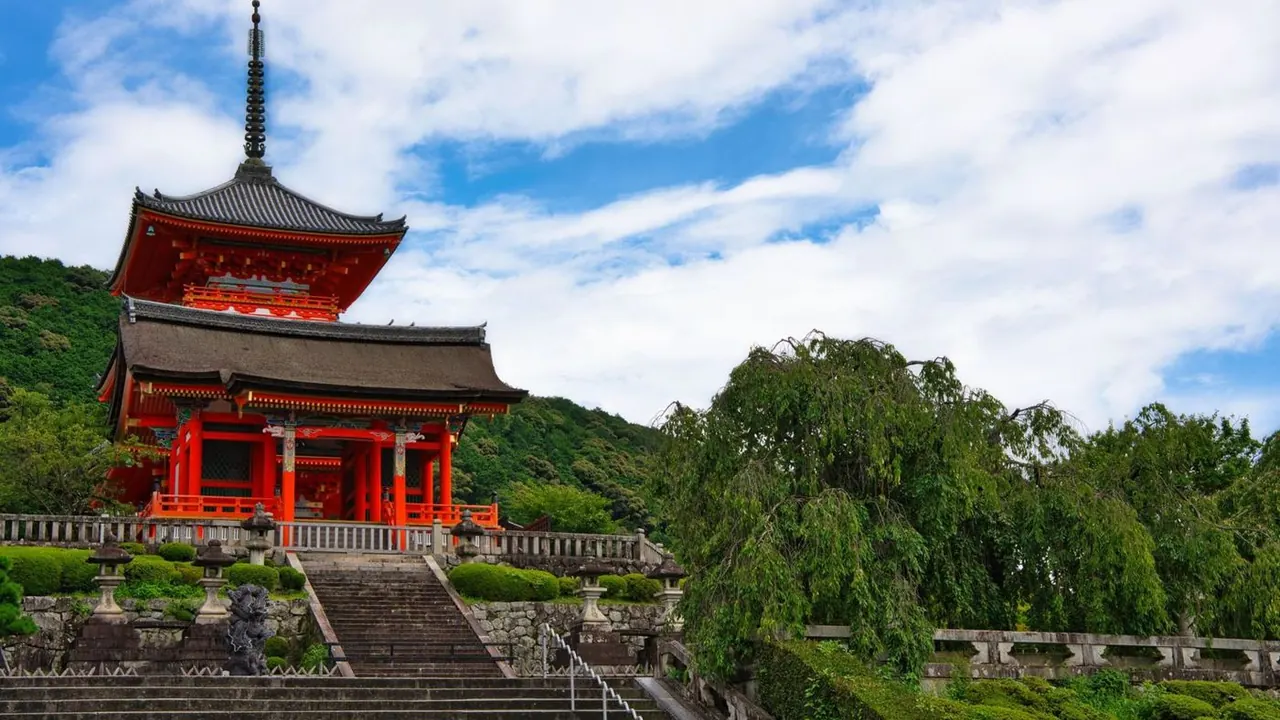
Photos: Kanazawa by 663highland, CC BY 2.5, cropped; Kyoto by Bert Mulder, Pexels License.
Kanazawa or Kyoto?
Our verdict in twelve categories, each scored against the same fixed benchmark cities, and the climate month by month, so you can choose for your trip.
Choose Kanazawa for
- beaches
- prices
Kanazawa suits a traveller who wants old Japan at a smaller, calmer scale, perhaps on a second trip after Kyoto. Kenroku-en, the samurai lanes of Nagamachi and the Higashi Chaya teahouses fit into two or three unhurried days without the crush. The seafood at Omicho is a reason to come in itself, rooms cost a little less, and you can reach the Sea of Japan beaches in summer or Shirakawa-go under winter snow.
Choose Kyoto for
- culture and sights
- day trips
- live music and the arts
For a first trip built around temples, gardens and traditional arts, Kyoto is the stronger choice by a wide margin. The former imperial capital has well over a thousand temples and shrines, sets the national standard for kaiseki and temple cooking, and puts Nara, Uji, Osaka and Himeji within easy rail reach. In return you get crowds at the famous sights and expensive rooms in the peak seasons.
Scoreboard
Twelve categories on one fixed scale from 0 to 100. The shaded stretch is the gap between the two.
Your match
Pick a travel style or drag the sliders, and both match scores follow your weighting.
Wins on beaches and prices with your weighting.
Wins on culture and sights and day trips with your weighting.
What matters to you?
Category by category
What the scores mean for a trip.
Beaches & swimming
Neither city is a beach destination, but Kanazawa at least has the sea a few kilometres away, with long sandy shores at Uchinada and at Chirihama, where cars drive on the sand, that make a pleasant summer half-day. Kyoto is inland, so its nearest swimming is freshwater at Omi-Maiko on Lake Biwa, and the clear Sea of Japan coast at Amanohashidate means an overnight trip.
Food & drink
Both are serious food cities, but they lean different ways. Kanazawa's strength is the cold sea: seafood bowls, sweet shrimp and winter snow crab at Omicho Market, plus Kaga dishes such as jibuni duck stew and nodoguro, and a few days covers the core of it.
Kyoto goes deeper and finer. Kaiseki in Gion's wooden houses, shojin ryori in temple precincts such as Daitokuji, tofu and yuba, Nishiki Market's pickles and the Fushimi sake breweries give far more to work through, with the emphasis on vegetables and tea-ceremony refinement rather than fresh fish.
Culture & sights
Both escaped wartime bombing and kept their old townscapes, so the difference is one of scale. Kanazawa has one of Japan's great gardens in Kenroku-en, the latticed teahouses of Higashi Chaya, Nagamachi's samurai walls and an outstanding contemporary art museum, a set you can see properly in two or three days.
Kyoto, capital for more than a thousand years, has seventeen UNESCO-listed sites, from Kinkaku-ji and Kiyomizu-dera to the moss garden of Saiho-ji, along with the Fushimi Inari gates and the Kyoto National Museum. It can fill a week, though at its famous sights you share the view with far more people than in Kanazawa.
Nightlife
Neither suits a big night out, and evenings in both run to izakaya, sake bars and small whisky bars. Kanazawa's are packed into the snack-bar grid of Katamachi and Kigura-machi, full of local office workers and with almost no clubs. Kyoto adds the lantern-lit Pontocho alley, summer terraces over the Kamo River and a few student clubs in Kiyamachi, and Osaka's late scene is under an hour away by train.
Nature & outdoors
Kyoto has nature right at its edge and easy to use without a car: trails into the Higashiyama hills, the bamboo of Arashiyama, the cedar path from Kurama to Kibune and boats down the Hozu gorge.
Kanazawa's own riverbanks and low hills are gentler and smaller. Its bigger landscapes, alpine Mount Hakusan and the terraced rice fields of the Noto coast, are wilder than anything near Kyoto but need a car and a long day. In winter they draw skiers more than walkers.
Day trips
Kanazawa has one outstanding outing in the thatched farmhouses of Shirakawa-go, with Takayama, Takaoka's Zuiryu-ji and the Kaga hot-spring towns behind it, but several of these depend on buses and long days.
Kyoto sits inside a dense rail network. Nara's deer and great Buddha, Uji's Byodo-in, Osaka and Himeji Castle are each under an hour away, and Kobe and the Lake Biwa towns add more, so you can decide the night before and still be back for dinner.
Good for families
Kanazawa has little in the city that is built for children. The playful 21st Century Museum, where they can stand beneath the pool, and the trap doors of the ninja temple are the highlights, and the zoo, the summer beaches and Fukui's dinosaur museum all mean a drive. The calm, spotless streets help, but young children can find the gardens and teahouses at its core slow.
Kyoto has much more aimed at them: the steam roundhouse and train simulators at the Railway Museum, an aquarium and zoo near the centre and samurai shows at Toei Studio Park. Nara's deer and Osaka's theme park are a short train ride away. The price is temple stairs, packed buses in peak season and draining summer heat.
Getting around
Kanazawa's main sights sit in a compact band about 2km from the station and are pleasant to walk, but with no metro or tram everything else rests on loop buses that can be slow, and snow makes winter walking harder.
Kyoto's flat central grid is better still for walking and cycling, and the Kamo River paths give a quiet route north to south. Its temples are spread round the edge of the basin, yet JR lines, private railways and the Randen tram mean trains can take much of the strain that buses alone carry in Kanazawa.
Shopping & style
Kanazawa's shopping is narrow and distinctive. It is built around the gold leaf the city makes for almost all of Japan, which turns up on lacquerware, cosmetics and even sweets in the chaya districts. Kutani porcelain, Kaga yuzen silk and Ohi tea bowls fill out the craft side, and Tatemachi and Korinbo cover everyday shopping.
Kyoto has far more range. Family-run makers sell Nishijin textiles, Kiyomizu-ware, fans, incense and hand-forged knives, the Teramachi and Shinkyogoku arcades run from antique prints to cheap clothes, and Shijo has the big department stores. Kanazawa has nothing to match the monthly flea markets at To-ji and Kitano Tenmangu.
Affordability
Kanazawa is the slightly cheaper stay, mainly because its station business hotels are plentiful and fairly priced, while Kyoto's rooms become scarce and costly in the cherry blossom and autumn colour seasons. Everyday eating is good value in both, and the splurges differ: snow crab and top Omicho seafood in Kanazawa, a kaiseki dinner in Kyoto. Kanazawa's bus fares to Shirakawa-go and Shinkansen tickets add to a trip in a way Kyoto's inexpensive local trains do not.
Live music & performing arts
Kanazawa does well for its size, with regular Noh at the prefectural theatre, dance and shamisen in the chaya teahouses and the Orchestra Ensemble Kanazawa, but there is little beyond that.
Kyoto gives you more to build an evening around: the spring dances of its five geisha districts, kabuki at the Minamiza, the oldest kabuki house in Japan, several Noh stages, Gion Corner's samplers and opera and dance at ROHM Theatre. Much of its traditional calendar is seasonal, so it pays to time a visit.
Wellness & relaxation
Kanazawa's strength is hot springs close at hand: Yuwaku is half an hour away in the hills, the Kaga towns of Yamanaka and Yamashiro make an easy overnight, and the city itself never feels crowded. Kyoto relies more on its century-old neighbourhood sento, zazen sessions and nights in temple lodgings, with Arima's onsen an hour away, though at its famous sights you only find calm early in the morning or at the northern temples. Neither is a spa city in the international sense, so the real choice is between quieter onsen and deeper temple calm.
When should you go?
Pick your month. The climate figures are measured averages, not a forecast.
Kanazawa in July
Kyoto in July
Daytime high, °C
Rainfall in the month, mm
Where the figures come from
Kyoto's sunshine is measured 43 km from the centre, at Osaka.
Temperature and rainfall are climate normals, averaged over the years shown. Kanazawa: 1991-2020 normals, Kanazawa (3.2 km from centre). Kyoto: 1971-2000 (sunshine 1991-2020, rainfall 1991-2020) normals, Kyoto (3.2 km from centre).
Kanazawa is at its best in April and May and again in October, when days are mild for walking and the gardens fill first with cherry blossom and then with red maples. By November the rain returns and the light fades. From then until February it is the wetter and greyer of the two, with about 301mm in December, much of it falling as snow, so walking the streets is slow. Summer is its one beach season. July and August are hot, and the sea reaches 27°C in August.
Kyoto has the same spring and autumn peaks but keeps the autumn one longer, because November stays fairly dry and bright there. Its rain comes in early summer instead and is heaviest in July. The enclosed basin makes August the more oppressive month of the two at around 32°C, too hot for long days of temple walking. Winter is where Kyoto pulls ahead. It is cold but clear and far sunnier, with only about 45mm in January, which makes it a quiet season for the temples while Kanazawa sits under snow cloud.
Which traveller are you?
On a culture and arts trip, Kyoto is the clear choice. Seventeen UNESCO-listed sites, over a thousand temples, the Kyoto National Museum, kabuki at the Minamiza and the spring geisha dances give far more depth than Kanazawa's compact, if lovely, set of sights.
For a beach and sun trip, neither city is ideal, but Kanazawa is the only one with a coast close by. In July and August the sandy beaches at Uchinada and Chirihama make an easy half-day out, while Kyoto's nearest swimming is Lake Biwa.
On a trip on a tight budget, Kanazawa makes the money go a little further. Its station business hotels stay fairly priced, set lunches and conveyor-belt sushi are cheap, and you avoid Kyoto's steep room rates in the cherry blossom and autumn colour seasons.
Before you go
| Measure | Kanazawa | Kyoto |
|---|---|---|
| Official language | Japanese | Japanese |
| Currency | Yen (JPY) | Yen (JPY) |
| Sockets | AB100 V, 50 and 60 Hz depending on the region | AB100 V, 50 and 60 Hz depending on the region |
| Driving side | Left | Left |
| Time zone | UTC+9 | UTC+9 |
| Emergency number | Police 110, fire 119 | Police 110, fire 119 |
| Elevation | 28 m | 51 m |
| Main airport | Komatsu Airport / JASDF Komatsu Air Base (KMQ)29 km from centre7 non-stop destinations | Kansai International Airport (KIX)81 km from centre62 non-stop destinations |
| Public holidays this year | 16 days | 16 days |
By the numbers
| Measure | Kanazawa | Kyoto |
|---|---|---|
| City population | 462,479 | 1,463,723 |
| People per km² | 989 | 1,768 |
| Museums within 10 km | 27 | 77 |
| UNESCO World Heritage sites within 50 km | 1 | 4 |
| Swim season, months above 21 °C | 4 months | 5 months |
Where else could you go?
Every comparison below shares a destination with this one, so you can follow Kanazawa or Kyoto somewhere new.