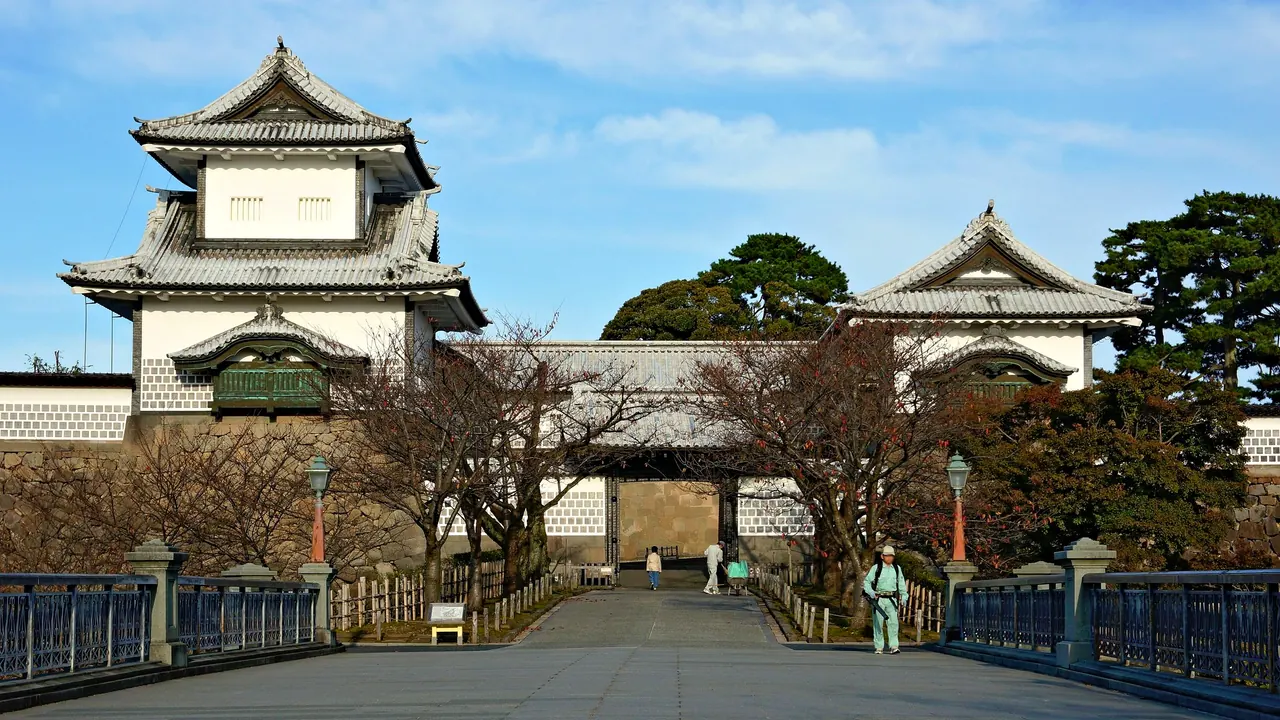
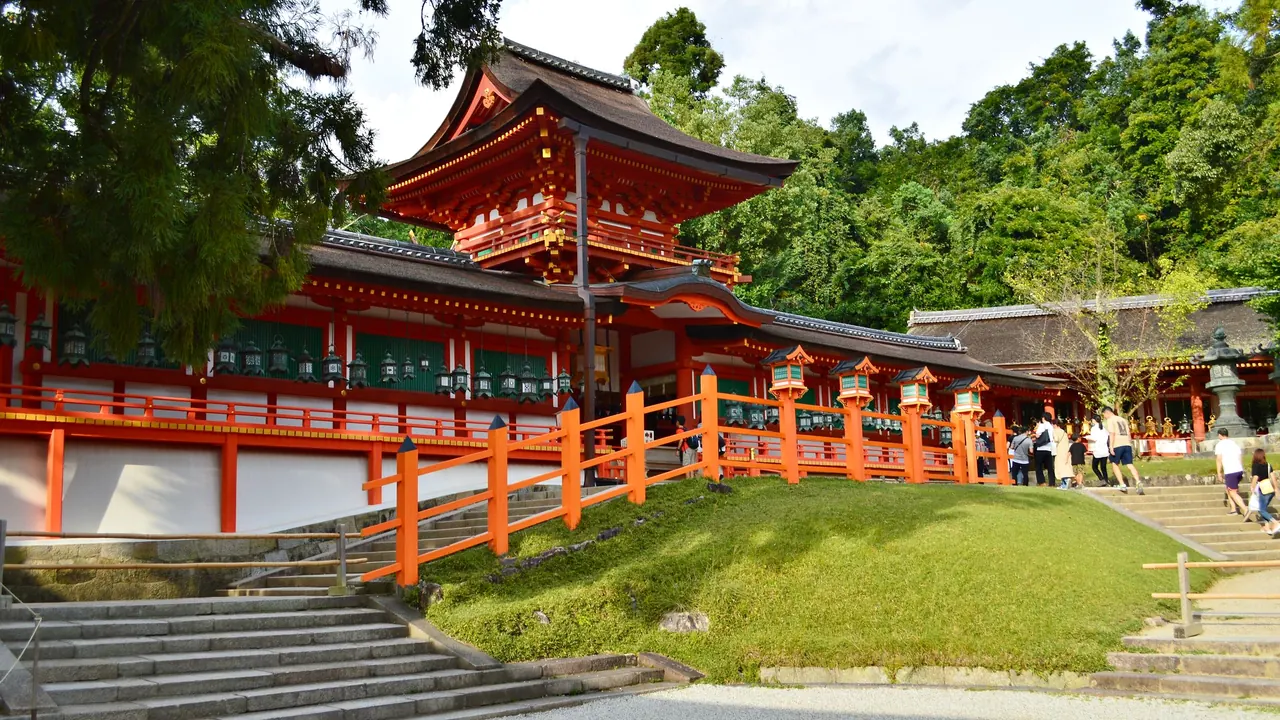
Photos: Kanazawa by 663highland, CC BY 2.5, cropped; Nara by Saigen Jiro, CC0.
Kanazawa or Nara?
Our verdict in twelve categories, each scored against the same fixed benchmark cities, and the climate month by month, so you can choose for your trip.
Choose Kanazawa for
- food and drink
- wellness
- beaches
Kanazawa suits the traveller who wants to settle into one city and eat well. Its Sea of Japan seafood, Kaga cooking and teahouse sweets go far beyond Nara's short menu, the evenings in Katamachi have more to them, and a hot-spring soak at Yuwaku or in the Kaga towns is easy to fit in. Gold-leaf and porcelain crafts, Noh and geisha dance round it out, so it works well as a self-contained stay of several days.
Choose Nara for
- day trips
- getting around
- culture and sights
Choose Nara if Japan's oldest history is what draws you. Todai-ji, Kasuga Taisha and the Tang-era temples to the west are a deeper set of monuments than Kanazawa's Edo townscape, the deer park sits at the centre, and you can walk almost everywhere. Its other strength is position: with Kyoto, Osaka and Horyu-ji all close by train, it makes a calm base for a wider tour of the region, as long as you accept quiet, early evenings.
Scoreboard
Twelve categories on one fixed scale from 0 to 100. The shaded stretch is the gap between the two.
Your match
Pick a travel style or drag the sliders, and both match scores follow your weighting.
Wins on food and drink and wellness with your weighting.
Wins on day trips and getting around with your weighting.
What matters to you?
Category by category
What the scores mean for a trip.
Beaches & swimming
Neither city is a beach destination, but only Kanazawa has a coast at all. Uchinada's long sands are a few kilometres from the city and the drive-on beach at Chirihama is under an hour away, which makes a pleasant half-day in July or August.
Nara sits inland in a basin. The nearest sea is the industrial shore of Osaka Bay, so a swim there means a pool.
Food & drink
Kanazawa is one of Japan's serious regional food cities, and Nara is not. Omicho Market's seafood bowls and winter snow crab, Kaga dishes such as jibuni and nodoguro, kaiseki tables and a deep tradition of wagashi with matcha give you several days of good eating.
Nara's table is smaller. It has persimmon-leaf kakinoha-zushi, narazuke pickles, fine Miwa somen and sake from the region that claims to have started it all. Near the park much of the food is quick lunch for day visitors, and keen eaters often take the train to Osaka or Kyoto.
Culture & sights
Both cities kept their old fabric, but Nara's is far older and grander. The eighth-century capital gives you Todai-ji's Great Buddha, Kofuku-ji's pagoda, Kasuga Taisha and the National Museum's Buddhist sculpture, then Toshodai-ji, Yakushiji and the Heijo Palace site to the west.
Kanazawa's heritage is Edo-period and more domestic: Kenroku-en, the samurai lanes of Nagamachi and the latticed teahouses of Higashi Chaya. It adds a modern side that Nara does not offer, with the 21st Century Museum and the D.T. Suzuki Museum. Both reward two or three unhurried days.
Nightlife
Neither city has much in the way of clubs, but Kanazawa gives an evening more to work with. Katamachi and Kigura-machi pack izakaya, sake bars, snack bars and whisky bars into a few streets, and they stay busy late at weekends.
Nara empties once the day visitors leave. What remains is a few izakaya and sake counters near Kintetsu Nara station, and they close early. A bigger night means Osaka, with the last train home setting the limit.
Nature & outdoors
Nara's green space starts in the middle of town. There are deer roaming Nara Park, the ancient Kasugayama Primeval Forest and an easy climb up Mount Wakakusa, with the Yamanobe-no-michi trail and Yoshino's blossom hills further out.
Kanazawa's own outdoors are gentler: riverside paths along the Sai and Asano. Its bigger landscapes, Mount Hakusan and the Noto coast, are far off and hard to reach without a car. Its snowy winters do bring skiing, which Nara cannot offer.
Day trips
Both are good bases, but Nara's position is exceptional. Kyoto and Osaka are each under an hour away by train, Horyu-ji is a short ride, and Asuka, Uji and the white castle at Himeji fill further days.
Kanazawa's outings are longer and more rural. The thatched farmhouses of Shirakawa-go are a bus ride away, Takayama makes a long day, and the Shinkansen reaches Toyama and Takaoka. Eihei-ji in Fukui and the lacquer town of Wajima are further still.
Good for families
Both are safe, clean and easy with children, and in both the core sights are aimed mostly at adults. Nara has the stronger single draw: feeding the deer and squeezing through the pillar at Todai-ji. Small children need watching around hungry deer.
Kanazawa spreads its appeal more widely, with the playful installations of the 21st Century Museum and the trick doors of the ninja temple. Within a short drive are summer beaches and a zoo, and the dinosaur museum in Fukui is further out. Families in Nara usually go into Osaka for an aquarium or theme park.
Getting around
Nara is the easier city on foot. Todai-ji, Kasuga Taisha, the museum and Naramachi all lie close to Kintetsu Nara station. A short train covers the western temples and Horyu-ji, and the flat basin suits rented bicycles.
Kanazawa's sights also sit in a compact band near the station. With no metro or tram, though, you rely on loop buses that crowd at busy times, and winter snow makes walking harder. The bike-share scheme helps outside winter.
Shopping & style
In both cities shopping centres on crafts, but Kanazawa has more of them and more besides. Its gold leaf, Kutani porcelain, Kaga yuzen silk and Wajima lacquer are serious work, and Korinbo and Tatemachi add department stores and boutiques.
Nara's crafts are quieter: sumi ink and brushes, Nara-zarashi linen, Akahada pottery and Ittobori dolls, sold in Naramachi and the covered arcades. Beyond those there is little, and keen shoppers head to Osaka.
Affordability
Day-to-day costs are much the same. Both have fairly priced business hotels near the stations, cheap set lunches and noodle counters, and modest entry fees at temples and gardens.
They differ in what tempts you to spend. In Kanazawa it is the food, from kaiseki dinners to winter crab, plus ryokan nights in the Kaga onsen towns. In Nara the free park keeps sightseeing cheap, but rail fares mount up if you use the city as a base for day trips.
Live music & performing arts
Kanazawa has the steadier programme. Noh is staged regularly at the prefectural Noh theatre, some chaya teahouses open their geisha dance and shamisen performances to visitors, and the Orchestra Ensemble Kanazawa plays a season beside the station.
Nara's performing arts are tied to the shrine and temple calendar. Kasuga Taisha keeps gagaku music and bugaku dance alive, above all at the winter On-matsuri, and Todai-ji holds the Omizutori fire rites in early spring. Outside those dates there is little to see, and Osaka fills the gap.
Wellness & relaxation
Kanazawa is the place for a proper soak. Yuwaku Onsen is about half an hour away in the hills, the Kaga hot-spring towns make a fine overnight stay, and many city hotels have their own hot-spring baths.
Nara has no notable hot springs, only neighbourhood bathhouses and bathing complexes on the outskirts. Its calm comes instead from early mornings among the deer and the quiet old town after the day visitors leave. That makes it a good pause between Osaka and Kyoto.
When should you go?
Pick your month. The climate figures are measured averages, not a forecast.
Kanazawa in July
Nara in July
Daytime high, °C
Rainfall in the month, mm
Where the figures come from
Nara's sunshine is measured 26 km from the centre, at Osaka.
Temperature and rainfall are climate normals, averaged over the years shown. Kanazawa: 1991-2020 normals, Kanazawa (3.2 km from centre). Nara: 1971-2000 (sunshine 1991-2020, rainfall 1991-2020) normals, Nara (2.6 km from centre).
Kanazawa is at its best in April and May. These are its driest months, mild enough for long walks in the gardens and reaching about 22°C by late May, and after August they are the sunniest. October is still pleasant on foot, though wetter. July and August are the only beach months, with the Sea of Japan reaching 27°C in August, but the heat and humidity make sightseeing tiring. From November the weather turns hard. Winter is grey, snowy and very wet, and December brings 301mm of rain, so Kenroku-en under snow is better for photographs than for long walks.
Nara has the same hot summer, peaking at 32°C in August, and its wettest months are June and July, so walking between temples is hardest then. The difference comes later in the year. In Nara, November stays mild, fairly dry and bright, and winter is cold but sunny, with only 50mm of rain in January. In spring the two cities are much the same, but from late autumn through winter Nara is clearly the better choice.
Which traveller are you?
On a culture and arts trip, Nara is the stronger choice. Todai-ji's Great Buddha, the lantern paths of Kasuga Taisha, the National Museum's Buddhist sculpture and Horyu-ji nearby are all of the first rank, while Kanazawa's Edo streets and contemporary art are fine but narrower.
For a food and nightlife trip, Kanazawa wins clearly. Omicho Market's crab and sweet shrimp, Kaga dishes such as jibuni and a dense evening grid of izakaya and sake bars in Katamachi give you far more than Nara, where kitchens close early.
On a relaxing and wellness trip, Kanazawa again comes out ahead. The hot-spring ryokan of Yuwaku are half an hour away and the Kaga onsen towns make an easy overnight stay, while Nara offers calm mornings in the park but no hot springs of note.
Before you go
| Measure | Kanazawa | Nara |
|---|---|---|
| Official language | Japanese | Japanese |
| Currency | Yen (JPY) | Yen (JPY) |
| Sockets | AB100 V, 50 and 60 Hz depending on the region | AB100 V, 50 and 60 Hz depending on the region |
| Driving side | Left | Left |
| Time zone | UTC+9 | UTC+9 |
| Emergency number | Police 110, fire 119 | Police 110, fire 119 |
| Elevation | 28 m | 70 m |
| Main airport | Komatsu Airport / JASDF Komatsu Air Base (KMQ)29 km from centre7 non-stop destinations | Kansai International Airport (KIX)59 km from centre62 non-stop destinations |
| Public holidays this year | 16 days | 16 days |
By the numbers
| Measure | Kanazawa | Nara |
|---|---|---|
| City population | 462,479 | 352,377 |
| People per km² | 989 | 1,273 |
| Museums within 10 km | 27 | 31 |
| UNESCO World Heritage sites within 50 km | 1 | 6 |
| Swim season, months above 21 °C | 4 months | 5 months |
Where else could you go?
Every comparison below shares a destination with this one, so you can follow Kanazawa or Nara somewhere new.