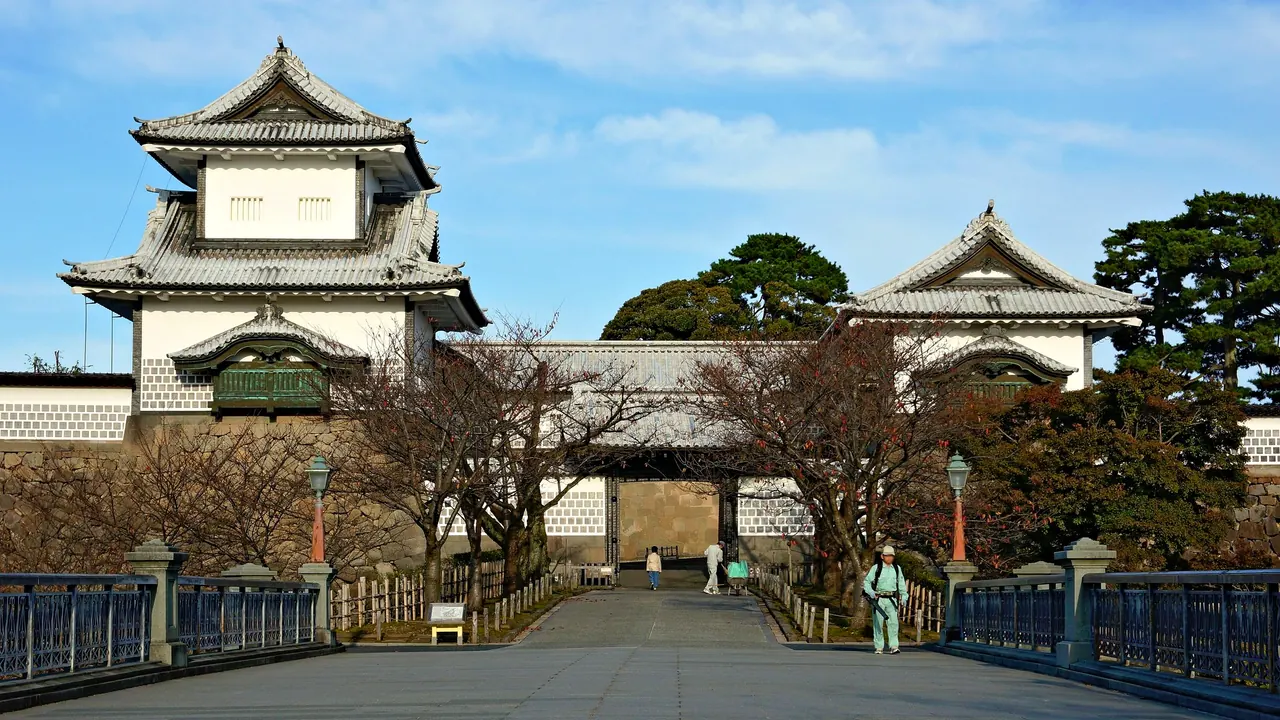
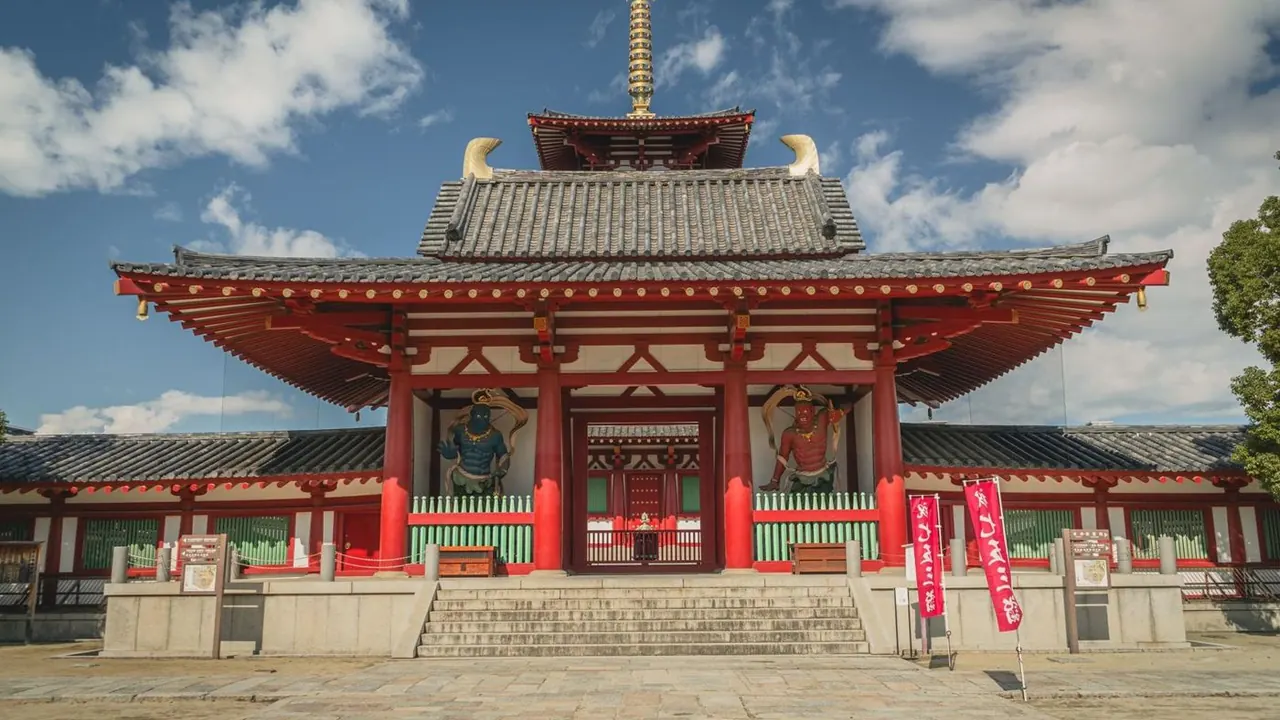
Photos: Kanazawa by 663highland, CC BY 2.5, cropped; Osaka by Sarmat Batagov, Pexels License.
Kanazawa or Osaka?
Our verdict in twelve categories, each scored against the same fixed benchmark cities, and the climate month by month, so you can choose for your trip.
Choose Kanazawa for
- culture and sights
- wellness
Kanazawa suits travellers who want old Japan at a slower pace. The war spared it, so the teahouse lanes of Higashi Chaya, the samurai walls of Nagamachi and the garden of Kenroku-en form a real historic townscape rather than scattered monuments. Add seafood from Omicho, gold-leaf and porcelain crafts, and a hot-spring night in the hills, and you have two or three quiet, rewarding days, perhaps with a trip to the thatched farmhouses of Shirakawa-go.
Choose Osaka for
- nightlife
- families
- getting around
Osaka is the better pick for appetite, energy and range. You come here to eat at counters in Namba, stay out until the first train, take children to the aquarium or the theme park, and ride fast trains to Kyoto, Nara and Himeji. It makes a lively, practical base for a longer trip, though its own history comes in separate pieces rather than as a whole townscape.
Scoreboard
Twelve categories on one fixed scale from 0 to 100. The shaded stretch is the gap between the two.
Your match
Pick a travel style or drag the sliders, and both match scores follow your weighting.
Wins on culture and sights and wellness with your weighting.
Wins on nightlife and families with your weighting.
What matters to you?
Category by category
What the scores mean for a trip.
Beaches & swimming
Neither city is a beach destination. Each has sand within reach for July and August, but the coasts are quite different. Kanazawa looks onto the open Sea of Japan, with long plain beaches at Uchinada close to town and drive-on sand at Chirihama. It feels wild and windy, and the surf is rough outside summer.
Osaka's swimming spots, such as Suma or Tannowa, sit on a built-up enclosed bay about an hour away by train, with coarse sand and suburban surroundings. Either works for a hot afternoon, nothing more.
Food & drink
Kanazawa's cooking is refined and rooted in the sea: sweet shrimp and seafood bowls at Omicho Market, snow crab in winter, Kaga dishes such as jibuni duck stew, and tea-ceremony sweets in the chaya teahouses. It is superb, but a few days covers the essentials.
Osaka has far more to eat. Its cheap counter food, from takoyaki and okonomiyaki to kushikatsu, runs through Dotonbori, Kuromon Market and the tiny izakaya of Ura-Namba and Tenma, while Kitashinchi provides the top-end kaiseki and sushi. A week of eating here would still leave plenty untried.
Culture & sights
Kanazawa has the stronger historic core because the wartime bombing missed it. Kenroku-en, the castle walls, the latticed teahouses of Higashi Chaya and the canal-side samurai lanes of Nagamachi make a continuous Edo-period townscape. The circular 21st Century Museum and the ninja temple add a modern and a playful side.
Osaka was rebuilt after the war, so it offers individual landmarks: the reconstructed castle on its original stone walls, Shitennoji, Sumiyoshi Taisha and good museums on Nakanoshima. Its own character lies more in the neon of Dotonbori and the old Shinsekai district than in historic streets.
Nightlife
This is one of the clearest differences between the two cities. In Kanazawa, evenings centre on Katamachi and Kigura-machi, with sake bars, small snack bars and a few whisky bars, mostly full of locals, and hardly any clubs. A long dinner and a quiet drink is the usual night.
Osaka is famous across Japan for going out. Minami offers standing bars, Amerikamura's DJ bars and small clubs, and endless late food, with Umeda's lanes and the formal Kitashinchi bars to the north. Strangers chat at the counter, and plenty of people stay out until the first morning train.
Nature & outdoors
The two are fairly level here, though their outdoors works differently. Kanazawa has the bigger landscapes: sacred Mount Hakusan, with alpine wildflowers in summer and skiing in winter, and the rugged Noto coast. Most of it needs a car, though.
Osaka has no high mountains, but the Minoo waterfall trail, the Rokko ridges above Kobe and the wooded slopes of Mount Ikoma are all within an hour by train. That makes it easier for day hikers without a car.
Day trips
Kanazawa has good outings, above all the thatched gassho villages of Shirakawa-go and Gokayama, with Takayama, the Zen monastery of Eihei-ji and the Kaga hot-spring towns further afield. Many involve buses or long days, though.
Osaka is one of the best bases in Japan. Kyoto is under half an hour away, Nara about forty minutes, and Himeji Castle and Kobe are both close, with Koyasan's temple mountain for an overnight stay. Frequent trains make every one of them simple to plan.
Good for families
Both are safe and spotless, but Osaka has far more for children. Universal Studios Japan, the whale sharks at Kaiyukan, the Tempozan Ferris wheel, Kids Plaza and Expo '70 park can fill a week, and stations have lifts and baby rooms throughout.
Kanazawa has a few good sights for children: the pool installation at the 21st Century Museum, the trick doors of the ninja temple and lawns to run on. Beyond that, families need a car for the zoo, the beaches or the dinosaur museum in Fukui.
Getting around
Kanazawa is a walking city. Omicho, the castle, Kenroku-en and the chaya districts sit within about 2km of the station on level streets. With no metro or tram, you rely on crowded loop buses or the bike-share, and winter snow makes walking harder.
Osaka covers a much larger area, but the Midosuji subway, the JR loop line and a single IC card make it easy to get around and connect you straight to Kyoto and Nara. The one real hassle is changing lines in Umeda's huge underground maze.
Shopping & style
Kanazawa is the better place to buy crafts, though Osaka has far more shopping overall. Kanazawa makes nearly all of Japan's gold leaf, and gilded lacquerware, Kutani porcelain, Kaga yuzen silk and Ohi tea bowls by serious makers are easy to find in the chaya districts and at the prefectural craft centre. For clothes, there are department stores in Korinbo and Katamachi and boutiques along Tatemachi, but few luxury labels or flagship stores.
Osaka has more of everything else. There is the long covered arcade of Shinsaibashi-suji, old Umeda department stores with luxury floors, international flagships on Midosuji, vintage and streetwear in Amerikamura, and electronics and anime in Den Den Town. Traditional crafts are thinner here, so the local thing to take home is a kitchen knife from Sennichimae Doguyasuji.
Affordability
Day-to-day costs are similar in both cities, and both have plenty of decent business hotels. The difference is where the money goes. In Kanazawa, the cost comes from its specialities: kaiseki dinners, winter snow crab, ryokan nights in the hot-spring towns, and Shinkansen or Shirakawa-go fares.
In Osaka, cheap street food and transport keep daily spending low. The big expenses are rooms in blossom and leaf season and at weekends, plus tickets for the theme park.
Live music & performing arts
Osaka has the larger stage scene. It is the home of bunraku puppet theatre, performed with English guides at the national theatre in Nippombashi, and it also has orchestra halls, small rock and jazz venues, manzai comedy in Japanese, and the Takarazuka Revue a short train ride away.
Kanazawa's offering is smaller but has its own character: Noh at the prefectural theatre, geisha dance and shamisen in the chaya teahouses, and a respected chamber orchestra. These are worth planning an evening around, but there is little beyond them.
Wellness & relaxation
Both cities have easy access to Japanese bathing culture, but in different settings. Kanazawa feels calmer overall: Yuwaku Onsen's streamside inns are half an hour away, the Kaga hot-spring towns make a fine overnight trip, and mornings in Kenroku-en or teahouse matcha set a slow pace.
Osaka's bathing is more urban: neighbourhood sento and large super sento complexes for a long evening soak, with historic Arima Onsen about an hour away. The city itself is fast and noisy, so the quiet moments have to be sought out.
When should you go?
Pick your month. The climate figures are measured averages, not a forecast.
Kanazawa in July
Osaka in July
Daytime high, °C
Rainfall in the month, mm
Temperature and rainfall are climate normals, averaged over the years shown. Kanazawa: 1991-2020 normals, Kanazawa (3.2 km from centre). Osaka: 1991-2020 normals, Osaka (1.8 km from centre).
Both cities are at their best in spring and autumn, when cherry blossom and red maples fill the gardens and the streets are pleasant to walk. Summer is hot in both, but Osaka is the more punishing, reaching 34°C in August with heavy humidity. Kanazawa is a few degrees cooler. July and August are the only real beach months, and the sea off both coasts warms to about 27°C in August.
Winter is where they part. Kanazawa sits on the Sea of Japan side and gets long, dark, snowy winters, with about 301mm of rain and snow in December and very little sun from November to February. Osaka stays dry and fairly bright through the same months, with around 47mm in January, so it makes the easier winter city break. Kanazawa in snow does have its own appeal for travellers who dress for it.
Which traveller are you?
On a culture and arts trip, Kanazawa is the better choice. Its unbombed Edo-period streets, chaya districts, Kenroku-en and craft workshops hang together as a historic town, while Osaka's heritage is a reconstructed castle and scattered temples within a modern city.
For a food and nightlife trip, Osaka wins easily. Takoyaki stalls, okonomiyaki grills and izakaya alleys run into a late, chatty bar scene in Minami and Umeda. Kanazawa eats superbly but quietly, and evenings usually end after a sake bar or two.
On a family trip with children, Osaka has far more to fill the days: Universal Studios Japan, the Kaiyukan aquarium, Kids Plaza and Expo park, all reached easily by train. In Kanazawa the main sights are gardens and teahouses, and most attractions for children are a drive away.
Before you go
| Measure | Kanazawa | Osaka |
|---|---|---|
| Official language | Japanese | Japanese |
| Currency | Yen (JPY) | Yen (JPY) |
| Sockets | AB100 V, 50 and 60 Hz depending on the region | AB100 V, 50 and 60 Hz depending on the region |
| Driving side | Left | Left |
| Time zone | UTC+9 | UTC+9 |
| Emergency number | Police 110, fire 119 | Police 110, fire 119 |
| Elevation | 28 m | 20 m |
| Main airport | Komatsu Airport / JASDF Komatsu Air Base (KMQ)29 km from centre7 non-stop destinations | Kansai International Airport (KIX)38 km from centre62 non-stop destinations |
| Public holidays this year | 16 days | 16 days |
By the numbers
| Measure | Kanazawa | Osaka |
|---|---|---|
| City population | 462,479 | 2,751,862 |
| People per km² | 989 | 12,340 |
| Museums within 10 km | 27 | 44 |
| UNESCO World Heritage sites within 50 km | 1 | 6 |
| Swim season, months above 21 °C | 4 months | 5 months |
Where else could you go?
Every comparison below shares a destination with this one, so you can follow Kanazawa or Osaka somewhere new.