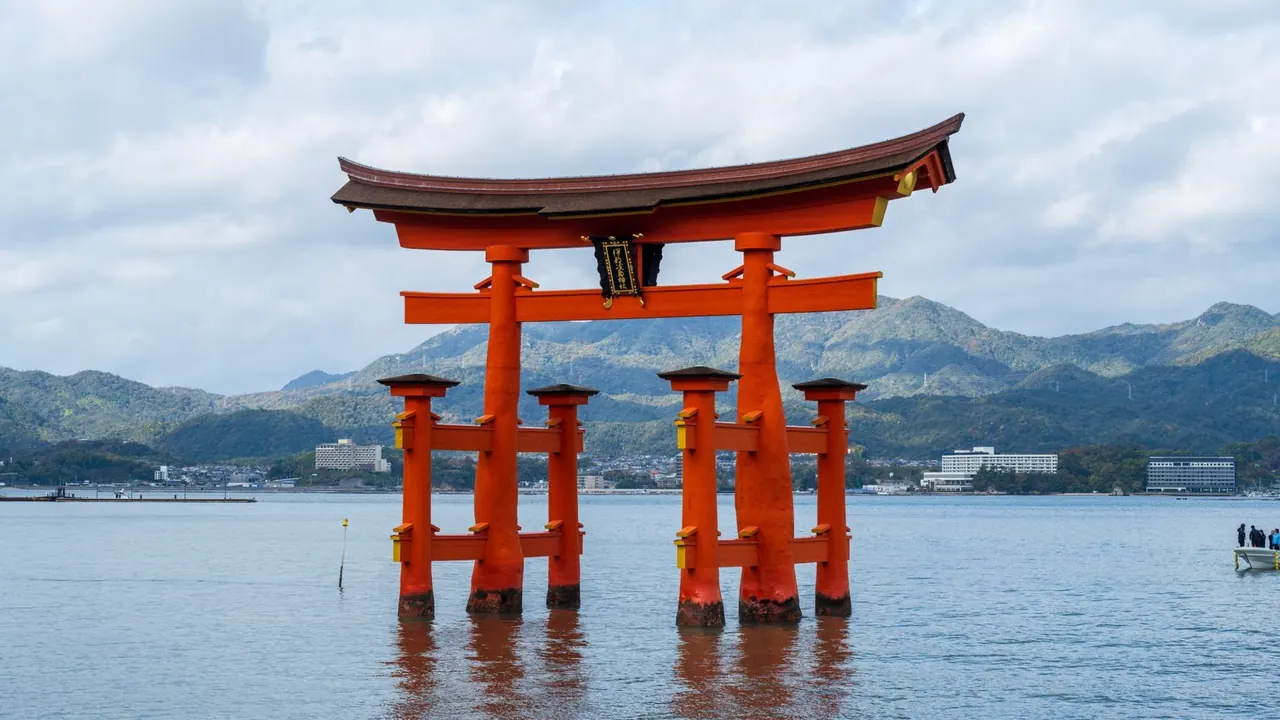
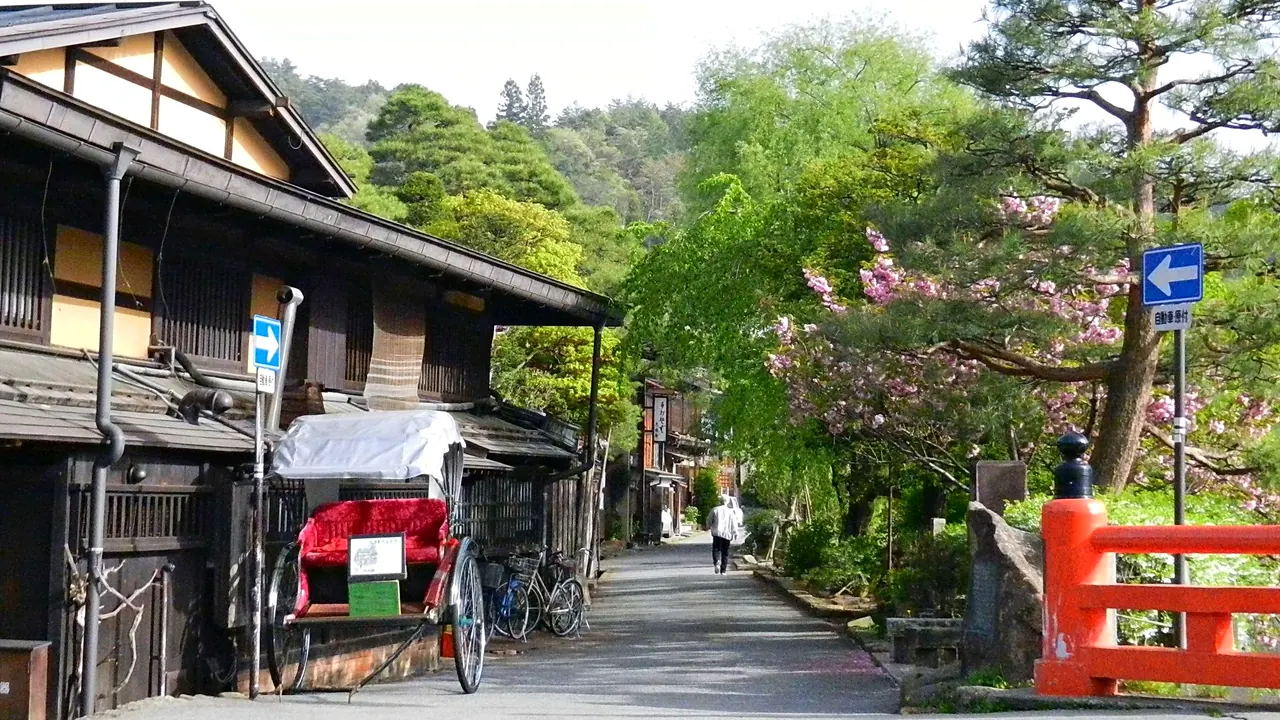
Photos: Hiroshima by Guohua Song, Pexels License; Takayama by lienyuan lee, CC BY 3.0, cropped.
Hiroshima or Takayama?
Our verdict in twelve categories, each scored against the same fixed benchmark cities, and the climate month by month, so you can choose for your trip.
Choose Hiroshima for
- nightlife
- beaches
- live music and the arts
Hiroshima suits a traveller who wants a real city with evenings out and plenty of excursions. The Peace Memorial Park gives the stay its weight. Okonomiyaki counters and the izakaya of Nagarekawa fill the nights. Miyajima, the Inland Sea islands and the towns along the shinkansen make it a base for several days rather than a single stop.
Choose Takayama for
- wellness
- nature and the outdoors
Takayama is the choice for slowing down in the mountains. It offers timbered Edo-period merchant lanes, a ryokan with its own spring-fed bath and the Northern Alps within a bus ride. That makes a quieter, rural stay of two or three nights, with Shirakawa-go as the obvious outing. Anyone who wants late nights, a stage or a swim will find little of them here.
Scoreboard
Twelve categories on one fixed scale from 0 to 100. The shaded stretch is the gap between the two.
Your match
Pick a travel style or drag the sliders, and both match scores follow your weighting.
Wins on nightlife and beaches with your weighting.
Wins on wellness and nature and the outdoors with your weighting.
What matters to you?
Category by category
What the scores mean for a trip.
Beaches & swimming
Neither city is a beach destination, but only Hiroshima gives you a swim at all. In high summer its calm, sheltered stretch of the Inland Sea is warm, and a ferry to Miyajima, Ninoshima or Etajima reaches small sandy beaches that fit into an island day.
Takayama lies deep in the Hida mountains, about two hours from the coast at Toyama Bay. Here, bathing means a hot spring, not the sea.
Food & drink
Hiroshima has more to eat and more places to eat it. Okonomiyaki built on the griddle, winter oysters from the bay, conger eel and tsukemen give it a deep local repertoire. Nagarekawa and Hondori are packed with izakaya serving Inland Sea fish.
Takayama's table is narrower and centres on Hida beef, served grilled on a magnolia leaf with hoba miso or on skewers from the old-town stalls, alongside soy-based ramen and market pickles. Both have sake on the doorstep, Saijo's brewery street for Hiroshima and the cedar-ball breweries of the merchant quarter for Takayama. Only Hiroshima keeps its kitchens busy late into the evening.
Culture & sights
The two are about equal for sightseeing, but they offer very different things. Hiroshima's culture is a single, heavy subject: the A-Bomb Dome and the Peace Memorial Museum, which need half a day and leave a lasting mark. Shukkeien garden and the castle grounds add calmer stops, in a city that is otherwise modern.
In Takayama the townscape is the sight. The Edo-period lanes of Sanmachi Suji survive largely intact, the Takayama Jinya is a rare feudal government office, and Hida Folk Village gathers thatched farmhouses on a hillside. It is atmosphere and craftsmanship rather than one defining visit.
Nightlife
Hiroshima has a real night out and Takayama barely has one. Nagarekawa is the largest entertainment district in the region, with stacked buildings of tiny bars, karaoke boxes and izakaya that stay busy past midnight, especially after a home baseball game.
In Takayama most visitors dine at their ryokan, the old town closes with its shops, and a few bars near the station see out the evening with a beer or a sake before eleven.
Nature & outdoors
Takayama has the grander outdoors. The Northern Alps are within a bus ride, with the Shin-Hotaka ropeway climbing towards peaks near 3,000m, flat trails through Kamikochi beneath the Hotaka range, high walking on Norikura and snow in winter. The catch is that you have to plan around bus timetables, and Kamikochi closes in the cold months.
Hiroshima's nature is about sea and islands. Forest trails climb Mount Misen for views over the Inland Sea, Sandankyo Gorge offers a long riverside walk, and the Shimanami Kaido crosses the islands by bike. It is pleasant and varied, but the hills are modest.
Day trips
Hiroshima is the better base. Miyajima and its floating torii are under an hour away, Iwakuni's Kintaikyo bridge, Onomichi, Takehara and Okunoshima's rabbits are close by, and the shinkansen brings Himeji Castle, Kurashiki and Korakuen within reach.
Takayama's outings are fewer but memorable. Shirakawa-go's thatched gassho villages, Hida-Furukawa's canals and the baths at Gero are all easy. Kanazawa, though, works better as the next stop than as a return trip, and much of the surrounding country is mountains rather than towns.
Good for families
Hiroshima is the easier place with children. Feeding the deer on Miyajima, the ropeway up Mount Misen, Okunoshima's rabbits, the free science museum, Asa Zoo and a noisy baseball evening give plenty of variety. The one hard decision is how much of the Peace Memorial Museum younger children should see.
Takayama is just as safe and manageable, and children enjoy the morning markets, the street snacks, the festival floats and winter snow. Nothing there is built for them, though, so it works best as a short stop.
Getting around
Both are easy to get around without a car, but they work differently. Hiroshima's flat centre is walkable, Japan's largest tram network runs out to the Miyajima ferry, and JR trains, the shinkansen and the Ujina island ferries cover the wider area.
Takayama is smaller still, with everything within about fifteen minutes' walk of the station. Getting further out depends on regional buses, which need some planning and can fill up in busy seasons.
Shopping & style
Hiroshima has the broader shopping, with the long covered Hondori arcade, department stores, the national chains and malls around the station. Crafts from the surrounding area, such as Kumano brushes and Miyajima rice paddles, add some local character.
Takayama is almost entirely about traditional craft: amber Shunkei lacquerware, yew carvings, Hida bentwood furniture and sarubobo charms, plus market miso and pickles. It is excellent for one well-made object and poor for clothes.
Affordability
Hiroshima is a little kinder to a budget. Business hotels are plentiful, okonomiyaki and set lunches cost little, and the Peace Park is free to walk. Spending builds up mainly on shinkansen day trips and island hotels.
Takayama's everyday costs are similarly modest, but the things people come for are expensive: a ryokan night with a multi-course dinner, a proper Hida beef meal, and rooms during the festival weeks.
Live music & performing arts
Hiroshima offers far more on stage. Its kagura dance-drama, with masks, demons and drumming, runs regular evening shows aimed at visitors, alongside a symphony orchestra, touring productions and small live houses.
Takayama's performance is limited to its spring and autumn festivals, with karakuri puppets on the floats and lantern-lit processions. They are remarkable, but on other dates there is almost nothing to watch.
Wellness & relaxation
Takayama is the stronger choice for rest. Many ryokan bring hot spring water into their own indoor and open-air baths, the riverside pools of Okuhida are about an hour away, and Gero Onsen is under an hour by train.
Hiroshima has no springs of its own and relies on neighbourhood sento, super-sento and rooftop hotel baths. For a real onsen you go to the spa villages in the hills, or you can spend a quiet ryokan night on Miyajima once the day-trippers have left.
When should you go?
Pick your month. The climate figures are measured averages, not a forecast.
Hiroshima in July
Takayama in July
Daytime high, °C
Rainfall in the month, mm
Where the figures come from
Takayama's sunshine is measured 65 km from the centre, at Matsumoto.
Temperature and rainfall are climate normals, averaged over the years shown. Hiroshima: 1991-2020 normals, Hiroshima (1.7 km from centre). Takayama: 1971-2000 (sunshine 1991-2020, rainfall 1981-2010) normals, Takayama (0.5 km from centre).
Hiroshima is at its best in October and November, when the days are mild, the rain eases and walks along the rivers and out on the islands are comfortable. Spring is just as pleasant, but the rain builds from March into the wet season of June and July, which peaks at about 299mm. August is hot and humid at around 33°C, which makes sightseeing hard going. It is also when the Inland Sea, near 26°C, is warm enough for a swim. Winter is cool and fairly dry, and the oysters are in season.
Takayama differs most at the cold end of the year. January highs are only about 3°C, far colder than Hiroshima, and snow covers the region. That suits thatched villages and hot baths but makes long walks hard. Summer brings little relief by comparison: July and August reach about 30°C in town, only a few degrees below Hiroshima. The rain is heavy in July and again in September, and the high trails of the Alps are the place to escape the heat. Late spring and October are the steadiest months for walking the old lanes. So the two cities are far apart in winter and close together in summer.
Which traveller are you?
For a food and nightlife trip, Hiroshima is the clear pick. Layered okonomiyaki, Inland Sea oysters and fish-led izakaya lead into Nagarekawa's maze of counter bars and karaoke, which runs past midnight. Takayama eats well but goes quiet early.
On a relaxing and wellness trip, Takayama wins easily. Many ryokan pipe hot spring water into their own baths, the open-air pools of Okuhida and the spa town of Gero are close by, and early nights come naturally. Hiroshima mostly offers sento and super-sento.
For an outdoors trip, Takayama gives the bigger landscapes: Kamikochi's riverside trails, the Shin-Hotaka ropeway up towards 3,000m peaks and winter snow. Hiroshima's outdoors is gentler, with island ferries, Mount Misen and cycling on the Shimanami Kaido.
Before you go
| Measure | Hiroshima | Takayama |
|---|---|---|
| Official language | Japanese | Japanese |
| Currency | Yen (JPY) | Yen (JPY) |
| Sockets | AB100 V, 50 and 60 Hz depending on the region | AB100 V, 50 and 60 Hz depending on the region |
| Driving side | Left | Left |
| Time zone | UTC+9 | UTC+9 |
| Emergency number | Police 110, fire 119 | Police 110, fire 119 |
| Elevation | 3 m | 573 m |
| Main airport | Hiroshima Airport (HIJ)43 km from centre10 non-stop destinations | Chubu Centrair International Airport (NGO)149 km from centre43 non-stop destinations |
| Public holidays this year | 16 days | 16 days |
By the numbers
| Measure | Hiroshima | Takayama |
|---|---|---|
| City population | 1,198,021 | 85,199 |
| People per km² | 1,324 | 39 |
| Museums within 10 km | 18 | 14 |
| UNESCO World Heritage sites within 50 km | 2 | 1 |
| Swim season, months above 21 °C | 4 months | - |
Where else could you go?
Every comparison below shares a destination with this one, so you can follow Hiroshima or Takayama somewhere new.
- Kanazawavs Takayama
- Kyotovs Takayama
- Hakonevs Takayama
- Naravs Takayama
- Fukuokavs Hiroshima
- Nikkovs Takayama