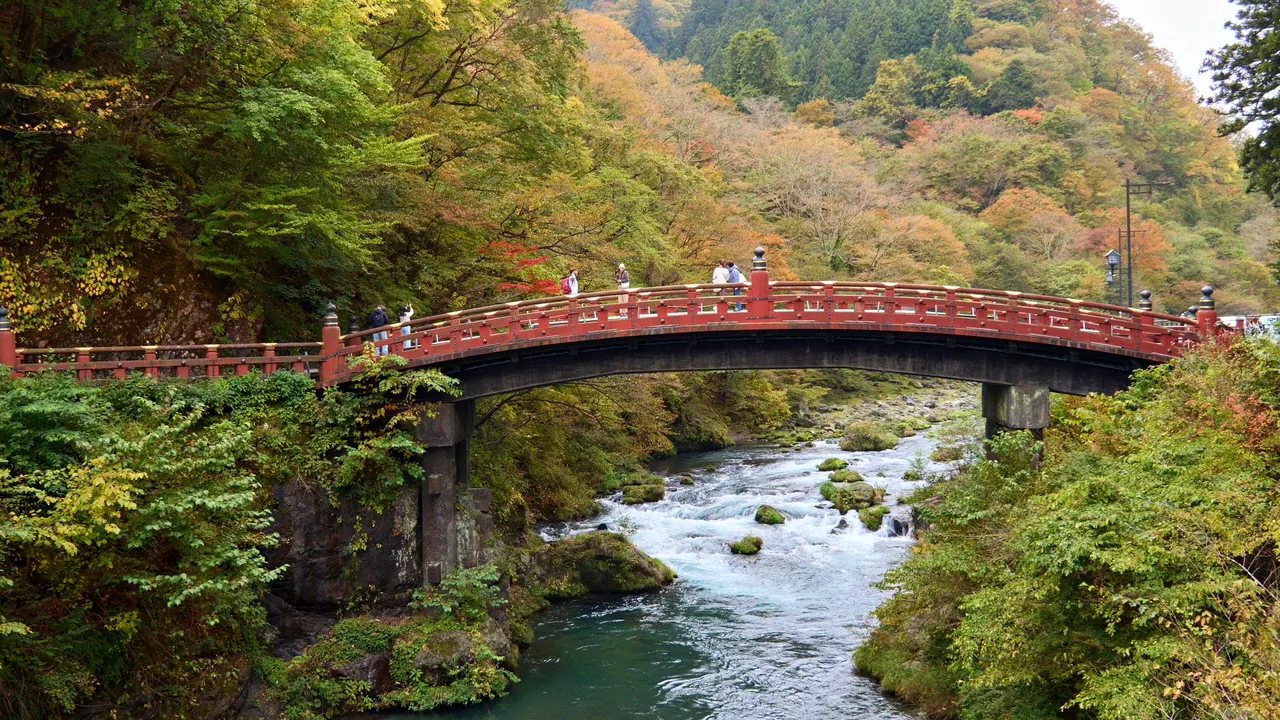
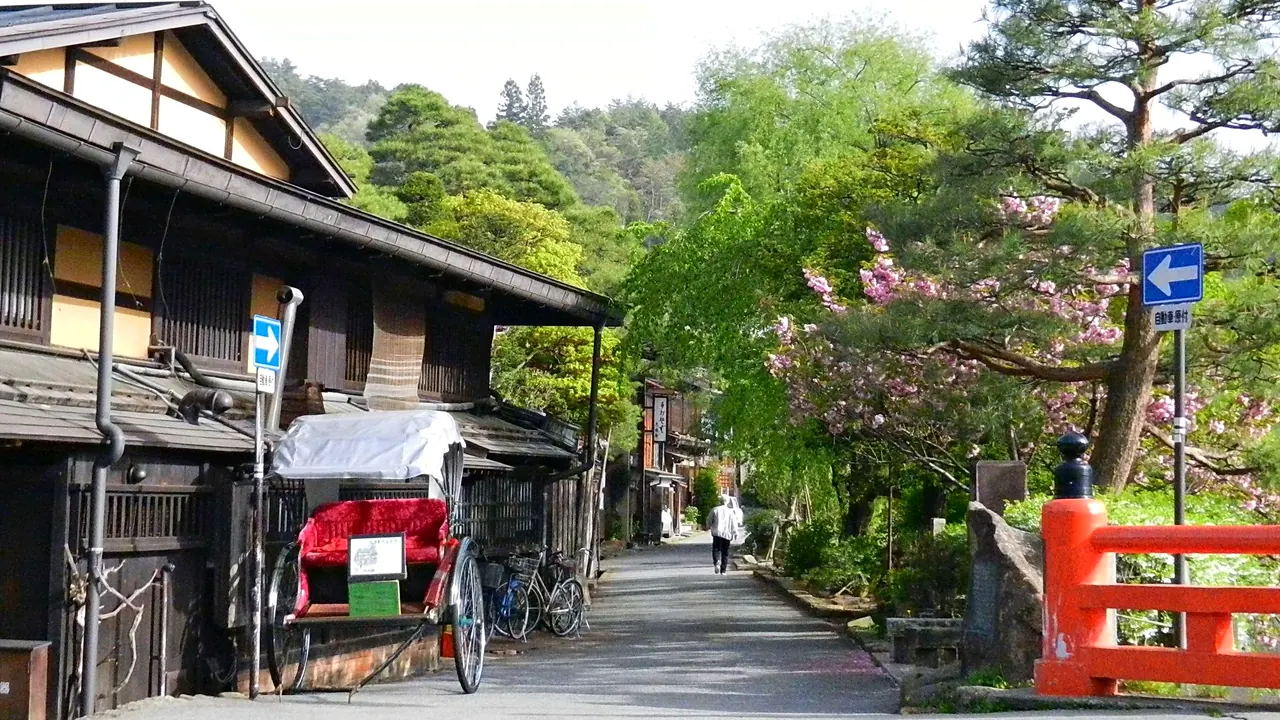
Photos: Nikko by lumoplank, CC0; Takayama by lienyuan lee, CC BY 3.0, cropped.
Nikko or Takayama?
Our verdict in twelve categories, each scored against the same fixed benchmark cities, and the climate month by month, so you can choose for your trip.
Choose Nikko for
- culture and sights
- nature and the outdoors
- wellness
Nikko is the pick for a traveller who wants one great monument and a lot of mountain around it. The gilded, carved shrines of Toshogu under the cedars are a grander sight than anything in Takayama. Above town, the national park climbs quickly to lakes, waterfalls and marshland trails, and the hot springs from Kinugawa up to Yumoto make it the better place to soak and do very little. You give up evenings out and variety at the table, but on a slow two or three days that hardly matters.
Choose Takayama for
- shopping
- food and drink
- getting around
Takayama rewards the visitor who would rather wander an old town than one shrine complex. Its timbered merchant lanes, sake breweries and morning markets make the days easier to fill, and the food is a real draw, with Hida beef and local sake well beyond what Nikko serves. The centre is flat and compact, the craft shopping has more substance, and Shirakawa-go, Hida-Furukawa and Kanazawa are close enough to make it a strong base on a longer route through central Japan.
Scoreboard
Twelve categories on one fixed scale from 0 to 100. The shaded stretch is the gap between the two.
Your match
Pick a travel style or drag the sliders, and both match scores follow your weighting.
Wins on culture and sights and nature and the outdoors with your weighting.
Wins on shopping and food and drink with your weighting.
What matters to you?
Category by category
What the scores mean for a trip.
Beaches & swimming
Neither is a swimming destination. Both sit deep in the mountains, hours from the coast, and in summer the water you get into is a hot spring. Nikko does have Lake Chuzenji and Lake Yunoko for a boat trip, while from Takayama the sea at Toyama Bay is the nearer of the two coasts, though still a separate journey.
Food & drink
Takayama eats noticeably better. Hida beef comes grilled on magnolia leaves, on skewers in the old town and even as sushi. The soy-based ramen and the morning markets by the Miyagawa cover everyday eating, and the sake breweries in the merchant quarter add tastings you can walk between.
Nikko's table is narrower and rooted in temple cooking: yuba in many forms, soba and grilled river fish, mostly served at lunch along the road to the shrines. In both towns the best dinner tends to be the one at your ryokan, but in Nikko there is much less to choose from outside it.
Culture & sights
Nikko has the bigger sight. Toshogu's lacquer, gold leaf and carved Yomeimon gate, set among giant cedars with Rinnoji, Futarasan and Taiyuinbyo beside it, form a UNESCO ensemble that draws visitors on its own. The Shinkyo bridge, the Tamozawa villa and the Jizo statues of Kanmangafuchi round it out.
Takayama's appeal is the whole townscape rather than one monument. Its preserved Edo merchant streets, the old government office at Takayama Jinya and the gassho farmhouses of Hida Folk Village give a quieter picture of everyday life in the past. Neither town has much in the way of museums.
Nightlife
Both towns go to bed early, but Takayama at least has somewhere to go after dinner. A few izakaya and small bars near the station and east of the river serve beer and sake into the late evening. In Nikko the day visitors have gone by late afternoon, and the evening is a ryokan dinner and a bath, with only hotel lounges in Kinugawa as an alternative.
Nature & outdoors
Nikko's wild country starts at the edge of town. The Irohazaka hairpins lead up to Lake Chuzenji beneath Mount Nantai, with Kegon Falls at its outlet and the Senjogahara boardwalks running on to Yunoko. Walks range from flat marsh trails to steep summit climbs, with rafting in the Kinugawa gorge and frozen falls in winter.
Takayama is the gateway to higher mountains, the Northern Alps, with the Shin-Hotaka ropeway and the riverside trails of Kamikochi. Reaching them takes an hour or more by bus, though, and Kamikochi closes in the cold months, so day-to-day access is easier from Nikko.
Day trips
Takayama has the better short outings. Shirakawa-go's thatched UNESCO village is under an hour by bus, canal-lined Hida-Furukawa is a quick train ride, and Gero Onsen and Kanazawa can be done as excursions or as onward stops.
Nikko's great asset is Tokyo, about two hours away, which brings the whole capital within reach of a long day. Closer at hand there are gyoza in Utsunomiya and the pottery kilns of Mashiko, with the post town of Ouchi-juku further north.
Good for families
Both are safe and calm and suit a couple of days with children rather than a week. The difference is in what the children get to do. Nikko has the attractions built for them on the Kinugawa side, with ninja and samurai shows at the Edo village, miniature landmarks, and boat rides on the lake, but its shrine stairs and spread-out bus journeys are hard with toddlers. Takayama has nothing made for children, though its flat old town, street snacks, market stalls and giant festival floats are easy to manage with a pushchair.
Getting around
Takayama is easier on foot. The old town, the Jinya and the markets are all within a short flat walk of the station, and the bus centre next door handles the regional trips.
Nikko is laid out along a single road that climbs about 2km from the stations to the shrines, and the shrine precinct itself is full of steps. The lake and falls depend on buses up the Irohazaka road, which can crawl badly on autumn weekends.
Shopping & style
Takayama is the better place to buy something worth keeping: translucent Shunkei lacquerware, carvings in yew, Hida bentwood furniture and brewery sake, with market stalls of miso and pickles alongside. Nikko comes down to one street of souvenirs, where Nikko-bori carved trays and straw-soled geta are the genuine finds among the boxed yuba. Neither town has fashion or department stores.
Affordability
Costs are much the same in both, and in both the price is set by the ryokan night with a full dinner rather than by daily spending. The pressure points differ: in Nikko, rooms by the lake and in the autumn foliage weeks are the dearest. In Takayama, the festival weeks book out, and a proper Hida beef meal is a splurge many visitors make, while ramen and market food keep the other meals cheap.
Live music & performing arts
Neither town has theatre or concerts, so in both places live performance means the spring and autumn festivals. Nikko's is martial and solemn: around a thousand men in samurai armour re-enacting the shogun's funeral march, with horseback archery. Takayama's is more theatrical, with ornate floats, string-worked karakuri puppets and lantern-lit night processions.
Wellness & relaxation
Nikko has more hot springs within easy reach. Kinugawa's large riverside inns are a short train ride away, Yumoto's milky sulphur water sits up by Lake Yunoko, and many ryokan have open-air baths facing forest or river. Midweek and in winter the mountain resorts become very quiet.
Takayama's own ryokan often have spring-fed baths too, but its most famous soaks lie outside town, in the Okuhida river pools and at Gero Onsen. Getting to them means planning a separate outing.
When should you go?
Pick your month. The climate figures are measured averages, not a forecast.
Nikko in July
Takayama in July
Daytime high, °C
Rainfall in the month, mm
Where the figures come from
Nikko has no weather station within reach, so its figures come from a gridded climate model rather than a measured record, and read a broad area rather than the city itself.
Takayama's sunshine is measured 65 km from the centre, at Matsumoto.
Temperature and rainfall are climate normals, averaged over the years shown. Nikko: 2001-2020 normals, NASA POWER reanalysis grid, no weather station within 90 km. Takayama: 1971-2000 (sunshine 1991-2020, rainfall 1981-2010) normals, Takayama (0.5 km from centre).
The two towns have very similar temperatures through the year, and both are mountain places where winter means real cold, with daytime highs around 3°C in January and snow in the hills. April and May are fine for walking in both, and high summer is warm without being oppressive, peaking near 29°C in August. Neither has a beach season to plan around. Late spring and the autumn months are when both are at their most comfortable for long days on foot.
Rain is where they part. Nikko's wet season runs from June through October, so autumn, its best season for colour, often comes with showers, at around 178mm in October. Takayama takes its heaviest rain in July and September, up to 273mm in July, but dries out sharply in October to about 93mm, which makes it the more dependable choice for an autumn visit. Takayama is also fairly sunny through spring and in August, and greyest in September.
Which traveller are you?
On a culture and arts trip, Nikko is the stronger choice. Toshogu, Rinnoji and Taiyuinbyo together make one of Japan's most lavish shrine ensembles. Takayama's merchant lanes and Jinya are charming, but they are a quieter kind of history.
For a food and nightlife trip, Takayama is clearly better. Hida beef, soy-glazed dango, market pickles and brewery sake tastings give real variety, and a few izakaya stay open after dinner. Nikko's eating revolves around yuba at lunch, and its evenings go dark early.
On an outdoors trip, Nikko puts the mountains closer. Local buses climb straight to Lake Chuzenji, Kegon Falls and the Senjogahara boardwalks, with Nantai to climb and rafting nearby. Takayama's Alpine scenery is grand, but Kamikochi and the ropeway take more bus planning.
Before you go
| Measure | Nikko | Takayama |
|---|---|---|
| Official language | Japanese | Japanese |
| Currency | Yen (JPY) | Yen (JPY) |
| Sockets | AB100 V, 50 and 60 Hz depending on the region | AB100 V, 50 and 60 Hz depending on the region |
| Driving side | Left | Left |
| Time zone | UTC+9 | UTC+9 |
| Emergency number | Police 110, fire 119 | Police 110, fire 119 |
| Elevation | 660 m | 573 m |
| Main airport | Tokyo Haneda International Airport (HND)134 km from centre98 non-stop destinations | Chubu Centrair International Airport (NGO)149 km from centre43 non-stop destinations |
| Public holidays this year | 16 days | 16 days |
By the numbers
| Measure | Nikko | Takayama |
|---|---|---|
| City population | 77,027 | 85,199 |
| People per km² | 53 | 39 |
| Museums within 10 km | 5 | 14 |
| UNESCO World Heritage sites within 50 km | 1 | 1 |
Where else could you go?
Every comparison below shares a destination with this one, so you can follow Nikko or Takayama somewhere new.