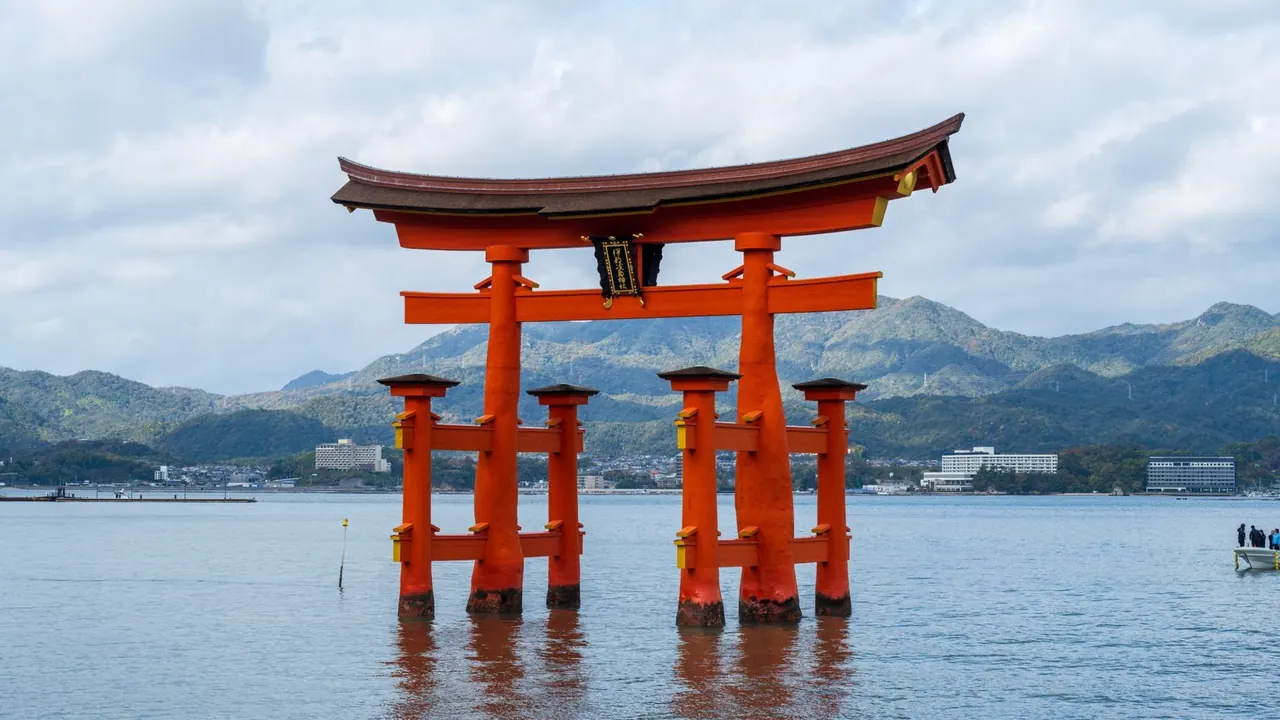
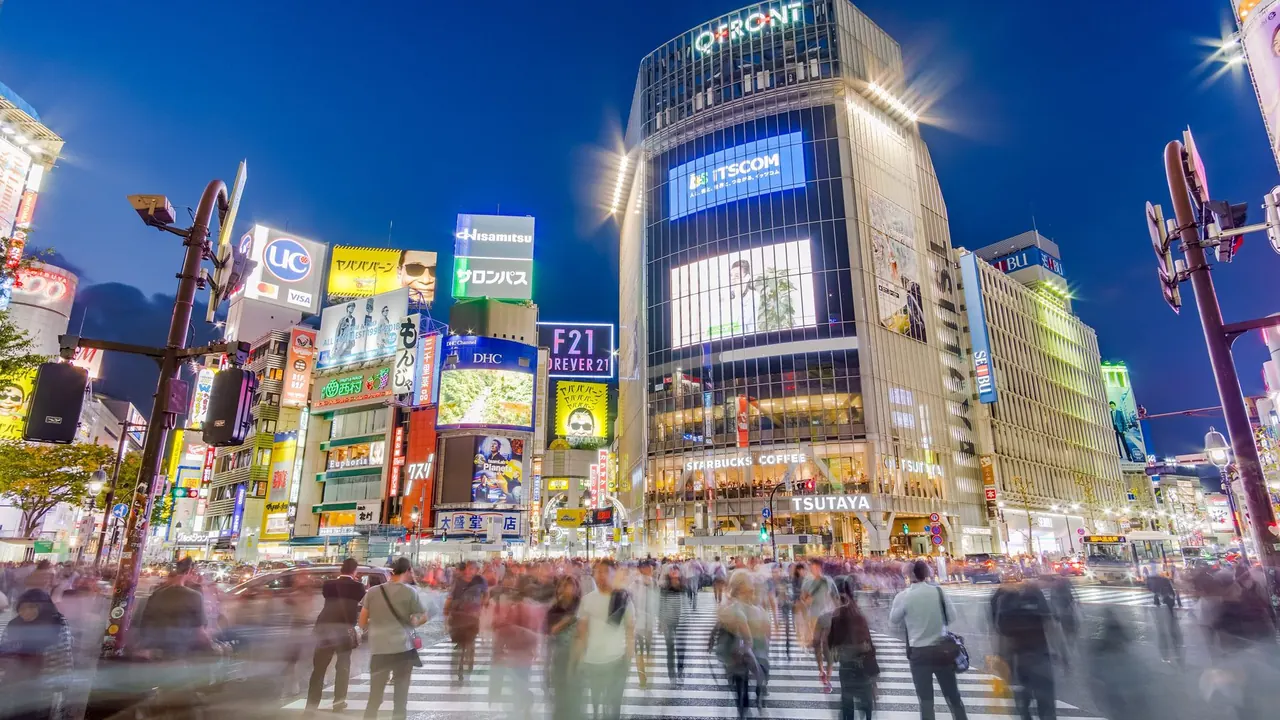
Photos: Hiroshima by Guohua Song, Pexels License; Tokyo by Benh LIEU SONG, CC BY-SA 2.0, cropped.
Hiroshima or Tokyo?
Our verdict in twelve categories, each scored against the same fixed benchmark cities, and the climate month by month, so you can choose for your trip.
Choose Hiroshima for
- prices
Hiroshima suits a traveller who wants a trip with weight and calm. The Peace Memorial Park and its museum give a day you will remember long after the trip, and the Inland Sea, with Miyajima's floating torii and its deer, is under an hour away. Add a flat centre you can walk, okonomiyaki at a griddle counter and hotels that stay reasonable, and it rewards a few unhurried days, often as one stop on a longer route through Japan.
Choose Tokyo for
- live music and the arts
- shopping
- nightlife
Choose Tokyo if you want as much as possible from one city. Its food, shopping, nightlife and stage life all go deeper than Hiroshima's, the museums at Ueno hold the great collections of Japanese art, and children are catered for at every turn. It costs more to sleep in and asks for more energy, but no other city in Japan gives a first-time visitor as much to do.
Scoreboard
Twelve categories on one fixed scale from 0 to 100. The shaded stretch is the gap between the two.
Your match
Pick a travel style or drag the sliders, and both match scores follow your weighting.
Wins on prices with your weighting.
Wins on live music and the arts and shopping with your weighting.
What matters to you?
Category by category
What the scores mean for a trip.
Beaches & swimming
Neither city has a beach in town worth swimming from, since both waterfronts are port and reclaimed land, but Tokyo has the better option within reach. An hour by train brings you to the Shonan coast, where Kamakura's Yuigahama, Zushi and Enoshima offer long stretches of dark volcanic sand, though summer weekends are packed.
Hiroshima's swimming means a ferry to Miyajima, Ninoshima or Etajima, or the shallow strands towards Kure. The water is calm and sheltered, which suits small children, but the beaches are small and jellyfish arrive late in the season.
Food & drink
Hiroshima eats well within a narrow range: layered okonomiyaki off the griddle, Inland Sea oysters in winter, conger eel on rice and the sake breweries of Saijo a short train ride away. It is honest, careful cooking, but with little fine dining and a thin choice of foreign cuisines.
Tokyo is on another scale. It has more Michelin stars than any other city, single-dish specialists that have perfected their craft over decades, the Tsukiji outer market and the depachika food halls, and French and Italian cooking that would hold their own in Paris or Rome. A week of eating in Tokyo never repeats itself.
Culture & sights
Hiroshima's culture is concentrated in one profound place. The A-Bomb Dome and the Peace Memorial Museum face the atomic bombing of 1945 more directly than anywhere else, and Shukkeien and the castle grounds round out two or three days. Little older architecture survived.
Tokyo also lost much of its past, to a great earthquake and then to wartime bombing, but it has far more to see. Senso-ji, Meiji Jingu and the Imperial Palace moats are matched by Ueno's museums, above all the Tokyo National Museum, so a culture-minded visitor can stay busy for a week or more.
Nightlife
Nagarekawa is a pleasant place for a slow evening, with an izakaya and then a small counter bar where the owner pours sake, but the scene is local and fairly modest. Tokyo's night goes much further. Golden Gai, Omoide Yokocho and whole buildings full of themed bars give you endless choice, and the clubs in Shibuya and Roppongi run until the first trains of the morning.
Nature & outdoors
Tokyo has a slight edge, mainly because its trains reach real mountains: Mount Takao in about an hour, the Okutama gorges, and Hakone and the Fuji Five Lakes for views of Fuji.
Hiroshima's landscape is gentler and closer to the water. It has river banks through a delta city, the forested islands of the Inland Sea, the climb up Mount Misen on Miyajima, and Sandankyo Gorge in autumn colour. Cyclists have the Shimanami Kaido across the islands to Shikoku.
Day trips
Both cities make excellent bases, and the difference is in what lies around them. From Hiroshima the trips are maritime: Miyajima's shrine by ferry, the old ports of Tomonoura and Onomichi, Okunoshima's rabbits, with Himeji Castle and Kurashiki a shinkansen hop away.
Tokyo's day trips are bigger, more famous names inland and along the coast: Kamakura's Great Buddha, the Toshogu shrine at Nikko, hot springs in Hakone and Yokohama's harbour.
Good for families
Tokyo is one of the easiest big cities anywhere to travel with children. Disneyland and DisneySea, Miraikan, the Ghibli Museum and several aquariums can fill a week, and stations with lifts, baby rooms and spotless toilets make each day easy.
Hiroshima is just as safe and clean, and feeding the deer on Miyajima or meeting Okunoshima's rabbits goes down well. But there is no theme park or large aquarium nearby, and parents need to decide how much of the Peace Memorial Museum's graphic material young children should see.
Getting around
Hiroshima's centre is compact enough to walk, with the Peace Park, Hondori, the castle and Shukkeien all close together, and Japan's largest tram network fills the gaps, though the trams are slow when the streets are busy.
Tokyo is in a different league: the densest rail network in the world, trains to the minute, English signs throughout, and almost every sight a short walk from a station. Its drawbacks are the giant interchange stations and the crush at rush hour.
Shopping & style
Hiroshima's shopping is essentially one long covered arcade, Hondori, with department stores and the national chains, and it is pleasant rather than exciting. The things worth carrying home are crafts and local produce: Kumano make-up brushes, Miyajima rice paddles and Saijo sake.
Tokyo gives a shopper whole districts, each with its own character. Ginza has the luxury houses, Omotesando the architect-designed flagships, Shimokitazawa and Harajuku vintage clothing, Kappabashi kitchen knives and Akihabara electronics. A keen shopper could spend the whole trip here.
Affordability
Both cities feed you cheaply and well, so the difference lies mostly in the bed. Hiroshima's business hotels are plentiful and fairly priced and rarely see peak-season extremes, which makes it the easier city on the budget. The costs that build up are shinkansen tickets for day trips and a night on Miyajima.
Tokyo's rooms are small and not cheap in the central districts, and prices climb sharply in cherry-blossom season and Golden Week. Taxis, cocktail bars and fine dinners add up quickly too.
Live music & performing arts
Hiroshima's one distinctive show is kagura, a masked Shinto dance-drama with drumming and demons, staged regularly for visitors and at village shrines in autumn. Beyond that, the programme is a regional one.
Tokyo has kabuki at the Kabuki-za, with single-act tickets for newcomers, plus Noh, the Takarazuka Revue, opera and ballet at the New National Theatre, and orchestras in halls such as Suntory Hall. Jazz bars and the live houses of Koenji and Shimokitazawa have music every night.
Wellness & relaxation
Hiroshima has no hot springs of its own, so bathing means sento, super-sento or a drive of an hour to a spa village. Its real calm comes from the slow pace, the riverside walks and a ryokan night on Miyajima once the day-trippers have gone.
Tokyo offers more. Hundreds of sento, some fed by dark mineral spring water, large bathing complexes with saunas, and Hakone's onsen inns about ninety minutes away. In both cities, check whether tattoos are allowed.
When should you go?
Pick your month. The climate figures are measured averages, not a forecast.
Hiroshima in July
Tokyo in July
Daytime high, °C
Rainfall in the month, mm
Temperature and rainfall are climate normals, averaged over the years shown. Hiroshima: 1991-2020 normals, Hiroshima (1.7 km from centre). Tokyo: 1991-2020 normals, Tokyo (3.6 km from centre).
The two cities follow almost the same temperature curve, so the best months are the same: April and May, then October and November, when the days are mild enough to walk all afternoon. Summer is hot and sticky in both, peaking at about 33°C in Hiroshima in August, a degree or so above Tokyo, and winter is cool but rarely harsh. The sea off both reaches about 26°C in August, which makes July to September the only real swimming months.
The rain falls at different times. Hiroshima's wet season is early summer, with June and especially July the wettest months, at nearly 300mm in July. Tokyo is wettest in September and October, at about 237mm in October, so its early autumn is less reliable than Hiroshima's. In winter Tokyo is the sunnier of the two, with clear, dry days that suit sightseeing, while Hiroshima has its brightest spell in spring and late summer.
Which traveller are you?
On a trip on a tight budget, Hiroshima is the kinder base, mainly because a bed costs less. Live on okonomiyaki counters and set lunches, walk the Peace Park, which is free, and favour ferry days to Miyajima over long shinkansen hops.
For a food and nightlife trip, Tokyo is the clear choice. Sushi counters, yakitori alleys and depachika food halls lead on to Golden Gai's tiny bars and the late clubs of Shibuya. Hiroshima offers fine okonomiyaki and a cosy Nagarekawa evening, but far less range.
On a family trip with children, Tokyo has far more to do and makes each day easier. Stay near a Yamanote line station, keep a whole day for the theme parks across the bay, and plan outings so you are off the trains at rush hour.
Before you go
| Measure | Hiroshima | Tokyo |
|---|---|---|
| Official language | Japanese | Japanese |
| Currency | Yen (JPY) | Yen (JPY) |
| Sockets | AB100 V, 50 and 60 Hz depending on the region | AB100 V, 50 and 60 Hz depending on the region |
| Driving side | Left | Left |
| Time zone | UTC+9 | UTC+9 |
| Emergency number | Police 110, fire 119 | Police 110, fire 119 |
| Elevation | 3 m | 6 m |
| Main airport | Hiroshima Airport (HIJ)43 km from centre10 non-stop destinations | Tokyo Haneda International Airport (HND)18 km from centre98 non-stop destinations |
| Public holidays this year | 16 days | 16 days |
By the numbers
| Measure | Hiroshima | Tokyo |
|---|---|---|
| City population | 1,198,021 | 14,264,798 |
| People per km² | 1,324 | 6,501 |
| Museums within 10 km | 18 | 192 |
| UNESCO World Heritage sites within 50 km | 2 | 1 |
| Swim season, months above 21 °C | 4 months | 4 months |
Where else could you go?
Every comparison below shares a destination with this one, so you can follow Hiroshima or Tokyo somewhere new.